
The Salvific Suffering of Christ
A blessed Passion/Palm Sunday to all our readers, a day of great solemnity, wherein we meditate on Christ’s pilgrimage towards His own death, and the stark account of His own suffering and death by crucifixion. This, paradoxically, was also His ‘glory’, for, as we recite in the Stations, it was by His holy cross, that the Saviour redeemed the world.
As Pope Saint John Paul II put it in his letter on suffering, Salvifici Doloris, well worth a read in this sacred time:
God gives his Son to “the world” to free man from evil, which bears within itself the definitive and absolute perspective on suffering. At the same time, the very word “gives” (“gave”) indicates that this liberation must be achieved by the only-begotten Son through his own suffering. And in this, love is manifested, the infinite love both of that only-begotten Son and of the Father who for this reason “gives” his Son. This is love for man, love for the “world”: it is salvific love.
In giving His ‘Son’, God gives Himself, for the Son was, and is God, which is why He could take upon Himself the sins of all time:
If the suffering “is measured” by the evil suffered, then the words of the Prophet enable us to understand the extent of this evil and suffering with which Christ burdened himself. It can be said that this is “substitutive” suffering; but above all it is “redemptive”. The Man of Sorrows of that prophecy is truly that “Lamb of God who takes away the sin of the world”(42). In his suffering, sins are cancelled out precisely because he alone as the only-begotten Son could take them upon himself, accept them with that love for the Father which overcomes the evil of every sin; in a certain sense he annihilates this evil in the spiritual space of the relationship between God and humanity, and fills this space with good.
Only Christ could take upon Himself ‘the evil of every sin’, for the One who suffered was not limited to the concrete conditions of space and time, a finite being, but the eternal and infinite God:
He who by his Passion and death on the Cross brings about the Redemption is the only-begotten Son whom God “gave”. And at the same time this Son who is consubstantial with the Father suffers as a man. His suffering has human dimensions; it also has unique in the history of humanity—a depth and intensity which, while being human, can also be an incomparable depth and intensity of suffering, insofar as the man who suffers is in person the only-begotten Son himself: ” God from God”. Therefore, only he—the only-begotten Son—is capable of embracing the measure of evil contained in the sin of man: in every sin and in “total” sin, according to the dimensions of the historical existence of humanity on earth.
As Pope John Paul puts it, we can never plumb the depths of this mystery, but the words of Christ in Gethsemane offer a window into His human soul, a glimpse into what it means for God to ‘become Man’:
His words also attest to this unique and incomparable depth and intensity of suffering which only the man who is the only-begotten Son could experience; they attest to that depth and intensity which the prophetic words quoted above in their own way help us to understand. Not of course completely (for this we would have to penetrate the divine-human mystery of the subject), but at least they help us to understand that difference (and at the same time the similarity) which exists between every possible form of human suffering and the suffering of the God-man. Gethsemane is the place where precisely this suffering, in all the truth expressed by the Prophet concerning the evil experienced in it, is revealed as it were definitively before the eyes of Christ’s soul.
In the infinitude of His suffering, Christ even took upon Himself the poena of separation from God, yes, the very pains of ‘hell’, without sin, without despair, but taking upon His own Person what we deserve for our own turning away from Him:
Together with this horrible weight, encompassing the “entire” evil of the turning away from God which is contained in sin, Christ, through the divine depth of his filial union with the Father, perceives in a humanly inexpressible way this suffering which is the separation, the rejection by the Father, the estrangement from God. But precisely through this suffering he accomplishes the Redemption, and can say as he breathes his last: “It is finished”
And so, we too must ‘finish’ our work, our own participation in the sacrifice of Christ, which is how we ‘make up what is lacking in His sufferings’. For, really, the only thing missing, like the Good Thief of which Father Callam writes, is our own fiat, our ‘yes’ to God, in accepting what He sends us, which all works to our good – and the good of others – if we too ‘bear our cross’ well: Remember me, when Thou comest into Thy Kingdom.

Carney’s Amoral Majority
After five defections – euphemistically described as ‘crossing the floor’ – and three by-elections, Mark Carney and his Liberals how have their coveted majority. One wonders what bowls of pottage were offered in back-room deals. In the archaic monarchical system that is the Dominion of Canada, this majority allows the newly-minted Prime Minister to rule[…]Continue reading→

Saint Kateri , Canada’s Protectress
This was the title given to Saint Kateri Tekakwitha, by Pope Benedict XVI, when he canonized her on October 28th, 2012, along with six others, in Saint Peter’ Square (she had been beatified by Pope John Paul II back in 1980). With Saint Joseph as our protector, along with the Canadian martyrs, we seem to[…]Continue reading→

A Tale of Two Benedicts
A grace-filled Holy Week to all our readers! As we await and prepare for the Resurrection about to dawn upon us, we might keep in mind two Benedicts: Pope Emeritus Benedict XVI, requiescat in pace, elected on this day in 2005; and today’s commemoration of the mystic pilgrim, Benedict Joseph Labre, who died on this[…]Continue reading→

My Name is Bernadette
April 16th is a propitious day, for besides the anniversary of Father de Valk’s death, who founded Catholic Insight in its print form decades ago, and the commemoration of the ‘two Benedicts’, mentioned in accompanying posts, today we also recall Saint Bernadette Soubirous, the young visionary to whom the Virgin Mary appeared numerous times at[…]Continue reading→

Saint Lydwina of Schiedam and Suffering Joyfully
Saint Lydwina of Schiedam (1380 – 1433) was one of the countless and glorious ‘victim souls’ in the history of the Church, those whose lives are filled with suffering, often of an unimaginable intensity, but who suffer joyfully. She was a fifteen-year old Dutch girl, out skating one day, when she fell and broke one[…]Continue reading→

The Glorious Martyrdoms of Martin and Maximus
As we enter into Eastertide, we recall on this 13th of April Pope Saint Martin I (+655), one of the noblest, if most tragic, of the successors of Saint Peter. Born in Umbria, Italy, he was of noble lineage, with great intelligence combined with charity and love of the poor and the Church. While still[…]Continue reading→

Saint Stanislaus of Szczepanów
We celebrate Saint Stanislaus today (+ April 11, 1079), in light of this Easter Octave, a bishop and martyr who accepted the episcopacy only at the direct order of Pope Alexander II. He proved a wise and courageous leader of his flock, put to death by his own king, Boleslaus, for rebuking the monarch’s ‘immoral[…]Continue reading→

Saint Gemma Galgani
On this April 11th, in 1903 – the same year that the Italian Guiseppe Sarto was elected Pope later that summer as Pius X – a lovely, young Italian woman died, by the name of Gemma Galgani. She lived a brief life of 24 years, as did a number of other young saints, including Pier[…]Continue reading→

An Ideological and Improper Translation
I noticed something odd with the psalm reading at Mass the other day. Our bishops’ conference here in Canada has decreed that the Mass in English – Novus Ordo – use the ‘NRSV’, the ‘New Revised Standard Version’, an ‘updated’ translation of the original RSV, first published in 1952. This ‘new translation’ has the tendency[…]Continue reading→
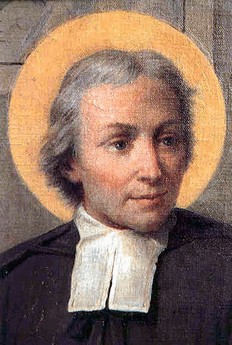
Saint Jean-Baptiste de la Salle: A Teacher for Teachers
Jean-Baptiste de la Salle (1651 – 1719), a French nobleman, ordained a priest, founded the first order in the Church’s history entirely without priests, and this came about almost by accident. I say ‘almost’, for, of course, there are no accidents with God. Destined for ordination from an early age, Jean-Baptiste never looked back, even[…]Continue reading→