
Martin and Maximus, Confessors and Martyrs
As we stand on the eve of Holy Week, it is fitting that the Church recall on this memorial, Pope Saint Martin I (+649), one of the noblest, if most tragic, of the successors of Saint Peter. Born in Umbria, Italy, he was of noble lineage, with great intelligence combined with charity and love of the poor. What struck me was one mission upon which he was sent by Pope John IV in 641 to redeem prisoners from the Slavs; Martin also piously gathered up many scattered relics, which he placed in a chapel he had built in Rome, signifying something deeply spiritual in him, in the midst of his temporal duties.
He was appointed apocrisiarius, or legate, to Constantinople and soon, with virtues so apparent, elected to succeed Pope John in 649, an office that would soon lead to his early death.
With the decline of Rome two centuries earlier – after the purported ‘fall’ with the deposition of the last pathetic emperor, the child Romulus Augustulus – power was now centralized in Constantinople, and, at this time, its emperor Constans II. Sadly, the East was also infected with the heresy of monothelitism, that Christ had no human will, but only a divine one, safeguarding, so they thought, the integrity of His Godhead, and the chance that His human will could somehow rebel and thwart the implacable divine decree.
This insidious heresy would have negated the reality of the Incarnation, as with no human will, Christ would not have assumed a full human nature, and therefore would not really have ‘become Man’, one like us in all things, but sin.
Pope Martin realized this, and summoned a Council as soon as he was elected, in 649, which convened at this own cathedral, Saint John Lateran, condemning the heresy in no uncertain terms, proclaiming the reality of two wills in Christ, divine and human, corresponding to the two natures which coalesced in the hypostatic union of His one divine Personhood.
Emperor Constans realized the threat this posed to his own authority, spiritual and temporal, so ordered the Pope’s arrest by the Exarch of Ravenna, the Roman city where Eastern authority was located in the West. The first exarch refused to carry out the order, but his successor had no such scruples, arresting Pope Martin at the Lateran on June 17, 653 – contrary to the laws of sanctuary, it seems – and hauling him, along with Saint Maximus the Confessor, the great intellectual foe of monothelitism, and one of the most profound of spiritual authors – in chains to Constantinople.
Maximus – whose story deserves its own article – was tortured, his right hand cut off and his tongue ripped out, so he could no longer ‘confess’ his ‘heresy’ – and died in exile in 662.
Constans likely thought that mutilating and executing the Pope would be unwise, making a martyr of him, so Martin was left to linger, exposed on the dock upon disembarking to taunts and jeers, stripped and paraded through the city, and left in prison, cold, hungry, cramped. But the great man, whose integrity shines through the ages, would not submit to the caesaropapist emperor, refusing to sign the Typus, which would have authorized the monothelitist heresy.
After months of isolation and starvation, through which he must have been sustained by the graces bestowed through deep prayer, the Pope was eventually exiled to Crimea, where he died a few months later, around the time of his companion Maximus, in September of 662, and a martyr he did indeed become, one of the most notable of witnesses to the Faith, of which he had been chosen as a defender and guardian.
The truth for which Martin and Maximus gave their lives was recognized two decades later, at the Third Council of Constantinople, which condemned monothelitism for all time, reaffirming the truth Pope Martin had declared in 649, that Christ, along with two natures, also had two wills, united in His one divine Person. It was thus God willed His Christ fulfill our redemption, taking our full humanity – including all of our sins and weaknesses – upon Himself, all the way to the Cross, where he atoned for all moral evil, opening the gates of heaven to everyone who assents to His truth. As Christ prayed in the Garden, let not my will, but Thine be done…
A fitting day to pray for our Holy Father, and all of our bishops and priests, that they too not only remain faithful to the Truth, but proclaim that Truth clearly and without compromise, with courage and conviction, in the face of a world growing more inimical, even diabolical, by the day.
But Christ is for us, so who can be against?
Saint Martin and Saint Maximus, orate pro nobis!
Carney’s Amoral Majority
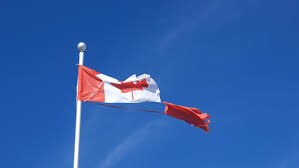
After five defections – euphemistically described as ‘crossing the floor’ – and three by-elections, Mark Carney and his Liberals how have their coveted majority. One wonders what bowls of pottage were offered in back-room deals. In the archaic monarchical system that is the Dominion of Canada, this majority allows the newly-minted Prime Minister to rule[…]Continue reading→

Saint Kateri , Canada’s Protectress
This was the title given to Saint Kateri Tekakwitha, by Pope Benedict XVI, when he canonized her on October 28th, 2012, along with six others, in Saint Peter’ Square (she had been beatified by Pope John Paul II back in 1980). With Saint Joseph as our protector, along with the Canadian martyrs, we seem to[…]Continue reading→

A Tale of Two Benedicts
A grace-filled Holy Week to all our readers! As we await and prepare for the Resurrection about to dawn upon us, we might keep in mind two Benedicts: Pope Emeritus Benedict XVI, requiescat in pace, elected on this day in 2005; and today’s commemoration of the mystic pilgrim, Benedict Joseph Labre, who died on this[…]Continue reading→

My Name is Bernadette
April 16th is a propitious day, for besides the anniversary of Father de Valk’s death, who founded Catholic Insight in its print form decades ago, and the commemoration of the ‘two Benedicts’, mentioned in accompanying posts, today we also recall Saint Bernadette Soubirous, the young visionary to whom the Virgin Mary appeared numerous times at[…]Continue reading→

Saint Lydwina of Schiedam and Suffering Joyfully
Saint Lydwina of Schiedam (1380 – 1433) was one of the countless and glorious ‘victim souls’ in the history of the Church, those whose lives are filled with suffering, often of an unimaginable intensity, but who suffer joyfully. She was a fifteen-year old Dutch girl, out skating one day, when she fell and broke one[…]Continue reading→

The Glorious Martyrdoms of Martin and Maximus
As we enter into Eastertide, we recall on this 13th of April Pope Saint Martin I (+655), one of the noblest, if most tragic, of the successors of Saint Peter. Born in Umbria, Italy, he was of noble lineage, with great intelligence combined with charity and love of the poor and the Church. While still[…]Continue reading→

Saint Stanislaus of Szczepanów
We celebrate Saint Stanislaus today (+ April 11, 1079), in light of this Easter Octave, a bishop and martyr who accepted the episcopacy only at the direct order of Pope Alexander II. He proved a wise and courageous leader of his flock, put to death by his own king, Boleslaus, for rebuking the monarch’s ‘immoral[…]Continue reading→
Saint Gemma Galgani
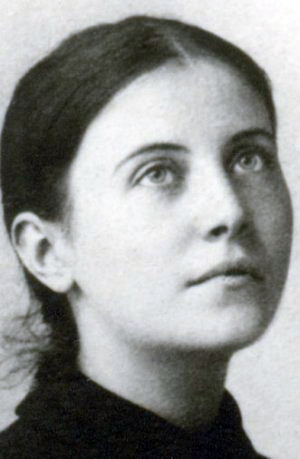
On this April 11th, in 1903 – the same year that the Italian Guiseppe Sarto was elected Pope later that summer as Pius X – a lovely, young Italian woman died, by the name of Gemma Galgani. She lived a brief life of 24 years, as did a number of other young saints, including Pier[…]Continue reading→
An Ideological and Improper Translation
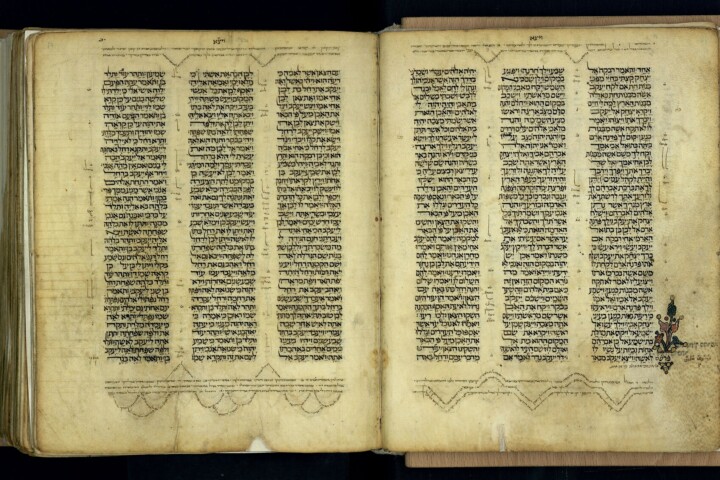
I noticed something odd with the psalm reading at Mass the other day. Our bishops’ conference here in Canada has decreed that the Mass in English – Novus Ordo – use the ‘NRSV’, the ‘New Revised Standard Version’, an ‘updated’ translation of the original RSV, first published in 1952. This ‘new translation’ has the tendency[…]Continue reading→
Saint Jean-Baptiste de la Salle: A Teacher for Teachers
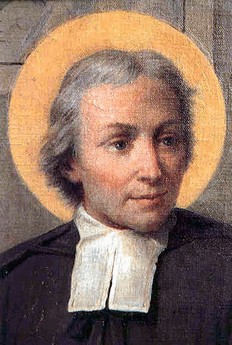
Jean-Baptiste de la Salle (1651 – 1719), a French nobleman, ordained a priest, founded the first order in the Church’s history entirely without priests, and this came about almost by accident. I say ‘almost’, for, of course, there are no accidents with God. Destined for ordination from an early age, Jean-Baptiste never looked back, even[…]Continue reading→