
Post Epiphany
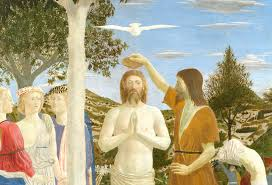
The Feast of the Baptism of the Lord marks the end of the Christmas Season and the beginning of Ordinary Time. It is a feast that has a foot in each season. It is part of the Christmas Season, because Christ has not yet begun his public ministry, but it is also the First Sunday in Ordinary Time. The celebration of the Baptism of the Lord is traditionally part of the threefold celebration of the Epiphany, which included the visitation of the Magi, the Baptism, and the wedding feast at Cana.
In the account of the His baptism, Christ comes to John the Baptist relatively unknown to the world. There are the select few who have already had privileged encounters with Him, such as the shepherds and the wise men in Bethlehem, but the average person doesn’t know anything about Him, because He has been living a secluded life in Nazareth with Mary and Joseph.
Up until this point, John is the one who has been drawing all the attention. For example, Luke says, “As the people were in expectation, and all men questioned in their hearts concerning John, whether perhaps he is the Christ” (Lk 3:15). “Multitudes” (cf. Lk 3:7) were going out into the wilderness to the place that he was baptizing in the Jordan River. John was a big deal. It’s difficult for us to grasp how big of a deal he was because we read the story already knowing that Jesus is the Messiah, but that obviously wasn’t the case for the multitudes going out into the wilderness to be baptized by John.
Despite his fame and the large following he acquires, John remains humble. He knows who he is and what his relationship is to Jesus. He says, “I baptize you with water; but he who is mightier than I is coming, the thong of whose sandals I am not worthy to untie; he will baptize you with the Holy Spirit and with fire” (Lk. 3:16). However, before we get to the baptism with the Holy Spirit and fire, we must first begin the journey.
John is preaching a baptism of repentance. Repentance, translating the Greek word metanoia, literally means after-thought, which is to say a change in soul. Jesus doesn’t need a change in soul because He is the perfect-souled man, but He does need to show us where our journey must begin. Where is that? At the Jordan River, just north of the Dead Sea. This is both the lowest point on earth and it is the border between the empty desert and the Promised Land. Repentance is recognizing that without God we are nothing – we are at the bottom of the earth in desert exile.
When Jesus is baptized, He takes humanity into the water with Him, we see the heavens opened, the Holy Spirit descends upon Him, and the Father says, “You are my beloved Son; with you I am well pleased” (Lk 3:22). With Moses the Israelites cross through the water of the Red Sea to escape slavery. With Joshua they cross through the water of the Jordan River to enter the Promised Land. In Jesus, Israel crosses through the water of the Jordan in order to escape death and become adopted sons of God. He is the Son of God by nature, and we become sons of God by participation.
In Luke’s Gospel the baptism of Jesus is followed by His genealogy. Luke traces the ancestry of Jesus all the way back to Adam, the son of God. Adam was the first man, and sin entered the world through him. Jesus is the new man, who carries all of humanity with Him back to God.
So, this is where Ordinary Time begins. Ordinary Time is a rather unfortunate title. It’s a default name – derived not from our notion of ordinary, but rather from ordinal, as in, a succession of numbers – to describe the numbered Sundays that separate the four major liturgical seasons. It’s not a theological title like Advent or Christmas. Personally, I don’t like the title and I think it should eventually be changed back to the various seasons used before the calendar revisions of 1969; namely, the Time after Epiphany, Septuagesima, etc., and the Time After Pentecost. Thinking of this Sunday as “The First Sunday After Epiphany” puts it into a new light. Christ is revealed to the nations in the Feast of the Epiphany, and the necessary sequitur is baptism. If we have met Christ, we must be baptized. His public ministry begins with His baptism and our spiritual life begins with baptism.
In the weeks that follow the Epiphany and the Baptism of the Lord we enter Christ’s ministry in Galilee. We journey with the apostles as they get to know Christ, and this time of walking with Him, witnessing His miracles and listening to His teaching, carries us through to the season of Lent. It’s cold outside and the days are still short, so most people spend their evenings inside. Enjoy this relaxed time of preparation to build up your knowledge of Christ. Read through the Gospel of Luke. Read Pope Benedict’s Jesus of Nazareth or other classic works on the life of Christ. Don’t fall into the trap of thinking that Ordinary Time means we go back to ordinary life – Christ relegated to 45 minutes on Sunday. This is the time after Epiphany. It’s our time to sit with Christ at the wedding feast of Cana and on the hill of beatitudes. It’s our time to hop into the boat and set out into the deep on the Sea of Galilee. It’s our time to be strengthened by His words as He prepares us for the eventual journey to Jerusalem and the Cross. Enjoy this time after Epiphany.

Remembering Father Alphonse de Valk
(Today marks the sixth anniversary of the death of Father Alphonse de Valk, C.S.B., a faithful, courageous and indefatigable Basilian priest, pro-life-and-family apostle, and the founder of Catholic Insight magazine. Here is what we wrote those on his entering into eternity five years ago, as we continue to remember him in our prayers and thoughts)[…]Continue reading→

Divine Mercy Sunday – An Echo of Every Mass
Reach out your hand and put it in my side. Do not doubt but believe’… ‘My Lord and my God!’ (Jn. 20:18)). Today is Divine Mercy Sunday, and as we celebrate the end of the Easter Octave, we contemplate the wounded side of our Saviour, the Church’s source of life. On Good Friday in the[…]Continue reading→

Saint Stanislaus of Szczepanów
We celebrate Saint Stanislaus today (+ April 11, 1079), in light of this Easter Octave, a bishop and martyr who accepted the episcopacy only at the direct order of Pope Alexander II. He proved a wise and courageous leader of his flock, put to death by his own king, Boleslaus, for rebuking the monarch’s ‘immoral[…]Continue reading→

First Holy Communion: Sermon from May 16, 1943
Here is a sermon from the good old days by +Rev. Msgr. Vincent Nicholas Foy (August 14, 1915 – March 13, 2017), from 1943. Readers may recall that Pope Saint Pius X, by the decree Quam Singulari in 1910, lowered the customary age of reception of Holy Communion – after the rigours of the plague[…]Continue reading→

In the Glorious Light of Easter, Alleluia!
Set your minds on things that are above, not on things that are on earth, for you have died, and your life is hidden with Christ in God. When Christ who is your life is revealed, then you also will be revealed with him in glory (Col. 3:3-4). The Resurrection of Our Lord and Saviour[…]Continue reading→

An Ancient Homily for Holy Saturday
The time between Good Friday and Easter Sunday is one of waiting, in silence, as the world wonders – anticipates – what will happen, after the death of Christ. We re-live this time each year in the anamnesis of our liturgy, and in turn look forward to the glorious re-creation of all things at the[…]Continue reading→

Europe’s Long Descent
(As we meditate on this day on Christ’s burial, and His descent into hell, it is fitting to ponder here with contributor Peter Marcus how the world seems to be heading there as well. The difference is that, although God cannot ‘redeem’ hell, nor those therein, He can and did redeem the world. There is[…]Continue reading→
Pope Saint John Paul II’s First Good Friday Homily
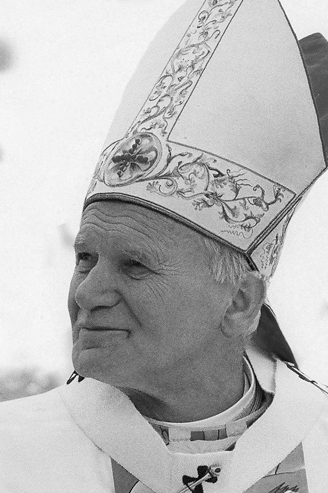
ADDRESS OF HIS HOLINESS JOHN PAUL II AT THE CONCLUSION OF THE STATIONS OF THE CROSS AT THE COLOSSEUM Good Friday, 13 April 1979 When we make the Way of the Cross from one station to the next, in spirit we are always at the spot wherethis journey had its “historical” place: where it[…]Continue reading→
A Meditation for Good Friday: How To Undo the Effects of Sin?
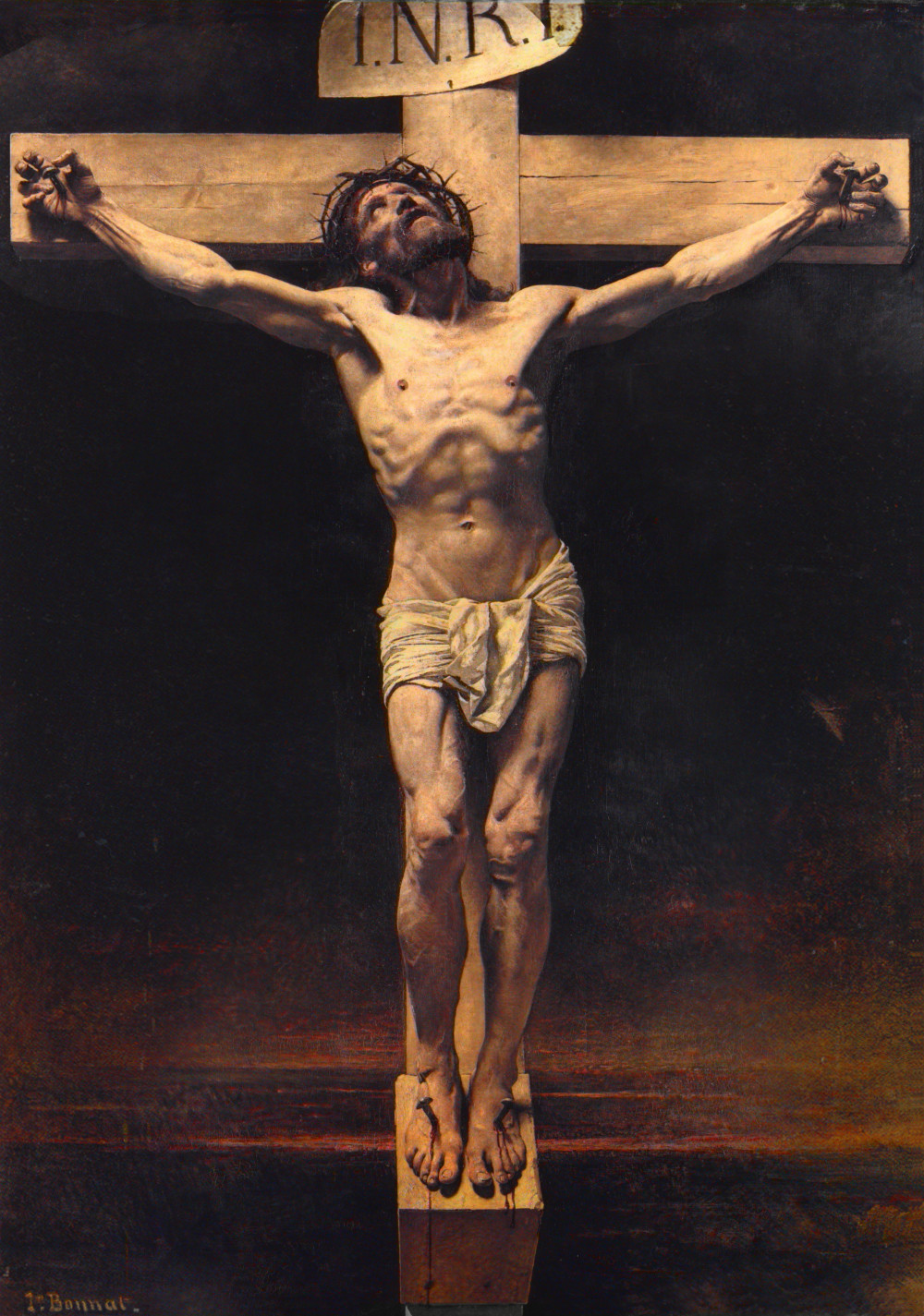
Cardinal Newman, now Saint John Henry Newman, was a towering figure of nineteenth-century Catholicism who is almost universally admired. I say “almost” because not everyone likes him. I knew a priest once, Arthur Caulkins, who has become disenchanted with Newman. As an undergraduate Arthur had been enamoured of Newman, and this interest continued when he[…]Continue reading→
Pope Benedict’s Last Holy Thursday Homily
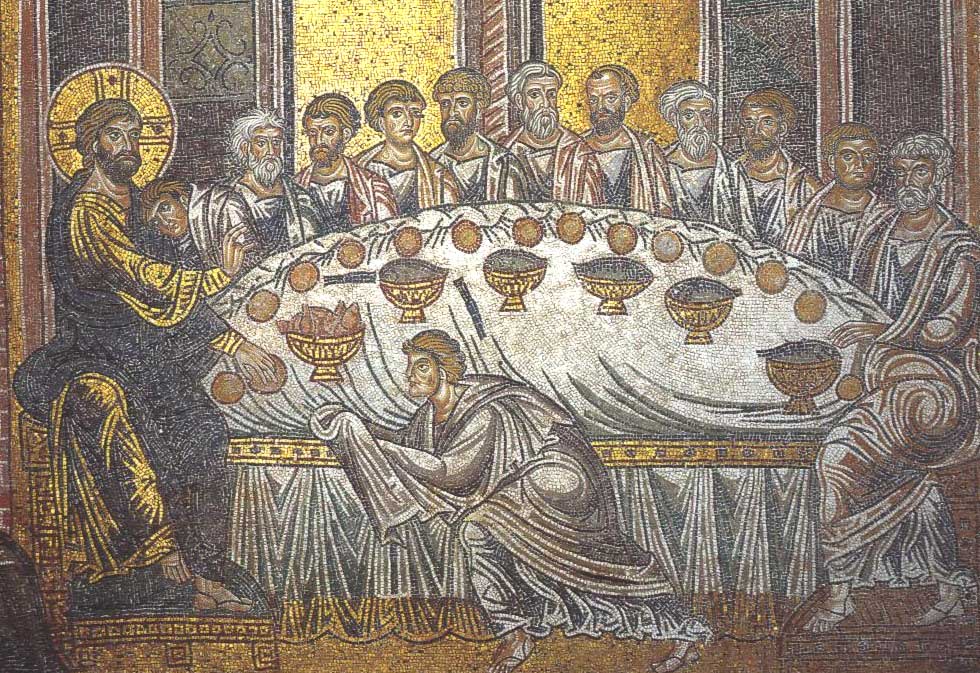
MASS OF THE LORD’S SUPPER HOMILY OF HIS HOLINESS BENEDICT XVI Basilica of St John Lateran Holy Thursday, 5 April 2012 Photo Gallery (Video) Dear Brothers and Sisters! Holy Thursday is not only the day of the institution of the Most Holy Eucharist, whose splendour bathes all else and in some ways draws it to[…]Continue reading→