
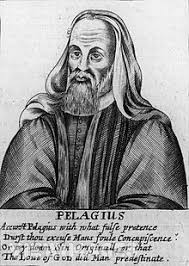
Promethean Pelagius
Before we leave 2018 behind, we should mark the 1600th anniversary of the official condemnation, of the heresy of Pelagius, in 418 A.D. by Pope Zosimus. Pelagius was the first writer we know of in what we now call Britain, and this theories might seem rather abstruse, but they were indeed fundamental in shaping the modern world but not, as the author of the aforelinked article argues, for the better.
The controversy was over the nature and efficacy of that mysterious things we Catholics call ‘grace’. Pelagius’ nemesis was the great Saint Augustine, and the two exchanged a series of letters which grew increasingly polemical. It all seems to have begun from a phrase in Augustine’s Confessions – the first tell-all autobiography in history:
Pelagius’s starting point was his response to what he regarded as an innovation by Saint Augustine. Sometime around AD 405, Pelagius heard someone quote the following from Augustine’s Confessions (then newly written): Da quod iubes, et iube quod vis. Augustine, addressing God in prayer, was saying: “Give what you command and command what you wish.”
Pelagius, an ascetical Irish monk, took umbrage to relying too much upon some mystical ‘grace of God’, as though this were needed for a man to control his wayward passions, and growing in holiness, considering this too passive and, well, weak and unmanly, and probably un-Irish to boot. In his view, it was up to us, by might and main and force of will, to make our way to heaven. All ‘grace’ could offer was a good example, by the life of Christ and His saints. Get to it, men! Esto vir!
Augustine, on the other hand, well aware of human weakness in his own life, stressed quite heavily – perhaps too heavily at times – on the need for grace, for God’s help moving and assisting, even keeping us spiritually alive, without which we would quite literally be damned.
A thousand years on, Calvin extended Augustine’s argument to the breaking point, arguing in his depressing tome The Institutes, that our human free will was so weak, corrupt and prone to evil as more or less not even to exist, and that every good deed was ‘pure grace’, Christ dwelling and acting in us. Hence, the classic Protestant ‘bondage of the will’, which was constrained to do nothing but evil, and that all our good works were really Christ’s.
In clarifying the matter, the Church taught that our salvation was a work both of grace and our free-will, our human will cooperating with divine grace. We must be in a ‘state of grace’, gratia gratum faciens – literally, ‘grace making graced’, being in friendship and charity with God, and not having rejected Him by mortal sin – to work for and gain heaven.
Saint Thomas describes this grace as a ‘supernatural quality of the soul’, which elevates all of our powers, and all the acts of those powers, to the supernatural level, so that we might become ‘like God’ and act in accord with His will.
Along with such habitual or sanctifying grace, each of our good actions, including our initial conversion, is also preceded and inspired by gratia agens , translated as ‘actual grace’ but literally ‘acting grace’, which are those transient helps from God that move the soul to do the right thing from the supernatural perspective.
Only by balancing free-will and grace, can man truly be himself and not only achieve fulfilment in this life, but reach – or more properly, be given – his final end of heaven.
Ponder what would follow from Pelagius’ Promethean principles: If we need not God to attain beatitude, then it is not much of a leap to just forego God altogether, and make ‘heaven’ here on earth. Why wait? Hence, all the attempts to build utopia in its various forms, from the Protestant communes, the French revolution and its grotesque republique, to Communist Russia, to Jonestown, and we have genetic design, transgenderism and transhumanism. Non serviam is despairing cry of all those who refuse to live and move and have our being within the loving constraints of God’s guiding hand. We must become like children, which is not easy for rebellious ‘adults’.
And if we need not grace, why not jettison faith also? If we need not God’s help to act well, then why His guidance to think properly? Accepting grace and faith require that virtue of humility, which is seeing ourselves as we really are, in relation to God and to each other.
It has been argued that Pelagius’ doctrine allowed us to break free from the constraining fetters of religion and reliance upon a deity, and so ‘conquer the world’ by the force of our reason. On the contrary, Man without the help – that is, without the grace – of God ultimately turns in on himself, demonic and despairing, his best laid plans gang aft a-gley, in the words of the Scottish bard, who likely knew little of Pelagius.
As Cardinal Ratzinger emphasized in a series of Lenten sermons in 1986, the “Christian option is the exact opposite” of such a Gnostic view: As he puts it, “Human beings are dependent, and only by denying their very being can they dispute that fact“, a point to which he would return numerous times in his writings in his later papacy.
Pious Pelagius would likely be deeply mortified to see where his thoughts have led, but as Aristotle said, what seems a small error in the beginning, if left unchecked, becomes monstrous in the end. If the devout Irish monk did make it to heaven – and we may hope he did – he would see in the retrospective of his life how much of his good works were grace, and that the condemnation of his heresy was a severe but beautiful mercy.
So in this new year, we should make a resolution to rely more upon the grace of God, which He offers us in prayer and our requesting, good measure and flowing over, but primarily abundant in His sacraments: He who eats my flesh and drinks my blood will have eternal life. Not a bad deal at all.
But we must also work out our salvation with fear and trembling. Ora et labora, as the Benedictines put it, ‘pray and work’ is what life is all about. Or, to return to another phrase attributed to Saint Augustine, and the later Saint Ignatius: pray as though everything depended upon God, and work as though everything depended upon you.
And don’t over-think the whole thing. Just live as your duty demands, giving your all, trusting in God, and praising Him still, our Saviour and our God.
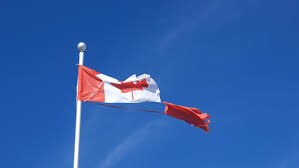
Carney’s Amoral Majority
After five defections – euphemistically described as ‘crossing the floor’ – and three by-elections, Mark Carney and his Liberals how have their coveted majority. One wonders what bowls of pottage were offered in back-room deals. In the archaic monarchical system that is the Dominion of Canada, this majority allows the newly-minted Prime Minister to rule[…]Continue reading→

Saint Kateri , Canada’s Protectress
This was the title given to Saint Kateri Tekakwitha, by Pope Benedict XVI, when he canonized her on October 28th, 2012, along with six others, in Saint Peter’ Square (she had been beatified by Pope John Paul II back in 1980). With Saint Joseph as our protector, along with the Canadian martyrs, we seem to[…]Continue reading→
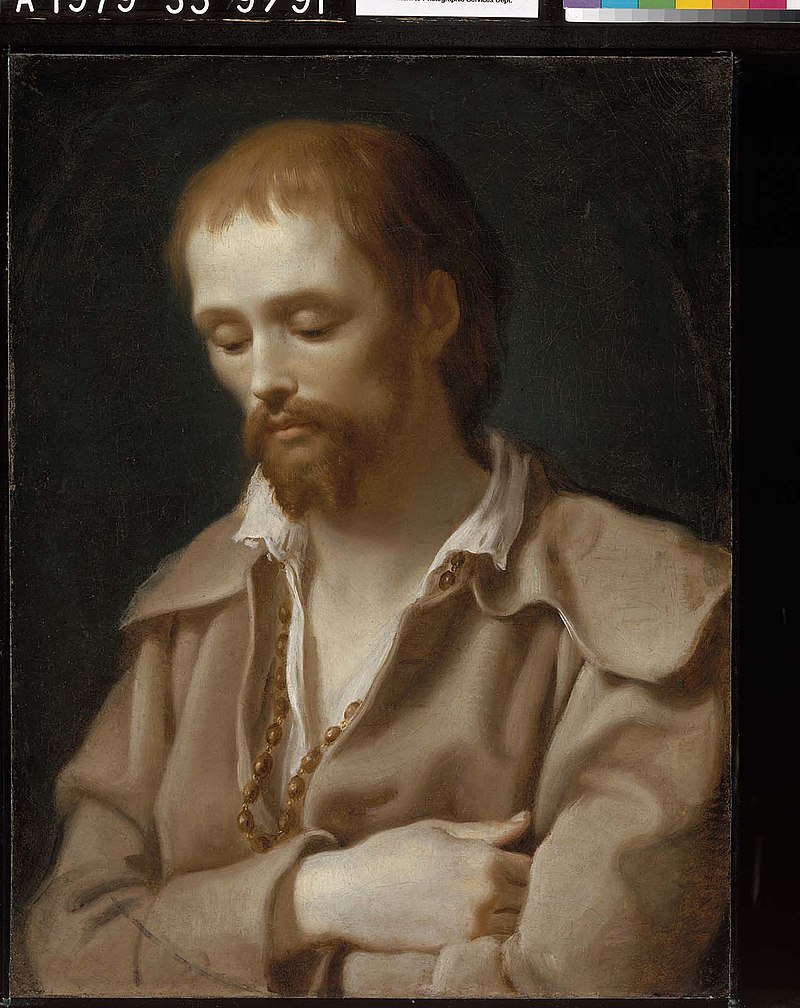
A Tale of Two Benedicts
A grace-filled Holy Week to all our readers! As we await and prepare for the Resurrection about to dawn upon us, we might keep in mind two Benedicts: Pope Emeritus Benedict XVI, requiescat in pace, elected on this day in 2005; and today’s commemoration of the mystic pilgrim, Benedict Joseph Labre, who died on this[…]Continue reading→

My Name is Bernadette
April 16th is a propitious day, for besides the anniversary of Father de Valk’s death, who founded Catholic Insight in its print form decades ago, and the commemoration of the ‘two Benedicts’, mentioned in accompanying posts, today we also recall Saint Bernadette Soubirous, the young visionary to whom the Virgin Mary appeared numerous times at[…]Continue reading→
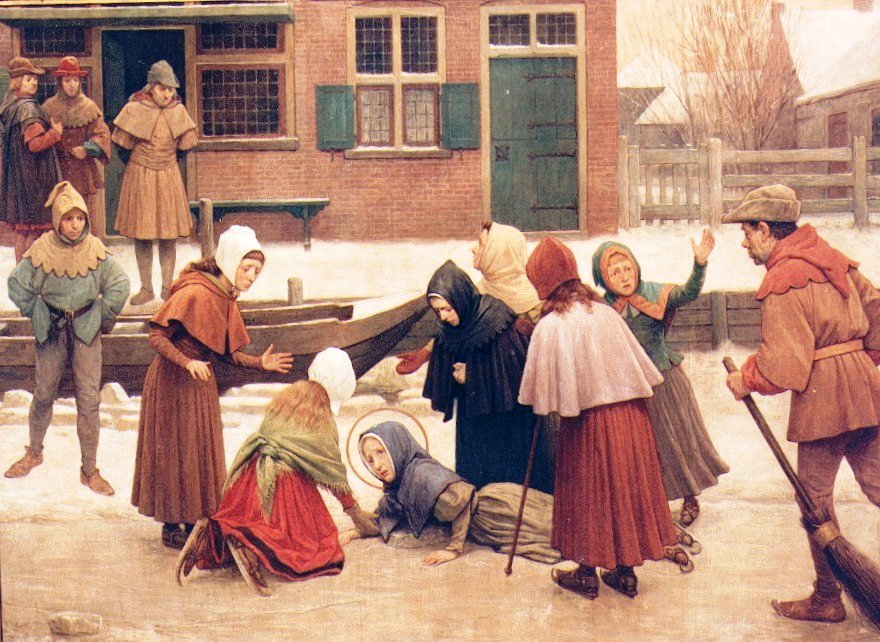
Saint Lydwina of Schiedam and Suffering Joyfully
Saint Lydwina of Schiedam (1380 – 1433) was one of the countless and glorious ‘victim souls’ in the history of the Church, those whose lives are filled with suffering, often of an unimaginable intensity, but who suffer joyfully. She was a fifteen-year old Dutch girl, out skating one day, when she fell and broke one[…]Continue reading→
The Glorious Martyrdoms of Martin and Maximus
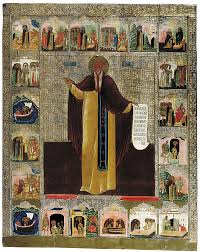
As we enter into Eastertide, we recall on this 13th of April Pope Saint Martin I (+655), one of the noblest, if most tragic, of the successors of Saint Peter. Born in Umbria, Italy, he was of noble lineage, with great intelligence combined with charity and love of the poor and the Church. While still[…]Continue reading→

Saint Stanislaus of Szczepanów
We celebrate Saint Stanislaus today (+ April 11, 1079), in light of this Easter Octave, a bishop and martyr who accepted the episcopacy only at the direct order of Pope Alexander II. He proved a wise and courageous leader of his flock, put to death by his own king, Boleslaus, for rebuking the monarch’s ‘immoral[…]Continue reading→
Saint Gemma Galgani
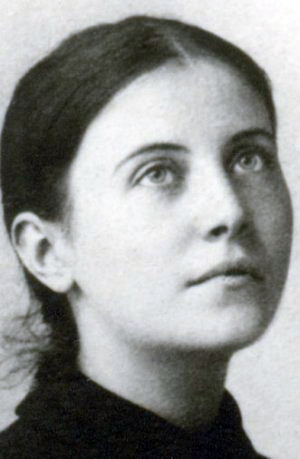
On this April 11th, in 1903 – the same year that the Italian Guiseppe Sarto was elected Pope later that summer as Pius X – a lovely, young Italian woman died, by the name of Gemma Galgani. She lived a brief life of 24 years, as did a number of other young saints, including Pier[…]Continue reading→
An Ideological and Improper Translation
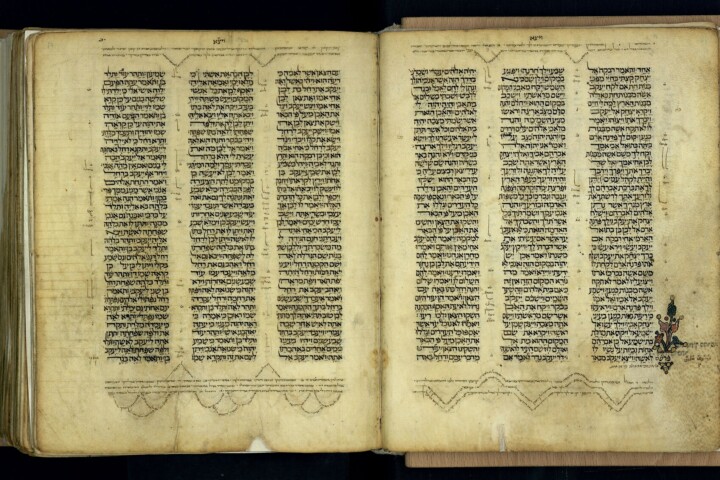
I noticed something odd with the psalm reading at Mass the other day. Our bishops’ conference here in Canada has decreed that the Mass in English – Novus Ordo – use the ‘NRSV’, the ‘New Revised Standard Version’, an ‘updated’ translation of the original RSV, first published in 1952. This ‘new translation’ has the tendency[…]Continue reading→
Saint Jean-Baptiste de la Salle: A Teacher for Teachers
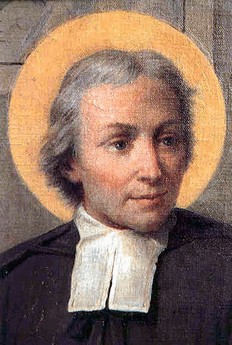
Jean-Baptiste de la Salle (1651 – 1719), a French nobleman, ordained a priest, founded the first order in the Church’s history entirely without priests, and this came about almost by accident. I say ‘almost’, for, of course, there are no accidents with God. Destined for ordination from an early age, Jean-Baptiste never looked back, even[…]Continue reading→