
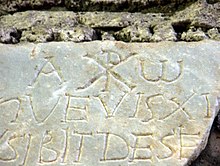
Pope Saint Damasus: The Faith, the Vulgate and the Mass of All Time
We owe quite a lot to Pope Saint Damasus (305 – 384), who oversaw the universal Church during the tumultuous era of the lingering Arian crisis from 366 to his death in good old age in 384. It was he who approved the decrees of the Council of Constantinople in 381 which condemned the pernicious Arian heresy for the second time, and promulgated the great Niceno-Constantinopolitan creed which we recite – or sing! – at Sunday Mass. Credo in unum Deum! Belt it out, like you mean it.
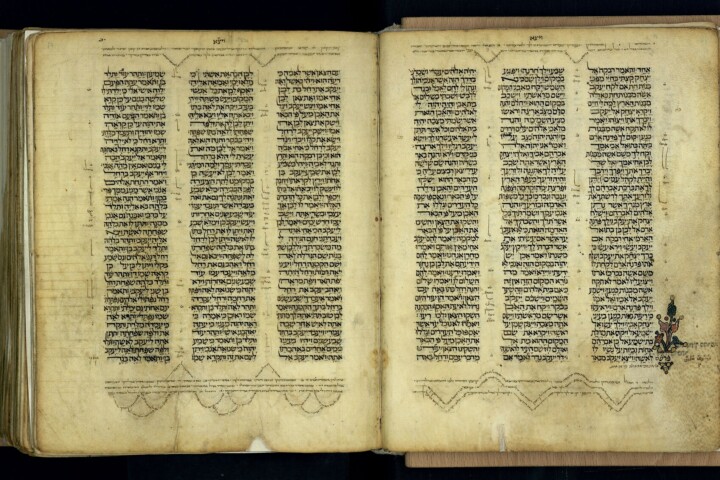
Damasus is perhaps best known for commissioning Saint Jerome, his secretary, in 382 to compile the first true ‘official’ Bible, the Latin Vulgate. Jerome dedicated his own long life to sifting and translating the vast array of original sources in Hebrew and Greek, in which, through hard labour, he had made himself fluent.
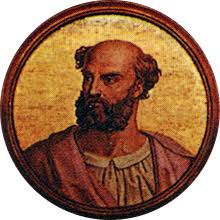 Damasus had already promulgated the official canon of Scripture at the Council of Rome in the same year: His De libris recipiendis et non recipiendis, ‘the books that should be received, and not received’, is identical with that of the much later decree of the Council of Trent in 1546, which set this canon for all time, contrary to Luther and the Protestants, who wanted to remove some books that were ‘inconvenient’ to their doctrine of sola Scriptura, sola fide and sola gratia. The Bible as we know it really is a Catholic book – universal and timeless – whose origins are divine, but whose versions and translations require careful scholarship, research and Magisterial authority.
As one of Damasus’ contemporary bishops, Augustine of Hippo, put it: But I would not believe in the Gospel, had not the authority of the Catholic Church already moved me. (cf., CCC, 119)
And while we’re at it, Pope Damasus is also the Pope who oversaw the transition of the whole Roman liturgy – that is, the Mass and sacraments – from Greek to Latin, which is still the official language of the Church, if all too rarely heard, in her doctrine, liturgy and prayers, immersed in immemorial Tradition. One of the last things Pope Saint John XXIII promulgated, on the very eve of the Second Vatican Council, was the Apostolic Constitution Veterum Sapientia, on February 22nd, 1962 – a brief, but profitable, read. Therein, the Holy Father ordered that Latin be preserved in seminaries and liturgies, and as the official language of the Church. The preservation of Latin in liturgy, by the way, was also decreed by the Council itself.
As a young boy, Damasus witnessed the legalization of Christianity under Constantine in February of 313 after that battle on Milvian Bridge, and, as an old man, he saw the Faith made the official religion of the Empire in 380 under Emperor Theodosius, in the promulgation De Fide Catholica in the same month, February (the 27th to be precise). Quite the time to live. Coincidentally, this fourth day of December also marks the promulgation of the feast of Christ the King, with Pius XI’s encyclical Quas Primas of 1925. Society is, and must be, in some sense ‘Catholic’, governed by Christ and His truth, or it devolves eventually into chaos and disorder – we need not look far for examples.
There were numerous scurrilous rumours of Damasus, the violent nature of his election, his conduct as Pope – most likely what we would now call fake news, as he was constantly hounded by the anti-Pope, Ursinus, who had apparently lost his faith, drifting over to Arianism.
Behind all this, the legacy of Damasus’ echoes through the ages, a pious and holy man, devoted to his religion, a great foe of the au courant heresies, against all those who denied Christ’s divinity, often with ambiguous and misleading language; Apollinarianism, which denied that Christ had a true human soul; and Macedonianism, which denied the divinity of the Holy Spirit. Damasus sent legates to the Council of Constantinople in 381, to ensure these heresies died the death they deserved, and the truth proclaimed and defined for all time.
Damasus also fostered devotion to the martyrs and their relics, opening up access to the catacombs – still a hugely popular attraction in Rome – signifying our incarnational as well as spiritual link not only to Christ, but to our ancestors in the Faith. One of his own favorite saints was the deacon, Lawrence, who had been martyred in the previous century, in 257, during the Decian persecution, a few days after Pope Sixtus II and some of his companions. Damasus bulit the magnificent Basilica Papale di San Lorenzo fuori le mura, to house his relics, which still stands to this day and which this author has visited more than once. I was nearly locked inside, while praying in the crypt of Lawrence’s tomb. Not that I would have minded all that much.
All in all, Damasus is one of the greatest of Popes, and it’s ironic that his own tomb is lost to history. He would likely have preferred it that way, as we honour this all-too-unknown and under-appreciated Pontiff, to whom we have much to thank, for the Vulgate Bible, the Latin Mass, and our devotion to saints. In this Advent season of watching and waiting, we should nurture and solidify in our own hearts and minds the Faith he handed on, for whose labours we should offer eternal gratitude and praise.
Have hope, dear reader, for God’s holy Catholic Church, as Daniel’s interpretaton of Nebuchadnezzar’s dream attests, is far greater than any given era or regime, and will endure unto the end of time, and Christ’s glorious Parousia. What is, is what has been, but what will be, exceeds our imagination or expectation.
Pope Saint Damasus, ora pro nobis et pro ecclesia! +
Carney’s Amoral Majority
After five defections – euphemistically described as ‘crossing the floor’ – and three by-elections, Mark Carney and his Liberals how have their coveted majority. One wonders what bowls of pottage were offered in back-room deals. In the archaic monarchical system that is the Dominion of Canada, this majority allows the newly-minted Prime Minister to rule[…]Continue reading→

Saint Kateri , Canada’s Protectress
This was the title given to Saint Kateri Tekakwitha, by Pope Benedict XVI, when he canonized her on October 28th, 2012, along with six others, in Saint Peter’ Square (she had been beatified by Pope John Paul II back in 1980). With Saint Joseph as our protector, along with the Canadian martyrs, we seem to[…]Continue reading→
A Tale of Two Benedicts
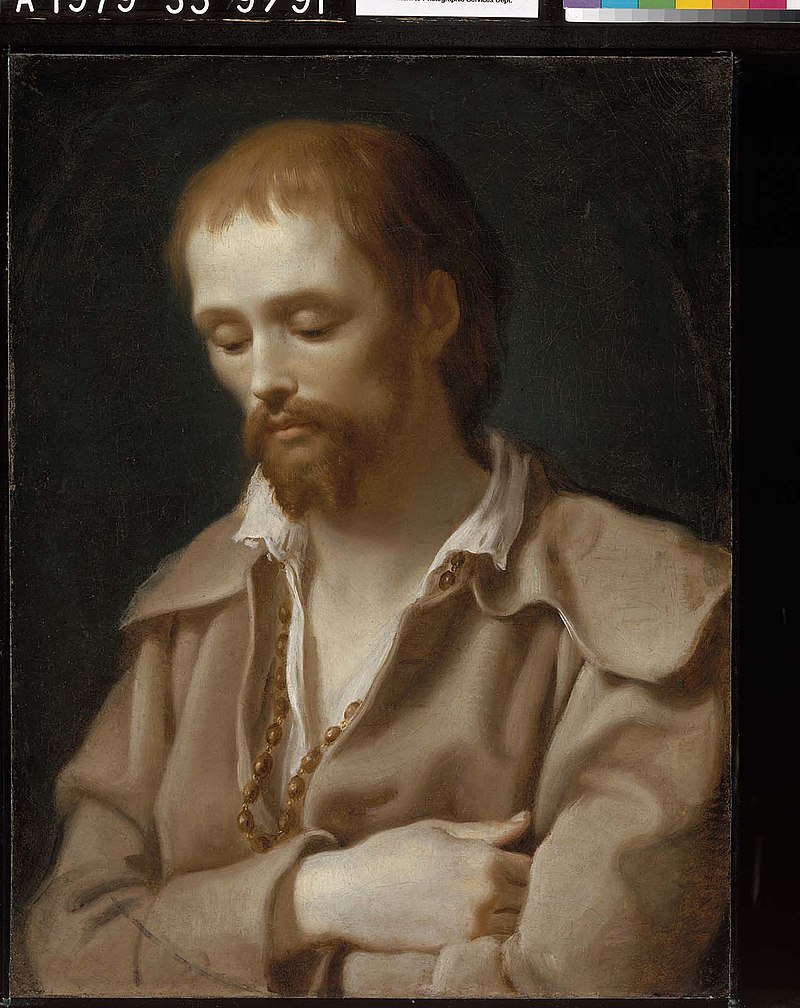
A grace-filled Holy Week to all our readers! As we await and prepare for the Resurrection about to dawn upon us, we might keep in mind two Benedicts: Pope Emeritus Benedict XVI, requiescat in pace, elected on this day in 2005; and today’s commemoration of the mystic pilgrim, Benedict Joseph Labre, who died on this[…]Continue reading→

My Name is Bernadette
April 16th is a propitious day, for besides the anniversary of Father de Valk’s death, who founded Catholic Insight in its print form decades ago, and the commemoration of the ‘two Benedicts’, mentioned in accompanying posts, today we also recall Saint Bernadette Soubirous, the young visionary to whom the Virgin Mary appeared numerous times at[…]Continue reading→
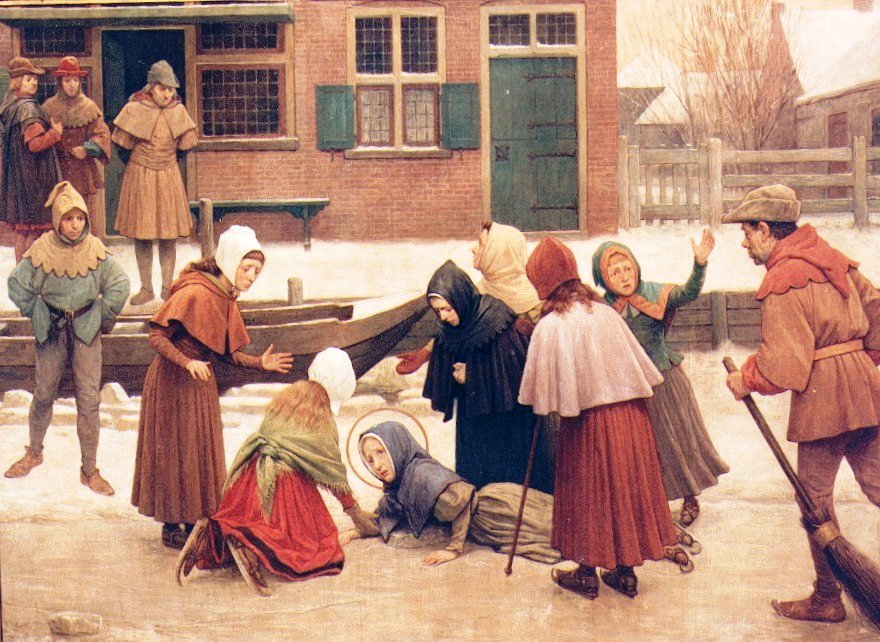
Saint Lydwina of Schiedam and Suffering Joyfully
Saint Lydwina of Schiedam (1380 – 1433) was one of the countless and glorious ‘victim souls’ in the history of the Church, those whose lives are filled with suffering, often of an unimaginable intensity, but who suffer joyfully. She was a fifteen-year old Dutch girl, out skating one day, when she fell and broke one[…]Continue reading→
The Glorious Martyrdoms of Martin and Maximus
As we enter into Eastertide, we recall on this 13th of April Pope Saint Martin I (+655), one of the noblest, if most tragic, of the successors of Saint Peter. Born in Umbria, Italy, he was of noble lineage, with great intelligence combined with charity and love of the poor and the Church. While still[…]Continue reading→
Canonizing Sister Faustina and Divine Mercy
HOMILY OF THE HOLY FATHER MASS IN ST PETER’S SQUARE FOR THE CANONIZATION OF SR MARY FAUSTINA KOWALSKA Sunday, 30 April 2000 1. “Confitemini Domino quoniam bonus, quoniam in saeculum misericordia eius”; “Give thanks to the Lord for he is good; his steadfast love endures for ever” (Ps 118: 1). So the Church sings on the Octave of[…]Continue reading→

Saint Stanislaus of Szczepanów
We celebrate Saint Stanislaus today (+ April 11, 1079), in light of this Easter Octave, a bishop and martyr who accepted the episcopacy only at the direct order of Pope Alexander II. He proved a wise and courageous leader of his flock, put to death by his own king, Boleslaus, for rebuking the monarch’s ‘immoral[…]Continue reading→
Saint Gemma Galgani
On this April 11th, in 1903 – the same year that the Italian Guiseppe Sarto was elected Pope later that summer as Pius X – a lovely, young Italian woman died, by the name of Gemma Galgani. She lived a brief life of 24 years, as did a number of other young saints, including Pier[…]Continue reading→
An Ideological and Improper Translation
I noticed something odd with the psalm reading at Mass the other day. Our bishops’ conference here in Canada has decreed that the Mass in English – Novus Ordo – use the ‘NRSV’, the ‘New Revised Standard Version’, an ‘updated’ translation of the original RSV, first published in 1952. This ‘new translation’ has the tendency[…]Continue reading→