
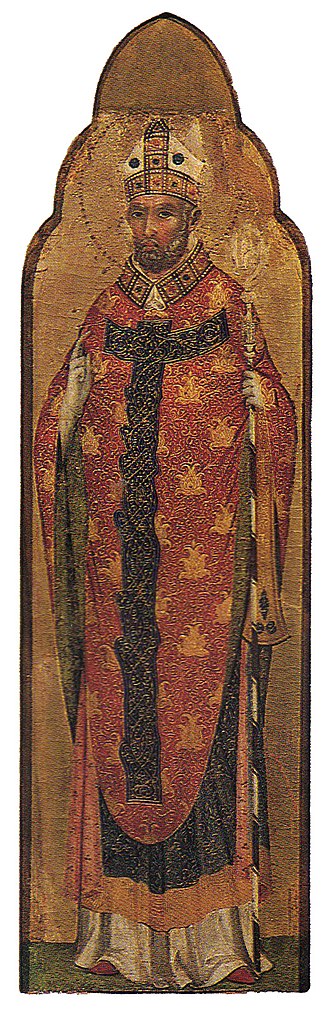
May God Raise Up More Bishops Like Ambrose
The great bishop and doctor Ambrose (340 – 397) is known for many things, not least his role in the conversion of the great Saint Augustine. When he was born, a swarm of bees covered his mouth and face – quite a traumatic event, one might think – but Ambrose’s father said to leave them alone, for they signified that his son would be gifted in some way with greatness.
Like his protégé Augustine (both of them later declared the first doctors of the Church) he spent the first portion of his adult life as a layman, and not even yet baptized. It was in 374, as Governor of Aemilia-Liguria in northern Italy, that he went to a church to quell a conflict between Arians and Catholics over the choice of the next bishop. As the cultured and educated Ambrose, well trained in law and rhetoric, began to speak so persuasively, the restive crowd began to chant in unison, ‘Ambrose for bishop!’ There is nothing wrong with a democratic choice for our bishops, or by popular acclaim, so long as the Holy Father approves and ratifies the choice. In fact, such a method may go some way to improving our episcopal candidates, for the sensus fidelium may have more sense than whatever process is now used. I’m sure many readers have in their mind a vigorous, orthodox priest who would make a fine bishop, but never will in our current milieu. Certainly, it worked well in Ambrose’s case, who went on to become one of the greatest pastors in the history of Christendom, known not least for his composition of chants and hymns – not specifically the task of a bishop, but a fitting accessory – more beautiful and ornate than the one which summoned him to office.
Still technically a pagan, but with Christian sensibilities, Ambrose fled into hiding from the mob – even back then, few wanted to be a bishop – but eventually relented with the emperor’s urging, accepting in quick succession baptism, confirmation and ordination, after which, as bishop, he adopted an ascetic lifestyle of prayer, study, writing and pastoral work – his whole life was dedicated to Christ and His Church:
Let your door stand open to receive Him, unlock your soul to Him, offer Him a welcome in your mind, and then you will see the riches of simplicity, the treasures of peace, the joy of grace. Throw wide the gate of your heart, stand before the sun of the everlasting light.
Ambrose was a staunch foe of the aforementioned heresy of Arianism, which claimed that Christ was not truly God, just an exalted creature, sort of an embodied angel. This was both a Christological, as well as a political heresy, lingering long after its condemnation at Nicaea in 325. As someone once reflected, Arianism was a fitting foil for power-hungry emperors and potentates, who could ‘reduce’ Christ to a non-divine creature, who could then be manipulated to their own purposes, and so take all the authority for themselves. For if Christ is truly the Omnipotent God, the Pantocrator, to Whom every knee must bow, then the emperor’s own power is rather limited . The insidious implicit influence of Arianism is still with us, as our world leaders shrug their shoulders, and turn away from Christ and His message; at least, for now…
Ambrose stood up to the emperors of his day, mired in Arianism, drawing clear lines in the sand for the limits of the State’s authority. But it was not just heretics. When the orthodox emperor Theodosius – who made Catholicism the official religion of the empire in 381 with his Edict of Thessalonica – allowed his troops to massacre the rioting civilians of that city a decade later, in 390 (they had taken refuge in the Hippodrome), Ambrose wrote a forthright, yet charitable, letter to the emperor, stating that he would be forbidden Communion until he repented, even blocking the doors of the cathedral in Milan. And, guess what? Theodosius realized his sin, and the firm action of his bishop likely saved his soul.
What might we give for such an Ambrose in Canada, who would confront our wayward politicians! Or America, Britain, Ireland…Anywhere! As the Collect for his Mass prays:
Ambrose is also famous for consoling the distraught Monica, weeping over her prodigal son, saying the child of such tears could not possibly be in lost in the sight of the good God. Sure enough, it was Ambrose, according to tradition, who eventually baptized Augustine, after the restless African spiritual wanderer finally went with his mother to Milan to meet the famous bishop. They found him poring over a text, amazed that Ambrose read ‘without moving his lips’. But it was Ambrose’s explanation of the Faith that finally tipped Augustine’s stubborn will, to accept the grace of God. What Ambrose said of the love of God may be said of any human love: Love is like a shadow, one can only catch it by falling into it.
And where would we be without the Doctor of Grace, his works far surpassing what any one man might consume, never mind produce? Ambrose and Augustine are forever linked in history, rejoicing together, with Monica and all the myriad of heavenly saints and angels, now in heaven.
But it is Ambrose we celebrate today, one of the great Church Fathers, whose inimitable works gained him a place amongst the Doctors. He wrote on almost every subject then known, and, hence, is a very fitting patron for the liberal arts. Amongst his many spiritual treatises, his devotion to Our Lady makes him a fitting saint on this vigil of her Immaculate Conception. Ambrose was also a poet and hymnographer, credited with introducing hymns into the Liturgy, and we will leave you with the words and chant of his glorious Advent reflection, Veni redemptor gentium, used in the Office of Readings in that final novena before Christmas, from December 17th to the night before the great feast:
Veni, redemptor gentium;
ostende partum Virginis;
miretur omne saeculum:
talis decet partus Deum.
Come, Redeemer of the nations;
show forth the Virgin birth;
let every age marvel:
such a birth befits God.
Amen.
Carney’s Amoral Majority
After five defections – euphemistically described as ‘crossing the floor’ – and three by-elections, Mark Carney and his Liberals how have their coveted majority. One wonders what bowls of pottage were offered in back-room deals. In the archaic monarchical system that is the Dominion of Canada, this majority allows the newly-minted Prime Minister to rule[…]Continue reading→

Saint Kateri , Canada’s Protectress
This was the title given to Saint Kateri Tekakwitha, by Pope Benedict XVI, when he canonized her on October 28th, 2012, along with six others, in Saint Peter’ Square (she had been beatified by Pope John Paul II back in 1980). With Saint Joseph as our protector, along with the Canadian martyrs, we seem to[…]Continue reading→

Remembering Father Alphonse de Valk
(Today marks the sixth anniversary of the death of Father Alphonse de Valk, C.S.B., a faithful, courageous and indefatigable Basilian priest, pro-life-and-family apostle, and the founder of Catholic Insight magazine. Here is what we wrote those on his entering into eternity five years ago, as we continue to remember him in our prayers and thoughts)[…]Continue reading→
A Tale of Two Benedicts
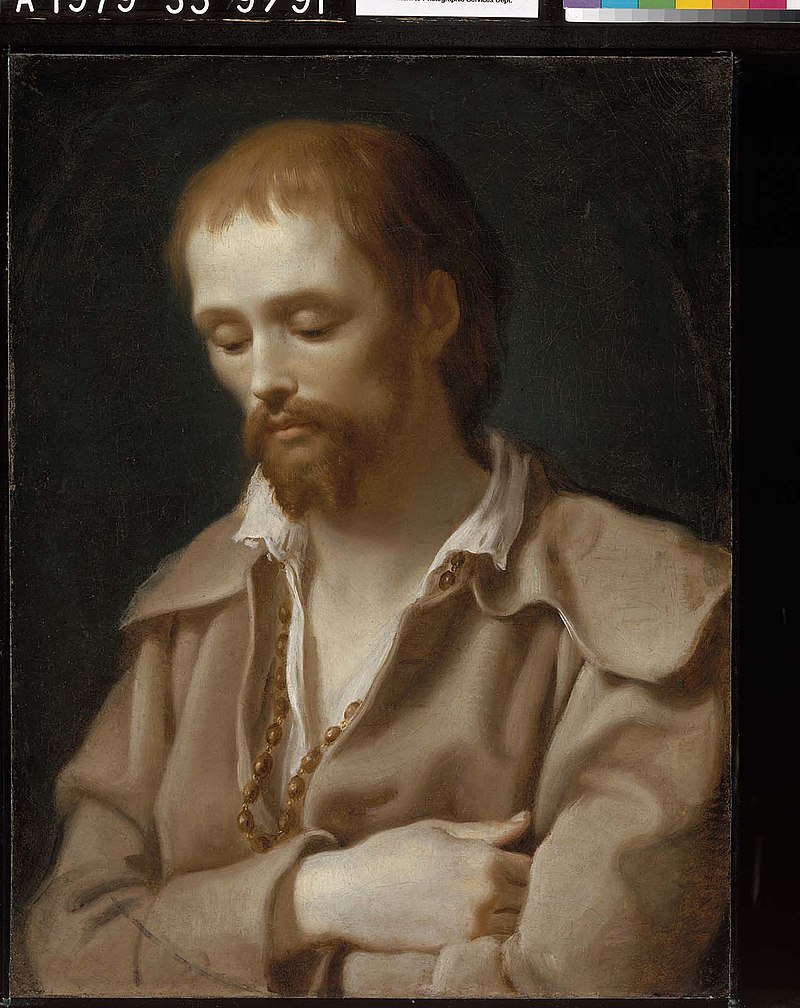
A grace-filled Holy Week to all our readers! As we await and prepare for the Resurrection about to dawn upon us, we might keep in mind two Benedicts: Pope Emeritus Benedict XVI, requiescat in pace, elected on this day in 2005; and today’s commemoration of the mystic pilgrim, Benedict Joseph Labre, who died on this[…]Continue reading→

My Name is Bernadette
April 16th is a propitious day, for besides the anniversary of Father de Valk’s death, who founded Catholic Insight in its print form decades ago, and the commemoration of the ‘two Benedicts’, mentioned in accompanying posts, today we also recall Saint Bernadette Soubirous, the young visionary to whom the Virgin Mary appeared numerous times at[…]Continue reading→
Saint Lydwina of Schiedam and Suffering Joyfully
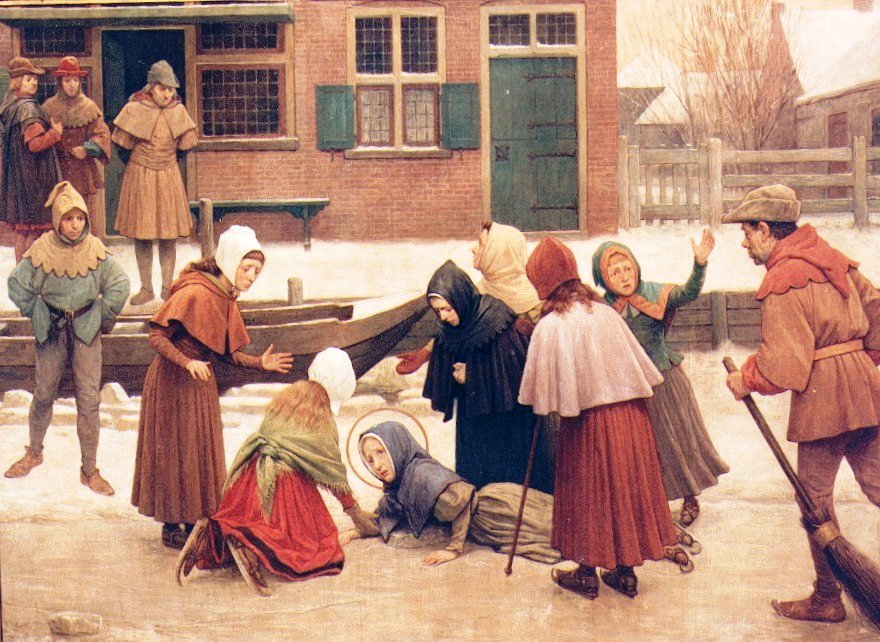
Saint Lydwina of Schiedam (1380 – 1433) was one of the countless and glorious ‘victim souls’ in the history of the Church, those whose lives are filled with suffering, often of an unimaginable intensity, but who suffer joyfully. She was a fifteen-year old Dutch girl, out skating one day, when she fell and broke one[…]Continue reading→
The Glorious Martyrdoms of Martin and Maximus
As we enter into Eastertide, we recall on this 13th of April Pope Saint Martin I (+655), one of the noblest, if most tragic, of the successors of Saint Peter. Born in Umbria, Italy, he was of noble lineage, with great intelligence combined with charity and love of the poor and the Church. While still[…]Continue reading→
Canonizing Sister Faustina and Divine Mercy
HOMILY OF THE HOLY FATHER MASS IN ST PETER’S SQUARE FOR THE CANONIZATION OF SR MARY FAUSTINA KOWALSKA Sunday, 30 April 2000 1. “Confitemini Domino quoniam bonus, quoniam in saeculum misericordia eius”; “Give thanks to the Lord for he is good; his steadfast love endures for ever” (Ps 118: 1). So the Church sings on the Octave of[…]Continue reading→

Divine Mercy Sunday – An Echo of Every Mass
Reach out your hand and put it in my side. Do not doubt but believe’… ‘My Lord and my God!’ (Jn. 20:18)). Today is Divine Mercy Sunday, and as we celebrate the end of the Easter Octave, we contemplate the wounded side of our Saviour, the Church’s source of life. On Good Friday in the[…]Continue reading→
Saint Gemma Galgani
On this April 11th, in 1903 – the same year that the Italian Guiseppe Sarto was elected Pope later that summer as Pius X – a lovely, young Italian woman died, by the name of Gemma Galgani. She lived a brief life of 24 years, as did a number of other young saints, including Pier[…]Continue reading→