
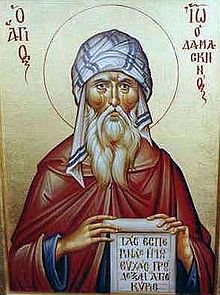
John of Damascus, Defender of Icons and the Last of the Eastern Fathers
Was there ever a golden age of Catholic and Islamic relations? The evidence for such is slim, with the two religions seemingly incompatible and irreconcilable – after all, they both want to convert everyone to their respective religion, and one believes that Christ is Lord, Redeemer and Saviour, God from God and Light from Light, while the other denies this with vehemence, which Saint John says is a sign of the antichrist. One, of course, is true, the other, is not.
But even so, individual Christians and Muslims may reach some sort of local truce, and John of Damascus seems to have achieved some sort of modus vivendi. Still, like all Christians in predominantly Islamic lands, John was a infidel dhimmi, but valued for his learning and competence, being one of those enviable polymaths – as were so many of the Fathers – who wrote on Scripture, music, mathematics, law and philosophy. Hence, he proved quite useful, as are all those immersed in what would be called the ‘liberal arts’. Little wonder he was kept unmolested, even praised and admired, for civil service, employed as a servant – a clerk, of sorts – for the Islamic Caliph in Damascus, then quite firmly in Muslim hands. The whole Arabic crescent had been conquered in the previous century not long after Muhammad’s death (632), as part of Islam’s drive for world-wide hegemony and submission.
John had no great love of Islam, and was ironically one of the first to write a systematic treatise against the Qur’an, calling the founder of Islam a ‘false prophet’ and a veritable ‘Antichrist’= see above. I wonder how he got away with it – perhaps they couldn’t read his Greek. Good thing John lived centuries before ‘Islamophobic’ laws, but he likely would have ignored them, as any right thinking Father, or son, of the Church ought.
John of Damascus is considered by many to be the last of the eastern Church Fathers (Saint Bernard of Clairvaux, +1153, considered the last of the west). Soon after his death, the Church at Constantinople fell into schism under Photius (+893), culminating two centuries later with the mutual excommunications of 1054, with East and West going their separate ways.
With all the Fathers, John of Damascus witnesses to golden patristic age of theological riches, our primary witness to the great Tradition handed on from Christ, by way of the Apostles – all that the Church lives and believes, including the Liturgy, the sacraments, prayer, moral teaching, all the intricacies and consistencies of our great Faith,
In other words, contra the later Luther, sola Scriptura, we need both Scripture and our great Tradition. For even the canon of Scripture is given us by Christ, and as Augustine admitted that I would not believe in the Gospel, had not the authority of the Catholic Church already moved me.
And speaking of being moved by the grace of the good God, after his time in public service, John felt called ‘higher’, and was consecrated a monk at Mar Saba monastery near Jerusalem, which had been founded in 484 by Sabas the Sanctified, a hermit who ended up founding several communities. In his own day, Sabas was a great foe of the heresy of monphysitism, that Christ had only one nature, divine, which ‘swallowed up’ the human nature, thus voiding the reality of the Incarnation. Christ, ergo, only seemed to be human. The fourth Council at Chalcedon in 451 had proclaimed dogmatically and for all time that Christ, in His one divine Personhood, assumed a true human nature. But heresies there must be, and they do linger.
Three centuries later, in the fractious mid-700’s, Saint John from the same monastery would be battling another heresy, this time iconoclasm, that any images of Christ, His mother or the saints, and any veneration thereof, was idolatrous and heretical, and hence such icons must be ‘smashed’, broken to pieces, cast to oblivion, chucked into swamps, even if they be, as they often were, the most beautiful and ancient works of art. We have had iconoclastic outbursts recurring in the post-‘Reformation’ era, with Oliver Cromwell and his Roundheads destroying much of the heritage of merrie England. And again post-Vatican II, even if the conciliar documents called for retaining our more traditional art and architecture, we had high altars, statuary, paintings, missals, prayer books, piled high in dumps. But to fanatics of the zeitgeist, the ‘spirit of VC II’, the written word, law, matter not, all part of what Benedict called the ‘hermeneutic of rupture’.
In our own day, we have seen tragic iconoclasm with the resurgence of radical Islam; wherever it goes, art, music, architecture, blown up and disintegrated. The scarring influence of the iconclastic heresy, common to a number of religions, is enough to make one weep over what has been lost in our liturgical and archaeological landscape – and our musical one as well.
Iconoclasm may have had its original roots in Islamic influence on the Byzantine court, and the emperor, Leo III the Isaurian (+741), was all for it, in ways that are otherwise difficult to explain, for he considered himself a Christian, and a zealous one at that; then again, so did the Calvinists, and, we may presume, the ‘liturgical experts’ in the heady seventies, when just about everything they could get their hands on was levelled. There were many martyrs in Leo’s persecution, as there are today, in different ways.
John’s masterful treatises on the value, but even the necessity of images for the true and proper worship of God are amongst the finest in our Tradition, and for which he is perhaps best known, being declared in 1890 one of the 36 Doctors of the Church by Pope Leo XIII. His writings were quoted almost verbatim at the Second Council of Nicaea in 787, which condemned iconoclasm in no uncertain terms, teaching, semper et ubique, that images are good for the soul, a true ‘media’ from God the Father, through Christ, His true and original Image, to us. By looking at Christ, and His saints, we see who we are truly meant to be.
I will leave you for now with words of John Damascene quoted in the Catechism, fitting for the beginning of Advent, wherein we await the very Incarnation of the Almighty:
Previously God, who has neither a body nor a face, absolutely could not be represented by an image. But now that he has made himself visible in the flesh and has lived with men, I can make an image of what I have seen of God…and contemplate the glory of the Lord, his face unveiled.
Saint of Damascus, ora pro nobis! +
Carney’s Amoral Majority
After five defections – euphemistically described as ‘crossing the floor’ – and three by-elections, Mark Carney and his Liberals how have their coveted majority. One wonders what bowls of pottage were offered in back-room deals. In the archaic monarchical system that is the Dominion of Canada, this majority allows the newly-minted Prime Minister to rule[…]Continue reading→

Saint Kateri , Canada’s Protectress
This was the title given to Saint Kateri Tekakwitha, by Pope Benedict XVI, when he canonized her on October 28th, 2012, along with six others, in Saint Peter’ Square (she had been beatified by Pope John Paul II back in 1980). With Saint Joseph as our protector, along with the Canadian martyrs, we seem to[…]Continue reading→
A Tale of Two Benedicts
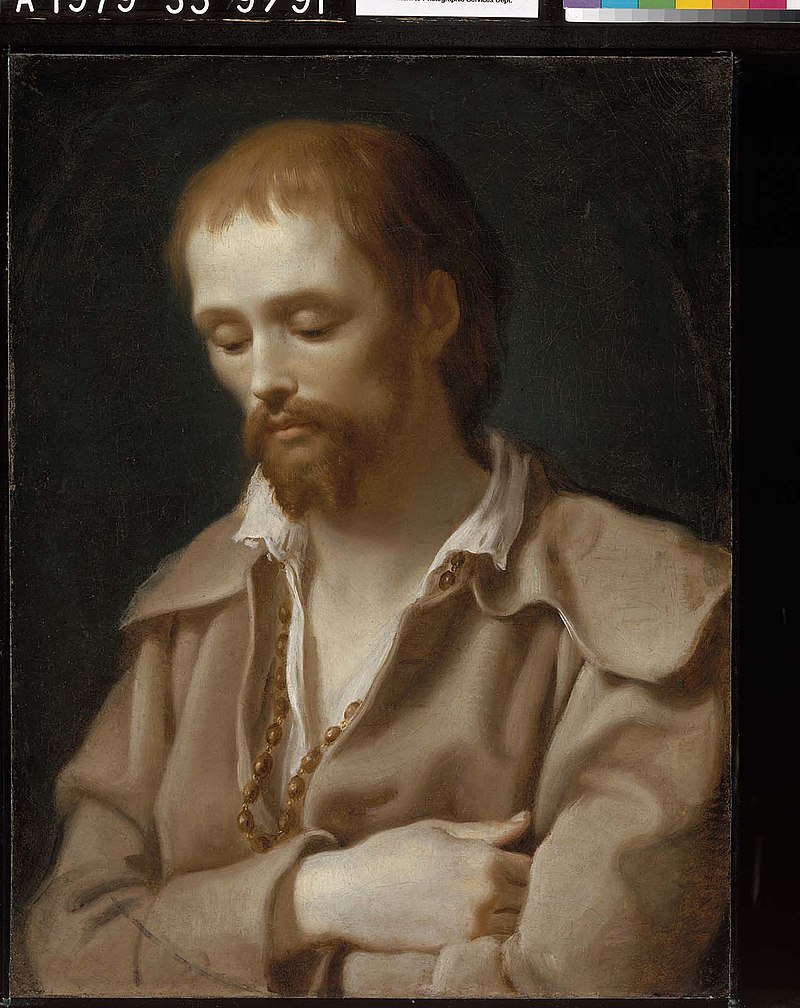
A grace-filled Holy Week to all our readers! As we await and prepare for the Resurrection about to dawn upon us, we might keep in mind two Benedicts: Pope Emeritus Benedict XVI, requiescat in pace, elected on this day in 2005; and today’s commemoration of the mystic pilgrim, Benedict Joseph Labre, who died on this[…]Continue reading→

My Name is Bernadette
April 16th is a propitious day, for besides the anniversary of Father de Valk’s death, who founded Catholic Insight in its print form decades ago, and the commemoration of the ‘two Benedicts’, mentioned in accompanying posts, today we also recall Saint Bernadette Soubirous, the young visionary to whom the Virgin Mary appeared numerous times at[…]Continue reading→
Saint Lydwina of Schiedam and Suffering Joyfully
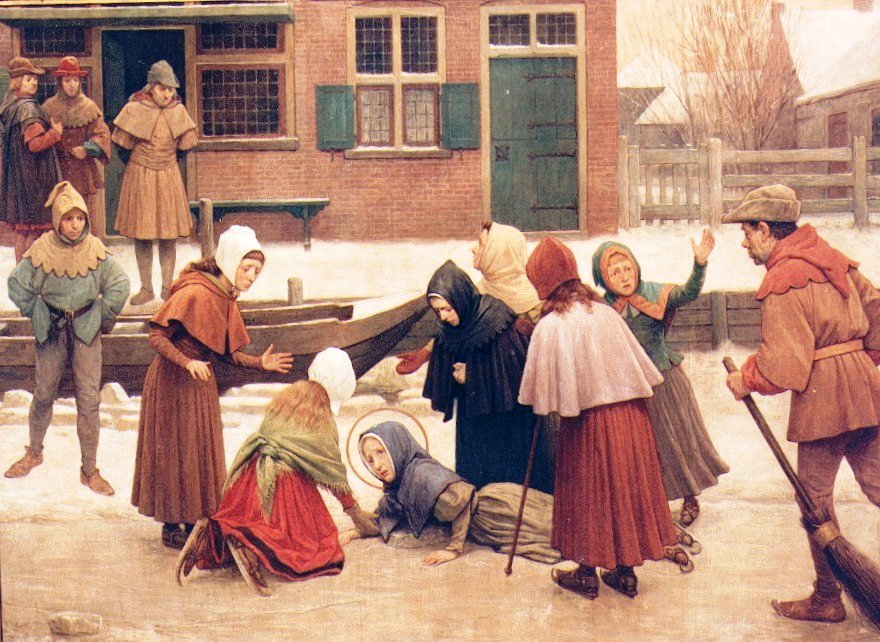
Saint Lydwina of Schiedam (1380 – 1433) was one of the countless and glorious ‘victim souls’ in the history of the Church, those whose lives are filled with suffering, often of an unimaginable intensity, but who suffer joyfully. She was a fifteen-year old Dutch girl, out skating one day, when she fell and broke one[…]Continue reading→
The Glorious Martyrdoms of Martin and Maximus
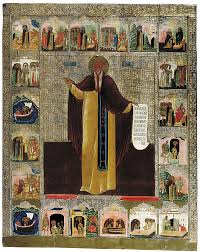
As we enter into Eastertide, we recall on this 13th of April Pope Saint Martin I (+655), one of the noblest, if most tragic, of the successors of Saint Peter. Born in Umbria, Italy, he was of noble lineage, with great intelligence combined with charity and love of the poor and the Church. While still[…]Continue reading→
Canonizing Sister Faustina and Divine Mercy
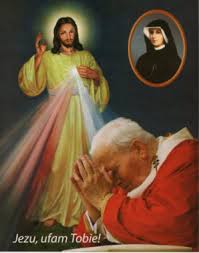
HOMILY OF THE HOLY FATHER MASS IN ST PETER’S SQUARE FOR THE CANONIZATION OF SR MARY FAUSTINA KOWALSKA Sunday, 30 April 2000 1. “Confitemini Domino quoniam bonus, quoniam in saeculum misericordia eius”; “Give thanks to the Lord for he is good; his steadfast love endures for ever” (Ps 118: 1). So the Church sings on the Octave of[…]Continue reading→

Saint Stanislaus of Szczepanów
We celebrate Saint Stanislaus today (+ April 11, 1079), in light of this Easter Octave, a bishop and martyr who accepted the episcopacy only at the direct order of Pope Alexander II. He proved a wise and courageous leader of his flock, put to death by his own king, Boleslaus, for rebuking the monarch’s ‘immoral[…]Continue reading→
Saint Gemma Galgani
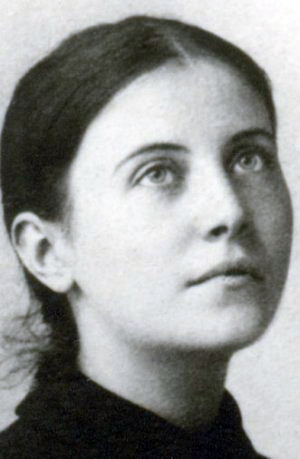
On this April 11th, in 1903 – the same year that the Italian Guiseppe Sarto was elected Pope later that summer as Pius X – a lovely, young Italian woman died, by the name of Gemma Galgani. She lived a brief life of 24 years, as did a number of other young saints, including Pier[…]Continue reading→
An Ideological and Improper Translation
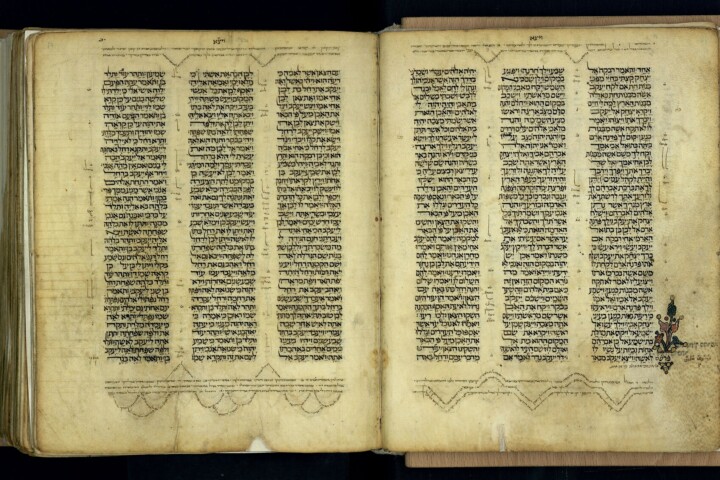
I noticed something odd with the psalm reading at Mass the other day. Our bishops’ conference here in Canada has decreed that the Mass in English – Novus Ordo – use the ‘NRSV’, the ‘New Revised Standard Version’, an ‘updated’ translation of the original RSV, first published in 1952. This ‘new translation’ has the tendency[…]Continue reading→