
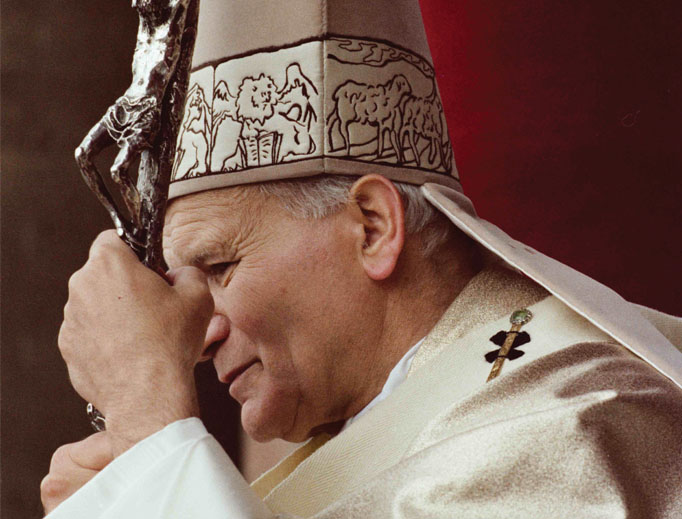
Saint John Paul II at 40
Today we commemorate Pope Saint John Paul II, for this day chosen as his ‘feast’ marks the 40 anniversary of his coronation as the 264th successor of Saint Peter as the Vicar of Christ, and the tender age of 58 (tender for a Pope); he would go on to have the second-longest serving Pope in history after Pope Blessed Pius IX, or third, if we include Saint Peter’s own reign as the longest.
The pontificate of John Paul was indeed ‘great’ in so many senses of that term, spiritually, intellectually, pastorally and, in one of his own favorite terms, personally. For what really makes someone significant is how he stands before God, as a ‘person’ made and perfected in the image of God’s own Personhood, for that a man is and nothing more, as one saint put it. This holds whether that person is world-famous, as this Pope was, his handsome visage posted everywhere; or unknown to the world, as so many contemplatives, monks, nuns, have been.
Karol Wojtyla originally wanted to follow the latter path, to offer himself as a Carmelite, driven by his love of prayer and solitude, to be ‘alone with God’, but his spiritual director advised the diocesan priesthood, and we have all been the richer for that decision young Karol made, to give himself completely to God in pastoral and spiritual service, right up until the end, ravaged by Parkinson’s, where he offered his own weakness, pain and debility in what may have been his most powerful personal testament.
I will just offer today, in light of the current Synod, an excerpt from Pope John Paul’s 1984 powerful Letter to Youth, which I hope has been read by all the episcopal and advisory participants, and would provide invaluable help in their own discernment on what young people ‘need’ in these troublous times. This bit is on the role of conscience, emphasized in a number of the Popes works, for it is the daily decisions of conscience that shape who we will become, hopefully for the better, and the role of said conscience in the time of youth is indispensable and unrepeatable. As a pastor and spiritual director, Father Wojtyla made demands upon the young people whom he advised, for only he who makes such demands upon himself can grow in holiness, be magnanimous, or ‘great in soul’, and become the person, the saint, that God intends each of us to be. Any other path is nothing less than tragic, and God wills the good, nay, the best, for us all.
Dear young friends! The response which Jesus gives to his questioner in the Gospel is addressed to each one of you. Christ asks you about the state of your moral awareness, and at the same time he questions you about the state of your conscience. This is a key question for man: it is the fundamental question of your youth, one that concerns the whole plan of life which must be formed precisely in youth. Its value is the one most closely connected with the relationship of each of you with moral good and evil. The value of this plan depends in an essential way on the authenticity and rectitude of your conscience. It also depends on its sensitivity.
So we find ourselves here at a crucial moment, when at every step time and eternity meet at a level which is proper to man. It is the level of the conscience, the level of moral values: the conscience is the most important dimension of time and history. For history is written not only by the events which in a certain sense happen “from outside”; it is written first of all “from within”: it is the history of human consciences, of moral victories and defeats. Here too the essential greatness of man finds its foundation: his authentically human dignity. This is that interior treasure whereby man continually goes beyond himself in the direction of eternity. If it is true that “it is established that people would die only once”, it is also true that man carries with him the treasure of conscience, the deposit of good and evil, across the frontier of death, in order that, in the sight of him who is holiness itself, he may find the ultimate and definitive truth about his whole life: “after that comes judgment”.(37)
This is just what happens in the conscience: in the interior truth of our acts, in a certain sense, there is constantly present the dimension of eternal life. And simultaneously the same conscience, through moral values, imprints the most expressive seal upon the life of the generations, upon the history and culture of human environments, societies, nations and of all humanity.
In this field how much depends on each one of you!
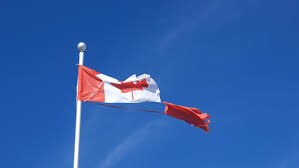
Carney’s Amoral Majority
After five defections – euphemistically described as ‘crossing the floor’ – and three by-elections, Mark Carney and his Liberals how have their coveted majority. One wonders what bowls of pottage were offered in back-room deals. In the archaic monarchical system that is the Dominion of Canada, this majority allows the newly-minted Prime Minister to rule[…]Continue reading→

Saint Kateri , Canada’s Protectress
This was the title given to Saint Kateri Tekakwitha, by Pope Benedict XVI, when he canonized her on October 28th, 2012, along with six others, in Saint Peter’ Square (she had been beatified by Pope John Paul II back in 1980). With Saint Joseph as our protector, along with the Canadian martyrs, we seem to[…]Continue reading→

A Tale of Two Benedicts
A grace-filled Holy Week to all our readers! As we await and prepare for the Resurrection about to dawn upon us, we might keep in mind two Benedicts: Pope Emeritus Benedict XVI, requiescat in pace, elected on this day in 2005; and today’s commemoration of the mystic pilgrim, Benedict Joseph Labre, who died on this[…]Continue reading→

My Name is Bernadette
April 16th is a propitious day, for besides the anniversary of Father de Valk’s death, who founded Catholic Insight in its print form decades ago, and the commemoration of the ‘two Benedicts’, mentioned in accompanying posts, today we also recall Saint Bernadette Soubirous, the young visionary to whom the Virgin Mary appeared numerous times at[…]Continue reading→

Saint Lydwina of Schiedam and Suffering Joyfully
Saint Lydwina of Schiedam (1380 – 1433) was one of the countless and glorious ‘victim souls’ in the history of the Church, those whose lives are filled with suffering, often of an unimaginable intensity, but who suffer joyfully. She was a fifteen-year old Dutch girl, out skating one day, when she fell and broke one[…]Continue reading→

The Glorious Martyrdoms of Martin and Maximus
As we enter into Eastertide, we recall on this 13th of April Pope Saint Martin I (+655), one of the noblest, if most tragic, of the successors of Saint Peter. Born in Umbria, Italy, he was of noble lineage, with great intelligence combined with charity and love of the poor and the Church. While still[…]Continue reading→

Saint Stanislaus of Szczepanów
We celebrate Saint Stanislaus today (+ April 11, 1079), in light of this Easter Octave, a bishop and martyr who accepted the episcopacy only at the direct order of Pope Alexander II. He proved a wise and courageous leader of his flock, put to death by his own king, Boleslaus, for rebuking the monarch’s ‘immoral[…]Continue reading→
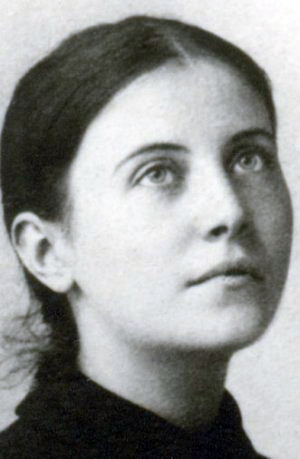
Saint Gemma Galgani
On this April 11th, in 1903 – the same year that the Italian Guiseppe Sarto was elected Pope later that summer as Pius X – a lovely, young Italian woman died, by the name of Gemma Galgani. She lived a brief life of 24 years, as did a number of other young saints, including Pier[…]Continue reading→
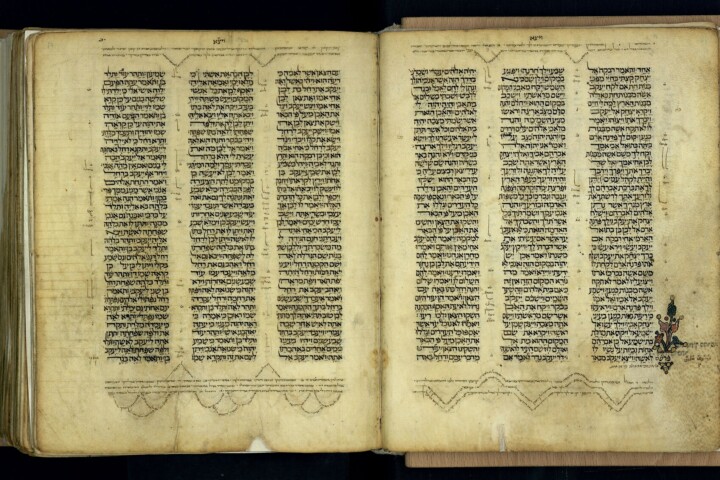
An Ideological and Improper Translation
I noticed something odd with the psalm reading at Mass the other day. Our bishops’ conference here in Canada has decreed that the Mass in English – Novus Ordo – use the ‘NRSV’, the ‘New Revised Standard Version’, an ‘updated’ translation of the original RSV, first published in 1952. This ‘new translation’ has the tendency[…]Continue reading→
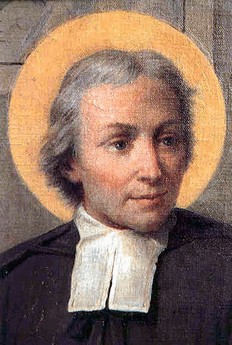
Saint Jean-Baptiste de la Salle: A Teacher for Teachers
Jean-Baptiste de la Salle (1651 – 1719), a French nobleman, ordained a priest, founded the first order in the Church’s history entirely without priests, and this came about almost by accident. I say ‘almost’, for, of course, there are no accidents with God. Destined for ordination from an early age, Jean-Baptiste never looked back, even[…]Continue reading→