
The Fourth of July: Pier Giorgio and Elizabeth of Portugal
A joyous Independence Day to all our American readers. There are any number of factions developing in the once-United States, but all can be traced back to those who accept the Christian principles that hold the republic together – in God we trust – from those who have rejected them, and are more or less Nietzschean nihilists. We can only be independent if we are free, and only free if we live in the truth which ‘sets us free’. As the Didache, the early teaching of the Apostles, echoing Moses, states clearly: there is a way of life, and a way of death, and a great divide exists between the two, as we are tragically discovering. Choose life, then, that you and your descendants may live. Here’s hoping and praying the way of life wins out in the hearts of many.
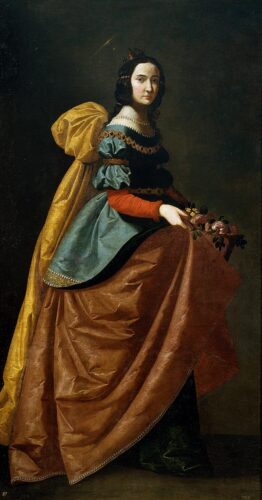
On that note, we have this July the 4th at least two saints, we should mention: Elizabeth of Portugal (+1336), queen, wife, mother, widow, peacemaker, third order Franciscan who, after her fractious husband’s death (whom she sanctified, as much as his coarser soul could take, it seems), retired to an hidden life of prayer and penitence in a convent, feeding the poor and tending the sick. She twice placed herself physically between her warring family, specifically, her husband’s forces against those of his sons, and the second time was too much strain, bringing on a moribund fever. Elizabeth was immediately hailed as a saint, and canonized by Pope Urban VIII in 1625, the same Pontiff who would condemn Galileo seven or so years later, but who also sent the Jesuit missionaries to New France, later named, of course, Canada – eight of them future martyrs, including Jean de Brebeuf, as well as Antoine Daniel, who was put to death on this day. His courage echoes through the ages, as he stood before his church near what is now Mount Saint Louis, confronting the attacking Iroquois in his stole and surplice, so that his beloved flock could escape. His body was pierced with arrows, then thrown into the burning church. A priest and I visited the site years ago, now in a farmer’s field. He said that school buses used to visit regularly on pilgrimage, but no more. May we remember his example, and beg his intercession for Canada.
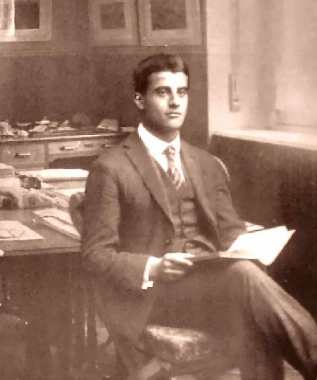
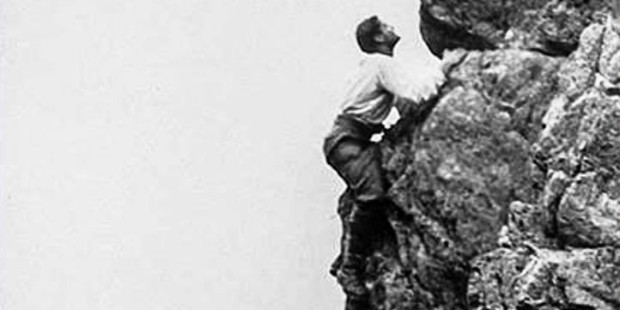
A saint perhaps more known to our readers, especially beyond Canada, is Pier Giorgio Frassati (+1925), a handsome, young, athletic Italian from an aristocratic family, who died at the age of 24 of poliomyelitis he contracted from his (mainly hidden) work with the poor, to whom he would carry food and necessities himself, making a detailed list of who they were and what they needed. Besides his charitable endeavours, Frassati’s talents were unbounded: An avid mountaineer and hiker, scaling some of Italy’s grandest peaks; he could sing, and cite long sections of Dante with ease. Although he danced well, he never liked it quite as much as he put on, but good male dancers are thin on the ground, and one may surmise that it was chivalry that motivated him in many such things. Although in love once, he thought his parents would not approve of the marriage, and relinquished his hopes, a sacrifice that cost him dearly, as he once confided to his sister.
His chastity, purity and simplicity; his good humour and indefatigable help of others, (which really was his greatest joy); his devotion to the faith, to the Holy Mass and Rosary; his imperturbable spirit; his love of Italy and all things Italian, of music and song and the outdoors, attracted many to him:
You ask me whether I am in good spirits. How could I not be so? As long as Faith gives me strength I will always be joyful. Sadness ought to be banished from Catholic souls… the purpose for which we have been created shows us the path; even if strewn with many thorns, it is not a sad path. It is joyful even in the face of sorrow.
I vaguely recall reading he confessed to not having a good singing voice, which, with a bit of what I hope is innocent schadenfreude, I was sort of glad to hear, that this gifted man did not have every charism under God’s sun. Pier Giorgio has become not just a patron of youth, but a very icon of how one’s first formative years may be well spent. As he exhorted his fellows:
With all the strength of my soul I urge you young people to approach the Communion table as often as you can. Feed on this bread of angels whence you will draw all the energy you need to fight inner battles. Because true happiness, dear friends, does not consist in the pleasures of the world or in earthly things, but in peace of conscience, which we have only if we are pure in heart and mind.
Like Saint Thérèse, Pier covered a lot of ground quickly, and God took his sanctified soul to heaven while young, so to leave us, perhaps, with a vivid picture and example of goodness and perfection in its integral and primordial form, of body and soul, an image, however distant, of what we were in the Garden; so we will be in heaven, but in a far more perfect way.
Pier was peaceful and resigned in his lingering torment from the polio, his once fit, muscular body soon reduced to a skeletal frame. He even peacefully accepted the denial of morphine by order of his mother – which she saw as unfitting – not realizing what agony her son was in.
His parents expected a few dignitaries and friends at his funeral; to their surprise, the streets thronged with thousands of the people of Turin, including all those he had helped secretly; truly, his name was proclaimed from the housetops. When Pier Giorgio’s body was exhumed in 1981, it was found to be incorrupt.
On May 20th, 1990, Pier Giorgio was beatified by Pope John Paul II, who in his own youth as Karol Wojtyla resembled the beatus in many ways. Perhaps they are climbing mountains together in heaven as I write, or at least will when their bodies are reunited with their souls at the end of time in that new heaven and new earth; I for one hope to join them one day, Deo volente, even if taking a bit longer time and a more circuitous route, alas, than the good Pier Giorgio.
Saint Elizabeth and Blessed Pier Giorgio, orate pro nobis!
Carney’s Amoral Majority
After five defections – euphemistically described as ‘crossing the floor’ – and three by-elections, Mark Carney and his Liberals how have their coveted majority. One wonders what bowls of pottage were offered in back-room deals. In the archaic monarchical system that is the Dominion of Canada, this majority allows the newly-minted Prime Minister to rule[…]Continue reading→

Saint Kateri , Canada’s Protectress
This was the title given to Saint Kateri Tekakwitha, by Pope Benedict XVI, when he canonized her on October 28th, 2012, along with six others, in Saint Peter’ Square (she had been beatified by Pope John Paul II back in 1980). With Saint Joseph as our protector, along with the Canadian martyrs, we seem to[…]Continue reading→
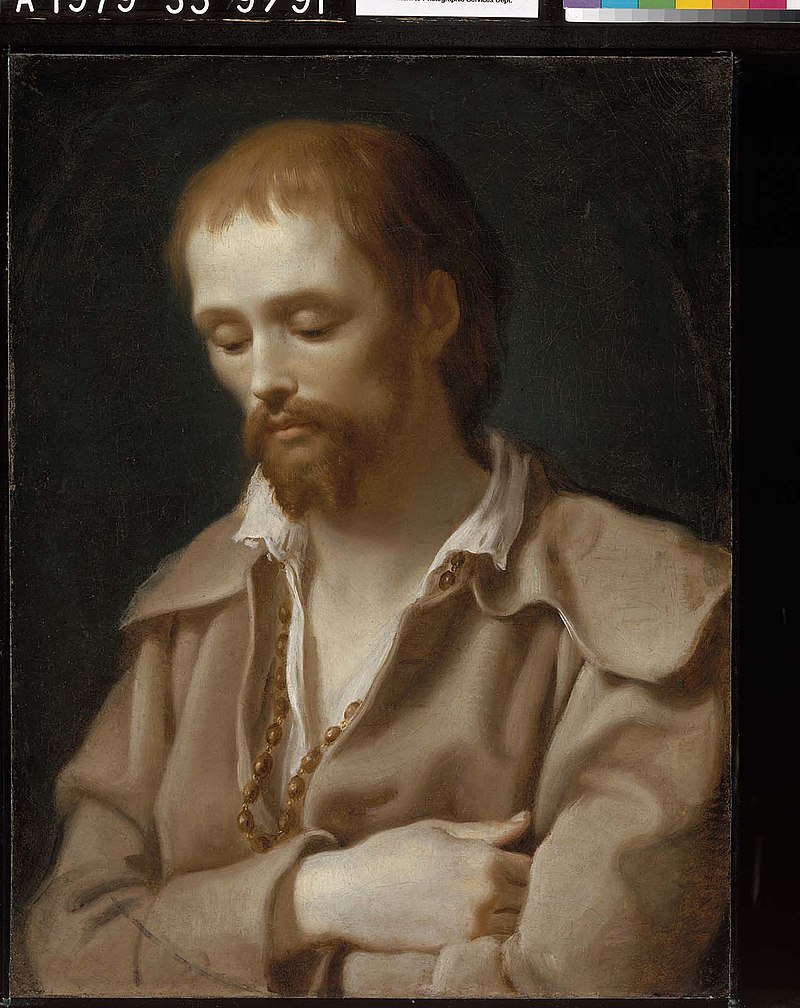
A Tale of Two Benedicts
A grace-filled Holy Week to all our readers! As we await and prepare for the Resurrection about to dawn upon us, we might keep in mind two Benedicts: Pope Emeritus Benedict XVI, requiescat in pace, elected on this day in 2005; and today’s commemoration of the mystic pilgrim, Benedict Joseph Labre, who died on this[…]Continue reading→

My Name is Bernadette
April 16th is a propitious day, for besides the anniversary of Father de Valk’s death, who founded Catholic Insight in its print form decades ago, and the commemoration of the ‘two Benedicts’, mentioned in accompanying posts, today we also recall Saint Bernadette Soubirous, the young visionary to whom the Virgin Mary appeared numerous times at[…]Continue reading→
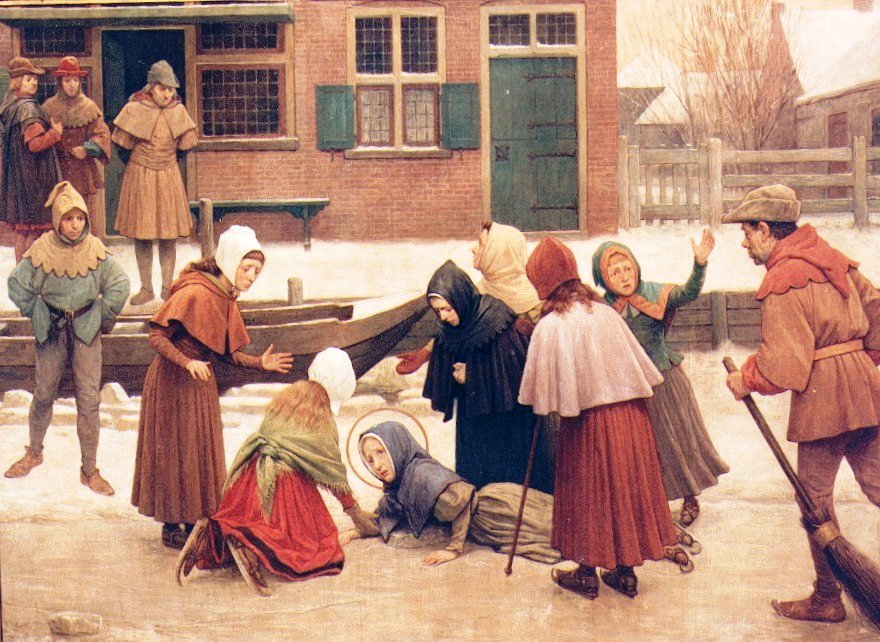
Saint Lydwina of Schiedam and Suffering Joyfully
Saint Lydwina of Schiedam (1380 – 1433) was one of the countless and glorious ‘victim souls’ in the history of the Church, those whose lives are filled with suffering, often of an unimaginable intensity, but who suffer joyfully. She was a fifteen-year old Dutch girl, out skating one day, when she fell and broke one[…]Continue reading→
The Glorious Martyrdoms of Martin and Maximus
As we enter into Eastertide, we recall on this 13th of April Pope Saint Martin I (+655), one of the noblest, if most tragic, of the successors of Saint Peter. Born in Umbria, Italy, he was of noble lineage, with great intelligence combined with charity and love of the poor and the Church. While still[…]Continue reading→
Canonizing Sister Faustina and Divine Mercy
HOMILY OF THE HOLY FATHER MASS IN ST PETER’S SQUARE FOR THE CANONIZATION OF SR MARY FAUSTINA KOWALSKA Sunday, 30 April 2000 1. “Confitemini Domino quoniam bonus, quoniam in saeculum misericordia eius”; “Give thanks to the Lord for he is good; his steadfast love endures for ever” (Ps 118: 1). So the Church sings on the Octave of[…]Continue reading→

Saint Stanislaus of Szczepanów
We celebrate Saint Stanislaus today (+ April 11, 1079), in light of this Easter Octave, a bishop and martyr who accepted the episcopacy only at the direct order of Pope Alexander II. He proved a wise and courageous leader of his flock, put to death by his own king, Boleslaus, for rebuking the monarch’s ‘immoral[…]Continue reading→
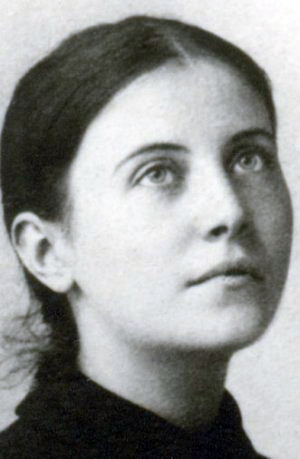
Saint Gemma Galgani
On this April 11th, in 1903 – the same year that the Italian Guiseppe Sarto was elected Pope later that summer as Pius X – a lovely, young Italian woman died, by the name of Gemma Galgani. She lived a brief life of 24 years, as did a number of other young saints, including Pier[…]Continue reading→
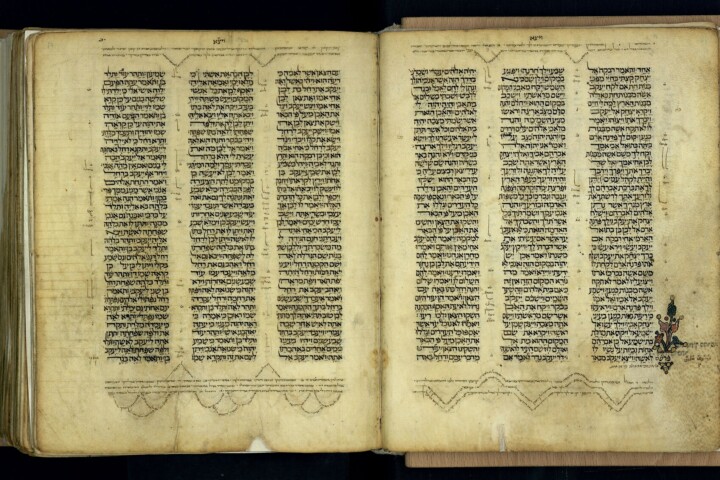
An Ideological and Improper Translation
I noticed something odd with the psalm reading at Mass the other day. Our bishops’ conference here in Canada has decreed that the Mass in English – Novus Ordo – use the ‘NRSV’, the ‘New Revised Standard Version’, an ‘updated’ translation of the original RSV, first published in 1952. This ‘new translation’ has the tendency[…]Continue reading→