
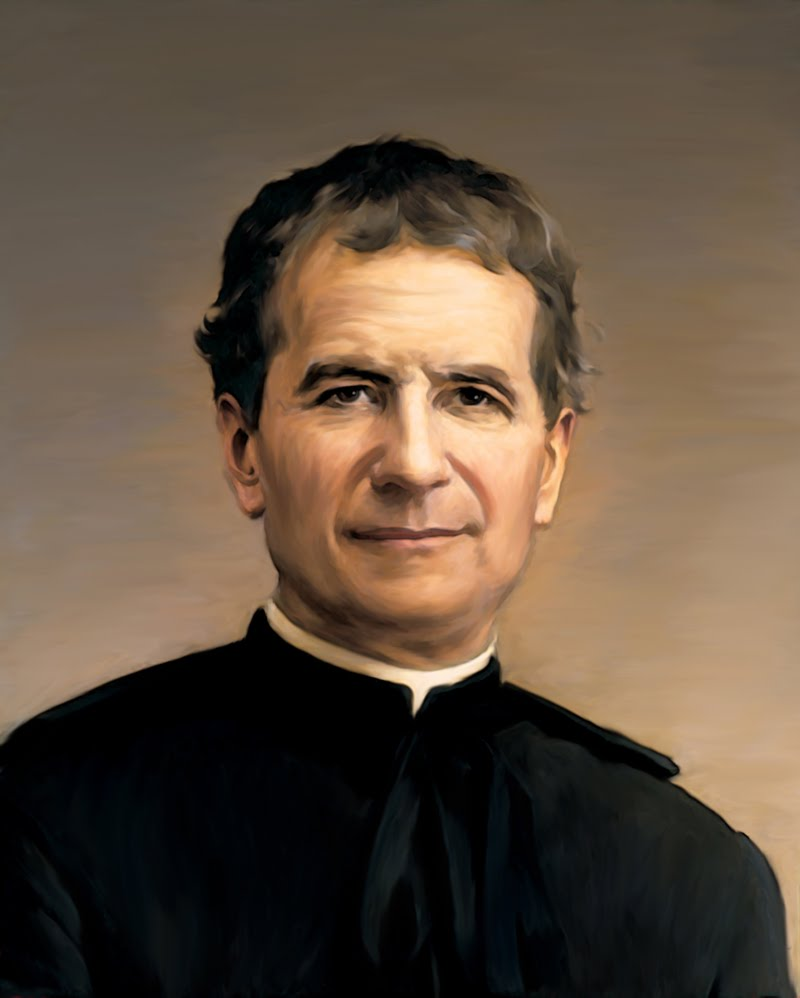
The Charism of Saint John Bosco
The term ‘charismatic’ has an ambiguous meaning in the Church, invoking images of liturgical guitars, drums, emotional crescendos, and disconcerting glossolalia. In the Church’s theology, however, it has a rather specific meaning, derived from Saint Paul’s letters: A ‘charism’, from the Greek word for ‘grace’, Χάρις is a gratia gratis data, a gift, talent, ministry, freely given by God to a soul, by which others may be led to holiness.
Saint John Bosco, who died on this day in 1888, is one of the most ‘charismatic’ of saints, endowed with many gifts, which he offered to God in a long and varied life, and in so doing left us one of the most exemplary and endearing models of the priesthood, similar in some ways to Saint John Vianney, who died three decades earlier (+1859), or even more so, Saint Philip Neri (+1595), who dedicated their lives in an heroic way to the ministry of alter Christus, Vianney in the parish, at the altar, in the confessional, and to the education and formation of the young.
John Bosco grew up in dire poverty in northern Italy, but by the grace of God, his own determination and some human help, he made his way through school and to priestly ordination. Realizing that he had been given his gift freely, he chose to give freely. He had lived through dire poverty, as had myriads of abandoned and semi-feral young boys around him, amongst all the moral and spiritual degradation that entailed. Hence, he determined to do something. At his own initiative, against all the ‘wisdom of this world’ and innumerable hardships and setbacks, he set up a school and training centre for the abandoned youngsters, keeping this difficult apostolate going through his own courage, grit and the grace of the good God.
And he was just the man to do so: Strong and athletic, he had learned to juggle and do acrobatics as a child, so to raise money to put himself through school, and dedicated himself like a dervish to his studies when he finally made it into the seminary. Like the future Karol Wojtyla, he was also handsome and intelligent, but gave up up any thoughts of marriage to focus on higher things, moved by the plight of the young people crowding around the slums and prisons of Turin.
Health is God’s great gift, and we must spend it entirely for Him. Our eyes should see only for God, our feet walk only for Him, our hands labor for Him alone; in short, our entire body should serve God while we still have the time. Then, when He shall take our health and we shall near our last day, our conscience will not reproach us for having misused it.
His own healthy life was almost entirely self-gift, a generous sacrifice to God, the fruit of which is evident through the world to this day. The Bosco method, emphasizing example and gentle correction, transformed how children were taught, and his schools for boys were open to all and sundry. As he wrote to his brethren:
Don Bosco emphasized leading by example and exhortation, being strict and intransigent about the most necessary things, realizing that perfection was a gradual, and lifelong, process. This requires more effort on the part of the teacher, but is worth it:
My sons, in my long experience very often I had to be convinced of this great truth. It is easier to become angry than to restrain oneself, and to threaten a boy than to persuade him. Yes, indeed, it is more fitting to be persistent in punishing our own impatience and pride than to correct the boys. We must be firm but kind, and be patient with them.
This applied, by the way, both to educational and the spirituality. As he put it, against the rigorists and Jansenists plaguing the Church, in our own striving for perfection: We do not go to Holy Communion because we are good; we go to become good. But we have to want, and be striving, to become good. Don Bosco was no fan of complacence, or justifying sin.
The Order he founded, the Salesians, inspired by and under the patronage of the 16th century bishop Saint Francis de Sales, still runs hundreds of schools and apostolates across the globe, with 17,000 members and over 2000 houses.
Saint John Bosco shows us what one good soul who responds to the grace of God can do. In the midst of the evil around us, all the scandals and deviant sexuality and selfishness that so corrupts us, the Church, society, we must always remember, with the example of Bosco and countless others like him, that goodness, excellence, magnanimity and holiness are not only possible, but eminently necessary. And a small amount of good counteracts a whole lot of evil. If only more were to follow that the path that God intends for them, through that still gentle voice of conscience, guiding us suaviter et fortiter, sweetly but insistently, to do His will, in which alone is our peace and our salvation.
Saint John Bosco died on this last day of January in 1888, and people thronged to his funeral. Pope Pius XI, who had known the saint, and penned an encyclical on Catholic Education likely inspired by his example, both beatified Don Giovanni Bosco on June 2, 1929, and canonized him on Easter Sunday, April 1, 1934. Don Bosco is the patron of much and many, including children, delinquents, apprentices and magicians, which sort of go together. The saint’s collected works comprise 220 titles in 38 volumes, written in the midst of teaching and forming thousands of boys, as well as living out a priestly ministry of the sacraments. Truly, a life well lived, and a reminder of what one soul can do to change the world.
Saint John Bosco, ora pro nobis!
Carney’s Amoral Majority
After five defections – euphemistically described as ‘crossing the floor’ – and three by-elections, Mark Carney and his Liberals how have their coveted majority. One wonders what bowls of pottage were offered in back-room deals. In the archaic monarchical system that is the Dominion of Canada, this majority allows the newly-minted Prime Minister to rule[…]Continue reading→

Saint Kateri , Canada’s Protectress
This was the title given to Saint Kateri Tekakwitha, by Pope Benedict XVI, when he canonized her on October 28th, 2012, along with six others, in Saint Peter’ Square (she had been beatified by Pope John Paul II back in 1980). With Saint Joseph as our protector, along with the Canadian martyrs, we seem to[…]Continue reading→
A Tale of Two Benedicts
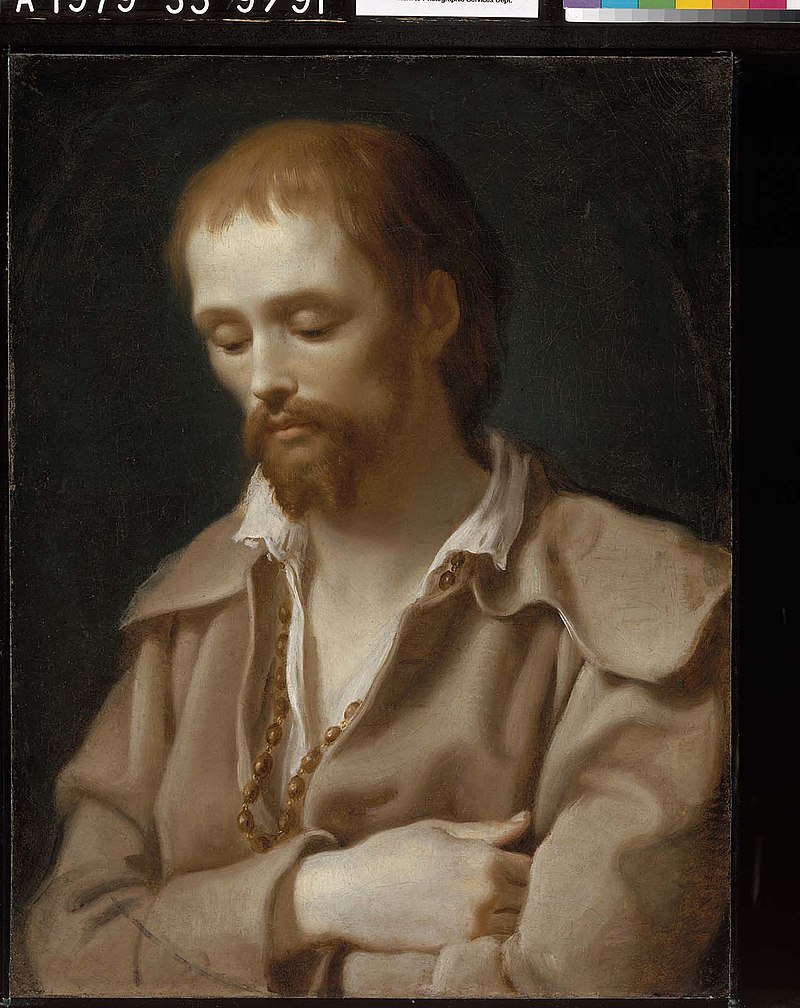
A grace-filled Holy Week to all our readers! As we await and prepare for the Resurrection about to dawn upon us, we might keep in mind two Benedicts: Pope Emeritus Benedict XVI, requiescat in pace, elected on this day in 2005; and today’s commemoration of the mystic pilgrim, Benedict Joseph Labre, who died on this[…]Continue reading→

My Name is Bernadette
April 16th is a propitious day, for besides the anniversary of Father de Valk’s death, who founded Catholic Insight in its print form decades ago, and the commemoration of the ‘two Benedicts’, mentioned in accompanying posts, today we also recall Saint Bernadette Soubirous, the young visionary to whom the Virgin Mary appeared numerous times at[…]Continue reading→
Saint Lydwina of Schiedam and Suffering Joyfully
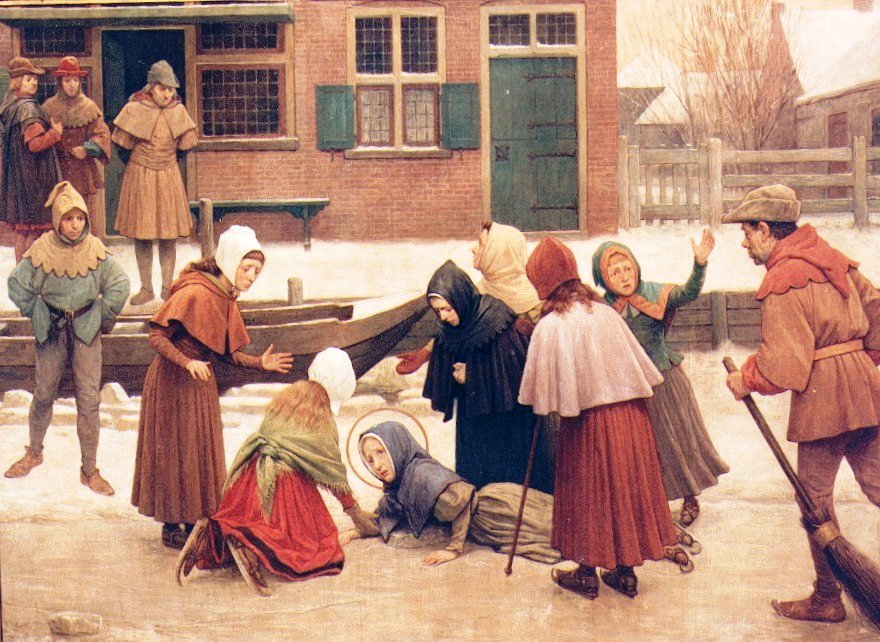
Saint Lydwina of Schiedam (1380 – 1433) was one of the countless and glorious ‘victim souls’ in the history of the Church, those whose lives are filled with suffering, often of an unimaginable intensity, but who suffer joyfully. She was a fifteen-year old Dutch girl, out skating one day, when she fell and broke one[…]Continue reading→
The Glorious Martyrdoms of Martin and Maximus
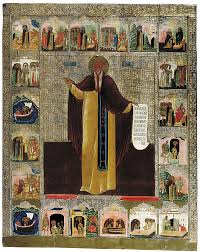
As we enter into Eastertide, we recall on this 13th of April Pope Saint Martin I (+655), one of the noblest, if most tragic, of the successors of Saint Peter. Born in Umbria, Italy, he was of noble lineage, with great intelligence combined with charity and love of the poor and the Church. While still[…]Continue reading→

Canonizing Sister Faustina and Divine Mercy
HOMILY OF THE HOLY FATHER MASS IN ST PETER’S SQUARE FOR THE CANONIZATION OF SR MARY FAUSTINA KOWALSKA Sunday, 30 April 2000 1. “Confitemini Domino quoniam bonus, quoniam in saeculum misericordia eius”; “Give thanks to the Lord for he is good; his steadfast love endures for ever” (Ps 118: 1). So the Church sings on the Octave of[…]Continue reading→

Saint Stanislaus of Szczepanów
We celebrate Saint Stanislaus today (+ April 11, 1079), in light of this Easter Octave, a bishop and martyr who accepted the episcopacy only at the direct order of Pope Alexander II. He proved a wise and courageous leader of his flock, put to death by his own king, Boleslaus, for rebuking the monarch’s ‘immoral[…]Continue reading→
Saint Gemma Galgani
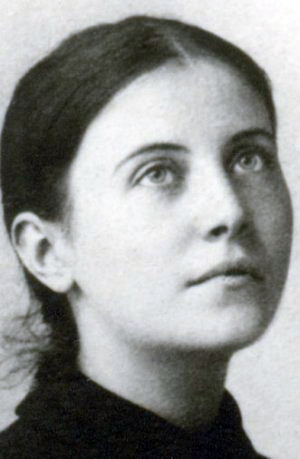
On this April 11th, in 1903 – the same year that the Italian Guiseppe Sarto was elected Pope later that summer as Pius X – a lovely, young Italian woman died, by the name of Gemma Galgani. She lived a brief life of 24 years, as did a number of other young saints, including Pier[…]Continue reading→
An Ideological and Improper Translation
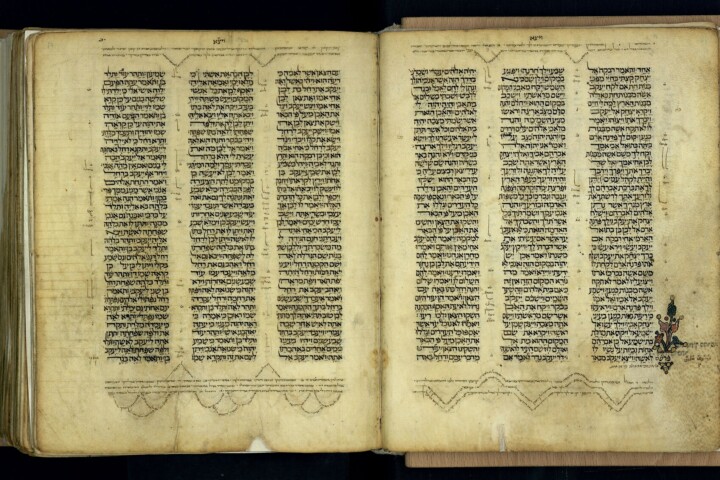
I noticed something odd with the psalm reading at Mass the other day. Our bishops’ conference here in Canada has decreed that the Mass in English – Novus Ordo – use the ‘NRSV’, the ‘New Revised Standard Version’, an ‘updated’ translation of the original RSV, first published in 1952. This ‘new translation’ has the tendency[…]Continue reading→