
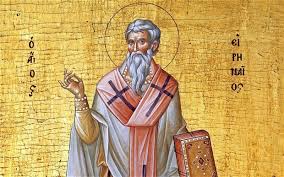
Saint Irenaeus: Witness to Truth and Tradition
Saint Irenaeus (+202 A.D.), bishop of Lugdunum – now Lyons – in the second century of the Church’s existence, a disciple of the martyr Saint Polycarp, who was in turn a disciple of Saint John the Apostle, is himself not only one of the clearest links to apostolic Tradition, but his writings and thoughts form the basis of what we now know as that queen of the sciences, ‘theology’: That is, the application of reason to the revealed word of God, of which Ireneaus is considered the founder, if we may also include Saint John himself.
Raised in Asia Minor in a Christian household, near what is now Izmir, Turkey, Irenaeus, whose name means ‘maker of peace’, traveled west, was ordained a priest, and, after his spiritual and intellectual gifts were clearly recognized, was eventually consecrated bishop in the Roman territory of what is now France.
Irenaeus wrote much, and much of what he wrote thankfully survives. His main battle was against the Gnostics, a powerful sect that claimed to have secret, esoteric knowledge of the path to ‘salvation’. Their theories were complex, quite bizarre to our reading, but, perhaps because of that very esoteric complexity – if you’re going to tell a lie, the saying goes, tell a whopper – they convinced many. The Gnostics were the first ‘experts’, if you will.
They were also dualists, holding that matter, including our own bodies, are evil, the result of a god of darkness, while spirit and soul were good, created by a good god. The Gnostics claimed this knowledge was from Christ Himself, not via the Magisterium, thereby separating themselves from the hierarchical and Catholic Church. Hence, one could do what one wanted with the body, for it was the ‘soul’ that really mattered (read: so long as my ‘intentions’ are good).
They Gnostics were the first real ‘heretics’, literally, those who create a schism or rip in the Body of Christ. We should beware those who seek salvation outside the Church, or that they know better, their natural intellectual or charismatic gifts overcoming the duty of the ‘submission of mind and will’ to proper teaching authority.
The saint’s powerful treatise Adversus haereses (Against Heresies) put paid to the Gnostics, arguing against their doctrines with a power, clarity and simplicity that has provided a model for clear theological thinking ever since. He posited three rules for orthodoxy: Scripture, Tradition and the definitive teachings of the successors of the Apostles, especially that of the bishops of Rome – in other words, the Magisterium.
This work is quoted from at length in the first section of the universal Catechism (cf., #172-175), and it is worth quoting also here as we meditate upon this saint today, signifying the unity that has been the primary hallmark of the Church from her very foundation:
Indeed, the Church, though scattered throughout the whole world, even to the ends of the earth, having received the faith from the apostles and their disciples. . . guards [this preaching and faith] with care, as dwelling in but a single house, and similarly believes as if having but one soul and a single heart, and preaches, teaches and hands on this faith with a unanimous voice, as if possessing only one mouth…
For though languages differ throughout the world, the content of the Tradition is one and the same. the Churches established in Germany have no other faith or Tradition, nor do those of the Iberians, nor those of the Celts, nor those of the East, of Egypt, of Libya, nor those established at the centre of the world. . The Church’s message “is true and solid, in which one and the same way of salvation appears throughout the whole world…
We guard with care the faith that we have received from the Church, for without ceasing, under the action of God’s Spirit, this deposit of great price, as if in an excellent vessel, is constantly being renewed and causes the very vessel that contains it to be renewed
Tradition has it that the holy bishop was martyred in a local persecution of Catholics in the year 202, under the reign of Septimius Severus, his relics placed in the church of Saint Joseph in Lyons, soon renamed after him as devotion to him grew.
Alas, the tomb of the saint was pillaged and destroyed by the Huguenots (French Calvinists) in 1562, evincing that mysterious prophecy of Saint Paul that ‘heresies we will always have with us’, just as true now as it was 500 or 2000 years ago. What is old is what is new again. Often, they are subtle and insidious:
Error never shows itself in its naked reality, in order not to be discovered. On the contrary, it dresses elegantly, so that the unwary may be led to believe that it is more truthful than truth itself.
The worse of them all is Modernism, which Pope Saint Pius X described in his 1907 encyclical Pascendi as the ‘synthesis of all heresies’. Yet, fear not, for with Saint Irenaeus, we may find the truth in Tradition, in that constant and firm Tradition going back to the Apostles, found in the Catechism, encyclicals, and all the definitive teaching of the Magisterium, which helps us not only to understand Scripture and the very mind and will of Christ, but to attain the true path of salvation, found only in Christ and the Church He founded.
Pope Francis declared Irenaeus the most recent – 37th – Doctor of the Church on January 21, 2022.
We may trust that grace and truth will abound all the more, and will triumph in the end, for those with eyes to see and ears to hear, and simple, child-like hearts open to the grace of God.
Saint Irenaeus, ora pro nobis!
Carney’s Amoral Majority
After five defections – euphemistically described as ‘crossing the floor’ – and three by-elections, Mark Carney and his Liberals how have their coveted majority. One wonders what bowls of pottage were offered in back-room deals. In the archaic monarchical system that is the Dominion of Canada, this majority allows the newly-minted Prime Minister to rule[…]Continue reading→

Saint Kateri , Canada’s Protectress
This was the title given to Saint Kateri Tekakwitha, by Pope Benedict XVI, when he canonized her on October 28th, 2012, along with six others, in Saint Peter’ Square (she had been beatified by Pope John Paul II back in 1980). With Saint Joseph as our protector, along with the Canadian martyrs, we seem to[…]Continue reading→
A Tale of Two Benedicts
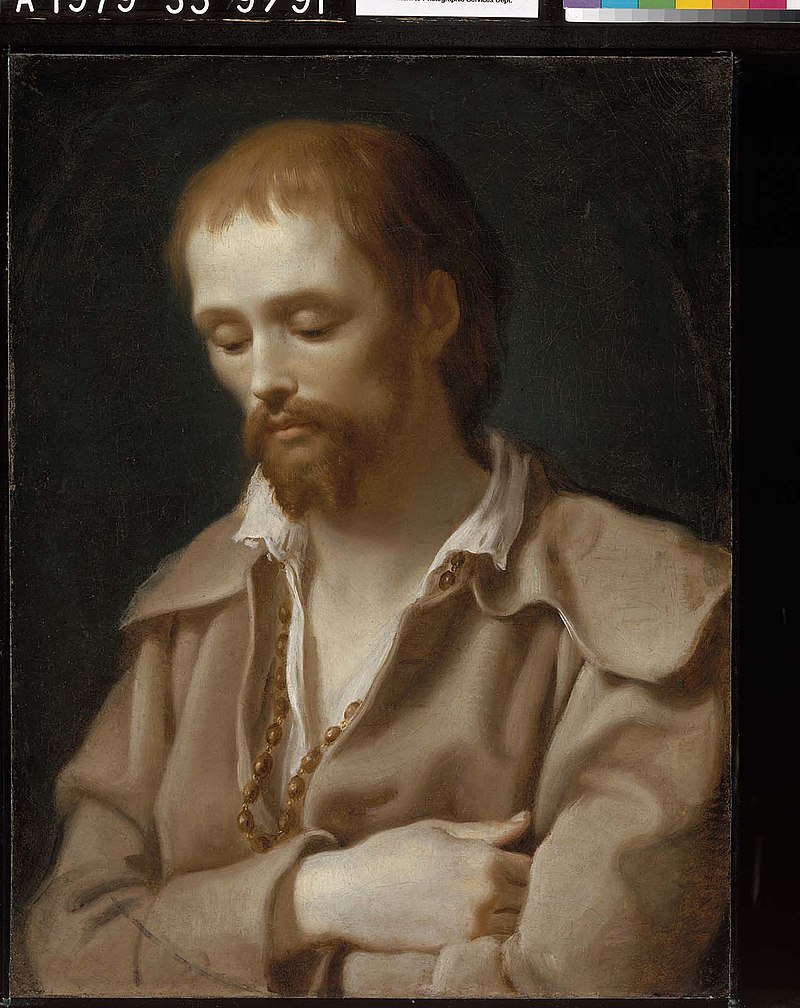
A grace-filled Holy Week to all our readers! As we await and prepare for the Resurrection about to dawn upon us, we might keep in mind two Benedicts: Pope Emeritus Benedict XVI, requiescat in pace, elected on this day in 2005; and today’s commemoration of the mystic pilgrim, Benedict Joseph Labre, who died on this[…]Continue reading→

My Name is Bernadette
April 16th is a propitious day, for besides the anniversary of Father de Valk’s death, who founded Catholic Insight in its print form decades ago, and the commemoration of the ‘two Benedicts’, mentioned in accompanying posts, today we also recall Saint Bernadette Soubirous, the young visionary to whom the Virgin Mary appeared numerous times at[…]Continue reading→
Saint Lydwina of Schiedam and Suffering Joyfully
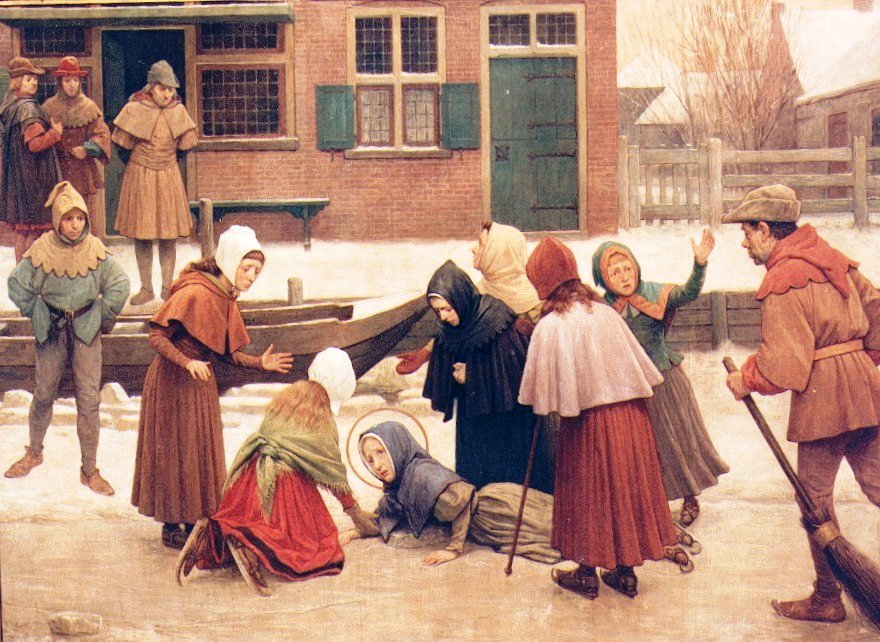
Saint Lydwina of Schiedam (1380 – 1433) was one of the countless and glorious ‘victim souls’ in the history of the Church, those whose lives are filled with suffering, often of an unimaginable intensity, but who suffer joyfully. She was a fifteen-year old Dutch girl, out skating one day, when she fell and broke one[…]Continue reading→
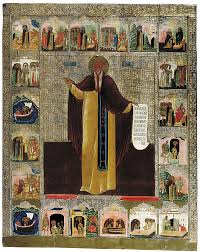
The Glorious Martyrdoms of Martin and Maximus
As we enter into Eastertide, we recall on this 13th of April Pope Saint Martin I (+655), one of the noblest, if most tragic, of the successors of Saint Peter. Born in Umbria, Italy, he was of noble lineage, with great intelligence combined with charity and love of the poor and the Church. While still[…]Continue reading→

Canonizing Sister Faustina and Divine Mercy
HOMILY OF THE HOLY FATHER MASS IN ST PETER’S SQUARE FOR THE CANONIZATION OF SR MARY FAUSTINA KOWALSKA Sunday, 30 April 2000 1. “Confitemini Domino quoniam bonus, quoniam in saeculum misericordia eius”; “Give thanks to the Lord for he is good; his steadfast love endures for ever” (Ps 118: 1). So the Church sings on the Octave of[…]Continue reading→

Saint Stanislaus of Szczepanów
We celebrate Saint Stanislaus today (+ April 11, 1079), in light of this Easter Octave, a bishop and martyr who accepted the episcopacy only at the direct order of Pope Alexander II. He proved a wise and courageous leader of his flock, put to death by his own king, Boleslaus, for rebuking the monarch’s ‘immoral[…]Continue reading→
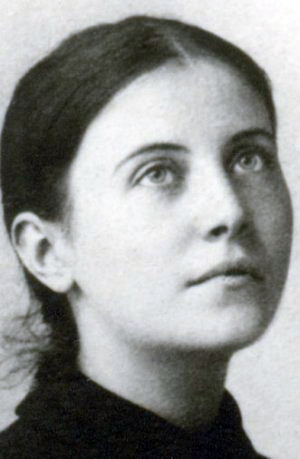
Saint Gemma Galgani
On this April 11th, in 1903 – the same year that the Italian Guiseppe Sarto was elected Pope later that summer as Pius X – a lovely, young Italian woman died, by the name of Gemma Galgani. She lived a brief life of 24 years, as did a number of other young saints, including Pier[…]Continue reading→
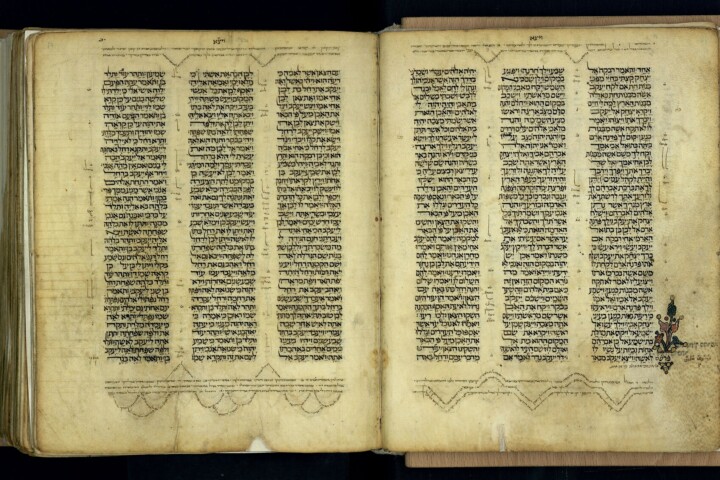
An Ideological and Improper Translation
I noticed something odd with the psalm reading at Mass the other day. Our bishops’ conference here in Canada has decreed that the Mass in English – Novus Ordo – use the ‘NRSV’, the ‘New Revised Standard Version’, an ‘updated’ translation of the original RSV, first published in 1952. This ‘new translation’ has the tendency[…]Continue reading→