
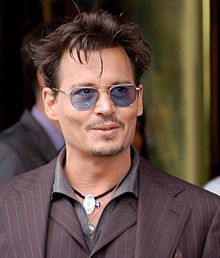
Whither True Wealth, Mr. Depp?
The Church has consistently advocated the proper distribution of wealth in society, ensuring that each one has ‘enough’ on which to live. Of course, the Magisterium has consistently condemned the intrinsically perverse solution of ‘socialism’, advocated by Karl Marx, and developed by his intellectual descendants, wherein the benign and disinterested ‘State’ would gather to itself all the means of production, and distribute justly as each has ‘need’. In turn, each worker would provide for the commonwealth according to his ‘capacity’.
Things don’t work that way, and such a solution would deny our human nature, which requires freedom to work upon our own private property, whether that be physical and earthy, like a farm, a workshop or trade, or intellectual and technological, as in writing, creativity, healing, teaching and such.
Pope John Paul II in Centesimus Annus states that the economy is really a sub-discipline of anthropology and moral theology, for the money and wealth in our society will follow what people desire, and what they desire flows from their moral decisions, and those things around which they have ordered their lives. What, really, do we as a people ‘value’? Where is our ‘treasure’? It is that for which we will work and spend our money.
The role of the Church is not to build an economic system, or provide any particular societal models, but rather to inform and elevate the individual conscience, so that, each person at a time, and that means you and me, can make a more informed, moral decision in what we do, and don’t do, what we work for, and don’t work for, and where we spend our hard-earned wealth, thereby keeping the whole economic river flowing.
Alas, however, our culture is anything but elevated and, well, cultured, which is why classical music societies, and classical education, and classical literature, much that is true, good and beautiful, are all suffering, while banality, even crudeness, are in the ascendant, ironically enough.
I came across an article the other day on the spending habits of the actor Johnny Depp. I suppose one could argue that he has contributed to ‘culture’, but not, I would argue, in a way that has consistently elevated it. I have nothing against him, except some concern over his apparent abandonment of the mother of his children (whom he never married), his multiple other marriages and relationships, and his overall disordered life. Anyway, the article was significant in portraying a man who has too much money, or at least knows not how to divest himself of what he has. As a sample, Mr. Depp spent
over $75 million to “acquire, improve and furnish 14 residences, including a 45-acre chateau in the South of France, a chain of islands in the Bahamas, multiple houses in Hollywood, several penthouse lofts in downtown Los Angeles, and a fully-functioning horse farm in Kentucky.
I ask: How can one person live in 14 houses? Depp also owns 70 guitars, which is about 68 or so more than he needs. Leo XIII taught in Rerum Novarum that we make property our own, which is to say, ‘private’, by impressing our personality upon it. This is what turns a ‘house’ into a ‘home’ as I have written before. This is also what turns a guitar that hangs upon a wall into an instrument that is played for the enjoyment of oneself and others.
Mr. Depp has also lavished out millions on collectibles and memorabilia involving icons such as Marilyn Monroe, John Dillinger and Marlon Brando. The collection is so extensive it fills “12 storage facilities” and cost over $1 million just to archive.
A bunch of nostalgic American paraphernalia sitting in storage facilities that few, if anyone, ever see. Is this where his treasure is?
In a fit of what may only be described as the kind of insanity peculiar to the rich, Depp spent over $3 million “to blast from a specially-made cannon the ashes of author Hunter Thompson over Aspen, Colorado”. Depp played the troubled journalist Thompson in a film not too long, during the filming of which he met his soon-to-be-wife-then-ex-wife-and-sometime-lesbian Amber Heard, who profited handsomely from her dalliance with the fellow film star.
Yes, Depp has had his fair share of personal travails, often of his own choosing, which is perhaps that is why he also spends $30,000 per month on wine “he had flown to him from around the world for his personal consumption”.
One must forget one’s troubles somehow, even if Chesterton declares we should always drink to remember, never to forget. Flying around all that vino may also help explain his $200,000 per month on private planes.
There is more, but that offers a window into how too-rich-Johnny spends his millions, most of which were made in his unwatchable yet mystifyingly-profitable Pirates of the Caribbean, prancing around as a mumbling drunk pirate, the whole sad and sorry premise founded on a Disney amusement ride, with yet another film in the works. We get what we pay for.
And yet, in that relatively small segment of the world’s population we call ‘rich’, Depp is a rather low man on the totem pole. Monsieurs Zuckerberg and Gates could buy Johnny out many, many times over. Bill Gates may soon become the world’s first trillionaire. I will leave it to future columns to discuss whether and how much Face Book and Microsoft have themselves affected our culture, for better or worse, and whether they should have the value they do.
What we do know is that the wealth of the world is becoming ever-more concentrated in the hands of fewer and fewer, as the following graph demonstrates:
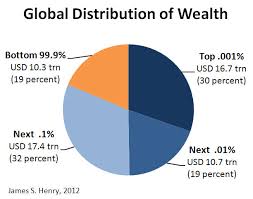
That is most of the world’s wealth in the hands of far less than 1% of the population, and I am not sure even Depp fits into this category. I am no socialist, and believe not in forced redistribution. Rather, the best and most moral way to ‘distribute’ wealth is to educate people, from our government legislators to the man in the street, in that which is really of value, so they can work and support that which is truly good, for themselves and for others. On this I will have more to say soon. In the meantime, try your best to avoid any more Pirates.
Carney’s Amoral Majority
After five defections – euphemistically described as ‘crossing the floor’ – and three by-elections, Mark Carney and his Liberals how have their coveted majority. One wonders what bowls of pottage were offered in back-room deals. In the archaic monarchical system that is the Dominion of Canada, this majority allows the newly-minted Prime Minister to rule[…]Continue reading→

Saint Kateri , Canada’s Protectress
This was the title given to Saint Kateri Tekakwitha, by Pope Benedict XVI, when he canonized her on October 28th, 2012, along with six others, in Saint Peter’ Square (she had been beatified by Pope John Paul II back in 1980). With Saint Joseph as our protector, along with the Canadian martyrs, we seem to[…]Continue reading→
A Tale of Two Benedicts
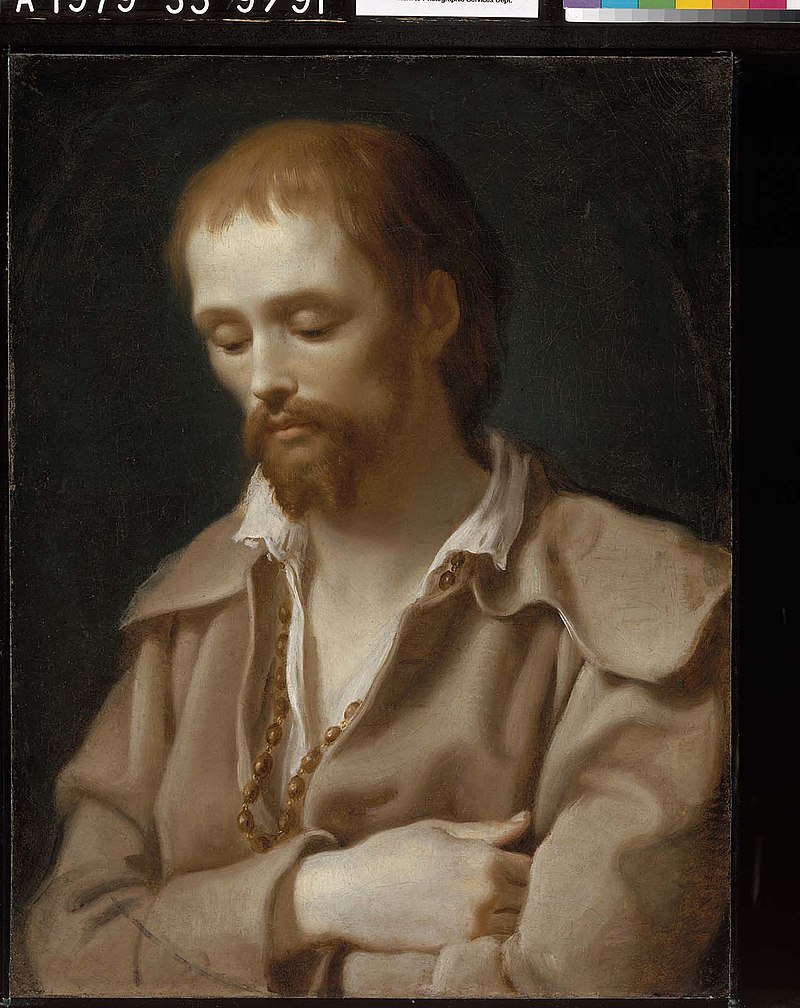
A grace-filled Holy Week to all our readers! As we await and prepare for the Resurrection about to dawn upon us, we might keep in mind two Benedicts: Pope Emeritus Benedict XVI, requiescat in pace, elected on this day in 2005; and today’s commemoration of the mystic pilgrim, Benedict Joseph Labre, who died on this[…]Continue reading→

My Name is Bernadette
April 16th is a propitious day, for besides the anniversary of Father de Valk’s death, who founded Catholic Insight in its print form decades ago, and the commemoration of the ‘two Benedicts’, mentioned in accompanying posts, today we also recall Saint Bernadette Soubirous, the young visionary to whom the Virgin Mary appeared numerous times at[…]Continue reading→
Saint Lydwina of Schiedam and Suffering Joyfully
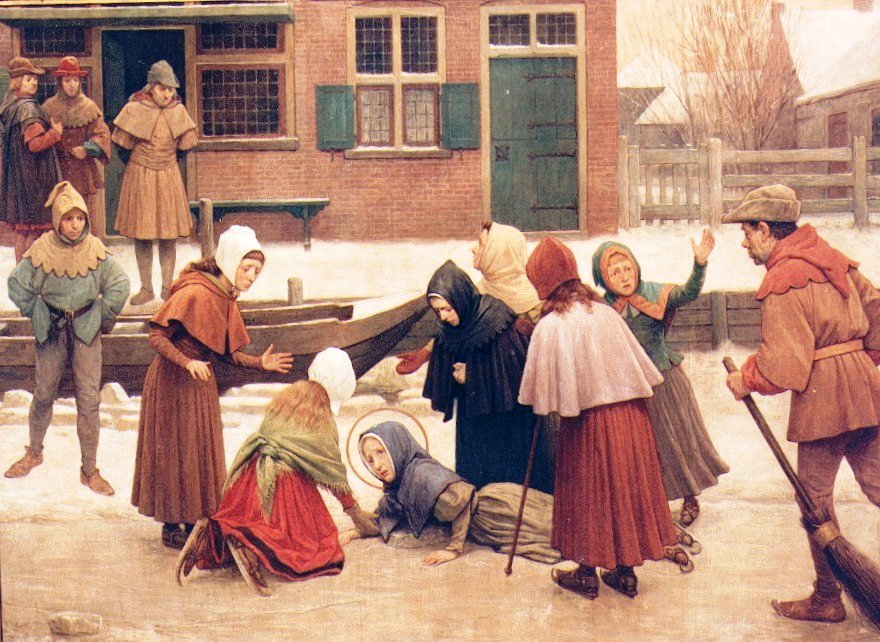
Saint Lydwina of Schiedam (1380 – 1433) was one of the countless and glorious ‘victim souls’ in the history of the Church, those whose lives are filled with suffering, often of an unimaginable intensity, but who suffer joyfully. She was a fifteen-year old Dutch girl, out skating one day, when she fell and broke one[…]Continue reading→
The Glorious Martyrdoms of Martin and Maximus
As we enter into Eastertide, we recall on this 13th of April Pope Saint Martin I (+655), one of the noblest, if most tragic, of the successors of Saint Peter. Born in Umbria, Italy, he was of noble lineage, with great intelligence combined with charity and love of the poor and the Church. While still[…]Continue reading→

Saint Stanislaus of Szczepanów
We celebrate Saint Stanislaus today (+ April 11, 1079), in light of this Easter Octave, a bishop and martyr who accepted the episcopacy only at the direct order of Pope Alexander II. He proved a wise and courageous leader of his flock, put to death by his own king, Boleslaus, for rebuking the monarch’s ‘immoral[…]Continue reading→
Saint Gemma Galgani
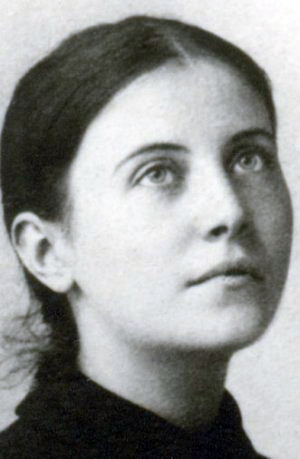
On this April 11th, in 1903 – the same year that the Italian Guiseppe Sarto was elected Pope later that summer as Pius X – a lovely, young Italian woman died, by the name of Gemma Galgani. She lived a brief life of 24 years, as did a number of other young saints, including Pier[…]Continue reading→
An Ideological and Improper Translation
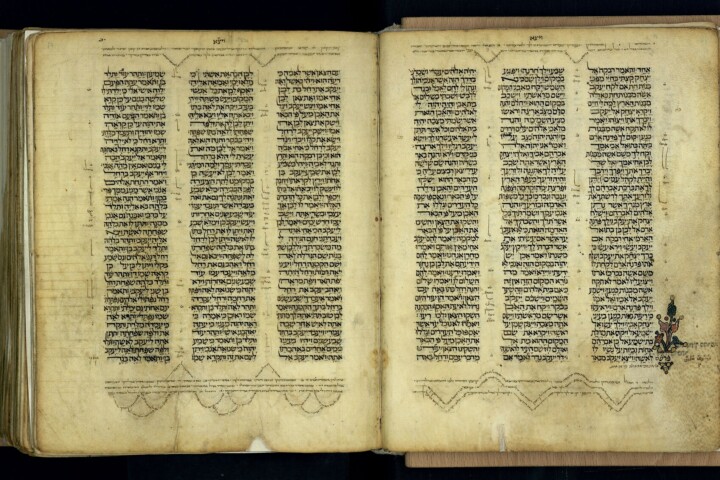
I noticed something odd with the psalm reading at Mass the other day. Our bishops’ conference here in Canada has decreed that the Mass in English – Novus Ordo – use the ‘NRSV’, the ‘New Revised Standard Version’, an ‘updated’ translation of the original RSV, first published in 1952. This ‘new translation’ has the tendency[…]Continue reading→
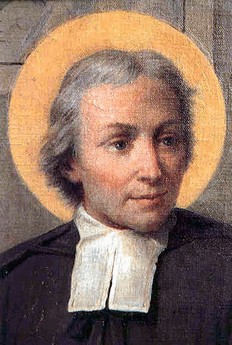
Saint Jean-Baptiste de la Salle: A Teacher for Teachers
Jean-Baptiste de la Salle (1651 – 1719), a French nobleman, ordained a priest, founded the first order in the Church’s history entirely without priests, and this came about almost by accident. I say ‘almost’, for, of course, there are no accidents with God. Destined for ordination from an early age, Jean-Baptiste never looked back, even[…]Continue reading→