
Of Dubia and Infants’ Rights
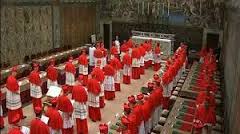
Concerning the ‘dubium’ put forward by the four cardinals, asking the Pope to clarify certain ambiguities in the recent post-Synodal Exhortation Amoris Laetitia, we can turn to Canon 212§3. of the 1983 Code of Canon Law, which states that
According to the knowledge, competence, and prestige which they possess, they have the right and even at times the duty to manifest to the sacred pastors their opinion on matters which pertain to the good of the Church and to make their opinion known to the rest of the Christian faithful, without prejudice to the integrity of faith and morals, with reverence toward their pastors, and attentive to common advantage and the dignity of persons.
If even lay people have this ‘right and duty’, one would think that bishops, who have the task of guarding and expounding Revelation as handed on from the Apostles, can also make known to their fellow bishops, including the Pope, ‘their opinion on matters which pertain to the good of the Church’. The decree on Bishops from Vatican II, Christus Dominus, declares
As legitimate successors of the Apostles and members of the episcopal college, bishops should realize that they are bound together and should manifest a concern for all the churches. For by divine institution and the rule of the apostolic office each one together with all the other bishops is responsible for the Church (#6)
Bishops have the right and the duty to be solicitous for the universal Church, for the clarity and purity of her doctrine. There is, therefore, in the Church the long and venerable tradition of submitting dubia to the Apostolic See, wherein pastors may request clarifications on certain points of doctrine, previously ambiguous, or not clarified sufficiently for whatever reason.
Then-Cardinal Ratzinger responded to one such dubium (not that there was much doubt) after Pope John Paul declared that only men could be priests in his 1994 Ordinatio Sacerdotalis. When this was questioned, the Cardinal, as head of the Congregation for the Doctrine of the Faith, responded with a reply that should have ended matters, declaring this doctrine to be infallible.
The cardinal-bishops in this case had the full right to ask for clarification. Of course, the Pope, with ‘full, supreme and universal power’ is also free not to respond to dubia, for reasons which he is also not bound to make public. The only ultimate judge of the Pope is God. Hence, I leave open-ended, for now, whether the four cardinals should have made their own (unanswered) dubia public. I am not sure, for we should strive for a balance between making the truth explicit, and preserving unity in the Church (and I wonder if we even want the explicit truth here). I am just glad I am not a cardinal, whose red robes may mean something more than symbolic soon. We are in strange and unusual times, and perhaps strange and unusual methods are now required.
You may have read reported in the news recently, and described on LifeSite, of a young woman in Kamloops who drowned her new-born baby in the bathtub (she delivered him herself at home, apparently), disposed of his body, then went off to take an exam. The troubled young woman, who was given a two-year probational sentence, since she was deemed ‘no threat to society’, is basically being let off scot-free. She claims the child was a result of a sexual assault while she was passed out inebriated at a party, and that she did not know she was pregnant until recently. All very emotional and sympathetic, but what, yes I ask, what of the drowned baby?
This should surprise no one, for the judge could not but consider that if she had wandered into an abortuary just a few hours before, while the baby was still in utero, she could have had her baby killed, legally, with the full support of the State and medical system, no questions asked, all antiseptic and worry free.
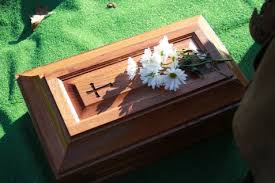 Yes, the effects of Roe vs. Wade and Morgentaler ripple on through, quite literally ripping apart the moral fabric of our universe. Once you open the Pandora’s box of death, it is difficult to keep it shut, for all sorts of evils come flying out. Peter Singer, the infamous professor of ‘ethics’ at Princeton, has through his vaunted and ballyhooed career advocated for a legal right for parents to euthanize their babies and toddlers for up to two years, at which point, he claims, they (the children, not the parents) become ‘sentient’ and worthy of autonomous rights (which Singer also advocates for chimps and gorillas and other ‘sentient’ animals). That would be more difficult since, unlike ‘infants’ (whose name means ‘unable to speak’), babies and toddlers can cry, kick and scream, or at least look at you with doleful eyes, on their way to the charnelhouse. All a bit more troublesome, one would think, which is likely why Singer’s suggestion has never quite been carried out. But one never knows in our day and age. As troubling as what it implies, Texas’ new law requiring victims of abortion to be given a proper burial at least brings this evil more out into the open, declaring it to be what it really is.
Ideas have consequences, and there is a deep metaphysical basis underlying our societal ills, not least our misconstrued notion of ‘rights’, which many curiously think come from a benevolent State, and not, as they do, from God. A baby has a right to life not because the government or parliament says he does, or does not, but rather because he is made ‘unto the image’ of that same God, Who will demand a reckoning for all that is done, and not done, to and for His ‘little ones’.
So expect more such cases like this unfortunate woman and her lost child, whose conscience we hope is not fully at fault, until that reckoning takes place. As we say in Advent, marana tha! Come, Lord Jesus…
Carney’s Amoral Majority
After five defections – euphemistically described as ‘crossing the floor’ – and three by-elections, Mark Carney and his Liberals how have their coveted majority. One wonders what bowls of pottage were offered in back-room deals. In the archaic monarchical system that is the Dominion of Canada, this majority allows the newly-minted Prime Minister to rule[…]Continue reading→

Saint Kateri , Canada’s Protectress
This was the title given to Saint Kateri Tekakwitha, by Pope Benedict XVI, when he canonized her on October 28th, 2012, along with six others, in Saint Peter’ Square (she had been beatified by Pope John Paul II back in 1980). With Saint Joseph as our protector, along with the Canadian martyrs, we seem to[…]Continue reading→
A Tale of Two Benedicts
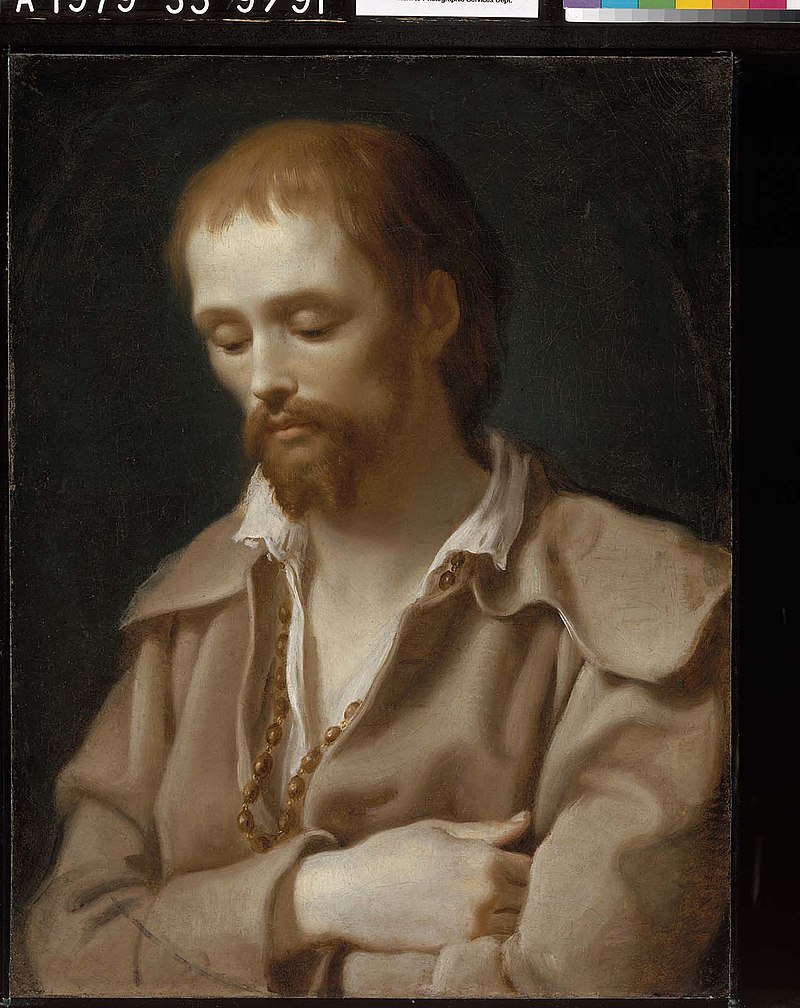
A grace-filled Holy Week to all our readers! As we await and prepare for the Resurrection about to dawn upon us, we might keep in mind two Benedicts: Pope Emeritus Benedict XVI, requiescat in pace, elected on this day in 2005; and today’s commemoration of the mystic pilgrim, Benedict Joseph Labre, who died on this[…]Continue reading→

My Name is Bernadette
April 16th is a propitious day, for besides the anniversary of Father de Valk’s death, who founded Catholic Insight in its print form decades ago, and the commemoration of the ‘two Benedicts’, mentioned in accompanying posts, today we also recall Saint Bernadette Soubirous, the young visionary to whom the Virgin Mary appeared numerous times at[…]Continue reading→
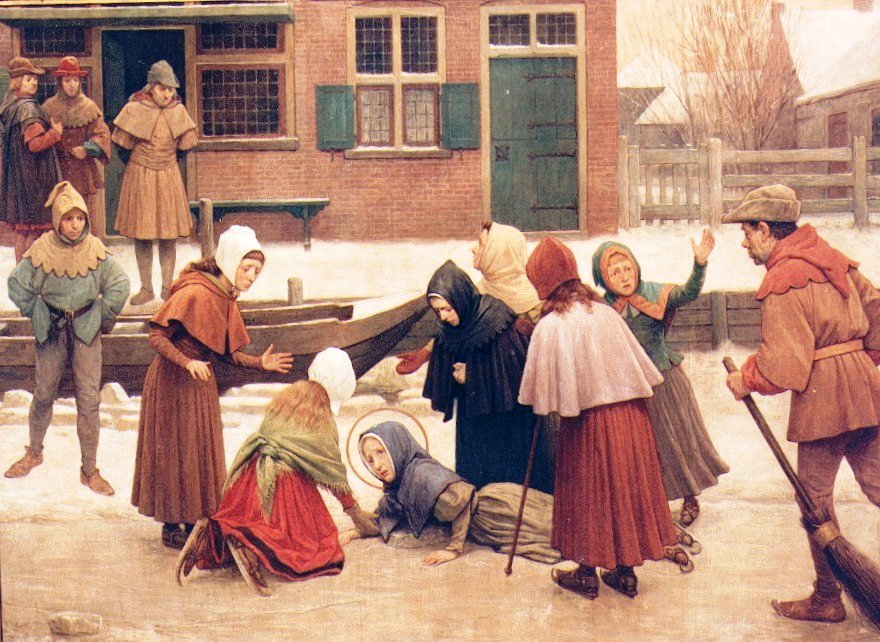
Saint Lydwina of Schiedam and Suffering Joyfully
Saint Lydwina of Schiedam (1380 – 1433) was one of the countless and glorious ‘victim souls’ in the history of the Church, those whose lives are filled with suffering, often of an unimaginable intensity, but who suffer joyfully. She was a fifteen-year old Dutch girl, out skating one day, when she fell and broke one[…]Continue reading→
The Glorious Martyrdoms of Martin and Maximus
As we enter into Eastertide, we recall on this 13th of April Pope Saint Martin I (+655), one of the noblest, if most tragic, of the successors of Saint Peter. Born in Umbria, Italy, he was of noble lineage, with great intelligence combined with charity and love of the poor and the Church. While still[…]Continue reading→

Saint Stanislaus of Szczepanów
We celebrate Saint Stanislaus today (+ April 11, 1079), in light of this Easter Octave, a bishop and martyr who accepted the episcopacy only at the direct order of Pope Alexander II. He proved a wise and courageous leader of his flock, put to death by his own king, Boleslaus, for rebuking the monarch’s ‘immoral[…]Continue reading→
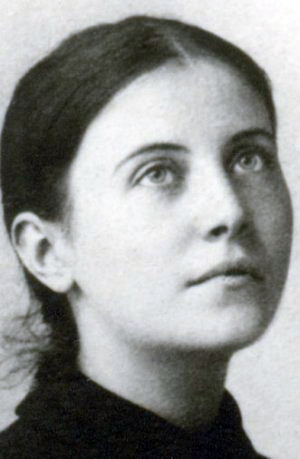
Saint Gemma Galgani
On this April 11th, in 1903 – the same year that the Italian Guiseppe Sarto was elected Pope later that summer as Pius X – a lovely, young Italian woman died, by the name of Gemma Galgani. She lived a brief life of 24 years, as did a number of other young saints, including Pier[…]Continue reading→
An Ideological and Improper Translation
I noticed something odd with the psalm reading at Mass the other day. Our bishops’ conference here in Canada has decreed that the Mass in English – Novus Ordo – use the ‘NRSV’, the ‘New Revised Standard Version’, an ‘updated’ translation of the original RSV, first published in 1952. This ‘new translation’ has the tendency[…]Continue reading→
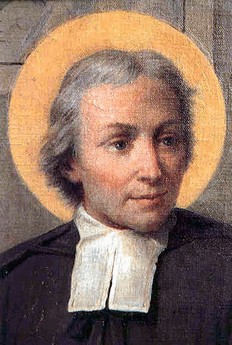
Saint Jean-Baptiste de la Salle: A Teacher for Teachers
Jean-Baptiste de la Salle (1651 – 1719), a French nobleman, ordained a priest, founded the first order in the Church’s history entirely without priests, and this came about almost by accident. I say ‘almost’, for, of course, there are no accidents with God. Destined for ordination from an early age, Jean-Baptiste never looked back, even[…]Continue reading→