
Mission Impossible: To Make a Real Movie
I finally got around recently to watching the fifth instalment of the Mission Impossible franchise. As expected, it was slick and high-budget, with impressive real-life stunts. Besides hanging on to moving planes and swerving motorcycles, Tom Cruise is showing his age a little, a rigid expression setting into his normally expressive face, a rictus grin replacing the toothy bluster of his youth, reminding me a bit of old Stoneface himself, the silent movie star Buster Keaton, who also, ironically, did all of his own stunts well into later life. We will see how long Tom lasts.
But back to the film, the problem with which is, to paraphrase the Bard, that it is much ado about nothing. As with so many of its ilk nowadays, such films avoid controversial topics like the plague (and even that topic is handled with the requisite political correctness, as in Matt Damon’s Contagion, basically a two-hour infomercial for the indispensability of the World Health Organization and its byzantine and bloated bureaucracy, which can, of course, solve any world crisis like incurable disease).
But the rub is that without controversy, there is no drama.
Nowhere is the vapidity of modern films more evident than in their choice of the bad guy(s). As Mark Steyn has pointed out, movies used to use real-life enemies to provide the tension: The ‘Japs’ and the ‘Krauts’ in World War II, the ‘Russians’ and the ‘KGB’ during the Cold War, corporate America in ‘Wall Street’ and its ilk.
One might think our films would dramatize evils that we are actually facing: Islamic terrorism comes to mind, or the difficulty of cultural assimilation. But no. Too sensitive for the fragile necks of Hollywood-types, which are not made for sticking out, unless the cause is safe, secure and politically correct, like global warming or black actors deserving Oscars.
So in Mission Impossible we have the go-to ‘rogue agent’, Solomon Lane, a rather pathetic-looking former member of the IMF (I always think of the International Monetary Fund when I hear that acronym, before the Impossible Mission Force reasserts itself, but, then again, they both play in fiction). Well, this agent, who has the defect of a weak chin and a funny nose (the distinctive-nose-syndrome, from Cruise’s own famous irregular schnozz, to the pointy nose of the female uber-agent, stands out in a number of actors in this romp), runs a rogue group bent on world domination, or instability, or something, for purposes that are unclear and ill-defined. Lane and his agents, for all their world-class-agent-skills, also cannot aim a gun, even at close range with an apparently unlimited number of bullets. Ho-hum.
And, speaking of the female British agent, aptly named Ilsa Faust, I guess because she deals in death or has magical skills (?), I have written before on how she implausibly steals the show: In an almost childish ‘everything Tom can do, she can do better’, the film is a montage of her apparent superiority in all things secret-agent-ish, from martial arts, to riding a motorbike, to knife fighting, to marksmanship (or is that markswomanship?), to holding her breath underwater, and so on. Well, it is the age of the Woman, and she has to make up for all those past movies in the age of patriarchy wherein Woman was the helpless rescuee, fainting into the arms of her muscular hero at just the right moment. Now it is Tom who faints into her arms. Yes, the once mighty-mouse Cruise is relegated to the background, looking befuddled and amazed by her excellences. Isla is all buffed up, dispatching rogue agents with various yoga-esque ju-jitsu moves, which involve jumping up and wrapping her legs awkwardly around their necks. I mean, she is attractive in an Swedish-English sort of way, but would secret agents of the male persuasion go so far to stand for such indignity? One wonders.
I am all for films developing what Pope John Paul would call the ‘genius of woman’, but this does not mean their competition on all things masculine. Are women to find their place in society only by becoming more like men? Some degree of the complementarity of man and woman is in order, and there must be a way to do this even in secret agent films.
And speaking of complementarity, the other characters in the IMF are add-ons without much purpose, just to make this a ‘group effort’, I guess to spread the wealth, and so the series does not look too much like Tom Cruise doing James Bond. Simon Pegg and Ving Rhames seem to have identical and redundant jobs as the requisite ‘computer whizzes’, and act as though sleepwalking to their impossibly-sized paycheques. The scene where Pegg declares his loyalty to Cruise seems flat; and, as Ving’s character aptly says in one of his few scenes as he works his laptop: “I could have done this from home”. Indeed.
Ah, the vapidity. One could argue people are just looking for entertainment and popcorn and visual spectacle, and well enough, but should we not ask for some degree of thought, background, development, and dramatic tension in our films? I suppose there are always lower depths to plumb compared to which the MI series reads like Shakespeare (and here I think of such things as the Transformers or Avengers). But one must compare excellence to excellence, not to even more mediocre mediocrity.
They are already starting production for the sixth instalment in the financially successful sequels, which make far more money overseas than here (perhaps because they cannot understand the dialogue, and think the movie is about something else). Here’s hoping at the very least that next time they figure out how to portray a real bad guy, and a real woman.

Carney’s Amoral Majority
After five defections – euphemistically described as ‘crossing the floor’ – and three by-elections, Mark Carney and his Liberals how have their coveted majority. One wonders what bowls of pottage were offered in back-room deals. In the archaic monarchical system that is the Dominion of Canada, this majority allows the newly-minted Prime Minister to rule[…]Continue reading→

Saint Kateri , Canada’s Protectress
This was the title given to Saint Kateri Tekakwitha, by Pope Benedict XVI, when he canonized her on October 28th, 2012, along with six others, in Saint Peter’ Square (she had been beatified by Pope John Paul II back in 1980). With Saint Joseph as our protector, along with the Canadian martyrs, we seem to[…]Continue reading→

A Tale of Two Benedicts
A grace-filled Holy Week to all our readers! As we await and prepare for the Resurrection about to dawn upon us, we might keep in mind two Benedicts: Pope Emeritus Benedict XVI, requiescat in pace, elected on this day in 2005; and today’s commemoration of the mystic pilgrim, Benedict Joseph Labre, who died on this[…]Continue reading→

My Name is Bernadette
April 16th is a propitious day, for besides the anniversary of Father de Valk’s death, who founded Catholic Insight in its print form decades ago, and the commemoration of the ‘two Benedicts’, mentioned in accompanying posts, today we also recall Saint Bernadette Soubirous, the young visionary to whom the Virgin Mary appeared numerous times at[…]Continue reading→

Saint Lydwina of Schiedam and Suffering Joyfully
Saint Lydwina of Schiedam (1380 – 1433) was one of the countless and glorious ‘victim souls’ in the history of the Church, those whose lives are filled with suffering, often of an unimaginable intensity, but who suffer joyfully. She was a fifteen-year old Dutch girl, out skating one day, when she fell and broke one[…]Continue reading→

The Glorious Martyrdoms of Martin and Maximus
As we enter into Eastertide, we recall on this 13th of April Pope Saint Martin I (+655), one of the noblest, if most tragic, of the successors of Saint Peter. Born in Umbria, Italy, he was of noble lineage, with great intelligence combined with charity and love of the poor and the Church. While still[…]Continue reading→

Saint Stanislaus of Szczepanów
We celebrate Saint Stanislaus today (+ April 11, 1079), in light of this Easter Octave, a bishop and martyr who accepted the episcopacy only at the direct order of Pope Alexander II. He proved a wise and courageous leader of his flock, put to death by his own king, Boleslaus, for rebuking the monarch’s ‘immoral[…]Continue reading→

Saint Gemma Galgani
On this April 11th, in 1903 – the same year that the Italian Guiseppe Sarto was elected Pope later that summer as Pius X – a lovely, young Italian woman died, by the name of Gemma Galgani. She lived a brief life of 24 years, as did a number of other young saints, including Pier[…]Continue reading→

An Ideological and Improper Translation
I noticed something odd with the psalm reading at Mass the other day. Our bishops’ conference here in Canada has decreed that the Mass in English – Novus Ordo – use the ‘NRSV’, the ‘New Revised Standard Version’, an ‘updated’ translation of the original RSV, first published in 1952. This ‘new translation’ has the tendency[…]Continue reading→
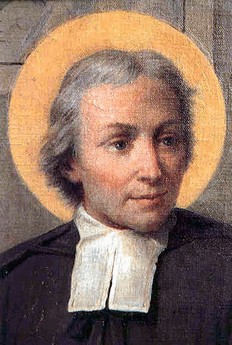
Saint Jean-Baptiste de la Salle: A Teacher for Teachers
Jean-Baptiste de la Salle (1651 – 1719), a French nobleman, ordained a priest, founded the first order in the Church’s history entirely without priests, and this came about almost by accident. I say ‘almost’, for, of course, there are no accidents with God. Destined for ordination from an early age, Jean-Baptiste never looked back, even[…]Continue reading→