
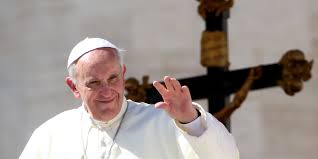
The Modus Operandi of Pope Francis
Like many around the world, Catholic or not, I have been trying to figure out Pope Francis. It is always a difficult task to ‘get’ a man, to understand whence he comes and whither he goes, not least due to the complexity of people’s backgrounds and that unpredictable reality that we call’ ‘free-will’, but which in its original Latin is more properly termed liberum arbitrium, or free choice. We never really know what people will choose to do, or not do, and even less why they do so.
One way we usually understand who people are is by their words and deeds, which, we presume, signify their interior state, or ‘who they are’. The Pope is a special case in this regard, for in his official capacity as the “universal shepherd of all the faithful”, he has certain charisms that belong to his office, not least of which is the charism, or grace, of infallibility. He sometimes acts officially as the Vicar of Christ, at other times as the man Jorge Bergoglio.
As the Dogmatic Constitution on the Church, Lumen Gentium, declares, the Pope’s infallibility is only exercised under certain conditions: The Holy Father must be teaching as Pope, to all the faithful, on a matter of faith and morals, in a definitive manner. Or in the words of the Constitution, paragraph 25:
And this is the infallibility which the Roman Pontiff, the head of the college of bishops, enjoys in virtue of his office, when, as the supreme shepherd and teacher of all the faithful, who confirms his brethren in their faith, by a definitive act he proclaims a doctrine of faith or morals.
Thus, we must believe that the Pope is ‘protected’, if you will, from going off the rails. The very grace of Christ surrounds his office, which is why the doctrine of the papacy cannot be grasped purely on natural or rational grounds. It is a mystery stricte dicta, which must be revealed to be believed. But the fact that in two millennia with 266 Popes, none have every taught heresy, is a sure motive of belief in the divine origins of the papacy.
Although we must accept such infallible teachings of the Pope (including the doctrine of the papacy itself) with the ‘assent of faith’, what of the far more common non-infallible teachings of the Vicar of Christ? These are more difficult to discern, and there is a hierarchy to them. Again, Lumen Gentium:
religious submission of mind and will (religiosum voluntatis et intellectus obsequium) must be shown in a special way (singulari ratione) to the authentic magisterium of the Roman Pontiff, even when he is not speaking ex cathedra; that is, it must be shown in such a way that his supreme magisterium is acknowledged with reverence, the judgments made by him are sincerely adhered to, according to his manifest mind and will
We discern the level of authority of such statements, as Lumen Gentium declares a few lines earlier, “from the character of the documents, from his frequent repetition of the same doctrine, or from his manner of speaking.”
I have read quite a bit of what the Holy Father has written ‘officially’ within his ‘authentic Magisterium’, and it is all pious and orthodox, with a few misleading phrases here and there. Then again, not many could fill the shoes of the precise clarity, breadth and depth of Benedict and John Paul, and Francis tends towards a more informal and homey style, which perhaps is in part what we, or maybe others, need.
He tends to stray somewhat more towards ambiguity in his off-the-cuff comments, and much has been written upon this tendency: his condemnations of non-defined ‘clericalism’, ‘fundamentalism’, and his rhetoric about the environment, not least global warming and climate change, his meetings with controversial figures and so on. Indeed, these statements receive far more press than his more authoritative statements, and his quips (‘who am I to judge’), usually taken out of context, are touted around the world, ending up on coffee mugs and t-shirts.
To be honest, after the clarity of the previous two pontiffs (which compassed most of my life so far), this colloquial tendency of Pope Francis has bothered me. Upon reflection, however, I think the Holy Father’s method stems from his Jesuit training, and their aim to be ‘all things to all men’. The Pope, as he has admitted (for all his aversion to unspecified fundamentalism) is himself fundamentally a ‘loyal son of the Church’, and thus we should not expect him to change any doctrine on faith or morals; indeed, by his very office, he cannot. However, in line with the Jesuit missionary spirit throughout the ages, he does seem to want to stretch the practical application of these principles, so that he can appeal to and, one may hope, bring in as many souls as he can.
Is this a dangerous game to play? The difficulty is that in such ‘stretched’ application (as in his recent amendment to canon law expediting the annulment process, and his apparent widening of the situations in which non-Catholics may receive Communion), some may read back into such application that the doctrine itself has changed (that marriage, for example, is no longer indissoluble, or that Communion is just a ‘sign of unity’). The Holy Father’s recent address to the Roman Rota, wherein he re-emphasized the presumed validity and indissolubility of marriages, should put to rest such radical fears.
Of course, my own proclivities would be for a Pope to make a clearer link between doctrine and its application, but who am I? I heard recently of a young Jesuit scholastic who said that if the Holy Father had not intervened with his own Catholicized version of environmental ethics and ecology at the recent Paris Summit, the radical anti-populationists would have unleashed an unbridled war on human beings. They were caught at their own game, and had to respect the authority of the Pope, who still governs one billion Catholics, and has much moral authority over the rest of the world population. We must not forget that for all the apparent radicalism of certain sections of Laudato Si, the Holy Father still emphasizes the primary and inviolability of human life (cf., #136). We may hope that he is just as clear on the sanctity and integrity of the human family structure, marriage and sexual morality in his awaited post-apostolic letter on the recent Synod on the Family.
Perhaps the Pope in his own way, or in a way of which even he may not be fully aware, is standing in the breach before the powers of Hell.
At least that is the task of the Vicar of Christ and the successor of Peter. Let us pray for the Pope, that in the time that remains to him (he just turned 79), carrying the heavy burden of standing in the place of Christ, he may fulfill what God wills of him, clearly and without compromise.
Carney’s Amoral Majority
After five defections – euphemistically described as ‘crossing the floor’ – and three by-elections, Mark Carney and his Liberals how have their coveted majority. One wonders what bowls of pottage were offered in back-room deals. In the archaic monarchical system that is the Dominion of Canada, this majority allows the newly-minted Prime Minister to rule[…]Continue reading→

Saint Kateri , Canada’s Protectress
This was the title given to Saint Kateri Tekakwitha, by Pope Benedict XVI, when he canonized her on October 28th, 2012, along with six others, in Saint Peter’ Square (she had been beatified by Pope John Paul II back in 1980). With Saint Joseph as our protector, along with the Canadian martyrs, we seem to[…]Continue reading→

Remembering Father Alphonse de Valk
(Today marks the sixth anniversary of the death of Father Alphonse de Valk, C.S.B., a faithful, courageous and indefatigable Basilian priest, pro-life-and-family apostle, and the founder of Catholic Insight magazine. Here is what we wrote those on his entering into eternity five years ago, as we continue to remember him in our prayers and thoughts)[…]Continue reading→
A Tale of Two Benedicts
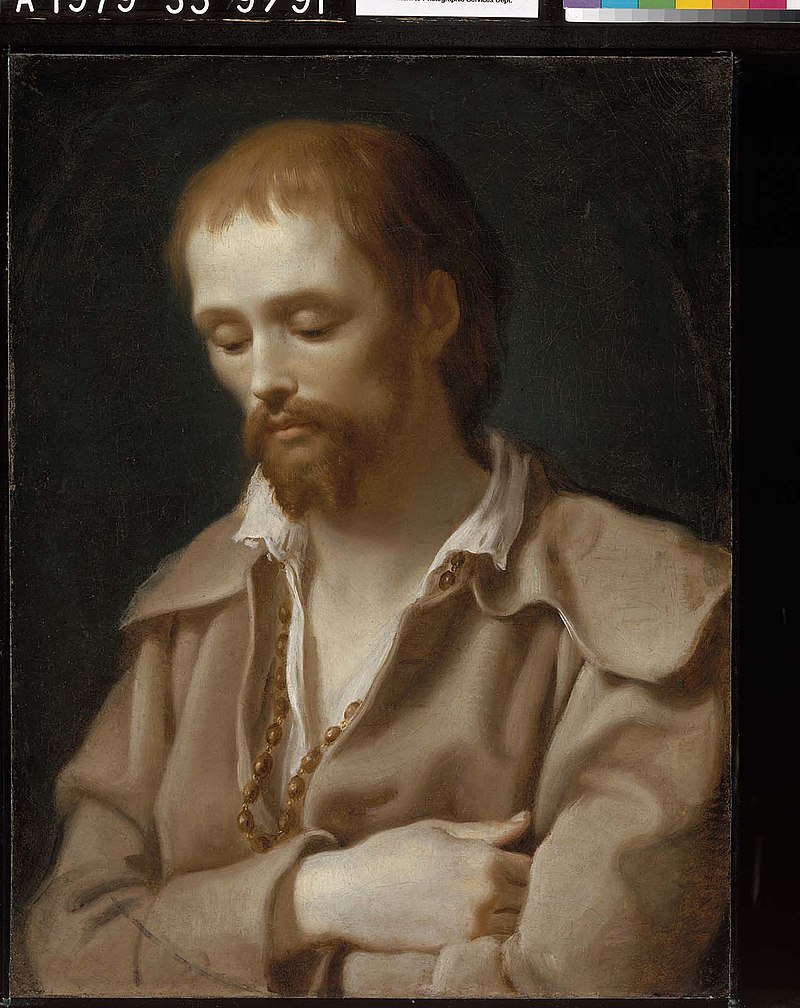
A grace-filled Holy Week to all our readers! As we await and prepare for the Resurrection about to dawn upon us, we might keep in mind two Benedicts: Pope Emeritus Benedict XVI, requiescat in pace, elected on this day in 2005; and today’s commemoration of the mystic pilgrim, Benedict Joseph Labre, who died on this[…]Continue reading→

My Name is Bernadette
April 16th is a propitious day, for besides the anniversary of Father de Valk’s death, who founded Catholic Insight in its print form decades ago, and the commemoration of the ‘two Benedicts’, mentioned in accompanying posts, today we also recall Saint Bernadette Soubirous, the young visionary to whom the Virgin Mary appeared numerous times at[…]Continue reading→
Saint Lydwina of Schiedam and Suffering Joyfully
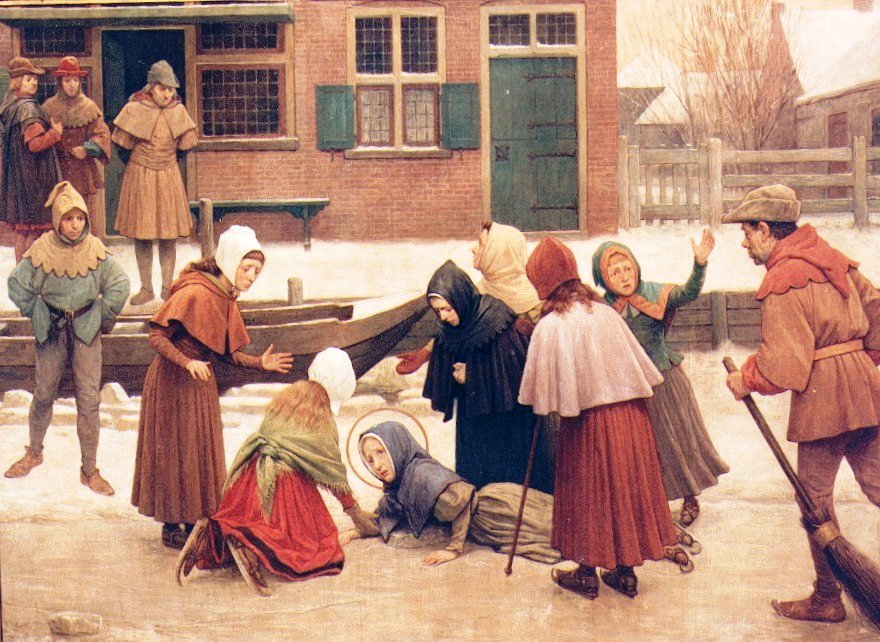
Saint Lydwina of Schiedam (1380 – 1433) was one of the countless and glorious ‘victim souls’ in the history of the Church, those whose lives are filled with suffering, often of an unimaginable intensity, but who suffer joyfully. She was a fifteen-year old Dutch girl, out skating one day, when she fell and broke one[…]Continue reading→
The Glorious Martyrdoms of Martin and Maximus
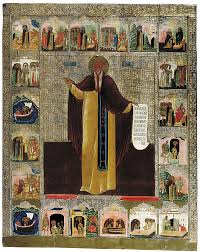
As we enter into Eastertide, we recall on this 13th of April Pope Saint Martin I (+655), one of the noblest, if most tragic, of the successors of Saint Peter. Born in Umbria, Italy, he was of noble lineage, with great intelligence combined with charity and love of the poor and the Church. While still[…]Continue reading→
Canonizing Sister Faustina and Divine Mercy
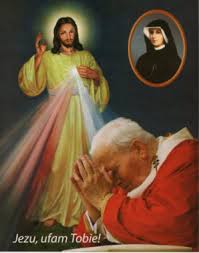
HOMILY OF THE HOLY FATHER MASS IN ST PETER’S SQUARE FOR THE CANONIZATION OF SR MARY FAUSTINA KOWALSKA Sunday, 30 April 2000 1. “Confitemini Domino quoniam bonus, quoniam in saeculum misericordia eius”; “Give thanks to the Lord for he is good; his steadfast love endures for ever” (Ps 118: 1). So the Church sings on the Octave of[…]Continue reading→

Divine Mercy Sunday – An Echo of Every Mass
Reach out your hand and put it in my side. Do not doubt but believe’… ‘My Lord and my God!’ (Jn. 20:18)). Today is Divine Mercy Sunday, and as we celebrate the end of the Easter Octave, we contemplate the wounded side of our Saviour, the Church’s source of life. On Good Friday in the[…]Continue reading→

Saint Stanislaus of Szczepanów
We celebrate Saint Stanislaus today (+ April 11, 1079), in light of this Easter Octave, a bishop and martyr who accepted the episcopacy only at the direct order of Pope Alexander II. He proved a wise and courageous leader of his flock, put to death by his own king, Boleslaus, for rebuking the monarch’s ‘immoral[…]Continue reading→