
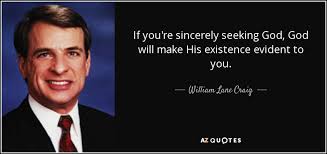
Theological Notions Simplified for Children
William Lane Craig, a world renowned Christian philosopher, theologian and apologist has written many works at the scholarly level. He has tackled deep issues within the philosophy of religion such as arguments for the existence of God, God’s relationship to time, the compatibility of divine foreknowledge with human free will and, most recently, the problem of God’s relation to abstract objects. On the theological side he has dealt heavily with the historicity of Jesus’ resurrection.
He has sought, as C.S. Lewis had put it, to defend a “mere” Christianity, that is, a defense of Christian beliefs and doctrines which are held in common by those who follow Roman Catholicism, Eastern Orthodoxy and Reformed theology. In my estimation he is the greatest defender of the Christian God’s existence, against atheistic polemics, past and present. Even some Catholic philosophers, including Edward Feser, have acknowledged their indebtedness to Craig’s work in abandoning their atheism.
Now addressing a much younger audience, Craig, under the pen name “Dr. Craig”, (a title slightly reminiscent of another children’s author, Dr. Seuss) has written ten books for children under the series title What is God Like?: The Attributes of God for Children. In each of these books he helps both children and parents wrestle with issues revolving around one of ten of God’s attributes, e.g. being all knowing, all loving, all powerful, all good, Trinitarian, eternal, self-sufficient, omnipresent, supremely great and immaterial.
These books are beautifully illustrated and engaging for children. They involve dialogues between a father, mother, son and daughter. Through these dialogues, difficult theological ideas are simplified in a way children and parents without any philosophical or theological training can understand. In one of the titles dealing with God being all-powerful, Dr. Craig carefully explains how this does not entail that God is capable of doing anything. For example, God cannot sin since if He were to sin, He would not be a maximally perfect being, hence not God. Craig also explains that God cannot perform logical contradictions such as making a square in the shape of a circle, since it is impossible for something to be both the shape of a circle and a square at the same time.
In another book which deals with God’s attribute of being all-good, Craig carefully navigates through what philosophers call the Euthyphro dilemma, which finds its source in Plato’s dialogue Euthyphro. In this dialogue, Socrates asks Euthyphro whether something is pious in and of itself, and therefore loved by the gods for being such, or whether something is pious because the gods love it. This dilemma has been transposed into a problematic for Christian theism with respect to the foundation of objective morality. The first horn of the dilemma demonstrates that certain things are right or wrong in and of themselves, independent of God’s command. This horn of the dilemma creates problems with respect to God’s sovereignty and omnipotence, the possibility of morals to be independent from God and, thirdly, God’s freedom. The second horn of the dilemma demonstrates that nothing can be right or wrong outside of God’s command. Obvious problems with this is that God’s goodness is reduced to his will, which suggests that morality is arbitrary.
Following St. Augustine, St. Anselm of Canterbury and St. Thomas Aquinas, Craig argues that the Euthyphro dilemma is a false one since God does not obey a morality outside of Himself, nor does He create morality. Instead of being “created” by God, morality is grounded in God’s very own good nature. Craig explains:
“You’re really thinking hard about this! But those aren’t the only two alternatives,” explained Papa. “God’s very nature is goodness. He is perfect justice, kindness, honesty, love and so on. His commands flow out of His perfectly good nature. So His commands aren’t just made up. But they aren’t based on anything outside of God either. His commands are rooted in His own perfect goodness.”
It is an entertaining way to get children thinking clearly and logically at a very young age.
I have purchased all ten books. I read them regularly with my five year old daughter. My daughter is quite receptive to these ideas and reflects profoundly on them, in particular those relating to the nature of Christ. She has asked the following question: “How can Jesus die, if Jesus is God?” Helping her understand the dual nature of Christ helped clarify how such a thing is even possible. A distinction between the pre-incarnate Christ (the second person of the Trinity) and the incarnate Christ helped bring clarity to the question. The pre-incarnate Christ had only a divine nature, but the incarnate Christ possesses both a divine and a human nature. So, in a sense, it is correct to state that God died – since a divine person actually died on the cross – but that does not entail that God ceased to exist. It is important to realize that in traditional Christianity, death is viewed as the separation of the soul from the body, which is understood to have happened to Christ, who thereby, experienced a disembodied state. However, at the moment of resurrection, Christ’s soul was reunified with his body.
These books are a tremendous resource for stimulating many deep questions for children. One of the books dealing with the Trinity is also valuable for contemporary discussions regarding Islam. It can help children respond to popular Islamic caricatures of the Christian faith. Christian children can then clarify misunderstandings that Muslim friends hold about their faith.
These books also make reference to Scripture when providing responses to questions about the different attributes of God. A memory verse is found at the end of each book.
For older and more advanced children, Craig, has recently written an introductory book on logic: Learning Logic.
The only misgiving I have is that the family depicted in the series comprises a father bear, a mother goose, a boy bear and a girl goose, which does not make much sense from a biological perspective. Nonetheless, these series are a great resource for the emergent Christian youth in defending their faith in a logical, creative and loving manner.
Scott Ventureyra is a PhD Theology candidate at the Dominican University College in Ottawa, Ontario, Canada. His PhD work involves the interaction between science and theology. His thesis research focuses on the Christian conception of God and creation in understanding the origins and emergence of consciousness. His research interests include systematic theology, science & theology, natural theology, philosophical theology and philosophy of mind. He is also a competitive tennis player and instructor.

Saint Kateri , Canada’s Protectress
This was the title given to Saint Kateri Tekakwitha, by Pope Benedict XVI, when he canonized her on October 28th, 2012, along with six others, in Saint Peter’ Square (she had been beatified by Pope John Paul II back in 1980). With Saint Joseph as our protector, along with the Canadian martyrs, we seem to[…]Continue reading→

Remembering Father Alphonse de Valk
(Today marks the sixth anniversary of the death of Father Alphonse de Valk, C.S.B., a faithful, courageous and indefatigable Basilian priest, pro-life-and-family apostle, and the founder of Catholic Insight magazine. Here is what we wrote those on his entering into eternity five years ago, as we continue to remember him in our prayers and thoughts)[…]Continue reading→

My Name is Bernadette
April 16th is a propitious day, for besides the anniversary of Father de Valk’s death, who founded Catholic Insight in its print form decades ago, and the commemoration of the ‘two Benedicts’, mentioned in accompanying posts, today we also recall Saint Bernadette Soubirous, the young visionary to whom the Virgin Mary appeared numerous times at[…]Continue reading→

Canonizing Sister Faustina and Divine Mercy
HOMILY OF THE HOLY FATHER MASS IN ST PETER’S SQUARE FOR THE CANONIZATION OF SR MARY FAUSTINA KOWALSKA Sunday, 30 April 2000 1. “Confitemini Domino quoniam bonus, quoniam in saeculum misericordia eius”; “Give thanks to the Lord for he is good; his steadfast love endures for ever” (Ps 118: 1). So the Church sings on the Octave of[…]Continue reading→

Divine Mercy Sunday – An Echo of Every Mass
Reach out your hand and put it in my side. Do not doubt but believe’… ‘My Lord and my God!’ (Jn. 20:18)). Today is Divine Mercy Sunday, and as we celebrate the end of the Easter Octave, we contemplate the wounded side of our Saviour, the Church’s source of life. On Good Friday in the[…]Continue reading→

Saint Stanislaus of Szczepanów
We celebrate Saint Stanislaus today (+ April 11, 1079), in light of this Easter Octave, a bishop and martyr who accepted the episcopacy only at the direct order of Pope Alexander II. He proved a wise and courageous leader of his flock, put to death by his own king, Boleslaus, for rebuking the monarch’s ‘immoral[…]Continue reading→

First Holy Communion: Sermon from May 16, 1943
Here is a sermon from the good old days by +Rev. Msgr. Vincent Nicholas Foy (August 14, 1915 – March 13, 2017), from 1943. Readers may recall that Pope Saint Pius X, by the decree Quam Singulari in 1910, lowered the customary age of reception of Holy Communion – after the rigours of the plague[…]Continue reading→

In the Glorious Light of Easter, Alleluia!
Set your minds on things that are above, not on things that are on earth, for you have died, and your life is hidden with Christ in God. When Christ who is your life is revealed, then you also will be revealed with him in glory (Col. 3:3-4). The Resurrection of Our Lord and Saviour[…]Continue reading→

An Ancient Homily for Holy Saturday
The time between Good Friday and Easter Sunday is one of waiting, in silence, as the world wonders – anticipates – what will happen, after the death of Christ. We re-live this time each year in the anamnesis of our liturgy, and in turn look forward to the glorious re-creation of all things at the[…]Continue reading→

Europe’s Long Descent
(As we meditate on this day on Christ’s burial, and His descent into hell, it is fitting to ponder here with contributor Peter Marcus how the world seems to be heading there as well. The difference is that, although God cannot ‘redeem’ hell, nor those therein, He can and did redeem the world. There is[…]Continue reading→