
Reasonable Force?
We will soon learn the fate of Constable James Forcillo, the Toronto police officer currently on trial for murder, who, shortly after midnight on July 18 2013 fired nine rounds from his 9 mm service pistol at 18 year-old Sammy Yatin, who was high on ecstasy (and perhaps marijuana and cocaine), semi-incoherent and brandishing a switchblade in an empty streetcar. Officer Forcillo, after commanding Sammy to drop the knife, fired three shots, the first two entering Sammy chest, damaging his heart and severing his spine, the third shattered his arm. Sammy collapsed (only in the movies are people ‘blown back’ by bullets), and as he writhed on the floor, still clutching the knife, Forcillo fired six more bullets, five of which hit Sammy in the groin, buttocks and abdomen. He was then Tasered, after which he was handcuffed, and an officer administered CPR, of course, to no avail.
There is a clear doctrine in the moral principle of self-defense, and especially for those charged with defending others, to use reasonable and proportionate force. This trial is to determine whether Officer Forcillo went far beyond that, into the realm of homicide, deliberately taking the life of a young man who at the time he was shot posed no immediate and lethal threat to those in his vicinity, at least not one that required such force.
Here is part of the recent exchange during the trial between Robert Warshaw, one of the Crown expert witnesses and a former American police chief who now specializes in reforming police departments, and Peter Brauti, the defense lawyer for Forcillo, with Warshaw claiming that Forcillo failed to use several reasonable alternatives to lethal force that night, including various de-escalation techniques.
I think police officers recognize this can be a dangerous job. There are risk factors that run concurrent with a police officer’s responsibility,” Warshaw said. “This is the job police officers sign up for. This is how they preserve life and how they protect the public.
Brauti: What they don’t have to do is put themselves in situations knowing it could end their own lives.
Warshaw responded: “I’m not suggesting any police officer put themselves in a situation knowing with certainty it could put an end to their own life. That’s a little bit different from police officers risking their lives or police officers executing tactical operations to get a certain outcome.
Well said, Mr. Warshaw. Those charged with the defense of society are called to use force to ensure the law is kept, especially when the harm of others is at stake. This is part of the coercive dimension of law, which, as Saint Thomas says, must not only teach us the right thing to do, but, should we disagree, force us to obey.
Force, of course, is a spectrum, from the fines for parking illegally, to Tasers, batons and, yes, the lethal force of the gun which, as we likely all agree, should be the last resort.
It is a curious development, according to Forcillo’s defense, that police officers now consider as one of their primary duties to protect themselves first, and the public, it seems, second, and never put themselves in any situation that ‘could end their own lives’. Should we not expect that those charged with the use of lethal force, or indeed force of any kind, use it primarily to protect us? Imagine a soldier going to battle who considers his primary duty is his own self-preservation, and that it should never be demanded of him to put himself in a life-threatening situation. ‘Screw you, Sarge, I ain’t goin’ over that hill…I might get mysel’ killed’!”
We have seen such scenes in movies. I will not call such soldiers ‘cowards’, for who of us would not blanch at the prospect of death, but should they turn and run, they will be called deserters, and treated as such.
Now, police officers are not soldiers, and their task is different, in keeping the peace amongst their own fellow citizens. They are not, or should be, ‘at war’ with us (although sometimes, one wonders…). That is part of the reason that, until recently, police officers in Britain did not carry guns. I am not sure what Constable Forcillo’s intentions were, and I know not all the specifics of the case, but I find his lawyer’s defense curious. Are police really to avoid putting themselves in any danger at all costs, even the cost of one of their own citizen’s lives? Did not the police in that situation have some duty to spare Sammy’s life? From the reports that have come out of that fateful July evening, it appears that no one, including the numerous officers in their Kevlar vests with pistols drawn, standing 12 to 15 feet away outside a streetcar in which Sammy was contained, was in immediate grave danger from Yatim, high on drugs, brandishing a three-inch switchblade. The streetcar driver himself remained alone with Sammy for some time, and the boy (for, being 18, he was a ‘boy’ in our Canadian law, illegal for him even to buy cigarettes or consume a beer) asked if he could call his father. The driver, eventually, calmly exited the vehicle, leaving the doors open.
As the Crown reasonably argues, could not the situation have been defused in any number of ways? Taser, batons, even conversation? Why was the first coercive response gunfire, and nine bullets at that? Forcillo’s lawyer argues that they were not entirely sure whether there was someone still on the streetcar, whom Sammy could have ‘taken hostage’. That seems a stretch, as Sammy was in no condition to take anyone hostage, the driver ensured all were off the vehicle (as the video shows), and, even so, as Warshaw rightly retorted, was not the officer recklessly endangering such putative ‘hostages’ by firing nine rounds, any number of which could have missed their intended target, and/or ricocheted into an unintended innocent bystander? Whom are our police really defending? Is this how they are trained?
 Speaking of ‘reasonable force’, we may contrast the streetcar incident with last week’s police action in Belgium, where they cornered the mastermind behind the Paris attacks, Abelhamid Abaaoud. As police approached, a woman in the apartment detonated herself (do these guys, or girls, all wear suicide bomb vests?), and police, to put it mildly, opened fire, pummelling 5000 rounds into the semi-collapsed dwelling. The body of the jihadi ‘mastermind’ was so mangled, identification required forensic analysis.
Reasonable force? Well, unlike Sammy, these guys will actually kill you, calmly and surely, simmering with religious zeal, with state-of-the-art weapons, fully automatic machine guns, high-end explosives, grenades. I suppose in such cases, force for force. I pray that it will be some time, or hopefully never, that we require such ‘police action’ in our neck of the woods (and, where I live, it really is the woods, so we may be free from attempted Islamic conquest for the near future, God willing).
As our world descends into ever-greater violent chaos, we have to discern where the real threat lies. And if our police are not willing to put themselves on the line to protect their fellow citizens while defending law and order, or get trigger-happy in the midst of such violence, well then, let the law be applied, and let us find someone who will step into harm’s way to defend those who cannot.

Carney’s Amoral Majority
After five defections – euphemistically described as ‘crossing the floor’ – and three by-elections, Mark Carney and his Liberals how have their coveted majority. One wonders what bowls of pottage were offered in back-room deals. In the archaic monarchical system that is the Dominion of Canada, this majority allows the newly-minted Prime Minister to rule[…]Continue reading→

Saint Kateri , Canada’s Protectress
This was the title given to Saint Kateri Tekakwitha, by Pope Benedict XVI, when he canonized her on October 28th, 2012, along with six others, in Saint Peter’ Square (she had been beatified by Pope John Paul II back in 1980). With Saint Joseph as our protector, along with the Canadian martyrs, we seem to[…]Continue reading→

Remembering Father Alphonse de Valk
(Today marks the sixth anniversary of the death of Father Alphonse de Valk, C.S.B., a faithful, courageous and indefatigable Basilian priest, pro-life-and-family apostle, and the founder of Catholic Insight magazine. Here is what we wrote those on his entering into eternity five years ago, as we continue to remember him in our prayers and thoughts)[…]Continue reading→
A Tale of Two Benedicts
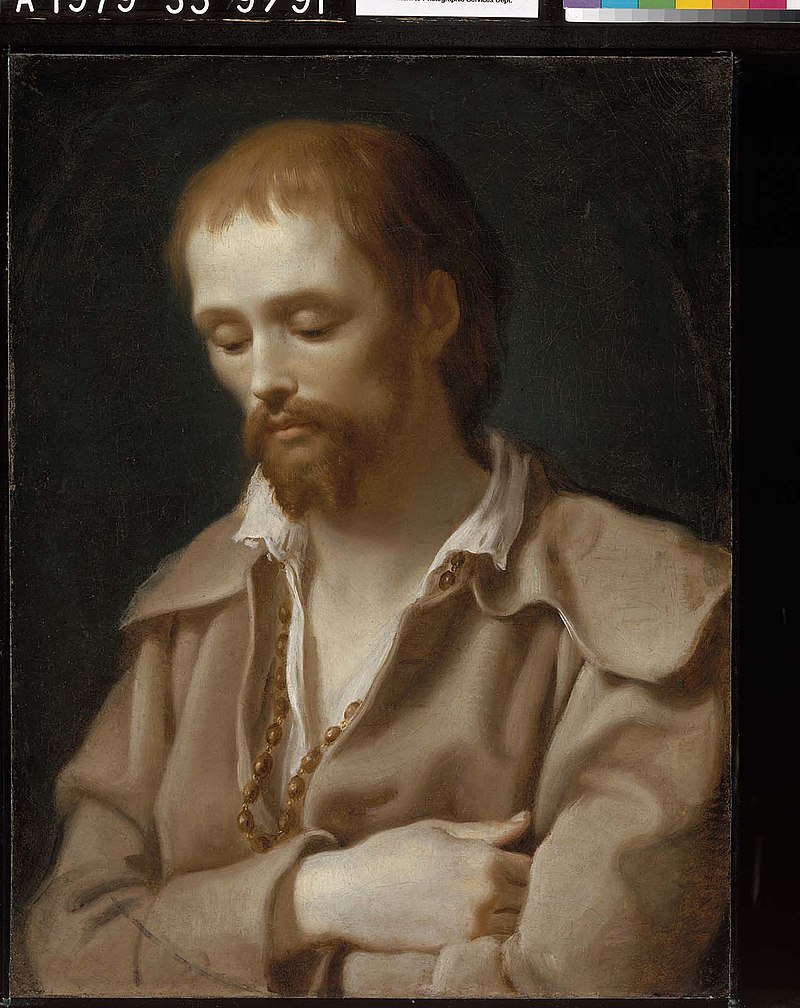
A grace-filled Holy Week to all our readers! As we await and prepare for the Resurrection about to dawn upon us, we might keep in mind two Benedicts: Pope Emeritus Benedict XVI, requiescat in pace, elected on this day in 2005; and today’s commemoration of the mystic pilgrim, Benedict Joseph Labre, who died on this[…]Continue reading→

My Name is Bernadette
April 16th is a propitious day, for besides the anniversary of Father de Valk’s death, who founded Catholic Insight in its print form decades ago, and the commemoration of the ‘two Benedicts’, mentioned in accompanying posts, today we also recall Saint Bernadette Soubirous, the young visionary to whom the Virgin Mary appeared numerous times at[…]Continue reading→
Saint Lydwina of Schiedam and Suffering Joyfully
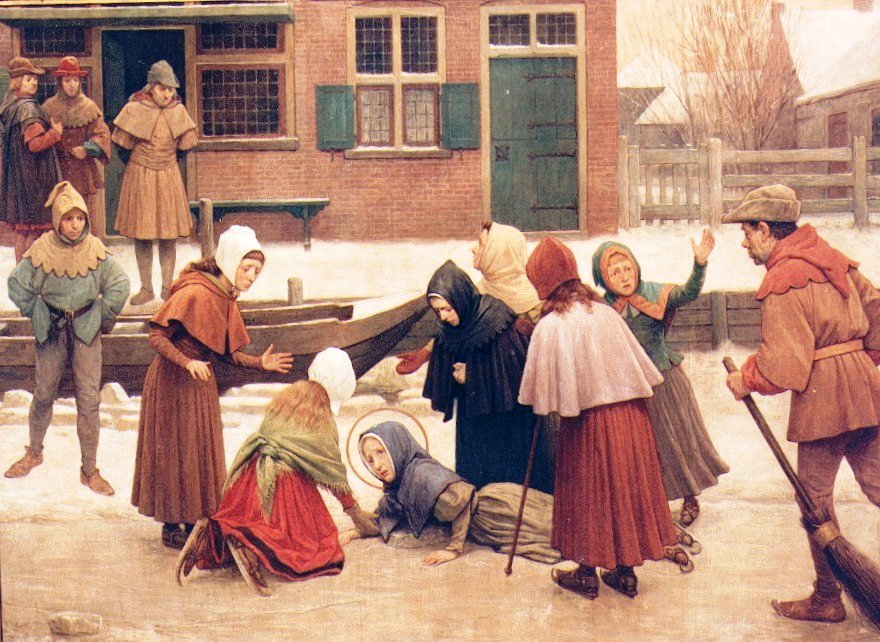
Saint Lydwina of Schiedam (1380 – 1433) was one of the countless and glorious ‘victim souls’ in the history of the Church, those whose lives are filled with suffering, often of an unimaginable intensity, but who suffer joyfully. She was a fifteen-year old Dutch girl, out skating one day, when she fell and broke one[…]Continue reading→
The Glorious Martyrdoms of Martin and Maximus
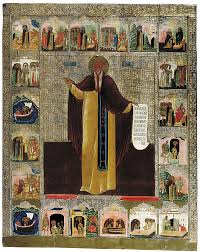
As we enter into Eastertide, we recall on this 13th of April Pope Saint Martin I (+655), one of the noblest, if most tragic, of the successors of Saint Peter. Born in Umbria, Italy, he was of noble lineage, with great intelligence combined with charity and love of the poor and the Church. While still[…]Continue reading→

Divine Mercy Sunday – An Echo of Every Mass
Reach out your hand and put it in my side. Do not doubt but believe’… ‘My Lord and my God!’ (Jn. 20:18)). Today is Divine Mercy Sunday, and as we celebrate the end of the Easter Octave, we contemplate the wounded side of our Saviour, the Church’s source of life. On Good Friday in the[…]Continue reading→

Saint Stanislaus of Szczepanów
We celebrate Saint Stanislaus today (+ April 11, 1079), in light of this Easter Octave, a bishop and martyr who accepted the episcopacy only at the direct order of Pope Alexander II. He proved a wise and courageous leader of his flock, put to death by his own king, Boleslaus, for rebuking the monarch’s ‘immoral[…]Continue reading→
Saint Gemma Galgani
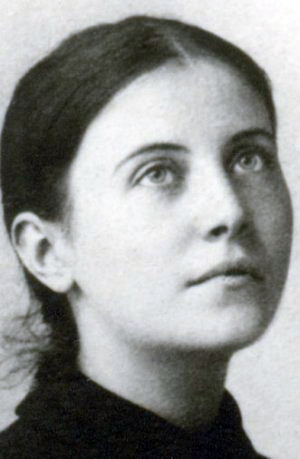
On this April 11th, in 1903 – the same year that the Italian Guiseppe Sarto was elected Pope later that summer as Pius X – a lovely, young Italian woman died, by the name of Gemma Galgani. She lived a brief life of 24 years, as did a number of other young saints, including Pier[…]Continue reading→