
2nd Sunday of Advent: The call to conversion
John the Baptist appeared in the wilderness, proclaiming a baptism of repentance for the forgiveness of sins (Mk 1:4).
The Gospel of the Mass on this second Sunday of Advent introduces us to John the Baptist, the voice of one crying out in the wilderness, “Prepare the way of the Lord; make straight His paths.” John the Baptist is one of the three Advent guides who, during this time of preparation for Christmas, lead us towards our encounter with the living God in Christ. As he did the people of his time, John also calls us to repentance and he bids us to produce good fruit as evidence of our repentance.
Why repentance? Quite simply, because repentance gets to the very heart of the matter when it comes to life and living. To repent is to have an “unconditional readiness to change in order to be transformed in Christ” (Dietrich Von Hildebrand). This is the true and complete meaning of repentance as understood in a religious sense; but it is no less true at the human or natural level. Some may say that they have neither a need nor a desire for change but life is not static, neither in itself nor as it is lived. Blessed John Henry Newman observed that “to live is to change, and to be perfect is to have changed often.” The call to repentance is a call to transformation in Christ; and this transformation is perfection. It is Heaven itself. For this reason, “faith in Christ is the highest form of repentance” (St. Cyril of Alexandria). Repentance is our response to God’s initiative which culminates in a definitive summons that is made in Christ, the Word made Flesh.
“And people from the whole Judean countryside and all the people of Jerusalem were going out to him, and were baptized by him in the river Jordan, confessing their sins.” Is Baptism simply a rite of initiation or are we truly cleansed by it? As Catholics, our understanding of the Sacraments is such that we believe that they effect what they signify. Hence Baptism truly cleanses and heals our human nature. There is a fundamental human nature that God addresses both through the baptism of John and in the Incarnation of His Son, and this nature is wounded; it is wounded by original sin and further weakened by the effects of sins committed and sins suffered. Because it is wounded it needs to be healed and restored; and just as in sickness a cure is most often found outside ourselves, so too in the healing of the human condition, the source of its healing came from without, from God Himself. Repentance prepares us for the gift of the Gospel.
The Prophet Isaiah declared: “For out of Zion shall go forth instruction, and the word of the Lord from Jerusalem” (Is 2:3). The Church is faithful to the mandate that she has received from our Lord Himself and so she instructs us, her children and those who do not yet belong to Christ first and foremost to heed the call to conversion. Repentance effectively addresses the all too common human illusion of self-sufficiency and our tendency to substitute ourselves for God; a tendency that in our day is fostered, imposed, and even institutionalized. Consequently, in heeding the call to repentance and faith in Christ Jesus our Saviour, we first divest ourselves of the illusion of self-sufficiency and we humbly dispose ourselves to new possibilities; to growth in knowledge and love, in truth and mercy. To repent is to have an “unconditional readiness to change in order to be transformed in Christ” (Dietrich Von Hildebrand). This is the true and complete meaning of repentance. When we begin to appreciate what this really means we begin also to understand the uniqueness and beauty of Christianity. The Second Epistle of St. Peter speaks of our “becoming partakers of the divine nature” (2 Pet 1:14). This is what the Son of God offers us and what no one else can offer us: the renewal and perfection of our human nature.
As we begin a new liturgical year, the ancient yet ever new invitation to conversion invites us who believe in Jesus to respond to the call to repentance and in the transformative experience of this encounter with the living God, to share in the Church’s mission to preach the Gospel of Salvation. “O people of Sion, behold the Lord will come to save the nations, and the Lord will make the glory of his voice heard in the joy of your heart” (Entrance Antiphon, Second Sunday of Advent; The Roman Missal). With these words, the Entrance Antiphon of our Mass, the liturgy of Advent invites us to experience the joy of salvation, a joy that is experienced in our hearts and, through us, is shared with others.
In the coming weeks we and many others throughout the world, including those who do not share our faith in Christ the Saviour, will endeavour to make Christmas a special day for our families and friends and even strangers. This is beautiful and yet we can also be so overwhelmed by what is peripheral and not essential; so much so that once Christmas comes we are glad just to survive it. Jesus the Messiah, the Saviour comes to be received. He comes in Word and in Sacrament as He came in history and will come again in glory. So then we must tend to our souls; that we may encounter Him and receive Him and continue to experience the one thing that gives our lives ultimate meaning and purpose. “And this is eternal life, that they know Thee the only true God, and Jesus Christ who Thou has sent” (Jn 17:3).
“I am confident of this, that the one who began a good work in you will continue to complete it until the day of Christ Jesus” (Phil 1:51). These words of the Apostle Paul give direction to our lives and also express the confidence and hope of Holy Mother Church as we begin a new year of grace and prepare to celebrate anew the Feast of Christmas. Everything we do in this life, the good we do, and even the suffering we endure, all are at the service of the work that God has begun in us and given to us. It may be said that through the mysteries of our own earthly life, we change, and because of our faith in Christ Jesus, we become more mature and humane and so the work of salvation continues and in and through us the offer of salvation is extended to others. This most certainly, is the best gift that we can give to others this Christmas. Let us open our hearts anew to the Mystery of Christ and allow ourselves to be embraced by His transformative Love.

Saint Kateri , Canada’s Protectress
This was the title given to Saint Kateri Tekakwitha, by Pope Benedict XVI, when he canonized her on October 28th, 2012, along with six others, in Saint Peter’ Square (she had been beatified by Pope John Paul II back in 1980). With Saint Joseph as our protector, along with the Canadian martyrs, we seem to[…]Continue reading→

Remembering Father Alphonse de Valk
(Today marks the sixth anniversary of the death of Father Alphonse de Valk, C.S.B., a faithful, courageous and indefatigable Basilian priest, pro-life-and-family apostle, and the founder of Catholic Insight magazine. Here is what we wrote those on his entering into eternity five years ago, as we continue to remember him in our prayers and thoughts)[…]Continue reading→

My Name is Bernadette
April 16th is a propitious day, for besides the anniversary of Father de Valk’s death, who founded Catholic Insight in its print form decades ago, and the commemoration of the ‘two Benedicts’, mentioned in accompanying posts, today we also recall Saint Bernadette Soubirous, the young visionary to whom the Virgin Mary appeared numerous times at[…]Continue reading→

Canonizing Sister Faustina and Divine Mercy
HOMILY OF THE HOLY FATHER MASS IN ST PETER’S SQUARE FOR THE CANONIZATION OF SR MARY FAUSTINA KOWALSKA Sunday, 30 April 2000 1. “Confitemini Domino quoniam bonus, quoniam in saeculum misericordia eius”; “Give thanks to the Lord for he is good; his steadfast love endures for ever” (Ps 118: 1). So the Church sings on the Octave of[…]Continue reading→

Divine Mercy Sunday – An Echo of Every Mass
Reach out your hand and put it in my side. Do not doubt but believe’… ‘My Lord and my God!’ (Jn. 20:18)). Today is Divine Mercy Sunday, and as we celebrate the end of the Easter Octave, we contemplate the wounded side of our Saviour, the Church’s source of life. On Good Friday in the[…]Continue reading→
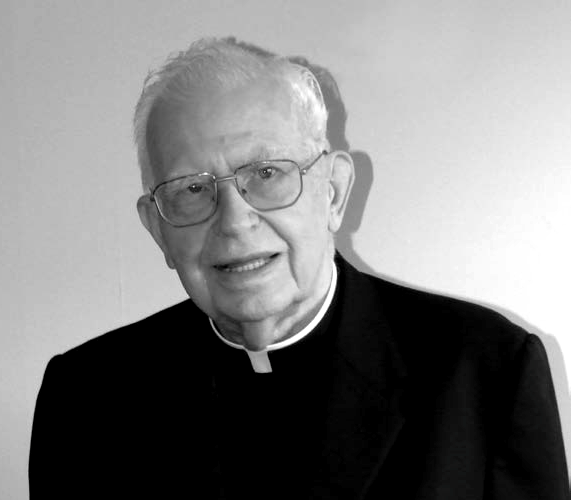
First Holy Communion: Sermon from May 16, 1943
Here is a sermon from the good old days by +Rev. Msgr. Vincent Nicholas Foy (August 14, 1915 – March 13, 2017), from 1943. Readers may recall that Pope Saint Pius X, by the decree Quam Singulari in 1910, lowered the customary age of reception of Holy Communion – after the rigours of the plague[…]Continue reading→
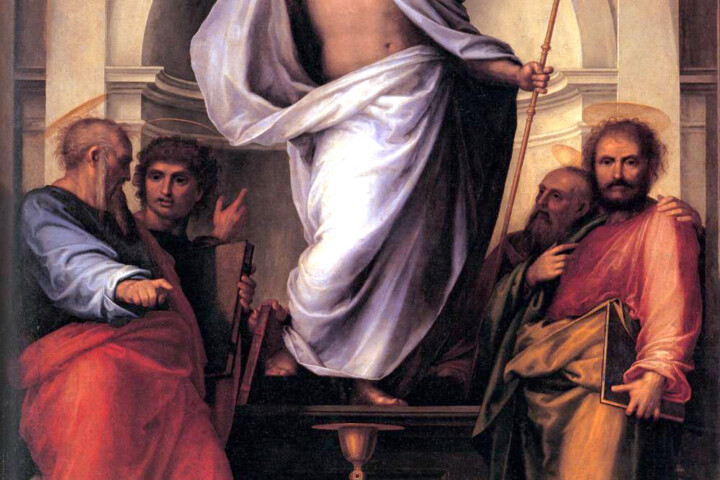
In the Glorious Light of Easter, Alleluia!
Set your minds on things that are above, not on things that are on earth, for you have died, and your life is hidden with Christ in God. When Christ who is your life is revealed, then you also will be revealed with him in glory (Col. 3:3-4). The Resurrection of Our Lord and Saviour[…]Continue reading→
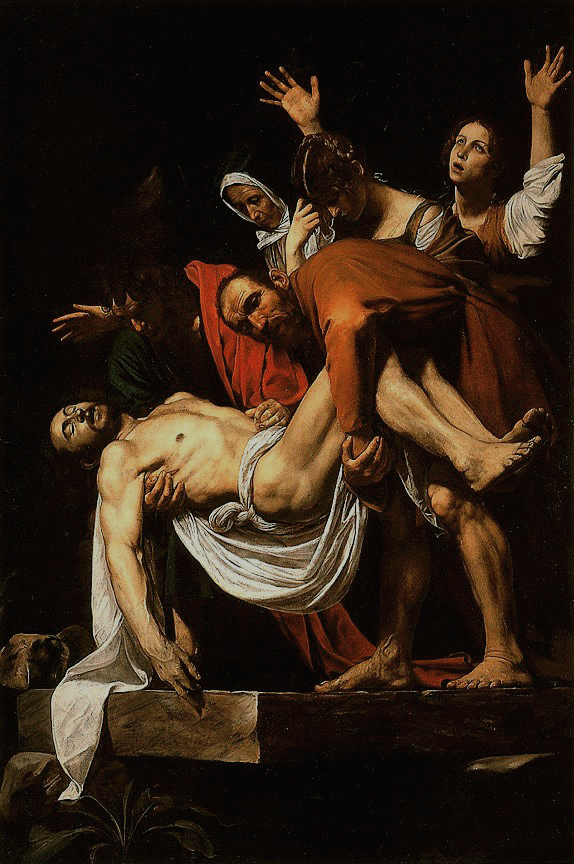
An Ancient Homily for Holy Saturday
The time between Good Friday and Easter Sunday is one of waiting, in silence, as the world wonders – anticipates – what will happen, after the death of Christ. We re-live this time each year in the anamnesis of our liturgy, and in turn look forward to the glorious re-creation of all things at the[…]Continue reading→
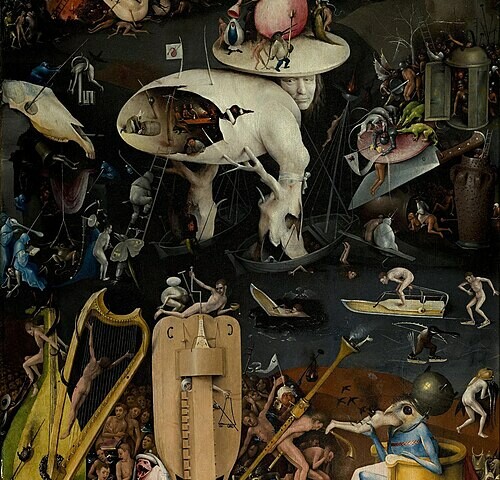
Europe’s Long Descent
(As we meditate on this day on Christ’s burial, and His descent into hell, it is fitting to ponder here with contributor Peter Marcus how the world seems to be heading there as well. The difference is that, although God cannot ‘redeem’ hell, nor those therein, He can and did redeem the world. There is[…]Continue reading→
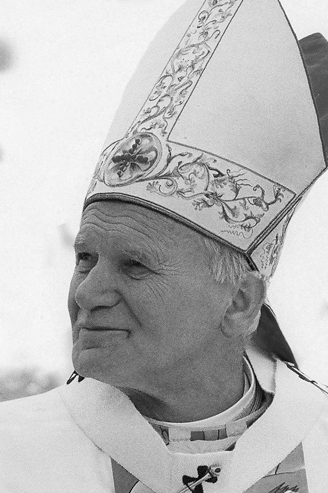
Pope Saint John Paul II’s First Good Friday Homily
ADDRESS OF HIS HOLINESS JOHN PAUL II AT THE CONCLUSION OF THE STATIONS OF THE CROSS AT THE COLOSSEUM Good Friday, 13 April 1979 When we make the Way of the Cross from one station to the next, in spirit we are always at the spot wherethis journey had its “historical” place: where it[…]Continue reading→