
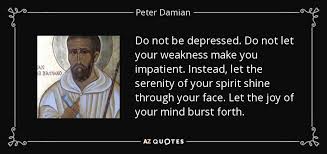
Saint Peter Damian and Pope Benedict
Not many in the hierarchy write like Saint Peter Damian (+1072) anymore, whose direct and blunt condemnation of the unnatural sexual sins of the clergy he condemns in his vivid Book of Gomorrah, as told in summary form by Carl Sundell.
Then again, not many today in the hierarchy write like Pope Benedict XVI, who, in the midst of a series of Wednesday audiences on the Church fathers, sings the praises of the 11th century bishop and doctor, who was not by nature a fire-and-brimstone Cromwellian iconoclast, but rather a highly cultured man, immersed in the beauty and culture of his age, one of the finest of Latinists, who penned treatises, hymns, poems and sermons that still move the soul. His condemnation of sin – and his own practice of asceticism – was a propaedeutic to the appreciation of beauty, truth and goodness, to which vice, especially disordered lust, blinds us. Only thus can true joy – interior, spiritual joy transcending the vicissitudes of this world – be found.
That is why many have adopted Petrus Damianus as a patron of the synod on the ‘sex abuse crisis’ engulfing the Church. And as many others have written, unless said synod recognizes that sin – not procedural policies – is the root of this crisis, little good will be achieved. And by ‘sin’ we mean the ‘sin’ condemned by Damian, which we may hope is named by name, so the axe may be brought down upon the root of the withered and decayed tree, and good fruit borne again. (Editor)
BENEDICT XVI
GENERAL AUDIENCE
Paul VI Audience Hall
Wednesday, 9 September 2009
[Video]
Saint Peter Damian
Dear Brothers and Sisters,
During the Catecheses of these Wednesdays I am commenting on several important people in the life of the Church from her origins. Today I would like to reflect on one of the most significant figures of the 11th century, St Peter Damian, a monk, a lover of solitude and at the same time a fearless man of the Church, committed personally to the task of reform, initiated by the Popes of the time. He was born in Ravenna in 1007, into a noble family but in straitened circumstances. He was left an orphan and his childhood was not exempt from hardships and suffering, although his sister Roselinda tried to be a mother to him and his elder brother, Damian, adopted him as his son. For this very reason he was to be called Piero di Damiano, Pier Damiani [Peter of Damian, Peter Damian]. He was educated first at Faenza and then at Parma where, already at the age of 25, we find him involved in teaching. As well as a good grounding in the field of law, he acquired a refined expertise in the art of writing the ars scribendi and, thanks to his knowledge of the great Latin classics, became “one of the most accomplished Latinists of his time, one of the greatest writers of medieval Latin” (J. Leclercq, Pierre Damien, ermite et homme d’Église, Rome, 1960, p. 172).
He distinguished himself in the widest range of literary forms: from letters to sermons, from hagiographies to prayers, from poems to epigrams. His sensitivity to beauty led him to poetic contemplation of the world. Peter Damian conceived of the universe as a never-ending “parable” and a sequence of symbols on which to base the interpretation of inner life and divine and supra-natural reality. In this perspective, in about the year 1034, contemplation of the absolute of God impelled him gradually to detach himself from the world and from its transient realties and to withdraw to the Monastery of Fonte Avellana. It had been founded only a few decades earlier but was already celebrated for its austerity. For the monks’ edification he wrote the Life of the Founder, St Romuald of Ravenna, and at the same time strove to deepen their spirituality, expounding on his ideal of eremitic monasticism.
One detail should be immediately emphasized: the Hermitage at Fonte Avellana was dedicated to the Holy Cross and the Cross was the Christian mystery that was to fascinate Peter Damian more than all the others. “Those who do not love the Cross of Christ do not love Christ”, he said (Sermo XVIII, 11, p. 117); and he described himself as “Petrus crucis Christi servorum famulus Peter, servant of the servants of the Cross of Christ” (Ep, 9, 1). Peter Damian addressed the most beautiful prayers to the Cross in which he reveals a vision of this mystery which has cosmic dimensions for it embraces the entire history of salvation: “O Blessed Cross”, he exclaimed, “You are venerated, preached and honoured by the faith of the Patriarchs, the predictions of the Prophets, the senate that judges the Apostles, the victorious army of Martyrs and the throngs of all the Saints” (Sermo XLVII, 14, p. 304). Dear Brothers and Sisters, may the example of St Peter Damian spur us too always to look to the Cross as to the supreme act God’s love for humankind of God, who has given us salvation.
(To continue reading, please see here).

Remembering Father Alphonse de Valk
(Today marks the sixth anniversary of the death of Father Alphonse de Valk, C.S.B., a faithful, courageous and indefatigable Basilian priest, pro-life-and-family apostle, and the founder of Catholic Insight magazine. Here is what we wrote those on his entering into eternity five years ago, as we continue to remember him in our prayers and thoughts)[…]Continue reading→

Divine Mercy Sunday – An Echo of Every Mass
Reach out your hand and put it in my side. Do not doubt but believe’… ‘My Lord and my God!’ (Jn. 20:18)). Today is Divine Mercy Sunday, and as we celebrate the end of the Easter Octave, we contemplate the wounded side of our Saviour, the Church’s source of life. On Good Friday in the[…]Continue reading→

In the Glorious Light of Easter, Alleluia!
Set your minds on things that are above, not on things that are on earth, for you have died, and your life is hidden with Christ in God. When Christ who is your life is revealed, then you also will be revealed with him in glory (Col. 3:3-4). The Resurrection of Our Lord and Saviour[…]Continue reading→

An Ancient Homily for Holy Saturday
The time between Good Friday and Easter Sunday is one of waiting, in silence, as the world wonders – anticipates – what will happen, after the death of Christ. We re-live this time each year in the anamnesis of our liturgy, and in turn look forward to the glorious re-creation of all things at the[…]Continue reading→
Pope Saint John Paul II’s First Good Friday Homily
ADDRESS OF HIS HOLINESS JOHN PAUL II AT THE CONCLUSION OF THE STATIONS OF THE CROSS AT THE COLOSSEUM Good Friday, 13 April 1979 When we make the Way of the Cross from one station to the next, in spirit we are always at the spot wherethis journey had its “historical” place: where it[…]Continue reading→
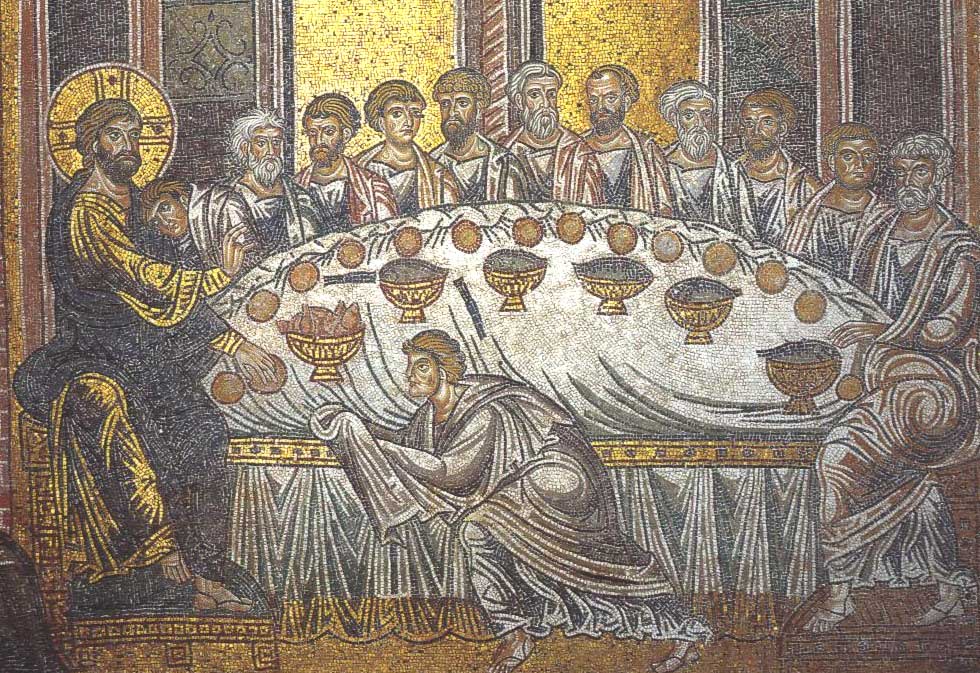
Pope Benedict’s Last Holy Thursday Homily
MASS OF THE LORD’S SUPPER HOMILY OF HIS HOLINESS BENEDICT XVI Basilica of St John Lateran Holy Thursday, 5 April 2012 Photo Gallery (Video) Dear Brothers and Sisters! Holy Thursday is not only the day of the institution of the Most Holy Eucharist, whose splendour bathes all else and in some ways draws it to[…]Continue reading→
Homily of John Paul II in the Basilica of the Annunciation
A blessed Solemnity of the Annunciation to one and all! Verbum caro factum est! Here is a meditation of the late, great John Paul II, staunchly devoted to Our Lady, from the Jubilee Year, just over a quarter of century ago, to provide food for thought, as we celebrate, and pray. Editor. JUBILEE PILGRIMAGE OF[…]Continue reading→
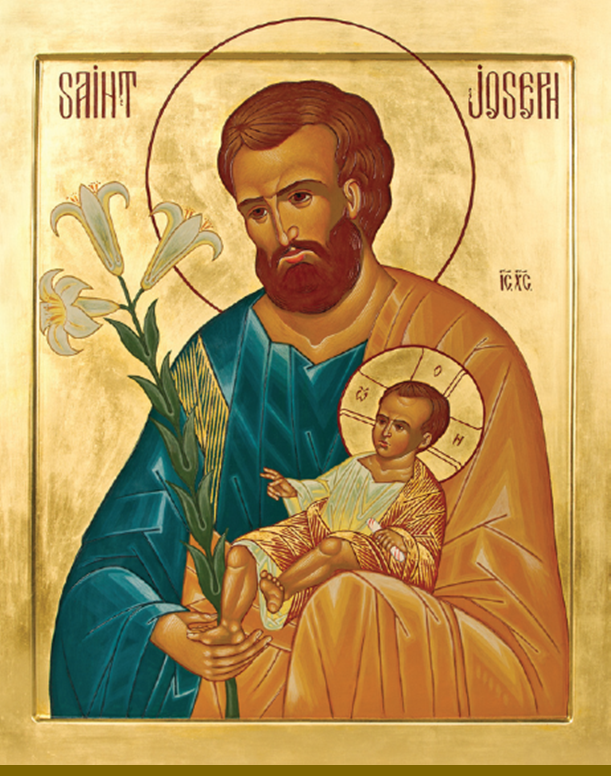
Homily of Pope Benedict on Saint Joseph
APOSTOLIC JOURNEY OF THE HOLY FATHER BENEDICT XVI TO CAMEROON AND ANGOLA (MARCH 17-23, 2009) EUCHARISTIC CELEBRATION ON THE OCCASION OF THE PUBLICATION OF THE INSTRUMENTUM LABORIS HOMILY OF THE HOLY FATHER BENEDICT XVI Amadou Ahidjo Stadium of Yaoundé Thursady, 19 March 2009 Dear Brother Bishops, Dear Brothers and Sisters, Praised be Jesus Christ who has gathered[…]Continue reading→
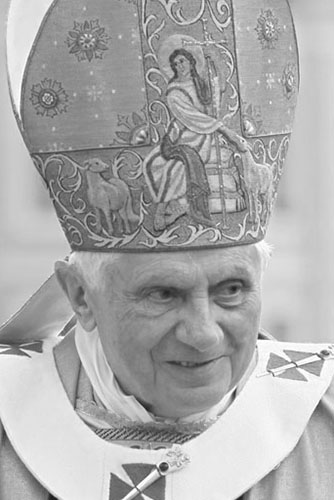
Pope Benedict and Saint Cyril
BENEDICT XVI GENERAL AUDIENCE Paul VI Audience Hall Wednesday, 27 June 2007 Saint Cyril of Jerusalem Dear Brothers and Sisters, Our attention today is focused on St Cyril of Jerusalem. His life is woven of two dimensions: on the one hand, pastoral care, and on the other, his involvement, in spite of himself, in the[…]Continue reading→
Fourth Sunday of Lent: Siloam and Spiritual Blindness
Once you were darkness, but now in the Lord you are light. Live as children of light – for the fruit of the light is found in all that is good and true (Eph. 5:8-9). The account of the cure of the blind man at the pool of Siloam, like the account of the conversation[…]Continue reading→