
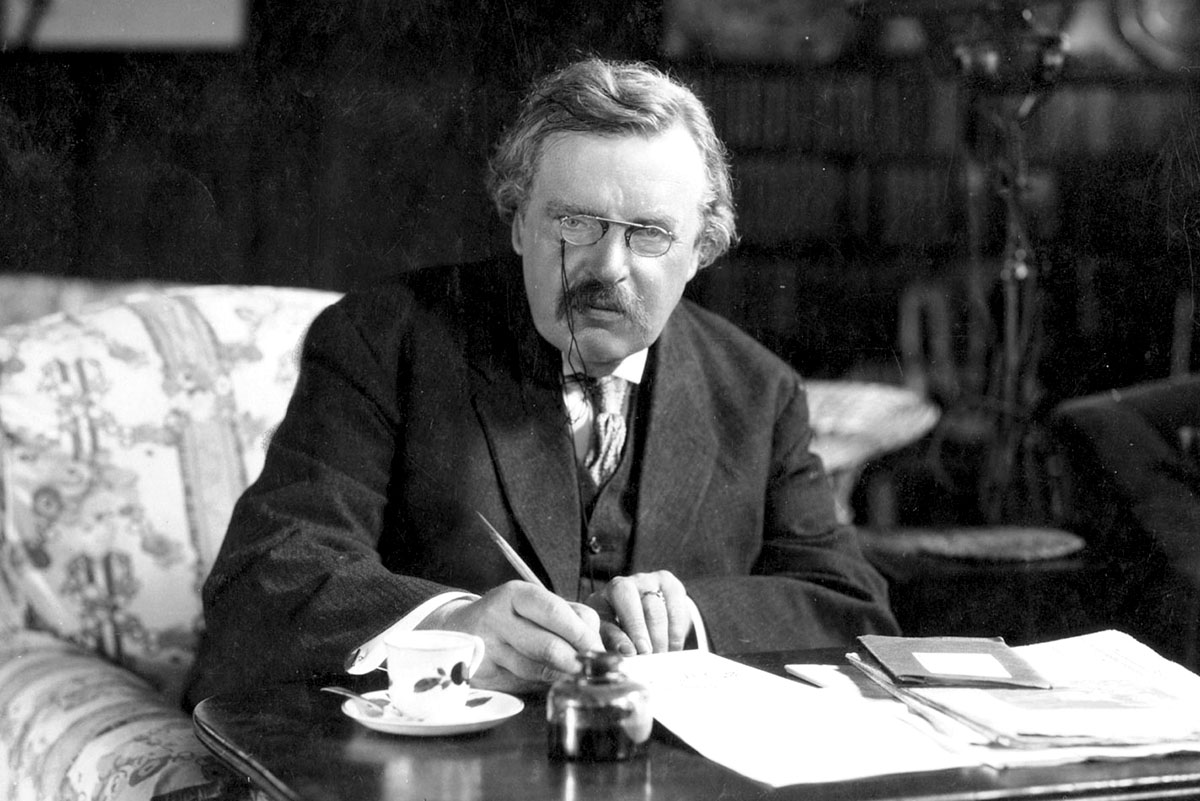
On Chesterton and Children: Theology of Repetition
What am I doing here? Is this all there is to life?
These questions occasionally surface as I sit at my desk, surrounded by beige walls, buzzing fluorescent lights, and the quiet hum of office routine. My cubicle isn’t bleak or terrible—it just feels… well, repetitive. Get up. Get dressed. Get the kids ready. Work. Commute. Dinner. Dishes. Bedtime. Repeat.
The grown-up in me longs for escape. For something more. Fantasy helps, especially when I can steal a moment in the evening to read. In my case, that moment came after the kids were tucked in and my wife was out running errands. I reached for a book that I hadn’t opened in years, Chesterton’s Orthodoxy, and unknowingly cracked open a portal to a more enchanted way of living.
A Moment of Literary Magic
I was only about twenty minutes into my reread when I stumbled upon a line from chapter four, “The Ethics of Elfland,” that stopped me cold:
“I have said that stories of magic alone can express my sense that life is not only a pleasure but a kind of eccentric privilege.”
That word—privilege—landed like a revelation. Life isn’t just a slog through sameness. It’s a gift. An odd, surprising, hilarious, painful, glorious gift. And it’s precisely the ordinary things—bedtimes, commutes, peanut-butter sandwiches—that hide the deepest wonder.
Chesterton’s whole chapter feels like it was written for tired dads, worn-out moms, and anyone who’s ever sighed at the sight of another unfolded laundry basket.
For Grown-Ups Are Not Strong Enough…
What struck me most was his take on repetition. Chesterton flips the adult view on its head:
“All towering materialism which dominates the modern world rests ultimately upon one assumption… that if a thing goes on repeating itself it is probably dead… But perhaps God is strong enough to exult in monotony. It is possible that God says every morning, ‘Do it again’ to the sun; and every evening, ‘Do it again’ to the moon.”
I’d always seen repetition as drudgery. Wake up, repeat yesterday. But Chesterton sees divine strength in repetition—not boredom, but joy. It’s not that God tires of creation; it’s that He delights in it again and again. Over and over, with childlike glee.
This shook me.
How often had I grumbled at the monotony of my life while my children were exulting in it?
Rediscovering Wonder
My kids teach me this every day. They can watch the same cartoon five times in a row and still laugh. They’ll arrange and rearrange the same Lego bricks into endless new stories. They don’t see the same thing—they see newness in sameness.
Chesterton phrases it this way, “The repetition in Nature may not be a mere recurrence, it may be a theatrical encore.”
The natural world is not reducible to a merely reasoned explanation. And if one’s outlook through the eyes of science alone it is a dreary way to live. “When we are asked why eggs turn to birds or fruits fall in autumn, we must answer that it is magic. It is not a “law,” for we do not understand its general formula. It is not a necessity, for though we can count on it happening, practically, we have no right to say that it must always happen,” Chesterton adds.
There is no such thing as ordinary. Only eyes that grow too dull to see it.
I remember standing with my toddler at the front door, watching him watch my car tires. Just the tires. The little guy was mesmerized. What was I missing? What else have I dismissed as boring that might actually be glorious?
There’s gospel truth there.
What if all the things I try to escape are actually opportunities to encounter the divine? What if running late, mopping up milk spills, and listening to the same bedtime book for the seventh time are not signs of spiritual stagnation but invitations to joy?
Legos, Chalk, and Elfland
In another gem, A Piece of Chalk, Chesterton marvels at the miracle of drawing on brown paper with white chalk:
“I had always vaguely felt facts to be miracles in the sense that they were wonderful: now I began to think them miracles in the stricter sense that they were wilful.”
This reminds me of the diligence my kids take in drawing or creating things. The other day my oldest son was hunched over the kitchen table for hours with paper and pencil. When I got back from work, he proudly told me that he was a cartographer. Not in that plain of language, but he exclaimed, “Look Dad! Here’s a map of Kid-Town!” The fact is when you care about something, you take the time to dedicate to it. To hone it and make it beautiful. That’s the reality Chesterton and my son taught me.
Facts are miracles. Repetition is divine. The world is not dead—it’s enchanted. Not because we escape it, but because we finally see it.
I don’t need to find Narnia, or follow a rabbit down a hole, or leap through Platform 9 ¾ (though I did visit that fictional landmark once during a trip to Europe 😊). The door to Elfland is in my kids’ closet, where Lego men await their next campaign. It’s in the crumbs on our kitchen table and the squeals of laughter echoing off bathtub walls.
The Divine Perspective
The life of children mirrors the life of God. Where adults sigh at sameness, God sings, “Do it again.” Monotony is not weakness. It’s strength. Chesterton reminds me that joy is not about variety, but about vision. Work is not drudgery when you look at it with the lens of love. Life is sacramental and repetitive. Jesus wants you to experience it again. And again.
It’s about embracing the call to be amazed—again.
As I go back to work tomorrow, I pray the Holy Spirit grants me the eyes of a child and the heart of a saint. Let me not curse the repetition of life but enter into it like liturgy. Because in the end, that’s what it is: a daily liturgy of love, work, wonder, and wild grace.
“Perhaps God is strong enough to exult in monotony.”
And perhaps, with a little help from Chesterton and a lot of help from grace, I can be too.

Remembering Father Alphonse de Valk
(Today marks the sixth anniversary of the death of Father Alphonse de Valk, C.S.B., a faithful, courageous and indefatigable Basilian priest, pro-life-and-family apostle, and the founder of Catholic Insight magazine. Here is what we wrote those on his entering into eternity five years ago, as we continue to remember him in our prayers and thoughts)[…]Continue reading→

Divine Mercy Sunday – An Echo of Every Mass
Reach out your hand and put it in my side. Do not doubt but believe’… ‘My Lord and my God!’ (Jn. 20:18)). Today is Divine Mercy Sunday, and as we celebrate the end of the Easter Octave, we contemplate the wounded side of our Saviour, the Church’s source of life. On Good Friday in the[…]Continue reading→

Saint Stanislaus of Szczepanów
We celebrate Saint Stanislaus today (+ April 11, 1079), in light of this Easter Octave, a bishop and martyr who accepted the episcopacy only at the direct order of Pope Alexander II. He proved a wise and courageous leader of his flock, put to death by his own king, Boleslaus, for rebuking the monarch’s ‘immoral[…]Continue reading→
First Holy Communion: Sermon from May 16, 1943
Here is a sermon from the good old days by +Rev. Msgr. Vincent Nicholas Foy (August 14, 1915 – March 13, 2017), from 1943. Readers may recall that Pope Saint Pius X, by the decree Quam Singulari in 1910, lowered the customary age of reception of Holy Communion – after the rigours of the plague[…]Continue reading→
In the Glorious Light of Easter, Alleluia!
Set your minds on things that are above, not on things that are on earth, for you have died, and your life is hidden with Christ in God. When Christ who is your life is revealed, then you also will be revealed with him in glory (Col. 3:3-4). The Resurrection of Our Lord and Saviour[…]Continue reading→
An Ancient Homily for Holy Saturday
The time between Good Friday and Easter Sunday is one of waiting, in silence, as the world wonders – anticipates – what will happen, after the death of Christ. We re-live this time each year in the anamnesis of our liturgy, and in turn look forward to the glorious re-creation of all things at the[…]Continue reading→
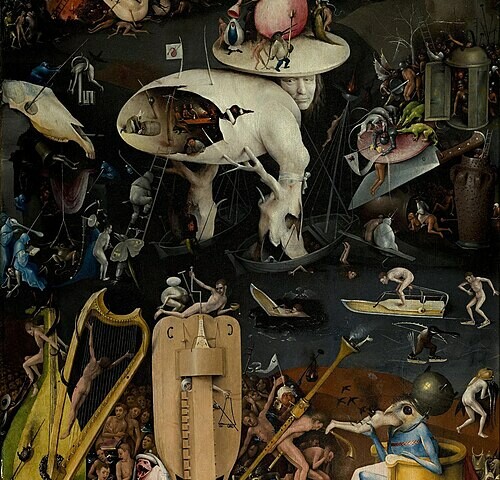
Europe’s Long Descent
(As we meditate on this day on Christ’s burial, and His descent into hell, it is fitting to ponder here with contributor Peter Marcus how the world seems to be heading there as well. The difference is that, although God cannot ‘redeem’ hell, nor those therein, He can and did redeem the world. There is[…]Continue reading→
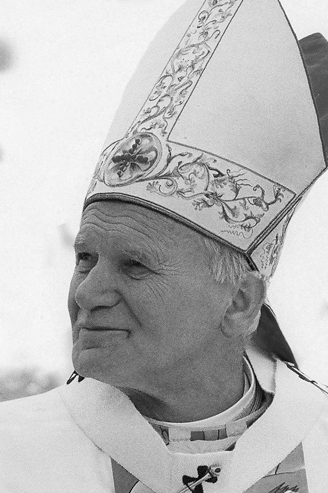
Pope Saint John Paul II’s First Good Friday Homily
ADDRESS OF HIS HOLINESS JOHN PAUL II AT THE CONCLUSION OF THE STATIONS OF THE CROSS AT THE COLOSSEUM Good Friday, 13 April 1979 When we make the Way of the Cross from one station to the next, in spirit we are always at the spot wherethis journey had its “historical” place: where it[…]Continue reading→
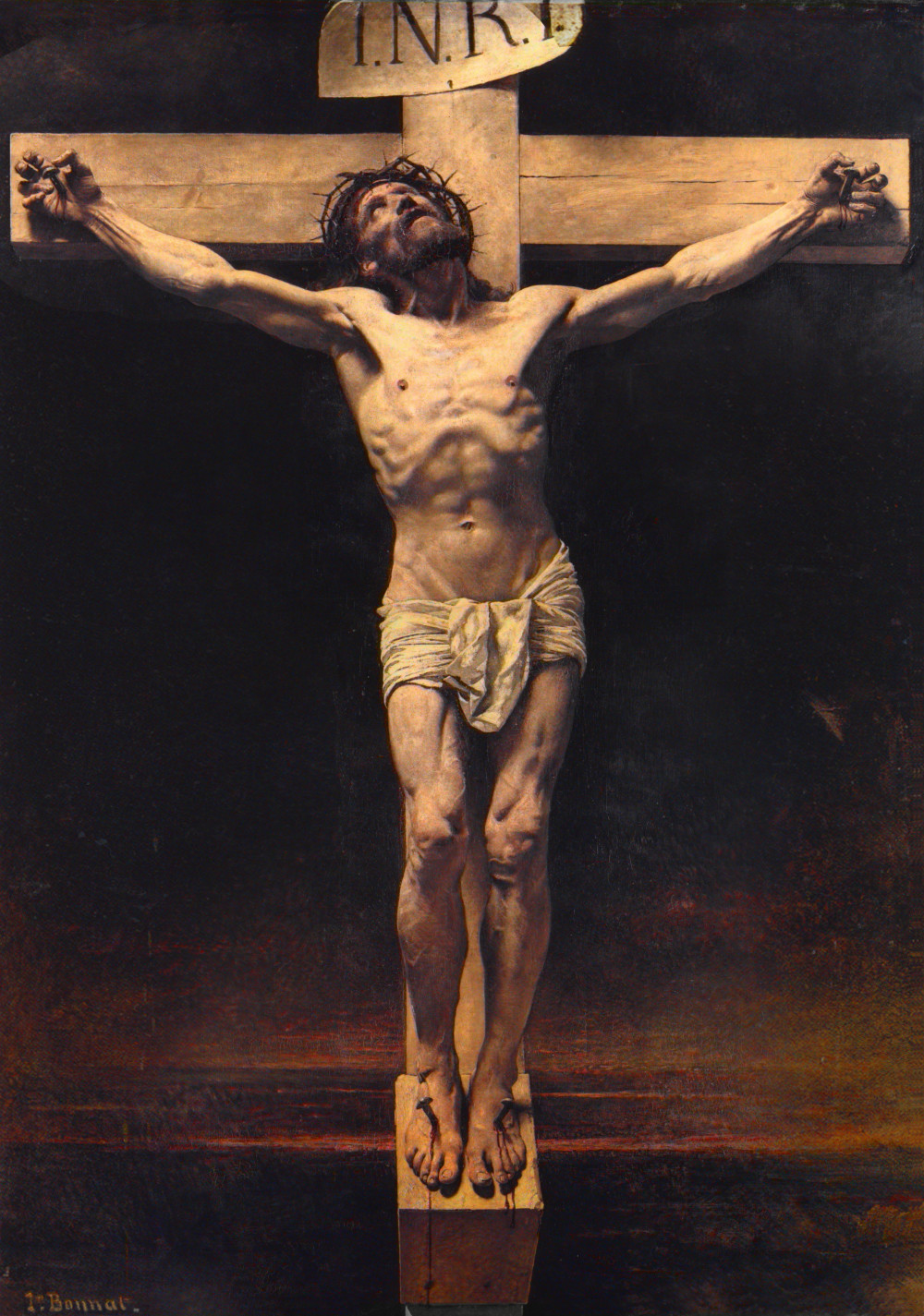
A Meditation for Good Friday: How To Undo the Effects of Sin?
Cardinal Newman, now Saint John Henry Newman, was a towering figure of nineteenth-century Catholicism who is almost universally admired. I say “almost” because not everyone likes him. I knew a priest once, Arthur Caulkins, who has become disenchanted with Newman. As an undergraduate Arthur had been enamoured of Newman, and this interest continued when he[…]Continue reading→
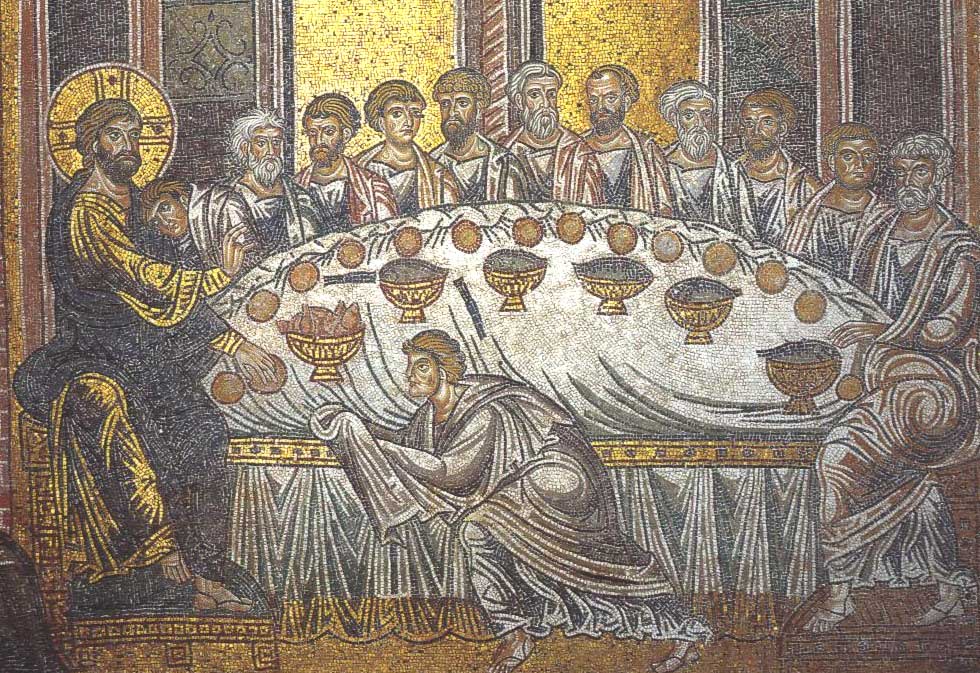
Pope Benedict’s Last Holy Thursday Homily
MASS OF THE LORD’S SUPPER HOMILY OF HIS HOLINESS BENEDICT XVI Basilica of St John Lateran Holy Thursday, 5 April 2012 Photo Gallery (Video) Dear Brothers and Sisters! Holy Thursday is not only the day of the institution of the Most Holy Eucharist, whose splendour bathes all else and in some ways draws it to[…]Continue reading→