
Eighteenth Sunday and Setting Our Sights On What is Above
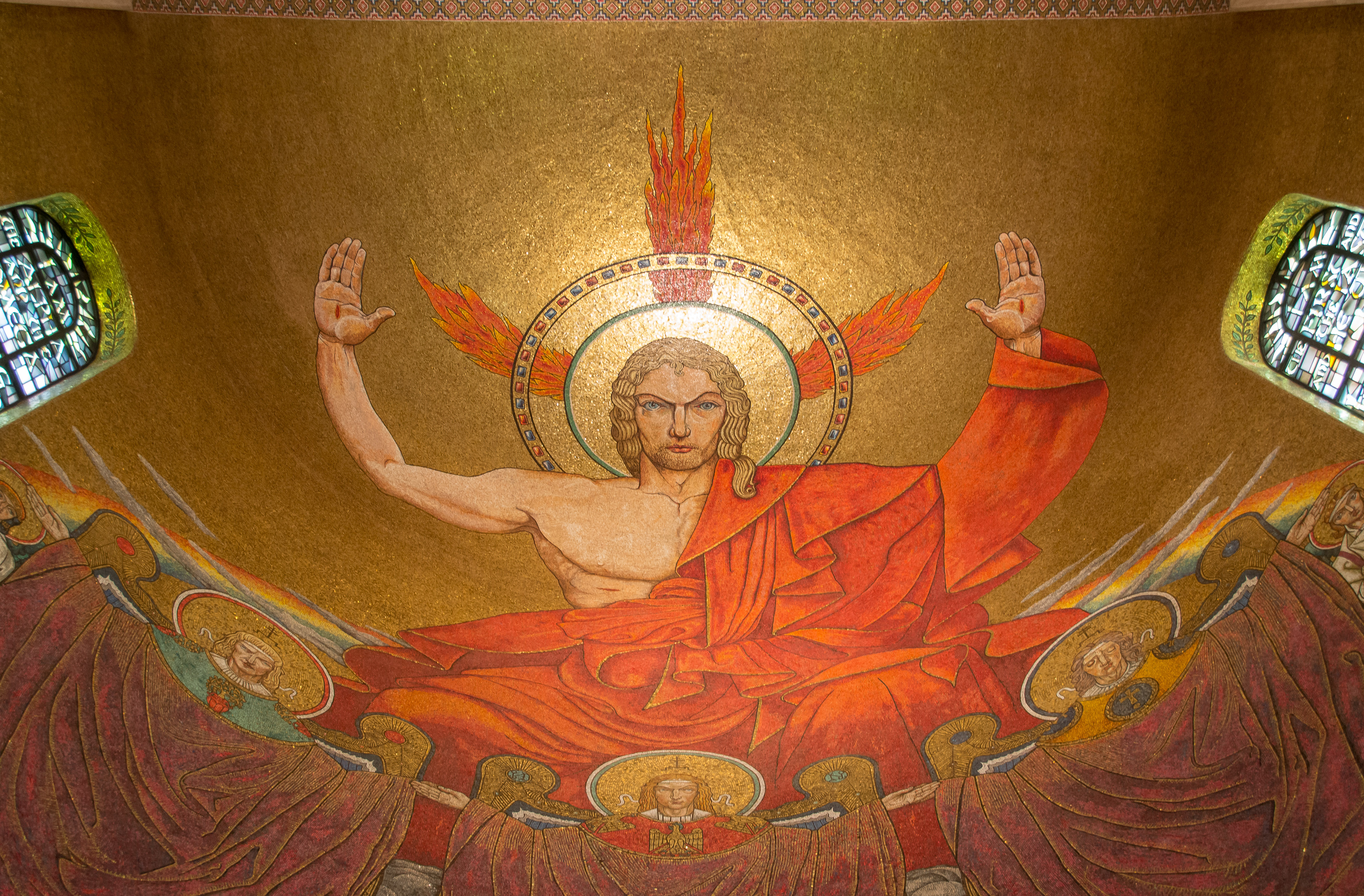
Set your minds on things that are above, not on things that are on earth, for you have died, and your life is hidden with Christ in God (Col 3: 2-3).
The scripture lessons of the Mass make it very clear that we were created and redeemed by God for supernatural life in this world and the Beatific Vision in the world to come. Think of what is above, not of what is on earth. For you have died, and your life is hidden with Christ in God (Col. 3:3). With these words the Apostle exhorts us to be mindful of our supernatural origin and destiny. As beautiful as it is, the world and its goods do not ultimately satisfy the deepest human yearnings, for one’s life does not consist in the abundance of his possessions (Lk. 12:15). The Apostle further exhorts us: Put to death, therefore what is earthly in you: immorality, impurity, passion, evil desire and covetousness, which is idolatry (Col. 3:5). In life, we often come to acknowledge and affirm the truth of these words after error and personal struggle but aided by the prayers of the Church, in time our faith enlightens us and its wisdom guides our thoughts and actions. Our Lord exhorts us to seek first the kingdom of God and his righteousness (Mt. 6:33); and St Paul explains that the kingdom of God is not food or drink but righteousness and peace and joy in the Holy Spirit (Rom. 14:17). Righteousness, joy, peace, existence, meaning, purpose – these are what we call metaphysical realities that help us to understand ourselves and the world. They are beyond the physical; principles and truths that guide our actions.
According to Raymond Cardinal Burke, the greatest danger today is the loss of a sound metaphysics, and consequently, of a sense of an objective reality, that is, a reality beyond ourselves. Both our first reading and the Gospel parable speak to the vanity, that is, the emptiness and foolishness of those who trust in their own devices. This may be said of those who are seeking to impose a new world order. We must guard against their foolishness. Though increasingly the architects of this new world are quite explicit in their intentions, we do well to attempt to discern the ideas behind their efforts. Ideas, good or bad, have their consequences. We are only able to discern what is sometimes referred to as zeitgeist, the beliefs and ideas of our time, by appealing to the moral foundations of what is still, even if weak, a common Catholic culture. In the absence of such a culture, nevertheless, we are not without the knowledge of Catholic truth. As men and women of faith, our response to what is happening in real time as it were, must be measured, reasonable but also salvific, that is to say, enlightened and enlivened by the true Faith. We must not allow ourselves to be overcome by evil; rather we must overcome evil with good (Cf. Rom. 12:21).
When the faith dies, the culture dies, the civilization dies and the people begin to die (Pat Buchanan). As the proponents of the so called great reset continue their efforts to impose a dystopian liberal world order, in which faith, truth and freedom are at best memories of a time that is no more, it is absolutely essential that we return and remain immovably rooted in our traditional Catholic Faith. Our future is in tradition. Our religion is from God Himself and the great truths that have been revealed to us, the truth of life’s meaning and purpose, the world itself, the sacredness of human life, these have been the foundation of a civilization that has brought learning, discipline and goodness everywhere, including our own nation. The respect for law and reason fostered by Catholic culture rescued peoples victimized by barbarism and gave birth to nations that have contributed greatly to the commonwealth of humanity. The barbarism that we face, the cold, calculating attitude to human persons, like barbarism of any kind, always dehumanizes. That in fact is what barbarism is: the refusal to recognize the humanity or equality of others. Such is always the curse of tribalism.
The humanizing influence of the Church by means of the Gospel is an undeniable reality and all of modern Western society is indebted to the Church, to say nothing of the Church’s work in developing nations. Yet, since the French Revolution a process of secularization has brought us to where we are today: a wasteland in which the Church also is experiencing desertification. As Cardinal Burke rightly observes, this has led to the grand capitalism of those who adore mammon – money, and to Marxism. All those who have turned from Christ have seen that Satan is a bloody tyrant. As bearers of the truth and of goodness our witness is needed more than ever especially in our own nation, where tragically in the fields of education and health care the charity of the Church has been replaced by the cruelty and lies of the state for the innocence of life and its sacred character are subject to moral and physical violence.
Ideas have consequences and so in this troubled time in history, with its particular challenges and dangers, we must clearly and deliberately devise a program, a simple plan of action that will enable us as a Catholic community of faith to continue to proclaim the truth of Christ and generously to practice the salvific charity of Christ. The parish is best suited for such a program because a parish is a basic ecclesiastical unit. The parish is to the Church what the family is to society; and restoring and maintaining the health and integrity of both is our work. When the faith dies, the culture dies, the civilization dies and the people begin to die.
A Plan of Action for our Troubled Times
As Catholics, first and foremost we are grateful to God Our Father for the gift and knowledge of the True Faith through Jesus Christ Our Lord and Saviour in the grace of the Holy Spirit.
In this bond of faith, we seek ever greater unity in the charity of Christ which urges us on to further the establishment of God’s Kingdom first in our own hearts through prayer and the works of mercy; and by extension, in our midst and beyond through our loving concern for the well-being of our neighbour.
At this time in history when the integrity of the Faith and the Church’s communion are under attack and visibly undermined, we resolve all the more to assist one another in the bond of faith and charity through the sharing of spiritual and material goods, following the example of Our Lady, St. Joseph and of St. Benedict.
We resolve to the extent that we are able to be attentive to one another’s needs, to bear one another’s burdens, and in hope, to pray for the Triumph of Our Lady’s Immaculate Heart.
May God the Father, the author of all that is good, confirm us in our common effort and bring it to completion in an ever deeper communion of faith and charity.

Remembering Father Alphonse de Valk
(Today marks the sixth anniversary of the death of Father Alphonse de Valk, C.S.B., a faithful, courageous and indefatigable Basilian priest, pro-life-and-family apostle, and the founder of Catholic Insight magazine. Here is what we wrote those on his entering into eternity five years ago, as we continue to remember him in our prayers and thoughts)[…]Continue reading→

Divine Mercy Sunday – An Echo of Every Mass
Reach out your hand and put it in my side. Do not doubt but believe’… ‘My Lord and my God!’ (Jn. 20:18)). Today is Divine Mercy Sunday, and as we celebrate the end of the Easter Octave, we contemplate the wounded side of our Saviour, the Church’s source of life. On Good Friday in the[…]Continue reading→

Saint Stanislaus of Szczepanów
We celebrate Saint Stanislaus today (+ April 11, 1079), in light of this Easter Octave, a bishop and martyr who accepted the episcopacy only at the direct order of Pope Alexander II. He proved a wise and courageous leader of his flock, put to death by his own king, Boleslaus, for rebuking the monarch’s ‘immoral[…]Continue reading→
First Holy Communion: Sermon from May 16, 1943
Here is a sermon from the good old days by +Rev. Msgr. Vincent Nicholas Foy (August 14, 1915 – March 13, 2017), from 1943. Readers may recall that Pope Saint Pius X, by the decree Quam Singulari in 1910, lowered the customary age of reception of Holy Communion – after the rigours of the plague[…]Continue reading→
In the Glorious Light of Easter, Alleluia!
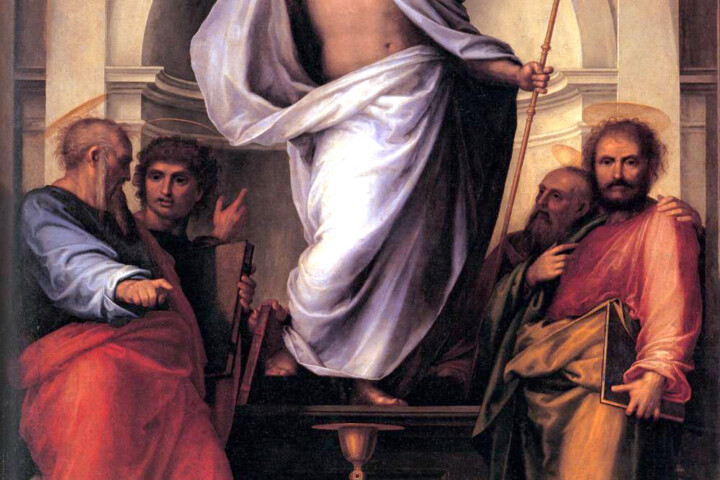
Set your minds on things that are above, not on things that are on earth, for you have died, and your life is hidden with Christ in God. When Christ who is your life is revealed, then you also will be revealed with him in glory (Col. 3:3-4). The Resurrection of Our Lord and Saviour[…]Continue reading→
An Ancient Homily for Holy Saturday
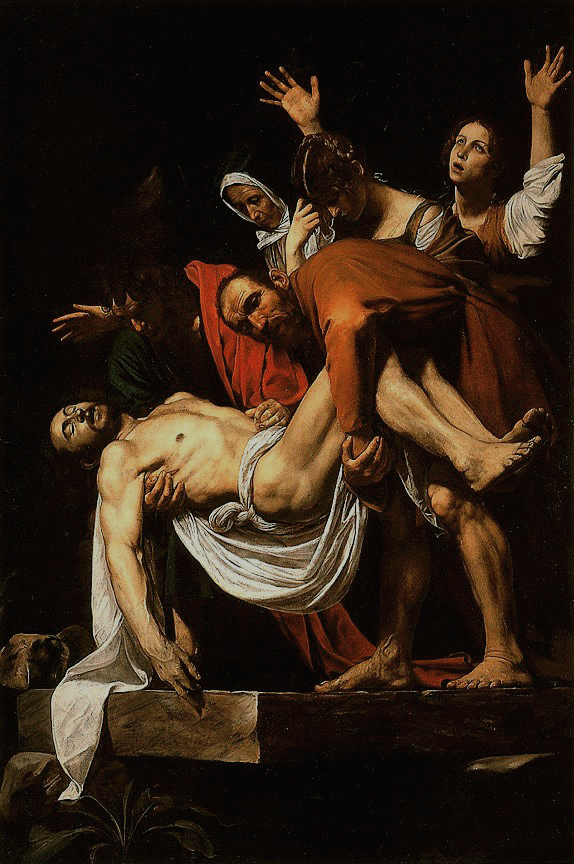
The time between Good Friday and Easter Sunday is one of waiting, in silence, as the world wonders – anticipates – what will happen, after the death of Christ. We re-live this time each year in the anamnesis of our liturgy, and in turn look forward to the glorious re-creation of all things at the[…]Continue reading→
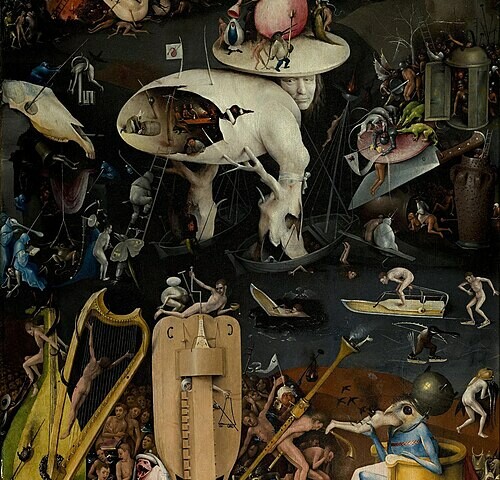
Europe’s Long Descent
(As we meditate on this day on Christ’s burial, and His descent into hell, it is fitting to ponder here with contributor Peter Marcus how the world seems to be heading there as well. The difference is that, although God cannot ‘redeem’ hell, nor those therein, He can and did redeem the world. There is[…]Continue reading→
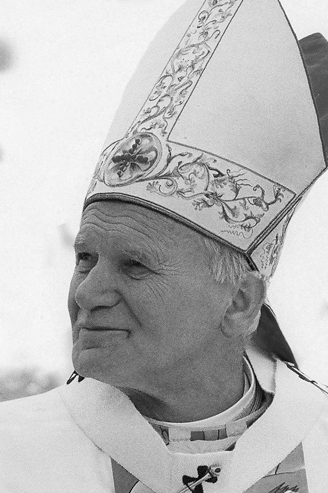
Pope Saint John Paul II’s First Good Friday Homily
ADDRESS OF HIS HOLINESS JOHN PAUL II AT THE CONCLUSION OF THE STATIONS OF THE CROSS AT THE COLOSSEUM Good Friday, 13 April 1979 When we make the Way of the Cross from one station to the next, in spirit we are always at the spot wherethis journey had its “historical” place: where it[…]Continue reading→
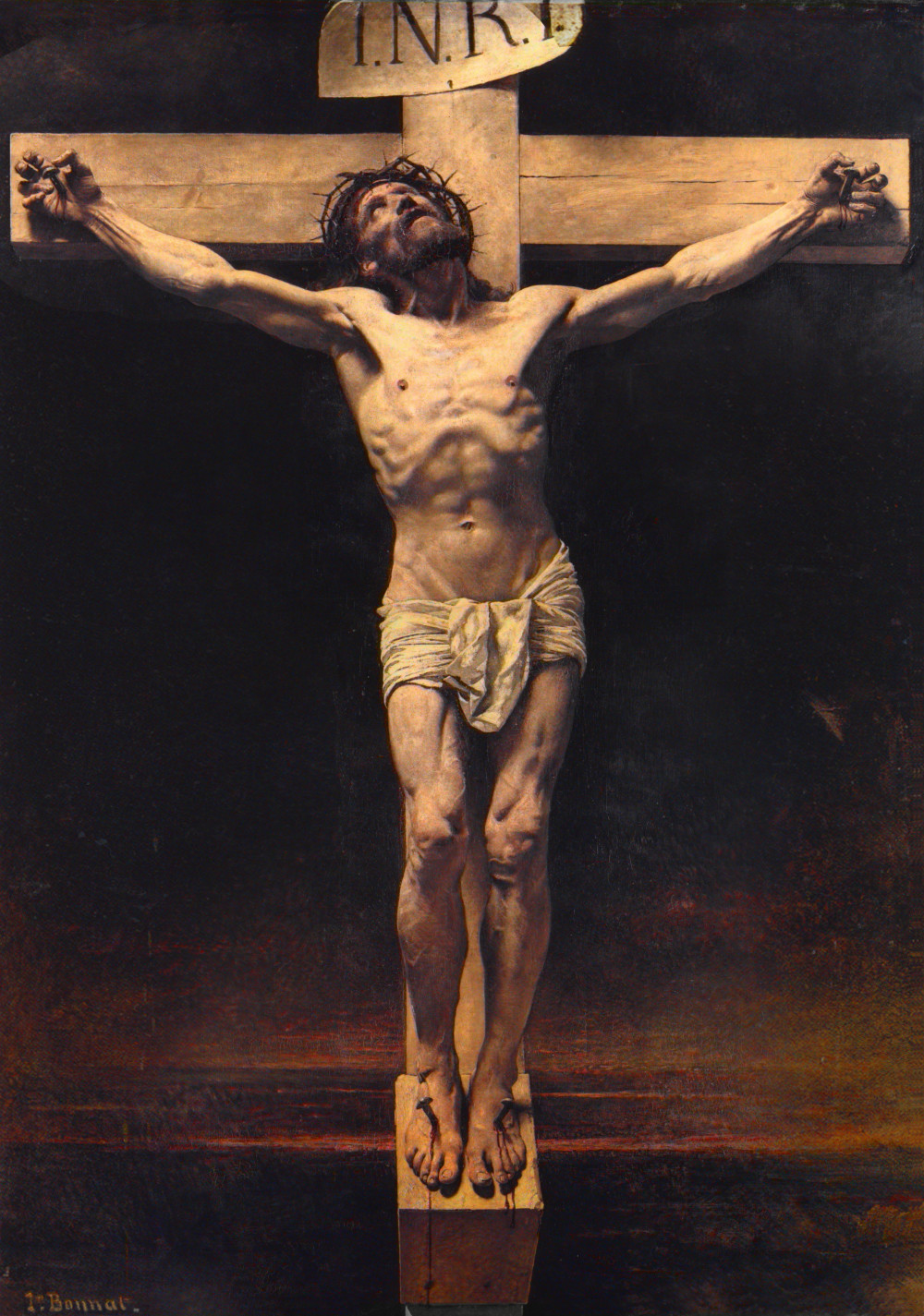
A Meditation for Good Friday: How To Undo the Effects of Sin?
Cardinal Newman, now Saint John Henry Newman, was a towering figure of nineteenth-century Catholicism who is almost universally admired. I say “almost” because not everyone likes him. I knew a priest once, Arthur Caulkins, who has become disenchanted with Newman. As an undergraduate Arthur had been enamoured of Newman, and this interest continued when he[…]Continue reading→
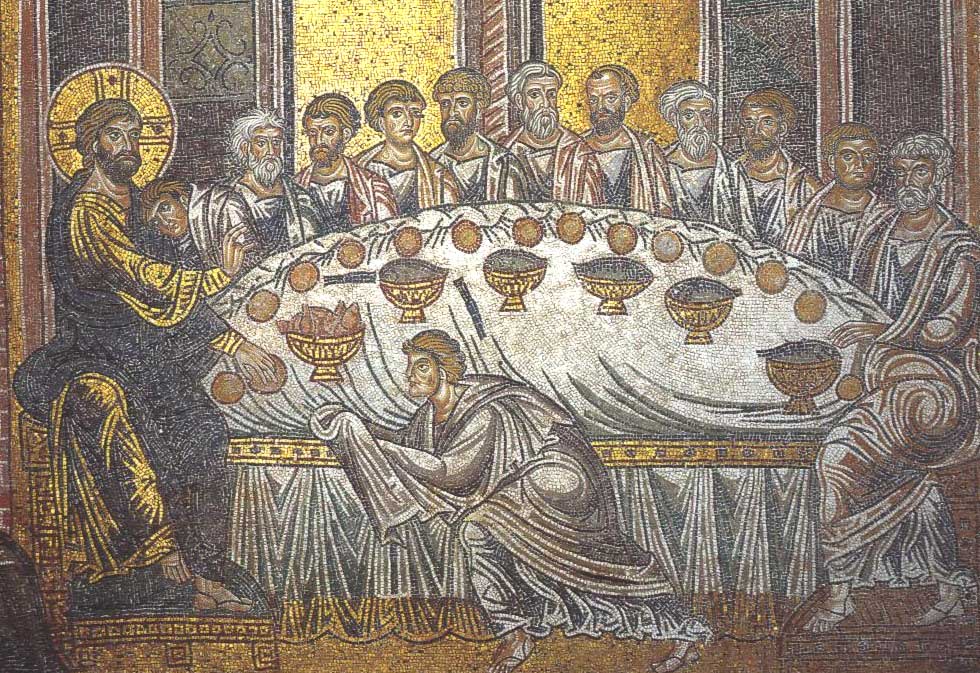
Pope Benedict’s Last Holy Thursday Homily
MASS OF THE LORD’S SUPPER HOMILY OF HIS HOLINESS BENEDICT XVI Basilica of St John Lateran Holy Thursday, 5 April 2012 Photo Gallery (Video) Dear Brothers and Sisters! Holy Thursday is not only the day of the institution of the Most Holy Eucharist, whose splendour bathes all else and in some ways draws it to[…]Continue reading→