
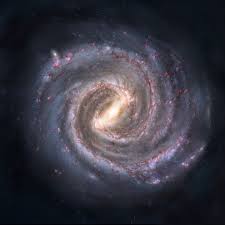
Apologetics 101, Question 7: A Designed versus Random Universe
In response to Catholic Insight’s post of Carl Sundell’s list of 39 essential questions Catholics should be prepared to answer about our faith, I have been responding to them one-by-one to equip you with clear, concise and (hopefully) well-reasoned answers to help you grow and share your Faith.
None of these answers can be conclusive. They simplify answers and provide a framework to approach these questions. You can find links to previously published articles in this series at the bottom.
7. How would you show that the universe appears to be designed, rather than haphazard?
This question appears to be looking for a list of examples from nature that show order, design or telos, which is the philosophical term for ‘purpose’, and then to follow with, “See!? Isn’t it obvious?! The universe is designed!”
This may be a helpful approach in responding to most who ask this question, and for many people it is obvious that individual examples from nature all aim toward a purpose or final cause, which implies design. It would be natural to apply this principle to nature as a whole and say that it must have an end or purpose, which would – again – imply design. Saying that all of nature is designed would mean that all of nature has a Designer. This Designer, because it would be outside of nature, would by definition be super-natural. This is what many mean by ‘God’ and it is the basis for Aquinas’s fifth way as found in his Summa Theologiae (Part I, Q 2, A 3).
However, it is important to recognize that this ordered, designed view of nature is a set of lenses that Christians are wearing when they view these individual examples. It is called by philosopher Edward Feser the ‘Aristotelian philosophy of nature’, finding its roots in the ancient philosopher Aristotle (Aristotle’s Revenge, location 47).
While the Aristotelian philosophy of nature is more ancient, common sensical and aligned with Christian teaching, it is no longer the assumed lens by which people view the world. The Christian must consider an alternative set of lenses before assuming this one.
The most common alternative philosophy of nature that contends with the Aristotelian and Christian one is referred to by Feser as the “mechanical world picture” in contrast to the “organic world picture” (Aristotle’s Revenge, location 141). As the name implies, this mechanical view sees even the natural substances and actions are artificial. This would also include the recognition of natural substances themselves. A mechanic view focuses on the parts of the thing itself, but does not see those parts in relation to a whole. Instead of seeing a tree, it sees roots, a trunk, branches and leaves.
It is clear that roots only make sense when seen in relation to the trunk, branches and leaves because that is what roots feed. Leaves only make sense in relation to roots, a trunk and branches because that is how those parts are nourished via chlorophyll from the sun. What is implied in this relational language is the telos of “life” as each function of each part in some way is ordered toward the nutrition of the whole plant, which contributes to the continued life of the individual plant as well as the continued life of the species of the plant.
The strongest argument for teleology is derived from the idea of a formal cause or the form of an object. Even if one does not want to acknowledge that natural objects have a purpose, it becomes more difficult to deny that objects have a form without also denying the possibility of classification. Without recognizing form, classification becomes impossible. This makes a fundamental component of scientific observation possible.
Once someone accepts that objects have forms, one has to ask why these objects are formed as they are. The answer to this implies final causality, telos, or purpose.
Another distinction (there’s always another distinction) with teleology is the one between extrinsic and intrinsic. This is important because one of them makes a stronger case for the teleos, or purpose, of natural things and nature itself. The first, “extrinsic” causality is the imposed purpose we give an object. We put the pieces together so that the object can complete a function. This can begin to point one to an understanding of telos, but it can easily be dismissed by one with the mechanistic world picture because we are the ones determining the purpose. However, “intrinsic” causality refers to the forms of substances that are not artificial. This form could not have been imposed like that of an artifact. One can take the simplest example from nature and see that its form is made to complete its function, its formal cause is ordered toward its final cause.
Finally, even the concept of “haphazard” or “randomness” actually cannot disprove design because those very concepts imply a design that supersedes the perception of randomness. When something is described as “random,” the implication is that there is a purpose to each expected behavior that the example in question is not meeting. This purpose is built-in or designed into the nature of the item in question. For example, it is not just that the result of a throw of dice will unpredictably produce a number 1-6; it is that the dice will act in accordance with its mass, the force by which it was thrown, the force of gravity, the resistance of air pressure, the friction of the ground, etc. All of these variables are designed into their nature. What we refer to as random is really just an acknowledgment of our lack of knowledge about the process of something. Something acts according to its form if no other factors impede it from doing so, even if we do not perceive what that impediment is or we unknowingly misunderstood the form.
This means that by taking into account the abundance of common-sense examples of both artifacts and substances acting according to their respective extrinsic and intrinsic purposes, the insufficiency of the mechanical world picture to explain this phenomenon, and the reliance on design for the concept of randomness (“haphazard”) to even exist, it is reasonable to apply the principle of design to both the individual examples within nature as well as nature as a whole (“the universe”). When one applies the principle of design to nature as a whole, then there must a Designer that stands outside of nature. This would make the Designer supernatural, which would imply other features. These features are those that most would befit something called God.
Want to catch up on the previous questions? You can find parts one, two, three, four, five and six (please include link to part once it is live) here!

Saint Kateri , Canada’s Protectress
This was the title given to Saint Kateri Tekakwitha, by Pope Benedict XVI, when he canonized her on October 28th, 2012, along with six others, in Saint Peter’ Square (she had been beatified by Pope John Paul II back in 1980). With Saint Joseph as our protector, along with the Canadian martyrs, we seem to[…]Continue reading→

Remembering Father Alphonse de Valk
(Today marks the sixth anniversary of the death of Father Alphonse de Valk, C.S.B., a faithful, courageous and indefatigable Basilian priest, pro-life-and-family apostle, and the founder of Catholic Insight magazine. Here is what we wrote those on his entering into eternity five years ago, as we continue to remember him in our prayers and thoughts)[…]Continue reading→

My Name is Bernadette
April 16th is a propitious day, for besides the anniversary of Father de Valk’s death, who founded Catholic Insight in its print form decades ago, and the commemoration of the ‘two Benedicts’, mentioned in accompanying posts, today we also recall Saint Bernadette Soubirous, the young visionary to whom the Virgin Mary appeared numerous times at[…]Continue reading→
Canonizing Sister Faustina and Divine Mercy
HOMILY OF THE HOLY FATHER MASS IN ST PETER’S SQUARE FOR THE CANONIZATION OF SR MARY FAUSTINA KOWALSKA Sunday, 30 April 2000 1. “Confitemini Domino quoniam bonus, quoniam in saeculum misericordia eius”; “Give thanks to the Lord for he is good; his steadfast love endures for ever” (Ps 118: 1). So the Church sings on the Octave of[…]Continue reading→

Divine Mercy Sunday – An Echo of Every Mass
Reach out your hand and put it in my side. Do not doubt but believe’… ‘My Lord and my God!’ (Jn. 20:18)). Today is Divine Mercy Sunday, and as we celebrate the end of the Easter Octave, we contemplate the wounded side of our Saviour, the Church’s source of life. On Good Friday in the[…]Continue reading→

Saint Stanislaus of Szczepanów
We celebrate Saint Stanislaus today (+ April 11, 1079), in light of this Easter Octave, a bishop and martyr who accepted the episcopacy only at the direct order of Pope Alexander II. He proved a wise and courageous leader of his flock, put to death by his own king, Boleslaus, for rebuking the monarch’s ‘immoral[…]Continue reading→
First Holy Communion: Sermon from May 16, 1943
Here is a sermon from the good old days by +Rev. Msgr. Vincent Nicholas Foy (August 14, 1915 – March 13, 2017), from 1943. Readers may recall that Pope Saint Pius X, by the decree Quam Singulari in 1910, lowered the customary age of reception of Holy Communion – after the rigours of the plague[…]Continue reading→
In the Glorious Light of Easter, Alleluia!
Set your minds on things that are above, not on things that are on earth, for you have died, and your life is hidden with Christ in God. When Christ who is your life is revealed, then you also will be revealed with him in glory (Col. 3:3-4). The Resurrection of Our Lord and Saviour[…]Continue reading→
An Ancient Homily for Holy Saturday
The time between Good Friday and Easter Sunday is one of waiting, in silence, as the world wonders – anticipates – what will happen, after the death of Christ. We re-live this time each year in the anamnesis of our liturgy, and in turn look forward to the glorious re-creation of all things at the[…]Continue reading→
Europe’s Long Descent
(As we meditate on this day on Christ’s burial, and His descent into hell, it is fitting to ponder here with contributor Peter Marcus how the world seems to be heading there as well. The difference is that, although God cannot ‘redeem’ hell, nor those therein, He can and did redeem the world. There is[…]Continue reading→