
Seventeenth Sunday: Perfecting Our Prayer With and In Christ
Ask and it will be given you; search, and you will find; knock, and the door will be opened to you (Lk. 11: 9). ⧾
The Scripture lessons of the Mass today speak to us of prayer – specifically of intercessory prayer in our first reading, and of the prayer which is expressive of all forms of prayer, the Our Father, in our Gospel reading. Before Our Lord taught this prayer, the expression ‘God the Father’ had never been revealed to anyone. When Moses himself asked God who he was, he heard another name [I AM]. The Father’s name has been revealed to us in the Son (Tertullian, De orat. 3: PL 1, 1155). Father means giver of life. God is the Creator of all that is but only because of Jesus is God our Father. Our Lord radically changed our relationship with God. Through Baptism we become children of God, sons in the Son, and thus Jesus made God our Father. We call this our divine filiation.
This prayer that He taught us is the most perfect of prayers…. In it we ask, not only for all the things we can rightly desire, but also in the sequence that they should be desired (St. Thomas Aquinas). It is said that when the great mystic and teacher of prayer St. Teresa of Avila prayed the Our Father, she found it almost impossible to get beyond the first two words; so moved was she by this truth. The first word of this prayer, ‘our’, expresses one of life’s greatest mysteries, the mystery of solidarity or communion. Each one of us who prays this prayer is instructed to call God not just my Father, but our Father. Each of us is to pray in the name of the whole Church, for each Christian is a cell in the one Body of Christ, a member of God’s family and a child of the same Father. The Catechism of the Catholic Church reminds us that the Church is this new communion of God and men. .. In praying ‘our’ Father, each of the baptized is praying in this communion (2790); that is, the communion of saints. Because of this mystery of solidarity in the Body of Christ, it can be said that our prayers echo. Our prayers will have effects on those who come after us, on strangers that we have never met, and on poor sinners and the most forgotten souls in Purgatory. Our prayer which today ascends to God will descend like rain at another time and place, wherever God directs it, where there is need for consolation or strength. Just as responsible use of resources will help those in our families and communities who come after us, so too our prayers can be of help to souls far removed from us in space and time.
Just over one hundred years ago three unlettered children were taught to pray by an angel and the prayer that he taught them may help us to deepen our understanding of the value and importance of prayer. In the spring of 1916, a year before Our Lady of Fatima appeared to Jacinta, Francisco and Lucia, they received a visit from an angel who called himself the Angel of Peace. He would prepare them for the mission they would receive from Our Lady to make known the devotion to her Immaculate Heart. As they usually did, they had brought their sheep to pasture, and after eating their lunch they prayed the Rosary together. Eager to play, they prayed the Rosary as quickly as possible with their own shortened version of the Rosary; saying on each bead only the first two words of the Our Father or Hail Mary. After their prayers that day, as they were starting to play a game, a strong wind shook the tree tops. In her memoirs Sr. Lucia would later describe what they saw: a young man, about fourteen or fifteen years old, whiter than snow, transparent, as crystal when the sun shines through it and of great beauty…. Then the angel spoke. ‘Do not be afraid. I am the Angel of Peace. Pray with me. The angel then knelt down and bowed until his forehead touched the ground and in this posture of great reverence, he taught them this beautiful prayer that is usually referred to as the Pardon Prayer: My God, I believe, I adore, I hope and I love You! I ask pardon of You for those who do not believe, do not adore, do not hope and do not love You. The angel repeated these words three times, and then he rose and said to the children, ‘Pray thus. The Hearts of Jesus and Mary are attentive to the voice of your supplications.’
This Pardon prayer outlines four fundamental actions we all must do in order to have a relationship with God: keep faith by believing, worship by adoring, trust by hoping and love by loving (Fr. Andrew Apostoli, C.F.R., Fatima for Today, p. 24). Then the prayer asks God to pardon those who are neglecting these duties towards Him. This prayer was for the children a powerful introduction to intercessory prayer for poor sinners. Praying for the salvation of souls is at the very centre of Our Lady of Fatima’s message. Indeed, the message of Fatima may be summarized as the conversion of poor sinners and the return of souls to God. In the apparition on August 19, 1917 Our Lady told the children: Pray, pray very much, and make sacrifices for sinners for many souls go to hell, because there are none to sacrifice themselves and to pray for them.
Our Lord admonished us that because wickedness is multiplied, most men’s love will grow cold (Mt. 24:12). Our lukewarm practice of the faith has now made many hearts cold and even hostile to the adoration and glory of God. We have forgotten it would seem, that there is greater unity in charity precisely because of our communion in the Sacrament of Charity that is the Eucharist (Sacramentum caritatis), the sacrament that satisfies our hunger for truth and freedom (Cf. Sacramentum Caritatis, 2). Shockingly, we have become averse to the sacredness and beauty of our ancient rites in the mistaken belief that fidelity and attention to our ancient forms of worship are an obstacle to human solidarity – divisive is the adjective of choice. The great missionary impetus that grew out of our ancient forms of worship and which today in some circles is derided, dismissed and even condemned, gave form and structure to many nations, including ours. To see and to hear as we do now pejorative references to our history as colonialism and our the present state of things as Canada’s deadly hangover from colonialism is nothing more than a general condemnation of memory (damnatio memoriae) contributing to a cold and hostile attitude towards our faith and our country. This is a dangerous development with possible disastrous repercussions, and it must be opposed.
On our part, small as it may be, as we continue to honour the Precious Blood of Jesus during this month dedicated to this Mystery of universal salvation, let us continue to embrace the whole world with our prayer, especially through the Seven Offerings of the Precious Blood. The children of Fatima were given the grace to understand that Jesus Our Saviour did indeed die for all; that those who live might live no longer for themselves but Him (2 Cor. 5: 15). When we also consciously and deliberately appropriate this great grace, it is the beginning of a deepening of our self-understanding as Christians and of our communion in Christ the world’s redeemer. Let us resolve all the more to live our lives in the light of these truths and let us be generous in our prayers and sacrifices for the conversion of poor sinners and the return of souls to God. ⧾
(from our archives)

Remembering Father Alphonse de Valk
(Today marks the sixth anniversary of the death of Father Alphonse de Valk, C.S.B., a faithful, courageous and indefatigable Basilian priest, pro-life-and-family apostle, and the founder of Catholic Insight magazine. Here is what we wrote those on his entering into eternity five years ago, as we continue to remember him in our prayers and thoughts)[…]Continue reading→

Divine Mercy Sunday – An Echo of Every Mass
Reach out your hand and put it in my side. Do not doubt but believe’… ‘My Lord and my God!’ (Jn. 20:18)). Today is Divine Mercy Sunday, and as we celebrate the end of the Easter Octave, we contemplate the wounded side of our Saviour, the Church’s source of life. On Good Friday in the[…]Continue reading→

Saint Stanislaus of Szczepanów
We celebrate Saint Stanislaus today (+ April 11, 1079), in light of this Easter Octave, a bishop and martyr who accepted the episcopacy only at the direct order of Pope Alexander II. He proved a wise and courageous leader of his flock, put to death by his own king, Boleslaus, for rebuking the monarch’s ‘immoral[…]Continue reading→

First Holy Communion: Sermon from May 16, 1943
Here is a sermon from the good old days by +Rev. Msgr. Vincent Nicholas Foy (August 14, 1915 – March 13, 2017), from 1943. Readers may recall that Pope Saint Pius X, by the decree Quam Singulari in 1910, lowered the customary age of reception of Holy Communion – after the rigours of the plague[…]Continue reading→
In the Glorious Light of Easter, Alleluia!
Set your minds on things that are above, not on things that are on earth, for you have died, and your life is hidden with Christ in God. When Christ who is your life is revealed, then you also will be revealed with him in glory (Col. 3:3-4). The Resurrection of Our Lord and Saviour[…]Continue reading→
An Ancient Homily for Holy Saturday
The time between Good Friday and Easter Sunday is one of waiting, in silence, as the world wonders – anticipates – what will happen, after the death of Christ. We re-live this time each year in the anamnesis of our liturgy, and in turn look forward to the glorious re-creation of all things at the[…]Continue reading→
Europe’s Long Descent
(As we meditate on this day on Christ’s burial, and His descent into hell, it is fitting to ponder here with contributor Peter Marcus how the world seems to be heading there as well. The difference is that, although God cannot ‘redeem’ hell, nor those therein, He can and did redeem the world. There is[…]Continue reading→
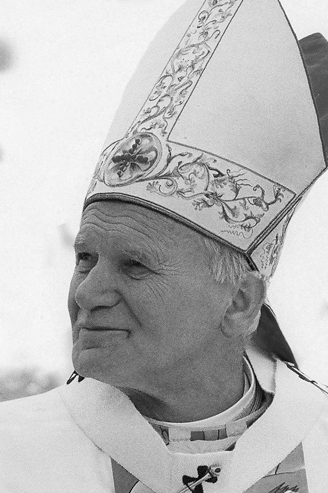
Pope Saint John Paul II’s First Good Friday Homily
ADDRESS OF HIS HOLINESS JOHN PAUL II AT THE CONCLUSION OF THE STATIONS OF THE CROSS AT THE COLOSSEUM Good Friday, 13 April 1979 When we make the Way of the Cross from one station to the next, in spirit we are always at the spot wherethis journey had its “historical” place: where it[…]Continue reading→
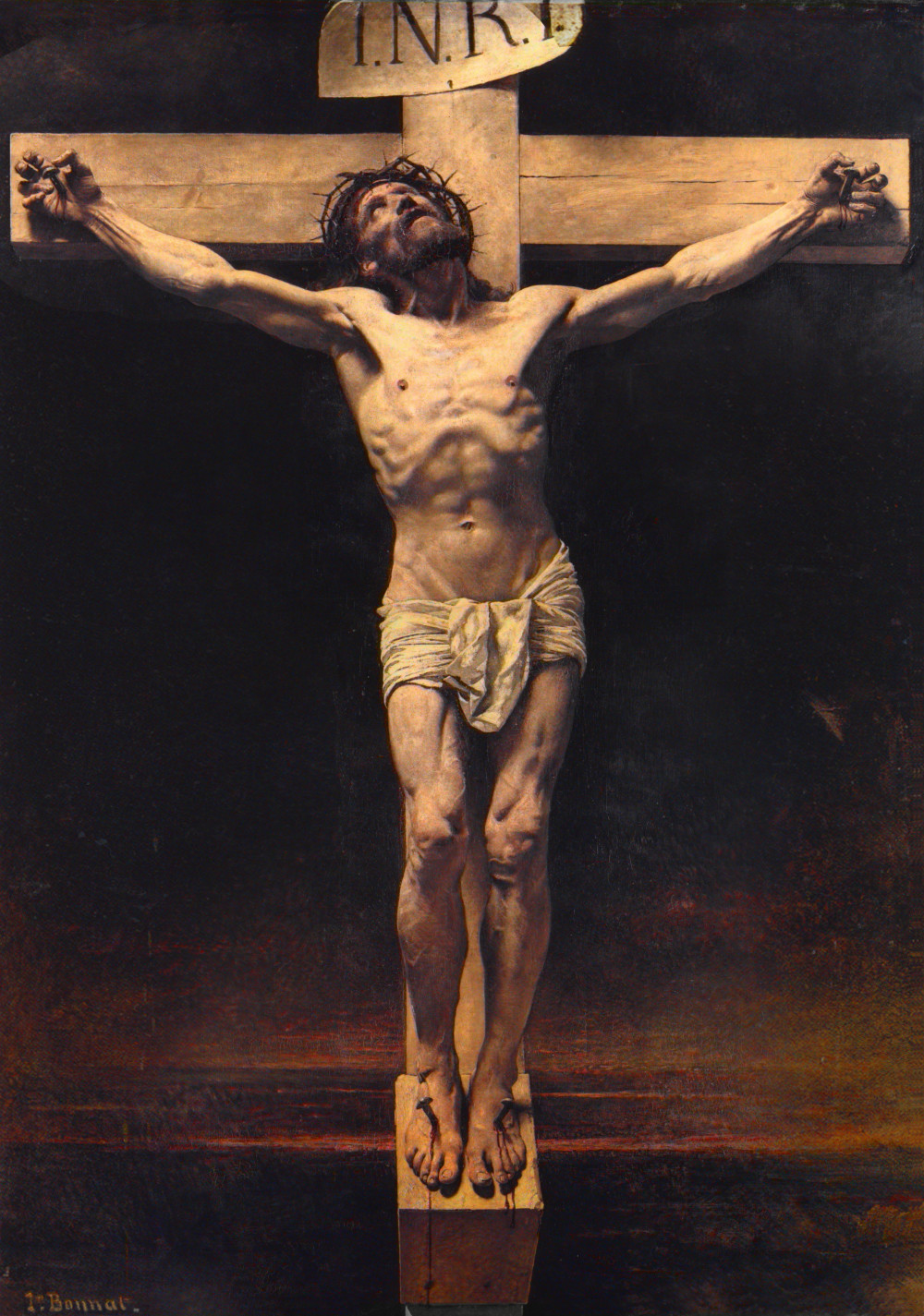
A Meditation for Good Friday: How To Undo the Effects of Sin?
Cardinal Newman, now Saint John Henry Newman, was a towering figure of nineteenth-century Catholicism who is almost universally admired. I say “almost” because not everyone likes him. I knew a priest once, Arthur Caulkins, who has become disenchanted with Newman. As an undergraduate Arthur had been enamoured of Newman, and this interest continued when he[…]Continue reading→
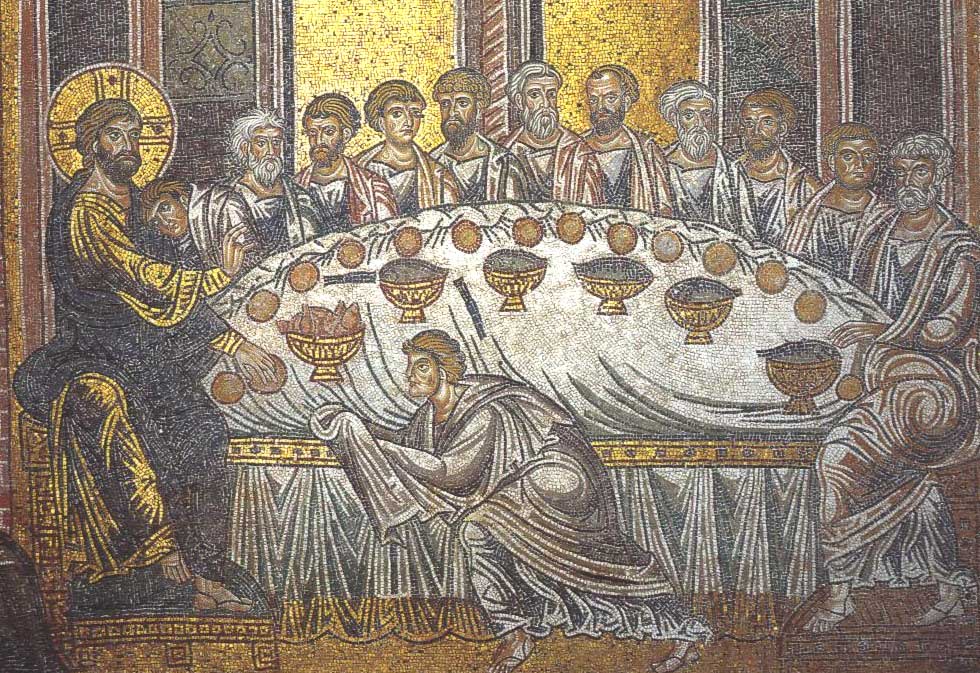
Pope Benedict’s Last Holy Thursday Homily
MASS OF THE LORD’S SUPPER HOMILY OF HIS HOLINESS BENEDICT XVI Basilica of St John Lateran Holy Thursday, 5 April 2012 Photo Gallery (Video) Dear Brothers and Sisters! Holy Thursday is not only the day of the institution of the Most Holy Eucharist, whose splendour bathes all else and in some ways draws it to[…]Continue reading→