
Pope John Paul II’s Letter Proclaiming Saints Bridget, Catherine and Teresa Benedicta Co-Patronesses of Europe
APOSTOLIC LETTER
ISSUED MOTU PROPRIO
PROCLAIMING
SAINT BRIDGET OF SWEDEN
SAINT CATHERINE OF SIENA AND
SAINT TERESA BENEDICTA OF THE CROSS
CO-PATRONESSES OF EUROPE
FOR PERPETUAL REMEMBRANCE
1. The hope of building a more just world, a world more worthy of the human person, stirred by the expectation of the impending Third Millennium, must be coupled with an awareness that human efforts are of no avail if not accompanied by divine grace: “Unless the Lord builds the house, those who build it labour in vain” (Ps 127:1). This must also be a consideration for those who in these years are seeking to give Europe a new configuration which would help the Continent to learn from the richness of her history and to eliminate the baneful inheritances of the past, so as to respond to the challenges of a changing world with an originality rooted in her best traditions.
There can be no doubt that, in Europe’s complex history, Christianity has been a central and defining element, established on the firm foundation of the classical heritage and the multiple contributions of the various ethnic and cultural streams which have succeeded one another down the centuries. The Christian faith has shaped the culture of the Continent and is inextricably bound up with its history, to the extent that Europe’s history would be incomprehensible without reference to the events of the first evangelization and then the long centuries when Christianity, despite the painful division between East and West, came to be the religion of the European peoples. Even in modern and contemporary times, when religious unity progressively disintegrated as a result both of further divisions between Christians and the gradual detachment of culture from the horizon of faith, the role played by faith has continued to be significant.
The path to the future cannot overlook this fact, and Christians are called to renew their awareness of it, in order to demonstrate faith’s perennial potential. In the building up of Europe, Christians have a duty to make a specific contribution, one which will be all the more valid and effective to the extent that they themselves are renewed in the light of the Gospel. In this way they will carry forward that long history of holiness which has traversed the various regions of Europe in the course of these two millennia, in which the officially recognized Saints are but the towering peaks held up as a model for all. For through their upright and honest lives inspired by love of God and neighbour, countless Christians in a wide range of consecrated and lay vocations have attained a holiness both authentic and widespread, even if often hidden.
2. The Church has no doubt that this wealth of holiness is itself the secret of her past and the hope of her future. It is the finest expression of the gift of the Redemption, which ransoms man from sin and gives him the possibility of new life in Christ. The People of God making their pilgrim way through history have an incomparable support in this treasure of holiness, sensing as they do their profound union with the Church in glory, which sings in heaven the praises of the Lamb (cf. Rev 7:9-10) and intercedes for the community still on its earthly pilgrimage. Consequently, from very ancient times the Saints have been looked upon by the People of God as their protectors, and by a singular practice, certainly influenced by the Holy Spirit, sometimes as a request of the faithful accepted by the Bishops, and sometimes as an initiative of the Bishops themselves, individual Churches, regions and even Continents have been entrusted to the special patronage of particular Saints.
Accordingly, during the celebration of the Second Special Assembly for Europe of the Synod of Bishops, on the eve of the Great Jubilee of the Year 2000, it has seemed to me that the Christians of Europe, as they join their fellow-citizens in celebrating this turning-point in time, so rich in hope and yet not without its concerns, could draw spiritual benefit from contemplating and invoking certain Saints who are in some way particularly representative of their history. Therefore, after appropriate consulation, and completing what I did on 31 December 1980 when I declared Co-Patrons of Europe, along with Saint Benedict, two Saints of the first millennium, the brothers Cyril and Methodius, pioneers of the evangelization of the East, I have decided to add to this group of heavenly patrons three figures equally emblematic of critical moments in the second millennium now drawing to its close: Saint Bridget of Sweden, Saint Catherine of Siena and Saint Theresa Benedicta of the Cross. Three great Saints, three women who at different times—two in the very heart of the Middle Ages and one in our own century—were outstanding for their fruitful love of Christ’s Church and their witness to his Cross.
(To continue reading, please see here).
A Closed, Unsustainable, Descending Loop
As a follow-up to my thoughts on Payette’s payout, here be a stark image of where are here in Canada. As the graph shows in, well, graphic terms, since 2025, the public sector has contributed to 95.5% of economic growth. The private sector – which funds the public sector, or is supposed to – has[…]Continue reading→
Presidential Pardon of Weronika Krawczyk
As a good news, follow-up to our story from Poland, of the persecution of Weronika Krawczyk for her pro-life views, we heard that she has been granted a presidential pardon. One might still wonder why one needs a presidential pardon for simply holding the long-held belief that the child within the womb is a child,[…]Continue reading→
Pope Leo and a Rosary for Peace
Pope Leo XIV has asked Catholics across the world to join him in a Rosary for peace today, at 18:00 Rome time (6 pm), which would be noon from where I write (EST). If you are able, whether at that time or another, and in whatever way you pray, to join in intercession with the[…]Continue reading→
Payette’s Payout
I was glancing through some headlines, and noticed a mention of Julie Payette – engineer and astronaut and sometime the Queen’s representative in Canada – which brought back vague memories. She was appointed Governor-General by Justin Trudeau in 2017. Ms. Payette resigned in 2021, amidst claims that she created a ‘toxic work environment’, with allegations[…]Continue reading→
Weronika Krawczyk and Injustice in Poland
Catholic Action in Poland has issued a formal statement appealing to the President of the Republic of Poland to pardon Weronika Krawczyk—convicted for warning other women against an abortion-performing gynaecologist. Catholic Action (AK) emphasizes that no apology is owed to a doctor who has performed numerous abortions and proposed others; furthermore, the organization considers the[…]Continue reading→
Saint Isidore of Seville, the Internet and Industriousness
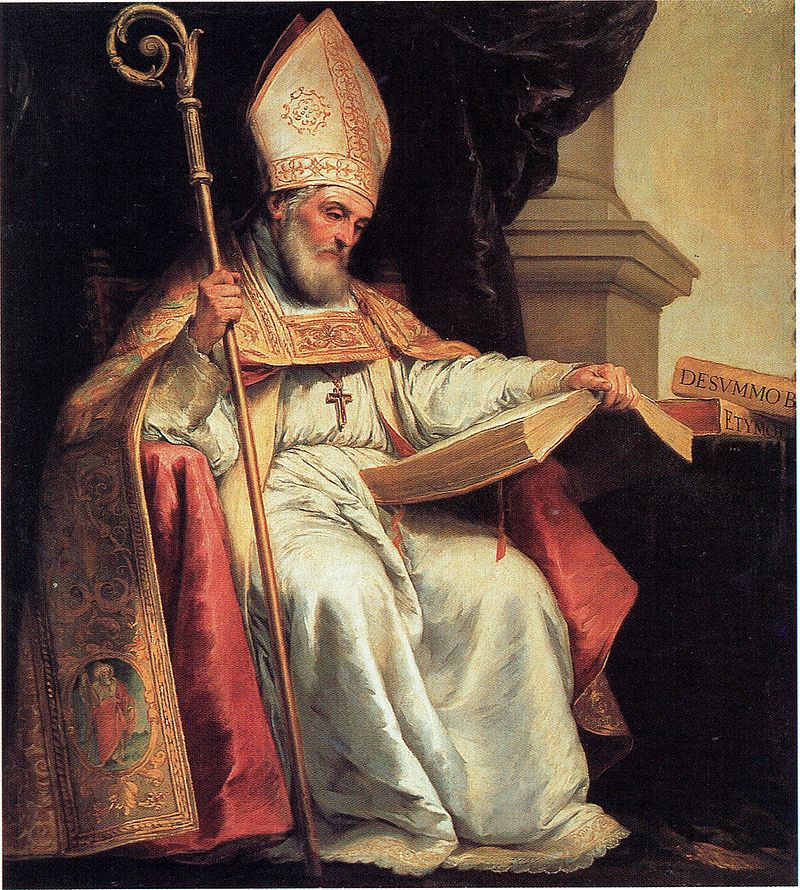
Today, April 4th, muted this year by Holy Saturday, is the commemoration of Saint Isidore of Seville (560-636) a bishop and doctor of the Church during a tumultuous age, when civilization was crumbling, coming apart at its very seams, which may sound sort of au courant. Then again, the form of this world has always[…]Continue reading→
Bishop Fulton Sheen’s 58th Good Friday Reflection
Incredible, at the beginning of this reflection, that the Venerable Bishop Sheen declares that he has given nearly 58 Good Friday reflections – this, as far as I can gather, was his final one, and he seems in full vigour in mind and body. The good bishop and evangelist died in his 84th year on[…]Continue reading→
Pope Saint John Paul II’s First Good Friday Homily
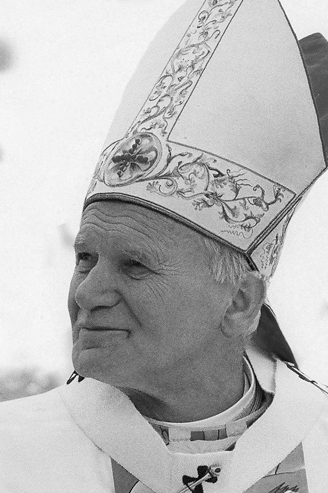
ADDRESS OF HIS HOLINESS JOHN PAUL II AT THE CONCLUSION OF THE STATIONS OF THE CROSS AT THE COLOSSEUM Good Friday, 13 April 1979 When we make the Way of the Cross from one station to the next, in spirit we are always at the spot wherethis journey had its “historical” place: where it[…]Continue reading→
A Minimal Friar and the Death of a Great Pope
This April the second- overshadowed by Holy Thursday this year – marks the memorial of Saint Francis of Paola (1417-1507), founder of the ‘Minim’ friars, so called for their humility and poverty, who interpreted the rule of Saint Francis of Assisi in quite a literal sense: extreme poverty, trust in God, foregoing all animal and[…]Continue reading→
Woven versus Seamless Garments
The reflection on the worthy project by Magie Dominic was intriguing, and I thought I would offer a brief follow-up commentary. The garment woven out of many pieces is a poignant symbol, even a ‘sacramental’, inspired by prayer and grace. We are all united in some way, and should strive for such unity, wherever we[…]Continue reading→