
Pope Benedict and Saint Bonaventure: Part III
BENEDICT XVI
GENERAL AUDIENCE
Saint Peter’s Square
Wednesday, 17 March 2010
[Video]
Saint Bonaventure (3)
Dear Brothers and Sisters,
This morning, continuing last Wednesday’s reflection, I would like to study with you some other aspects of the doctrine of St Bonaventure of Bagnoregio. He is an eminent theologian who deserves to be set beside another great thinker, a contemporary of his, St Thomas Aquinas. Both scrutinized the mysteries of Revelation, making the most of the resources of human reason, in the fruitful dialogue between faith and reason that characterized the Christian Middle Ages, making it a time of great intellectual vigour, as well as of faith and ecclesial renewal, which is often not sufficiently emphasized. Other similarities link them: Both Bonaventure, a Franciscan, and Thomas, a Dominican, belonged to the Mendicant Orders which, with their spiritual freshness, as I mentioned in previous Catecheses, renewed the whole Church in the 13th century and attracted many followers. They both served the Church with diligence, passion and love, to the point that they were invited to take part in the Ecumenical Council of Lyons in 1274, the very same year in which they died; Thomas while he was on his way to Lyons, Bonaventure while the Council was taking place.
Even the statues of the two Saints in St Peter’s Square are parallel. They stand right at the beginning of the colonnade, starting from the façade of the Vatican Basilica; one is on the left wing and the other on the right. Despite all these aspects, in these two great Saints we can discern two different approaches to philosophical and theological research which show the originality and depth of the thinking of each. I would like to point out some of their differences.
A first difference concerns the concept of theology. Both doctors wondered whether theology was a practical or a theoretical and speculative science. St Thomas reflects on two possible contrasting answers. The first says: theology is a reflection on faith and the purpose of faith is that the human being become good and live in accordance with God’s will. Hence the aim of theology would be to guide people on the right, good road; thus it is basically a practical science. The other position says: theology seeks to know God. We are the work of God; God is above our action. God works right action in us; so it essentially concerns not our own doing but knowing God, not our own actions. St Thomas’ conclusion is: theology entails both aspects: it is theoretical, it seeks to know God ever better, and it is practical: it seeks to orient our life to the good. But there is a primacy of knowledge: above all we must know God and then continue to act in accordance with God (Summa Theologiae, 1a, q. 1, art. 4). This primacy of knowledge in comparison with practice is significant to St Thomas’ fundamental orientation.
St Bonaventure’s answer is very similar but the stress he gives is different. St Bonaventure knows the same arguments for both directions, as does St Thomas, but in answer to the question as to whether theology was a practical or a theoretical science, St Bonaventure makes a triple distinction he therefore extends the alternative between the theoretical (the primacy of knowledge) and the practical (the primacy of practice), adding a third attitude which he calls “sapiential” and affirming that wisdom embraces both aspects. And he continues: wisdom seeks contemplation (as the highest form of knowledge), and has as its intention “ut boni fiamus” that we become good, especially this: to become good (cf. Breviloquium, Prologus, 5). He then adds: “faith is in the intellect, in such a way that it provokes affection. For example: the knowledge that Christ died “for us’ does not remain knowledge but necessarily becomes affection, love (Proemium in I Sent., q. 3).
His defence of theology is along the same lines, namely, of the rational and methodical reflection on faith. St Bonaventure lists several arguments against engaging in theology perhaps also widespread among a section of the Franciscan friars and also present in our time: that reason would empty faith, that it would be an aggressive attitude to the word of God, that we should listen and not analyze the word of God (cf. Letter of St Francis of Assisi to St Anthony of Padua). The Saint responds to these arguments against theology that demonstrate the perils that exist in theology itself saying: it is true that there is an arrogant manner of engaging in theology, a pride of reason that sets itself above the word of God. Yet real theology, the rational work of the true and good theology has another origin, not the pride of reason. One who loves wants to know his beloved better and better; true theology does not involve reason and its research prompted by pride, “sed propter amorem eius cui assentit [but is] motivated by love of the One who gave his consent” (Proemium in I Sent., q. 2) and wants to be better acquainted with the beloved: this is the fundamental intention of theology. Thus in the end, for St Bonaventure, the primacy of love is crucial.
Consequently St Thomas and St Bonaventure define the human being’s final goal, his complete happiness in different ways. For St Thomas the supreme end, to which our desire is directed is: to see God. In this simple act of seeing God all problems are solved: we are happy, nothing else is necessary.
Instead, for St Bonaventure the ultimate destiny of the human being is to love God, to encounter him and to be united in his and our love. For him this is the most satisfactory definition of our happiness.
Along these lines we could also say that the loftiest category for St Thomas is the true, whereas for St Bonaventure it is the good. It would be mistaken to see a contradiction in these two answers. For both of them the true is also the good, and the good is also the true; to see God is to love and to love is to see. Hence it was a question of their different interpretation of a fundamentally shared vision. Both emphases have given shape to different traditions and different spiritualities and have thus shown the fruitfulness of the faith: one, in the diversity of its expressions.
Let us return to St Bonaventure. It is obvious that the specific emphasis he gave to his theology, of which I have given only one example, is explained on the basis of the Franciscan charism. The “Poverello” of Assisi, notwithstanding the intellectual debates of his time, had shown with his whole life the primacy of love. He was a living icon of Christ in love with Christ and thus he made the figure of the Lord present in his time he did not convince his contemporaries with his words but rather with his life. In all St Bonaventure’s works, precisely also his scientific works, his scholarly works, one sees and finds this Franciscan inspiration; in other words one notices that his thought starts with his encounter with the “Poverello” of Assisi. However, in order to understand the practical elaboration of the topic “primacy of love” we must bear in mind yet another source: the writings of the so-called Pseudo-Dionysius, a Syrian theologian of the 6th century who concealed himself behind the pseudonym of Dionysius the Areopagite. In the choice of this name he was referring, to a figure in the Acts of the Apostles (cf. 17: 34). This theologian had created a liturgical theology and a mystical theology, and had spoken extensively of the different orders of angels. His writings were translated into Latin in the ninth century. At the time of St Bonaventure we are in the 13th century a new tradition appeared that aroused the interest of the Saint and of other theologians of his century. Two things in particular attracted St Bonaventure’s attention.
(To continue reading, please see here).
A Closed, Unsustainable, Descending Loop
As a follow-up to my thoughts on Payette’s payout, here be a stark image of where are here in Canada. As the graph shows in, well, graphic terms, since 2025, the public sector has contributed to 95.5% of economic growth. The private sector – which funds the public sector, or is supposed to – has[…]Continue reading→
Presidential Pardon of Weronika Krawczyk
As a good news, follow-up to our story from Poland, of the persecution of Weronika Krawczyk for her pro-life views, we heard that she has been granted a presidential pardon. One might still wonder why one needs a presidential pardon for simply holding the long-held belief that the child within the womb is a child,[…]Continue reading→
Pope Leo and a Rosary for Peace
Pope Leo XIV has asked Catholics across the world to join him in a Rosary for peace today, at 18:00 Rome time (6 pm), which would be noon from where I write (EST). If you are able, whether at that time or another, and in whatever way you pray, to join in intercession with the[…]Continue reading→
Payette’s Payout
I was glancing through some headlines, and noticed a mention of Julie Payette – engineer and astronaut and sometime the Queen’s representative in Canada – which brought back vague memories. She was appointed Governor-General by Justin Trudeau in 2017. Ms. Payette resigned in 2021, amidst claims that she created a ‘toxic work environment’, with allegations[…]Continue reading→
Weronika Krawczyk and Injustice in Poland
Catholic Action in Poland has issued a formal statement appealing to the President of the Republic of Poland to pardon Weronika Krawczyk—convicted for warning other women against an abortion-performing gynaecologist. Catholic Action (AK) emphasizes that no apology is owed to a doctor who has performed numerous abortions and proposed others; furthermore, the organization considers the[…]Continue reading→
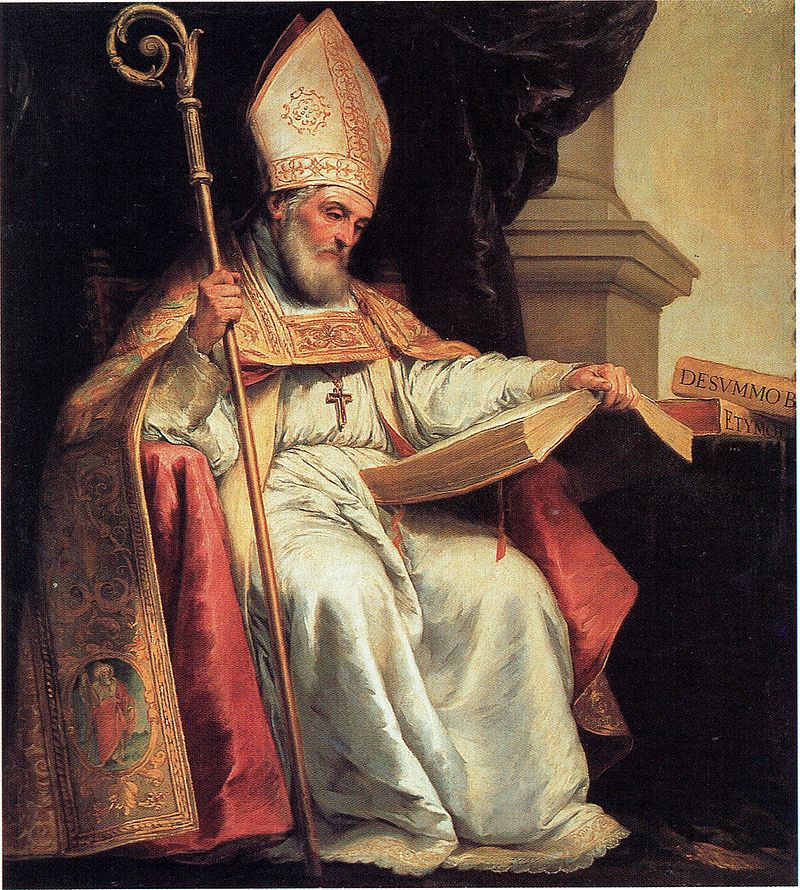
Saint Isidore of Seville, the Internet and Industriousness
Today, April 4th, muted this year by Holy Saturday, is the commemoration of Saint Isidore of Seville (560-636) a bishop and doctor of the Church during a tumultuous age, when civilization was crumbling, coming apart at its very seams, which may sound sort of au courant. Then again, the form of this world has always[…]Continue reading→
Bishop Fulton Sheen’s 58th Good Friday Reflection
Incredible, at the beginning of this reflection, that the Venerable Bishop Sheen declares that he has given nearly 58 Good Friday reflections – this, as far as I can gather, was his final one, and he seems in full vigour in mind and body. The good bishop and evangelist died in his 84th year on[…]Continue reading→
A Minimal Friar and the Death of a Great Pope
This April the second- overshadowed by Holy Thursday this year – marks the memorial of Saint Francis of Paola (1417-1507), founder of the ‘Minim’ friars, so called for their humility and poverty, who interpreted the rule of Saint Francis of Assisi in quite a literal sense: extreme poverty, trust in God, foregoing all animal and[…]Continue reading→
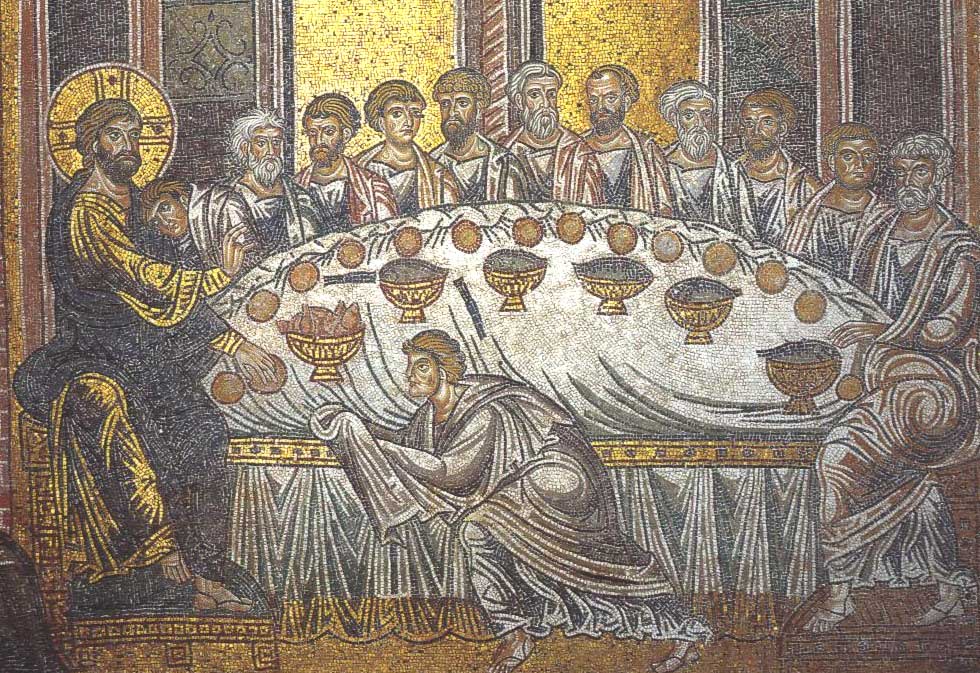
Pope Benedict’s Last Holy Thursday Homily
MASS OF THE LORD’S SUPPER HOMILY OF HIS HOLINESS BENEDICT XVI Basilica of St John Lateran Holy Thursday, 5 April 2012 Photo Gallery (Video) Dear Brothers and Sisters! Holy Thursday is not only the day of the institution of the Most Holy Eucharist, whose splendour bathes all else and in some ways draws it to[…]Continue reading→
Woven versus Seamless Garments
The reflection on the worthy project by Magie Dominic was intriguing, and I thought I would offer a brief follow-up commentary. The garment woven out of many pieces is a poignant symbol, even a ‘sacramental’, inspired by prayer and grace. We are all united in some way, and should strive for such unity, wherever we[…]Continue reading→