

If Christianity Recedes, What of Human Dignity?
“No power on this earth can destroy the thirst for human dignity.” – Nelson Mandela
Since the inception of Western civilization, the concept of human dignity has been that value most cherished by those who live under its domain. And it is fitting that we recognize Christianity, especially Catholicism, to be responsible for this occurrence. As critical theorist Jürgen Habermas so eloquently put it:
“Egalitarian universalism, from which sprang the ideas of freedom…human rights and democracy, is the direct heir of the Judaic ethic of justice and the Christian ethic of love…To this day, there is no alternative to it…we continue to draw on the substance of this heritage…Everything else is just idle postmodern chatter.”
When Christianity infuses a society, it provides something critical, something special – an understanding of the inherent value of human dignity as well as human rights and freedom which flow from it.
Over the last several decades, a growing number of Americans have abandoned their faith to join the ranks of the nonreligious. These “Nones” describe themselves as atheists, agnostics or “nothing in particular.” Some may shrug at this, but you don’t have to be religious to know that this shift doesn’t bode well for a nation founded on the precepts of freedom, natural rights and self-government.
For most of the 20th century, 70% of Americans belonged to a house of worship. But by 2020, Gallup found a mere 47% of Americans belonged to a church. According to several studies, Christianity is declining in America. A study by the Pew Research Center found that in 2022, 64% of Americans identified as Christian, down from 91% in 1976.
The “nones” — identifying with no particular religion — have grown significantly. Twenty-eight percent of American adults identified as “nones” in 2024, surpassing Catholics (21%) and Evangelical Protestants (24%). Pew projects that in 2070, Christians will likely make up less than half the US population.
And Great Britain has fared no better. UK Church membership has declined from 10.6 million in 1930 to 5.5 million in 2010 — or as a percentage of the population — from about 30% to 11.2%. By 2013, this had declined further to 5.4 million (10.3%). If current trends continue, UK Church membership will fall to 8.4% of the population by the end of 2025.
Catholic membership, in particular, has declined in the UK from 1.6 million (2008) to 1.1 (2020) – a reduction in participation of about 30 percent.
This might not seem like a crisis, but I suspect St. Thomas à Becket, England’s 12th century Archbishop of Canterbury, along with America’s Founding Fathers, would disagree. Our first president understood it well – sound self-government depended on morality and virtue, which in turn depended on religion. As George Washington stated in his Farewell address to the nation:
“Of all the dispositions and habits which lead to political prosperity, religion and morality are indisputable supports.”
So, what happens to human dignity in these countries if Christianity recedes from its role in society? Christian human dignity, especially from a Catholic perspective, is not founded on maximizing fairness or autonomy, but on the fact that all human beings are made free through natural law – the eternal law of God – not the whims of another human. If it becomes detached from that premise, then human dignity no longer makes sense.
Counterintuitive though it may seem, we owe a special thanks to a 19th century philosopher by the name of Nietzsche. Yes, the same, but through his musings we learn what lies ahead if Christianity recedes from society. Our philosopher nemesis criticized Christianity as a “slave morality.”
Yet, our philosopher reveals something of critical advantage to us — what modern liberal secularism without the tempering influence of Christianity will look like. The alternative to the Christian view of morality and worth of the individual is not something warm and comfortable; rather, it is invidious, more inhospitable. Nietzsche writes: “…‘Man in himself,’ the absolute man possesses neither dignity, nor rights, nor duties.”
Our atheist inadvertently confesses that the concept of human dignity is integral to Christianity — critical to the revolt of the “slave morality” that toppled pagan religion and dramatically altered people’s views of the worth of human beings.
Nietzsche is correct: Christianity introduced for the first time the idea of human dignity – the idea that all human beings are in some way special or worthy of respect simply because they are human beings – irrespective of their particular merits or standing.
Our own dignity today in America and Britain emanates from the Judeo-Christian tradition and the encounter between Christians and the secular world. But given what we know of the decline of Christianity in these two countries, human dignity is not something we may take for granted.
So, if human dignity is an original Catholic concept, what happens to it after Christianity – in a Post-Christian world?
Human dignity in a World After Christianity
In spite of any benevolent declarations about the future of human dignity, we must remain sanguine about the current state of affairs in Britain and America. Christianity does appear to be receding on both sides of the Atlantic.
Unfortunately, the “ghost” of Nietzsche is still with us. An increasingly secular Britain and America are not ushering in rational, neutral, and indifferent regimes, but rather dangerous, revitalized forms of atheism, agnosticism or pure apathy. Indeed, irrationalism is on full display in America.
The malevolence of secularism is visible across the country. Abortion and euthanasia are new forms of self-indulgence or worse — population control; transhumanism and transgenderism reflect humankind’s embrace of postmodern relativism where the lines blur between what constitutes man and woman. And then there is AI, Artificial Intelligence, increasingly supplanting human artifice – a “Prometheus” bearing gifts of alleged knowledge to humanity – to be exalted as a 21st century “godlike” entity. This is Nietzsche’s future – we must not let it become ours.
Britain and America must not permit Christianity to wane in influence or allow Catholicism (and especially traditional Catholicism) to recede from society. For with that loss will come the demise of our dignity, our rights and our freedoms. Let us continue God’s work in earnest.

Saint Kateri , Canada’s Protectress
This was the title given to Saint Kateri Tekakwitha, by Pope Benedict XVI, when he canonized her on October 28th, 2012, along with six others, in Saint Peter’ Square (she had been beatified by Pope John Paul II back in 1980). With Saint Joseph as our protector, along with the Canadian martyrs, we seem to[…]Continue reading→

Remembering Father Alphonse de Valk
(Today marks the sixth anniversary of the death of Father Alphonse de Valk, C.S.B., a faithful, courageous and indefatigable Basilian priest, pro-life-and-family apostle, and the founder of Catholic Insight magazine. Here is what we wrote those on his entering into eternity five years ago, as we continue to remember him in our prayers and thoughts)[…]Continue reading→

My Name is Bernadette
April 16th is a propitious day, for besides the anniversary of Father de Valk’s death, who founded Catholic Insight in its print form decades ago, and the commemoration of the ‘two Benedicts’, mentioned in accompanying posts, today we also recall Saint Bernadette Soubirous, the young visionary to whom the Virgin Mary appeared numerous times at[…]Continue reading→

Canonizing Sister Faustina and Divine Mercy
HOMILY OF THE HOLY FATHER MASS IN ST PETER’S SQUARE FOR THE CANONIZATION OF SR MARY FAUSTINA KOWALSKA Sunday, 30 April 2000 1. “Confitemini Domino quoniam bonus, quoniam in saeculum misericordia eius”; “Give thanks to the Lord for he is good; his steadfast love endures for ever” (Ps 118: 1). So the Church sings on the Octave of[…]Continue reading→

Divine Mercy Sunday – An Echo of Every Mass
Reach out your hand and put it in my side. Do not doubt but believe’… ‘My Lord and my God!’ (Jn. 20:18)). Today is Divine Mercy Sunday, and as we celebrate the end of the Easter Octave, we contemplate the wounded side of our Saviour, the Church’s source of life. On Good Friday in the[…]Continue reading→

Saint Stanislaus of Szczepanów
We celebrate Saint Stanislaus today (+ April 11, 1079), in light of this Easter Octave, a bishop and martyr who accepted the episcopacy only at the direct order of Pope Alexander II. He proved a wise and courageous leader of his flock, put to death by his own king, Boleslaus, for rebuking the monarch’s ‘immoral[…]Continue reading→
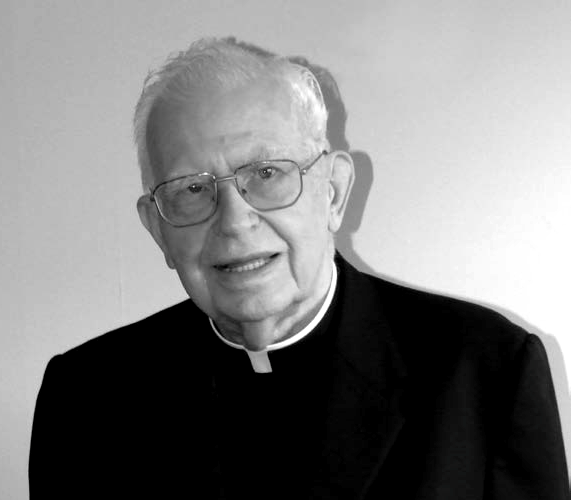
First Holy Communion: Sermon from May 16, 1943
Here is a sermon from the good old days by +Rev. Msgr. Vincent Nicholas Foy (August 14, 1915 – March 13, 2017), from 1943. Readers may recall that Pope Saint Pius X, by the decree Quam Singulari in 1910, lowered the customary age of reception of Holy Communion – after the rigours of the plague[…]Continue reading→
In the Glorious Light of Easter, Alleluia!
Set your minds on things that are above, not on things that are on earth, for you have died, and your life is hidden with Christ in God. When Christ who is your life is revealed, then you also will be revealed with him in glory (Col. 3:3-4). The Resurrection of Our Lord and Saviour[…]Continue reading→
An Ancient Homily for Holy Saturday
The time between Good Friday and Easter Sunday is one of waiting, in silence, as the world wonders – anticipates – what will happen, after the death of Christ. We re-live this time each year in the anamnesis of our liturgy, and in turn look forward to the glorious re-creation of all things at the[…]Continue reading→
Europe’s Long Descent
(As we meditate on this day on Christ’s burial, and His descent into hell, it is fitting to ponder here with contributor Peter Marcus how the world seems to be heading there as well. The difference is that, although God cannot ‘redeem’ hell, nor those therein, He can and did redeem the world. There is[…]Continue reading→