
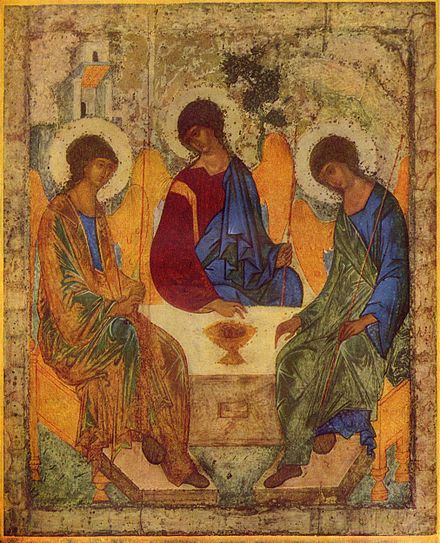
How Trinity Sunday Entered the Calendar
You may wonder how the Feast of the Holy Trinity came to be celebrated on the Sunday after Pentecost. It was not always celebrated today; in fact, we are approaching the seven hundredth anniversary of its universal institution under Pope John XXII (✝ 1334) in the fourteenth century.[1] Before then, the Sunday remained vacant, a dominica vacans upon which no feast was celebrated, and the churches in each region of Europe had their own particular customs for celebrating the day.[2] The votive mass of the Holy Trinity, arranged by Alcuin of York (✝ 804), was a common selection for this Octave day of Pentecost.[3] Prayers for this votive mass, for instance, can be found on the Octave of Pentecost in various manuscripts of the Gregorian Sacramentary,[4] a common book for the Mass during the time of Charlemagne and widely attested to be the work of Saint Gregory I (✝ 604).[5]
The Roman Church, nevertheless, held out with its custom of keeping the Sunday vacant.[6] In the eleventh century, Pope Alexander II (✝ 1073) researched the antiquity of the regional custom and declined to institute the feast for the universal church, citing that the Holy Trinity was commemorated already on every Sunday, and even at every daily mass with the Gloria Patri.[7] He saw no reason why the commemoration of the Holy Trinity should be pinned down to one particular day, since the same would need to apply for the Holy Unity, which the Catholic faith also professes.[8] The Pope also pointed out that Alcuin arranged votive masses for the other days of the week, such as that of the Holy Cross for Friday and of the Blessed Virgin Mary for Saturday. These masses, he argued, could be celebrated on any Friday or Saturday throughout the year, without any need to pin it down to a particular Friday or Saturday.[9] Thus, he concluded that Trinity Sunday should remain a Mass of devotional preference, rather than a Mass of pontifical mandate.
When Pope Alexander II made his inquiry into the history of the tradition, it was still the eleventh century, and feasts of common devotion, like Corpus Christi, were not yet situated in the universal calendar. It took till the fourteenth century for the feast to see its universal institution. Pope John XXII, the second pope of the Avignon Papacy, was nearing the end of his eighteen-year pontificate when he established the feast on the Octave day of Pentecost. No longer in Rome, he resided in a part of the Empire accustomed to the Carolingian use of the votive mass. He was on poor terms with the Emperor, Louis IV – who had fixed an antipope in Rome, Nicholas V – and many of his cardinals throughout Western Europe wished to have him deposed.[10] The Pope was also in the midst of a theological controversy at the time, for he had preached in a sequence of homilies that the saints do not enjoy the beatific vision until the final judgement.[11] Wishing to defend his orthodoxy and win the favour of those around him in Avignon,[12] John XXII raised the votive mass of the Holy Trinity to the status of a universal feast to be celebrated on the Sunday immediately following the feast of Pentecost, using the office which “had been made by the Franciscan John Peckham, Canon of Lyons, later Archbishop of Canterbury (✝ 1292).”[13]
The Feast of the Holy Trinity today still bears some of the marks of its antiquity. Both the introit and the responsorial psalm from Year A – the former from Tobit 12, the latter from Daniel 3 – are with some revision pre-Tridentine, dating perhaps back to the office of John Peckham. The Gospel from Year B, Saint Matthew’s account of the Great Commission, is also pre-Tridentine, with an extension of two verses at the beginning for a longer reading. The oratio super oblata and the oratio post communionem, with some revision, can be found in manuscripts of the Gregorian Sacramentary, together with the Tridentine collect, which is without revision.[14] These, with little doubt, were collected by Alcuin and his fellow liturgists during the Carolingian Renaissance, and may have been the prayers used by Pope Gregory I. Lastly, the beautiful and wondrous preface which we have to this day is pre-Gregorian, the composition of Pope Pelagius II, who reigned as Pope in the late sixth century.[15]
Today’s feast has a rich and profitable history, and we would do well to familiarize ourselves with it. But today we also have the opportunity to worship with greater devotion our God who stands blissfully outside of history, who remains ever Triune throughout the vicissitudes of time. Let us remember the history of the feast, but at the same time seek him who stands outside of it.
A joyous and blessed Trinity Sunday to you all.
Bibliography
Berno of Reichenau. “Libellus de quibusdam rebus ad missae officium pertinentibus.” In
Patrologia Latina. Vol. 142, 1061-63. 1066-67.
Bernold of Constance. “Micrologus de ecclesiasticis observationibus.” In Patrologia Latina. Vol. 1019-20.
Gregory the Great. “Liber sacramentorum.” In Patrologia Latina. Vol. 78. 116-17.
Kirsch, Johann Peter. “Micrologus.” In The Catholic Encyclopedia. Vol. 10.
https://www.newadvent.org/cathen/10285a.htm
Kirsch, Johann Peter. “Pope John XXII.” In The Catholic Encyclopedia. Vol. 8.
https://www.newadvent.org/cathen/08431a.htm.
Mershman, Francis. “Trinity Sunday.” In The Catholic Encyclopedia. Vol. 15. Edited by Charles Herbermann et. al. The Encyclopedia Press, 1913. 58.
Endnotes:
[1] Francis Mershman, “Trinity Sunday” in The Catholic Encyclopedia, vol. 15, edited by Charles G. Herbermann et. al, The Encyclopedia Press, 1913, 58.
[2] Berno of Reichenau, “Libellus de quibusdam rebus ad missae officium pertinentibus” in Patrologia Latina, vol. 142, 1061-63, 1066-67.
[3] Bernold of Constance, “Micrologus de ecclesiasticis observationibus” in Patrologia Latina, vol. 151, 1019-20.
[4] Gregory the Great, “Liber sacramentorum” in Patrologia Latina, vol. 78, 116-17.
[5] Francis Mershman, “Trinity Sunday,” 58.
[6] Bernold of Constance, “Micrologus de ecclesiasticis observationibus,” 1019-20.
[7] Bernold of Constance, “Micrologus de ecclesiasticis observationibus,” 1019-20.
[8] Bernold of Constance, “Micrologus de ecclesiasticis observationibus,” 1019-20.
[9] Bernold of Constance, “Micrologus de ecclesiasticis observationibus,” 1019-20.
[10] Johann Peter Kirsch, “Pope John XXII” in The Catholic Encyclopedia, vol. 8. https://www.newadvent.org/cathen/08431a.htm.
[11] Johann Peter Kirsch, “Pope John XXII,” https://www.newadvent.org/cathen/08431a.htm.
[12] This assertion is of my own historical judgement, taking into account the circumstances which moved him to universalize the feast at the time which he did.
[13] Francis Mershman, “Trinity Sunday,” 58.
[14] Gregory the Great, “Liber sacramentorum,” 116-17.
[15] Bernold of Constance, “Micrologus de ecclesiasticis observationibus,” 1019-20.

Remembering Father Alphonse de Valk
(Today marks the sixth anniversary of the death of Father Alphonse de Valk, C.S.B., a faithful, courageous and indefatigable Basilian priest, pro-life-and-family apostle, and the founder of Catholic Insight magazine. Here is what we wrote those on his entering into eternity five years ago, as we continue to remember him in our prayers and thoughts)[…]Continue reading→

Divine Mercy Sunday – An Echo of Every Mass
Reach out your hand and put it in my side. Do not doubt but believe’… ‘My Lord and my God!’ (Jn. 20:18)). Today is Divine Mercy Sunday, and as we celebrate the end of the Easter Octave, we contemplate the wounded side of our Saviour, the Church’s source of life. On Good Friday in the[…]Continue reading→

Saint Stanislaus of Szczepanów
We celebrate Saint Stanislaus today (+ April 11, 1079), in light of this Easter Octave, a bishop and martyr who accepted the episcopacy only at the direct order of Pope Alexander II. He proved a wise and courageous leader of his flock, put to death by his own king, Boleslaus, for rebuking the monarch’s ‘immoral[…]Continue reading→
First Holy Communion: Sermon from May 16, 1943
Here is a sermon from the good old days by +Rev. Msgr. Vincent Nicholas Foy (August 14, 1915 – March 13, 2017), from 1943. Readers may recall that Pope Saint Pius X, by the decree Quam Singulari in 1910, lowered the customary age of reception of Holy Communion – after the rigours of the plague[…]Continue reading→
In the Glorious Light of Easter, Alleluia!
Set your minds on things that are above, not on things that are on earth, for you have died, and your life is hidden with Christ in God. When Christ who is your life is revealed, then you also will be revealed with him in glory (Col. 3:3-4). The Resurrection of Our Lord and Saviour[…]Continue reading→
An Ancient Homily for Holy Saturday
The time between Good Friday and Easter Sunday is one of waiting, in silence, as the world wonders – anticipates – what will happen, after the death of Christ. We re-live this time each year in the anamnesis of our liturgy, and in turn look forward to the glorious re-creation of all things at the[…]Continue reading→
Europe’s Long Descent
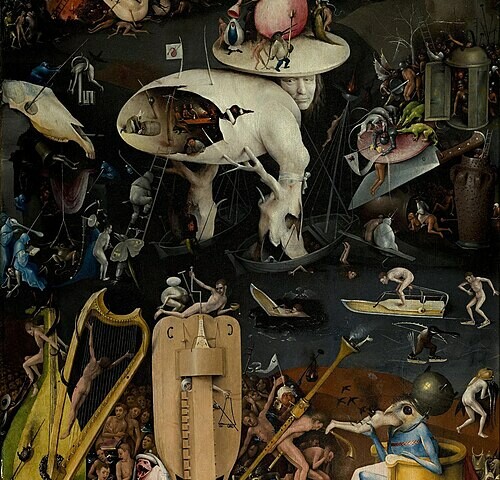
(As we meditate on this day on Christ’s burial, and His descent into hell, it is fitting to ponder here with contributor Peter Marcus how the world seems to be heading there as well. The difference is that, although God cannot ‘redeem’ hell, nor those therein, He can and did redeem the world. There is[…]Continue reading→
Pope Saint John Paul II’s First Good Friday Homily
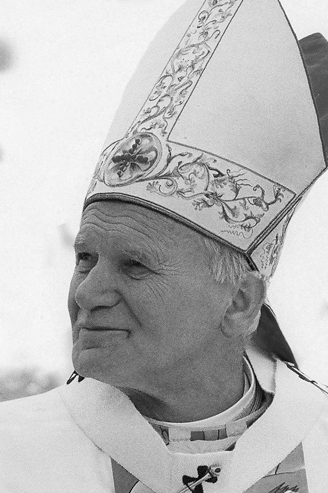
ADDRESS OF HIS HOLINESS JOHN PAUL II AT THE CONCLUSION OF THE STATIONS OF THE CROSS AT THE COLOSSEUM Good Friday, 13 April 1979 When we make the Way of the Cross from one station to the next, in spirit we are always at the spot wherethis journey had its “historical” place: where it[…]Continue reading→
A Meditation for Good Friday: How To Undo the Effects of Sin?
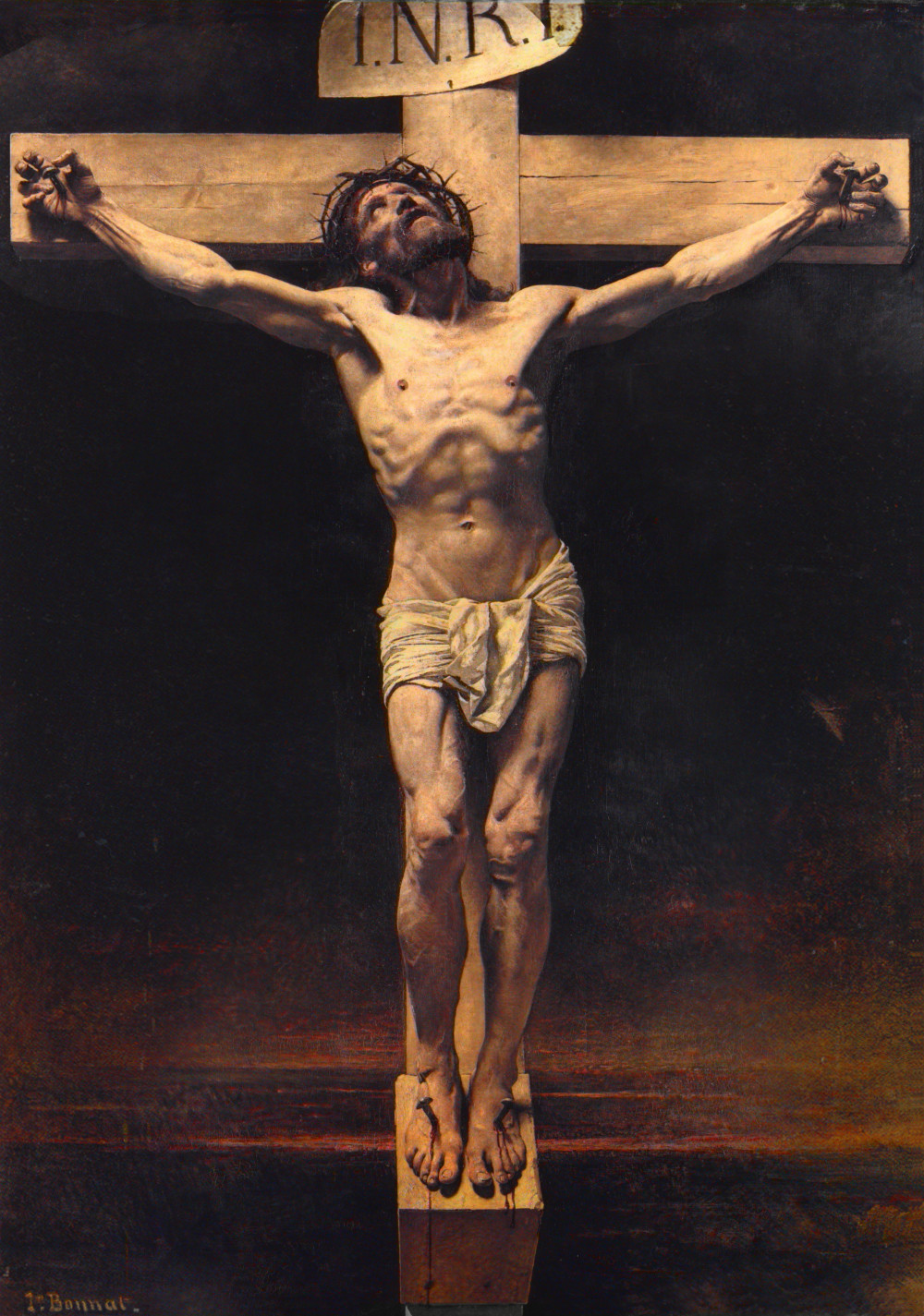
Cardinal Newman, now Saint John Henry Newman, was a towering figure of nineteenth-century Catholicism who is almost universally admired. I say “almost” because not everyone likes him. I knew a priest once, Arthur Caulkins, who has become disenchanted with Newman. As an undergraduate Arthur had been enamoured of Newman, and this interest continued when he[…]Continue reading→
Pope Benedict’s Last Holy Thursday Homily
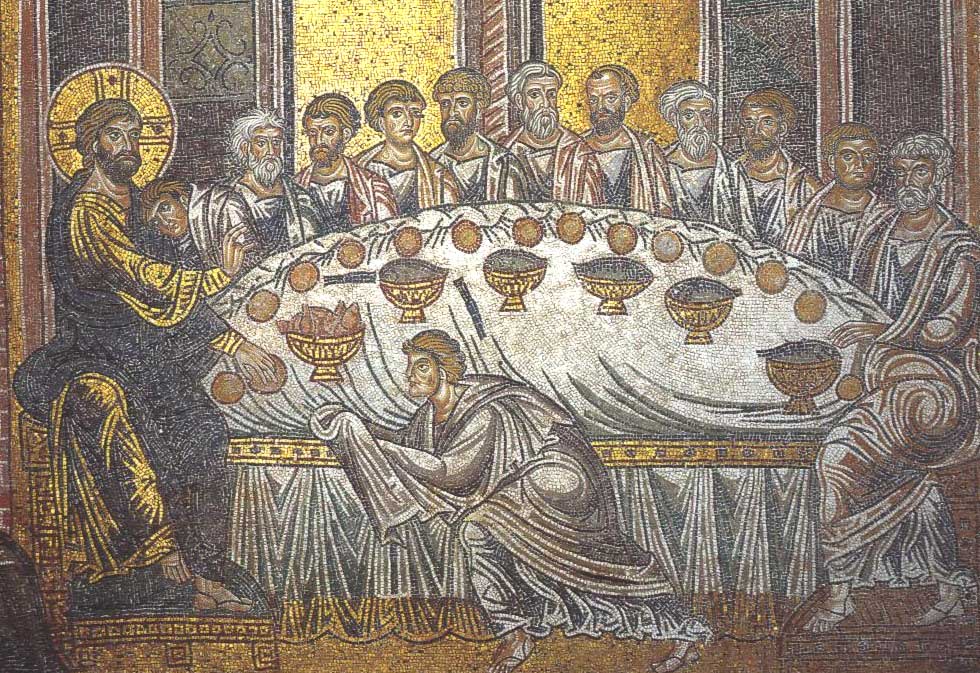
MASS OF THE LORD’S SUPPER HOMILY OF HIS HOLINESS BENEDICT XVI Basilica of St John Lateran Holy Thursday, 5 April 2012 Photo Gallery (Video) Dear Brothers and Sisters! Holy Thursday is not only the day of the institution of the Most Holy Eucharist, whose splendour bathes all else and in some ways draws it to[…]Continue reading→