

What is ‘Natural Theology’?
Natural theology is an attempt to prove, by the use of reason alone, that the claims of revealed religion are plausible. One of the great teachers of natural theology was the 13th Century Catholic theologian Thomas Aquinas. He offered, without reference to scripture, five famous proofs for the existence of God in his book Summa Theologica (cf., I, q.2, a.3). Another classic approach is by the philosopher William Paley in his book Natural Theology (1802). The claims of natural theology usually focus on the existence of God and His attributes. Let us look, for one example, at the teleological proof for the existence of God.
The word teleology comes from the Greek word telos, which means end or purpose. If a thing has a purpose, it would appear to be designed for that purpose or end. This implies the existence of one who designs the end or purpose. Though the argument was originally introduced by Aquinas as the fifth of his five proofs, William Paley gives us what has become the classic instance of the argument as follows:
In crossing a heath, suppose I pitched my foot against a stone, and were asked how the stone came to be there; I might possibly answer that, for anything I knew to the contrary, it had lain there forever: nor would it perhaps be very easy to show the absurdity of this answer. But suppose I had found a watch upon the ground, and it should be inquired how the watch happened to be in that place; I should hardly think of the answer I had before given, that for anything I knew, the watch might have always been there…. There must have existed, at some time, and at some place or other, an artificer or artificers, who formed [the watch] for the purpose which we find it actually to answer; who comprehended its construction, and designed its use…. Every indication of contrivance, every manifestation of design which existed in the watch, exists in the works of nature; with the difference, on the side of nature, of being greater or more, and that in a degree which exceeds all computation.
Paley is saying here, as a natural theologian, what the great physicist Isaac Newton had said before him: “This most beautiful [solar] system could only proceed from the dominion of an intelligent and powerful Being,” and what Charles Darwin would say after him about his theory of evolution: “There is grandeur in this view of life, with its several powers, having been originally breathed by the Creator into a few forms or into one ….” Even Albert Einstein, who denied he was an atheist, was a teleologist in the following remarks: “I want to know how God created this world. I am not interested in this or that phenomenon, in the spectrum of this or that element. I want to know His thoughts, the rest are details.” It is interesting to note that Einstein asks how, but not why, God created this world. That, of course, would have been for him too theological and unscientific a question to ask because it would require going deeper into God’s thoughts than Einstein would be willing to go.
What can be said of the teleological proof is that it suggests a designing God. It does not tell us whether God is good or evil; nor whether God is concerned about, or indifferent to, our fate. For reliable answers to such questions we must reason that God wants us to know more about Him by giving us a Bible full of revelations. But the teleological argument, like all the other proofs for the existence of God, raises also the question of whether the human mind can grasp how its own existence could come together by a series of unplanned accidents or pure luck, as some would say the theory of evolution argues. Are there not too many fortunate coincidences for us to believe that nature produced us purely by accident and without the slightest hint of a guiding hand? As astrophysicist (and atheist) Fred Hoyle noted, “The chances that life just occurred [without being designed] are about as unlikely as a typhoon blowing through a junkyard and constructing a Boeing-747.”
The teleological argument makes plausible the existence of God. But this argument only appeals to the head, for if one’s heart is dead set against the idea of a creative intelligence behind the universe, the argument may be interpreted to rise above the level of possible but not to the level of plausible.
No, for a more convincing proof we have to encounter Christ up close and personal. It is then and there that the mind and the heart together will find a way to embrace God with the greatest possible conviction. Natural theology supports, but does not oblige, anyone to believe anything which otherwise may be verified by revelation and the authentic yearnings of the human heart joined with the deepest insights of the human mind.
Mens et cor simul coniuncta!

Saint Kateri , Canada’s Protectress
This was the title given to Saint Kateri Tekakwitha, by Pope Benedict XVI, when he canonized her on October 28th, 2012, along with six others, in Saint Peter’ Square (she had been beatified by Pope John Paul II back in 1980). With Saint Joseph as our protector, along with the Canadian martyrs, we seem to[…]Continue reading→

Remembering Father Alphonse de Valk
(Today marks the sixth anniversary of the death of Father Alphonse de Valk, C.S.B., a faithful, courageous and indefatigable Basilian priest, pro-life-and-family apostle, and the founder of Catholic Insight magazine. Here is what we wrote those on his entering into eternity five years ago, as we continue to remember him in our prayers and thoughts)[…]Continue reading→

My Name is Bernadette
April 16th is a propitious day, for besides the anniversary of Father de Valk’s death, who founded Catholic Insight in its print form decades ago, and the commemoration of the ‘two Benedicts’, mentioned in accompanying posts, today we also recall Saint Bernadette Soubirous, the young visionary to whom the Virgin Mary appeared numerous times at[…]Continue reading→

Canonizing Sister Faustina and Divine Mercy
HOMILY OF THE HOLY FATHER MASS IN ST PETER’S SQUARE FOR THE CANONIZATION OF SR MARY FAUSTINA KOWALSKA Sunday, 30 April 2000 1. “Confitemini Domino quoniam bonus, quoniam in saeculum misericordia eius”; “Give thanks to the Lord for he is good; his steadfast love endures for ever” (Ps 118: 1). So the Church sings on the Octave of[…]Continue reading→

Divine Mercy Sunday – An Echo of Every Mass
Reach out your hand and put it in my side. Do not doubt but believe’… ‘My Lord and my God!’ (Jn. 20:18)). Today is Divine Mercy Sunday, and as we celebrate the end of the Easter Octave, we contemplate the wounded side of our Saviour, the Church’s source of life. On Good Friday in the[…]Continue reading→

Saint Stanislaus of Szczepanów
We celebrate Saint Stanislaus today (+ April 11, 1079), in light of this Easter Octave, a bishop and martyr who accepted the episcopacy only at the direct order of Pope Alexander II. He proved a wise and courageous leader of his flock, put to death by his own king, Boleslaus, for rebuking the monarch’s ‘immoral[…]Continue reading→

First Holy Communion: Sermon from May 16, 1943
Here is a sermon from the good old days by +Rev. Msgr. Vincent Nicholas Foy (August 14, 1915 – March 13, 2017), from 1943. Readers may recall that Pope Saint Pius X, by the decree Quam Singulari in 1910, lowered the customary age of reception of Holy Communion – after the rigours of the plague[…]Continue reading→
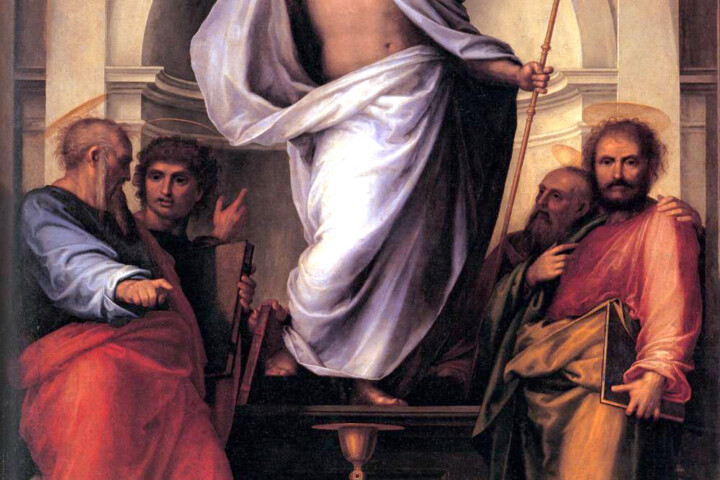
In the Glorious Light of Easter, Alleluia!
Set your minds on things that are above, not on things that are on earth, for you have died, and your life is hidden with Christ in God. When Christ who is your life is revealed, then you also will be revealed with him in glory (Col. 3:3-4). The Resurrection of Our Lord and Saviour[…]Continue reading→
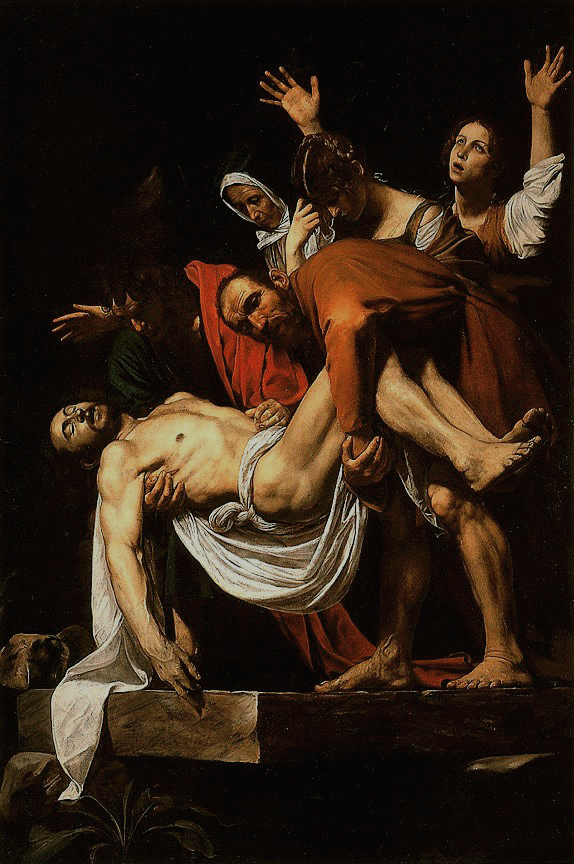
An Ancient Homily for Holy Saturday
The time between Good Friday and Easter Sunday is one of waiting, in silence, as the world wonders – anticipates – what will happen, after the death of Christ. We re-live this time each year in the anamnesis of our liturgy, and in turn look forward to the glorious re-creation of all things at the[…]Continue reading→
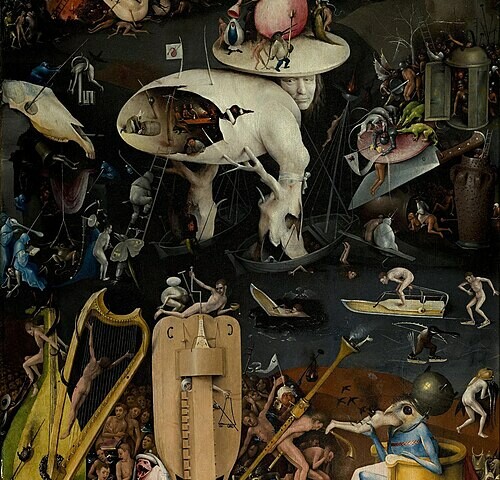
Europe’s Long Descent
(As we meditate on this day on Christ’s burial, and His descent into hell, it is fitting to ponder here with contributor Peter Marcus how the world seems to be heading there as well. The difference is that, although God cannot ‘redeem’ hell, nor those therein, He can and did redeem the world. There is[…]Continue reading→