
The Covenant Form Fulfilled in the Church
(A fitting reflection from contributor Mike Schramm, on how the Old Testament covenants point to the Catholic Church – and, we may add, to the hierarchical priesthood, and to the Pope, as the Vicar of Christ).
One of my favorite concepts when introducing biblical theology to my theology students is the theme of covenant. This is not only because of its ubiquity throughout the Scriptures or its theological profundity, but mostly because of its revelatory response by students who often have very little background in liturgical or sacramental Christianity.
To do this, I use the very popular model presented by Dr. Scott Hahn in A Father Who Keeps His Promises and has become the bread and butter of so much of his work.
Very briefly, an abbreviated version of this covenant model begins with Adam as the covenant mediator and shows the covenant form as the institution of marriage. It follows with the mediator, Noah, expanding the form to include his family. Then, moving to the pivotal Abraham and another expansion of the form to his tribe. The next mediator is Moses, with God expanding again with the institution of the nation. Finally, at least so far as the Old Testament is concerned, there is King David and another expansion to the kingdom.
Hahn would then present how Jesus Christ, the mediator of the New and final Covenant, fulfilled this role along with every other aspect of the biblical covenant. The form, then, would include another expansion
Because of the bridge this created with many Protestant Christians holding a high Christology but a low ecclesiology, the emphasis would always remain on the fulfillments found specifically in the Person of Jesus. Obviously, at one level, this is theologically sound and practically prudent, but there is certainly a place for a deeper understanding of the fulfillment found in the Church element of this covenant. The Church, of course, has long been known as the other part of the Christus totus or “the whole Christ,” according to St. Augustine (quoted in Catechism of the Catholic Church paragraph 795). While ecclesiology has long been considered more of a Catholic focus, it should be seen in light of its biblical, covenantal, foundation as well as its historical Christian roots.
Walking through the examples already presented in Hahn’s model, one can find fulfillments in the biblical understanding of the Church as much as one can in the Person of Jesus being a fulfillment of all the previous covenant mediators.
First, there is Adam’s form of marriage. How often did Jesus often compare himself to a bridegroom and Church to a bride? There are the parables of Matthew 22:1–14 and 25:1–13. There is the allegorical wedding at Cana in John 2, where Jesus and Mary represent man and woman of a New Creation. St. Paul saw this significance as well, dedicating Ephesians 5 to the relationship between Jesus and the Church. Finally, there is the climax of the book of Revelation, where the adorned Bridal Church is presented to the Lamb. It is the fundamental relationship of the Bible because it is the fundamental relationship of all Creation.
Moving to the next covenant form, it has expanded to the family. While the phrase “family of God” is more of a later adaptation, there are numerous allusions to the concept in the New Testament, wherein the Church called the “household of God”; the notion of “children of God” also implies a similar family imagery. The important basis from the Gospels for this concept comes from the famous discourse on baptism by Jesus, whereupon he says we must be born of “water and spirit” (John 3:5). This creates the family on earth as it is in heaven.
In Abraham the covenant form moves beyond blood relations to include his tribe. Similarly to how God built-in to his nation, and later his Church, the capacity to graft on the Gentiles, those who do not immediately share blood with God’s Chosen People. This ekklesia, this qahal or assembly, was always meant to move beyond the limiting human borders we often create.
When God chose Moses to free and then form the people of Israel, it was not just to claim a land hundreds of years in the promising, but also to establish a national and cultural identity. The primary identifying feature to these people were their laws, which God had given and Moses had delivered and interpreted. Now, in the celebration of this establishment, God creates his New Israel, the Church, through the sending of the law of Love in the Holy Spirit in Acts 2. St. Paul similarly associated the Church in this new established Israel in Romans 9.
Finally, with David the boundaries of God’s growing covenant extend even further as the Kingdom would now include those who have been conquered by God’s people. Now, God sends his emissaries and soldiers out to reach and draw those in through the only ‘weapon’ God knows, which is charity – for God is love. One of the first exclamations by the Son of David is that the Kingdom of God – or Kingdom of heaven – is at hand. This kingdom, whose court is made up of the poor, the sick and the rejected (see Matthew 5:3), is also the subject of numerous parables (including Matthew 13:44).
While the apologetic motivation has long led the Church to confront challenges from those outside, the primary purpose of this reflection is not simply to defend the need for a Church based on the biblical covenants. The allegorical reading of Scripture should broaden one’s understanding and appreciation of the Person of Jesus Christ by seeing him through the many Old Testament images. One can, and should, read allegorically these same images when considering the Church, which St. Paul tells us is the body of Christ (1 Corinthians 12:27).

Saint Kateri , Canada’s Protectress
This was the title given to Saint Kateri Tekakwitha, by Pope Benedict XVI, when he canonized her on October 28th, 2012, along with six others, in Saint Peter’ Square (she had been beatified by Pope John Paul II back in 1980). With Saint Joseph as our protector, along with the Canadian martyrs, we seem to[…]Continue reading→

Remembering Father Alphonse de Valk
(Today marks the sixth anniversary of the death of Father Alphonse de Valk, C.S.B., a faithful, courageous and indefatigable Basilian priest, pro-life-and-family apostle, and the founder of Catholic Insight magazine. Here is what we wrote those on his entering into eternity five years ago, as we continue to remember him in our prayers and thoughts)[…]Continue reading→

My Name is Bernadette
April 16th is a propitious day, for besides the anniversary of Father de Valk’s death, who founded Catholic Insight in its print form decades ago, and the commemoration of the ‘two Benedicts’, mentioned in accompanying posts, today we also recall Saint Bernadette Soubirous, the young visionary to whom the Virgin Mary appeared numerous times at[…]Continue reading→

Canonizing Sister Faustina and Divine Mercy
HOMILY OF THE HOLY FATHER MASS IN ST PETER’S SQUARE FOR THE CANONIZATION OF SR MARY FAUSTINA KOWALSKA Sunday, 30 April 2000 1. “Confitemini Domino quoniam bonus, quoniam in saeculum misericordia eius”; “Give thanks to the Lord for he is good; his steadfast love endures for ever” (Ps 118: 1). So the Church sings on the Octave of[…]Continue reading→

Divine Mercy Sunday – An Echo of Every Mass
Reach out your hand and put it in my side. Do not doubt but believe’… ‘My Lord and my God!’ (Jn. 20:18)). Today is Divine Mercy Sunday, and as we celebrate the end of the Easter Octave, we contemplate the wounded side of our Saviour, the Church’s source of life. On Good Friday in the[…]Continue reading→

Saint Stanislaus of Szczepanów
We celebrate Saint Stanislaus today (+ April 11, 1079), in light of this Easter Octave, a bishop and martyr who accepted the episcopacy only at the direct order of Pope Alexander II. He proved a wise and courageous leader of his flock, put to death by his own king, Boleslaus, for rebuking the monarch’s ‘immoral[…]Continue reading→
First Holy Communion: Sermon from May 16, 1943
Here is a sermon from the good old days by +Rev. Msgr. Vincent Nicholas Foy (August 14, 1915 – March 13, 2017), from 1943. Readers may recall that Pope Saint Pius X, by the decree Quam Singulari in 1910, lowered the customary age of reception of Holy Communion – after the rigours of the plague[…]Continue reading→
In the Glorious Light of Easter, Alleluia!
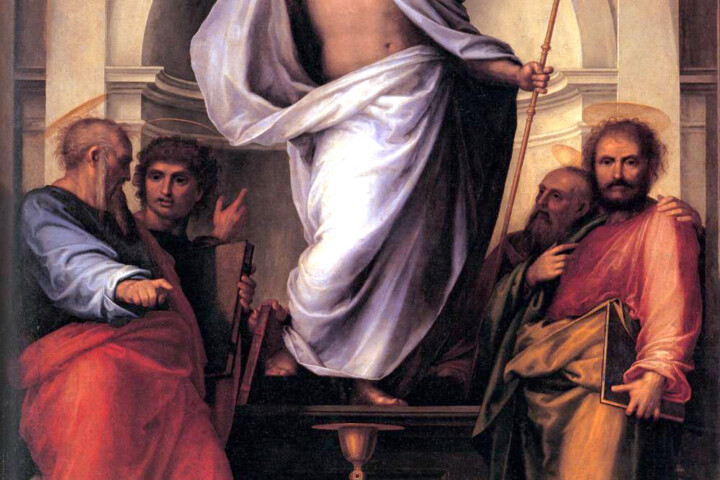
Set your minds on things that are above, not on things that are on earth, for you have died, and your life is hidden with Christ in God. When Christ who is your life is revealed, then you also will be revealed with him in glory (Col. 3:3-4). The Resurrection of Our Lord and Saviour[…]Continue reading→
An Ancient Homily for Holy Saturday
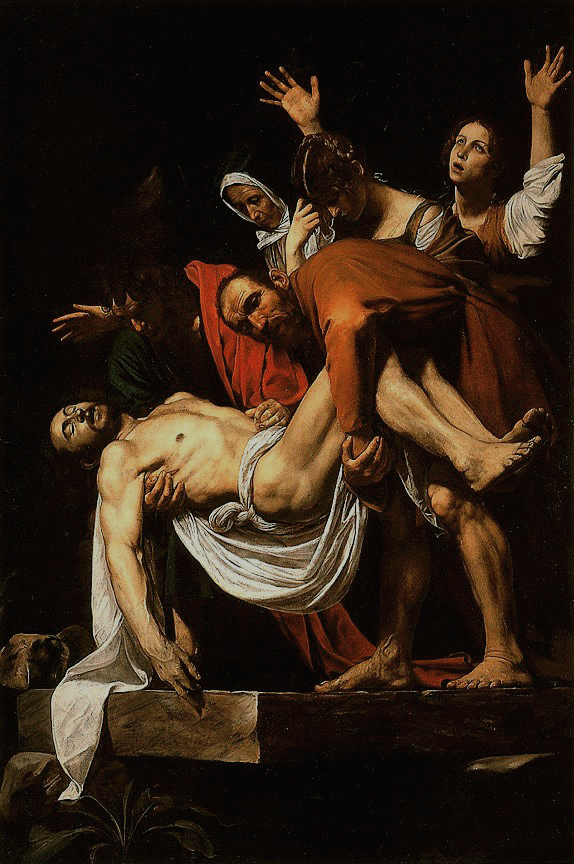
The time between Good Friday and Easter Sunday is one of waiting, in silence, as the world wonders – anticipates – what will happen, after the death of Christ. We re-live this time each year in the anamnesis of our liturgy, and in turn look forward to the glorious re-creation of all things at the[…]Continue reading→
Europe’s Long Descent
(As we meditate on this day on Christ’s burial, and His descent into hell, it is fitting to ponder here with contributor Peter Marcus how the world seems to be heading there as well. The difference is that, although God cannot ‘redeem’ hell, nor those therein, He can and did redeem the world. There is[…]Continue reading→