
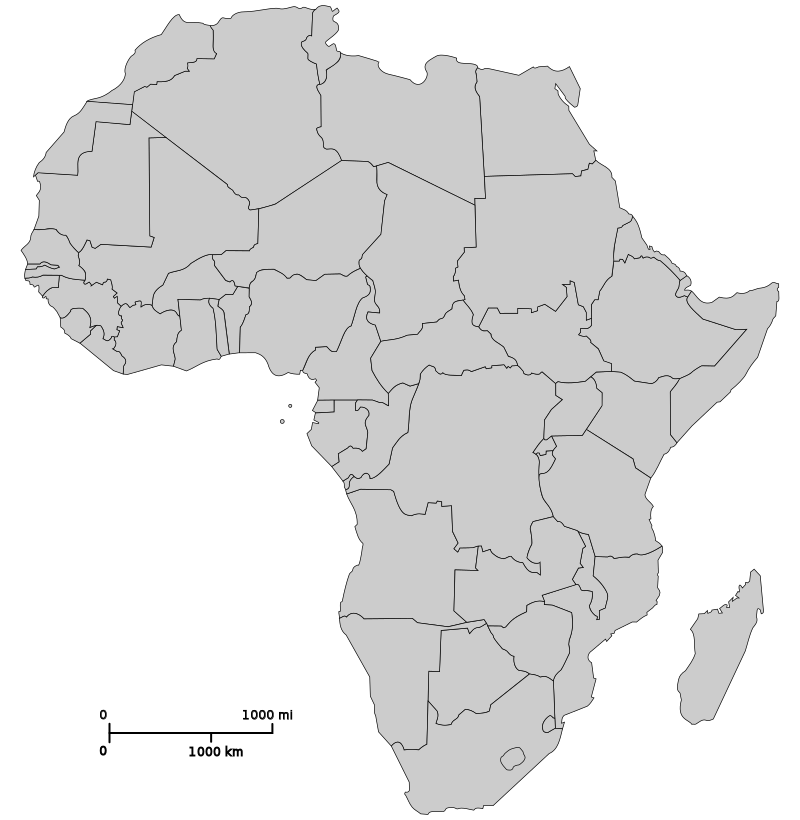
A Pope Out of Africa?
With the demise last month of Jorge Mario Bergoglio, Pope Francis I, there began immediate speculation about who next would serve as the Vicar of Christ.
The process of choosing the new pope – the conclave – is set to begin on the 7th of May when the traditional observation of the 9-day period of mourning ends. A total of 135 cardinals under the age of 80 will be eligible to cast a secret ballot for Francis’ successor, handing him the charge over 1.4 billion Catholics worldwide.
A papal candidate must garner at least two-thirds of the vote to be elected. Cardinals will continue to vote in successive rounds until one of them satisfies the requisite threshold. It took five rounds of voting in 2013 for Pope Francis to achieve that consensus.
The possibility of having the first African pope in modern history has been much discussed in the run-up to the election. Boasting 281 million members of the Catholic church representing 20 percent of her entire membership, many feel that it is time for an African pope to signify the changing face of the church.
There is widespread sentiment that the election of a black Pope may offer both the Church and Africa an opportunity to move forward in the world without pandering to trends or short-sighted reform agendas.
It has been argued that the Catholic church in Africa is dominated by the youth who are imbued with energy and enthusiasm; they have embraced the church’s traditions as well as its doctrines. An African pope may represent the energy necessary to reinvigorate the global church as to its time-honored traditions rather than becoming increasingly affected by apathy or worse the trendiness of modern liberalism.
Among the African names being given voice to, Fridolin Ambongo Besungu of the DRC has been identified as one of the top African contenders. His country, the DRC, is home to the largest population of Catholics in Africa at 55 million. He is an outspoken critic of the DRC government and was a prominent voice in the rejection of Pope Francis’s decision to allow the Catholic church to bless same-sex marriages.
This orientation may endear him to the conservative and traditionalist voices within the conclave who may not have agreed with Pope Francis’ more liberal reforms.
But alas, the arithmetic does not favor the election of an African candidate; only 18 of the 135 cardinals eligible to vote come from Africa. Europe remains the largest voting bloc with 53 cardinals followed by Asia with 23, Latin America has 21, North America has 16 while Oceania has 4 representatives.
“Contempt for the poor and vulnerable can be masked in refined language,” warned Cardinal Víctor Manuel Fernández, “false meritocracy…distorts human dignity.”
It is unlikely that an African candidate will be able to amass the two-thirds majority required for a successful election. Further, as much as Fridolin has an impressive profile, Francis did not accord him a high profile, powerful position within the Vatican hierarchy – something that will undermine his prospects.
Other better-known and more ‘Francis-friendly’ candidates will be in contention such as Mario Grech who was the architect of the Synod of Synodality, Pietro Parolin who was Francis’ second in command as the secretary of state of the Vatican, and Luis Tagle of the Philippines who is the pro-prefect for the Congregation for the Evangelization of Peoples.
All three cardinals subscribe to Francis’ liberal agenda for the Church.
How likely is it that a more liberal advocate of Francis’ policies will be appointed pontiff? One hundred and eight – roughly 80 percent – of the conclave substituents were appointed by Francis during his 12-year papacy. It’s a reality that has left some considering whether the late Pope essentially “packed the court” to insure the continuation of his modern liberal reforms.
But to be fair, observers suggest the outcome will be as difficult to predict as was Francis’ own election.
“It’s very simplistic to say cardinals just vote along ideological lines as though they’re part of political parties,” Miles Pattenden, a historian of the Catholic Church at Oxford University tells TIME. “That’s not how the Vatican works.”
The conclave tends to focus on grievances relative to the previous Pope. The initial issue to be discerned by the cardinals will be: do we want change or continuity?
Yale University professor of religious studies, Carlos Eire, contends that the clerics Francis appointed do hold to a more liberal ideological orientation. Francis raised very few conservative bishops to the College of Cardinals. While Francis may have focused on diversity geographically in his appointments, theologically – he did not.
In 2022, Francis appointed American Robert McElroy, a staunch advocate for immigration and inclusion within Catholicism of those in the LGBTQ+ community.
“When it comes to religious issues,” says Eire, “it is also highly likely that they [the cardinals] will lean away from traditionalism.”
It seems that of the new cardinals appointed by Francis, many are key figures in his liberal reform agenda.
Francis, who was technically bishop of Rome, had been conducting a reorganization of the Rome diocese and its pontifical universities. In January 2023, the pope appointed Baldassare Reina, 54, as vicar general of the Diocese of Rome. Several weeks later, he named him archbishop of the papal Basilica of St. John Lateran.
As vicegerent the young cardinal now has a mandate to reform the diocese. Cardinal Reina said the pope told him: “I want the church in Rome to be exemplary in everything – from financial transparency to staff management to pastoral priorities aligned with what I’m giving to the universal church.”
Reina, who is also grand chancellor of the pre-eminent Pontifical Lateran University, will be expected to execute Francis’ liberal reform agenda.
Perhaps the most familiar new cardinal to anyone who has been following Francis’ reforms is the Dominican Timothy Radcliffe, the ‘spiritual father’ of the recent Synod on Synodality. The years-long process was ostensibly aimed at making the church more inclusive and attentive to the perceived needs of rank-and-file Catholics, especially women.
Radcliffe, a British theologian, often provided clarifying remarks during the weeks-long debate and retreats at the Synod. At one point he set off a virtual firestorm by intimating that external financial pressures were influencing African bishops to reject Francis’ permission to allow blessings for gay couples. He later said, “clarifying,” that he just meant the African Catholic Church is under pressure from “other” well-financed faiths.
At the end of the day, whoever is eventually chosen as the next pope can no longer afford to ignore Africa. The church enjoys its most rapid growth there – moreover, it could even portend the future of that institution.

Saint Kateri , Canada’s Protectress
This was the title given to Saint Kateri Tekakwitha, by Pope Benedict XVI, when he canonized her on October 28th, 2012, along with six others, in Saint Peter’ Square (she had been beatified by Pope John Paul II back in 1980). With Saint Joseph as our protector, along with the Canadian martyrs, we seem to[…]Continue reading→

Remembering Father Alphonse de Valk
(Today marks the sixth anniversary of the death of Father Alphonse de Valk, C.S.B., a faithful, courageous and indefatigable Basilian priest, pro-life-and-family apostle, and the founder of Catholic Insight magazine. Here is what we wrote those on his entering into eternity five years ago, as we continue to remember him in our prayers and thoughts)[…]Continue reading→

My Name is Bernadette
April 16th is a propitious day, for besides the anniversary of Father de Valk’s death, who founded Catholic Insight in its print form decades ago, and the commemoration of the ‘two Benedicts’, mentioned in accompanying posts, today we also recall Saint Bernadette Soubirous, the young visionary to whom the Virgin Mary appeared numerous times at[…]Continue reading→

Canonizing Sister Faustina and Divine Mercy
HOMILY OF THE HOLY FATHER MASS IN ST PETER’S SQUARE FOR THE CANONIZATION OF SR MARY FAUSTINA KOWALSKA Sunday, 30 April 2000 1. “Confitemini Domino quoniam bonus, quoniam in saeculum misericordia eius”; “Give thanks to the Lord for he is good; his steadfast love endures for ever” (Ps 118: 1). So the Church sings on the Octave of[…]Continue reading→

Divine Mercy Sunday – An Echo of Every Mass
Reach out your hand and put it in my side. Do not doubt but believe’… ‘My Lord and my God!’ (Jn. 20:18)). Today is Divine Mercy Sunday, and as we celebrate the end of the Easter Octave, we contemplate the wounded side of our Saviour, the Church’s source of life. On Good Friday in the[…]Continue reading→

Saint Stanislaus of Szczepanów
We celebrate Saint Stanislaus today (+ April 11, 1079), in light of this Easter Octave, a bishop and martyr who accepted the episcopacy only at the direct order of Pope Alexander II. He proved a wise and courageous leader of his flock, put to death by his own king, Boleslaus, for rebuking the monarch’s ‘immoral[…]Continue reading→
First Holy Communion: Sermon from May 16, 1943
Here is a sermon from the good old days by +Rev. Msgr. Vincent Nicholas Foy (August 14, 1915 – March 13, 2017), from 1943. Readers may recall that Pope Saint Pius X, by the decree Quam Singulari in 1910, lowered the customary age of reception of Holy Communion – after the rigours of the plague[…]Continue reading→
In the Glorious Light of Easter, Alleluia!
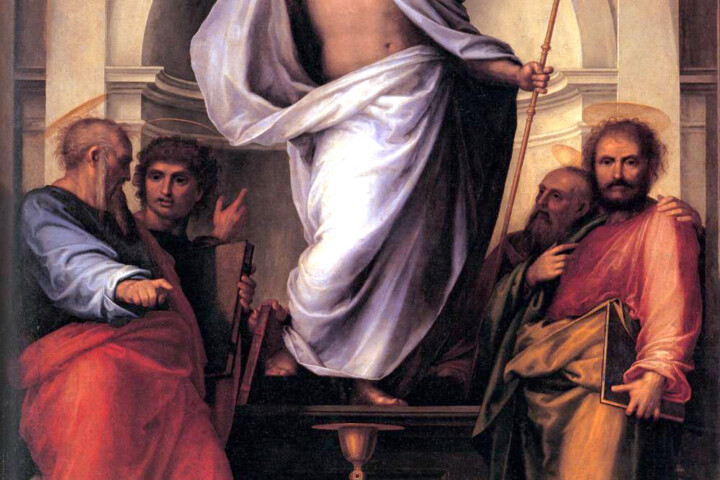
Set your minds on things that are above, not on things that are on earth, for you have died, and your life is hidden with Christ in God. When Christ who is your life is revealed, then you also will be revealed with him in glory (Col. 3:3-4). The Resurrection of Our Lord and Saviour[…]Continue reading→
An Ancient Homily for Holy Saturday
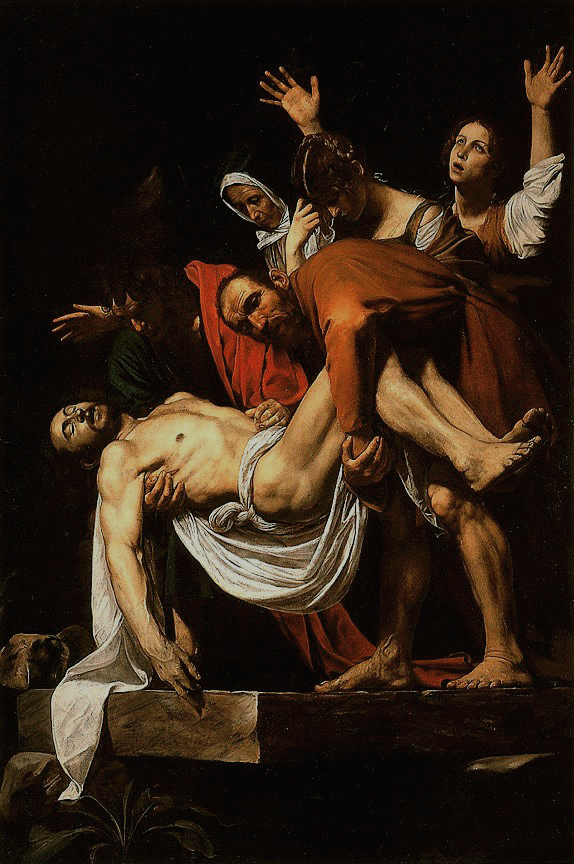
The time between Good Friday and Easter Sunday is one of waiting, in silence, as the world wonders – anticipates – what will happen, after the death of Christ. We re-live this time each year in the anamnesis of our liturgy, and in turn look forward to the glorious re-creation of all things at the[…]Continue reading→
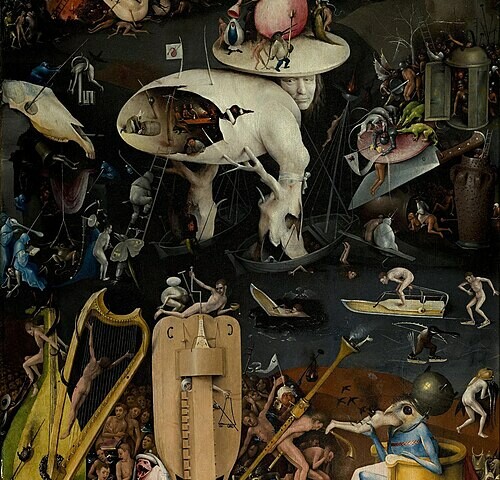
Europe’s Long Descent
(As we meditate on this day on Christ’s burial, and His descent into hell, it is fitting to ponder here with contributor Peter Marcus how the world seems to be heading there as well. The difference is that, although God cannot ‘redeem’ hell, nor those therein, He can and did redeem the world. There is[…]Continue reading→