
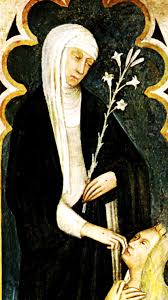
Pope Benedict and Saint Catherine of Siena
BENEDICT XVI
GENERAL AUDIENCE
Paul VI Hall
Wednesday, 24 November 2010
Saint Catherine of Siena
Dear Brothers and Sisters,
Today I would like to talk to you about a woman who played an eminent role in the history of the Church: St Catherine of Siena. The century in which she lived — the 14th — was a troubled period in the life of the Church and throughout the social context of Italy and Europe. Yet, even in the most difficult times, the Lord does not cease to bless his People, bringing forth Saints who give a jolt to minds and hearts, provoking conversion and renewal.
Catherine is one of these and still today speaks to us and impels us to walk courageously toward holiness to be ever more fully disciples of the Lord.
Born in Siena in 1347, into a very large family, she died in Rome in 1380. When Catherine was 16 years old, motivated by a vision of St Dominic, she entered the Third Order of the Dominicans, the female branch known as the Mantellate. While living at home, she confirmed her vow of virginity made privately when she was still an adolescent and dedicated herself to prayer, penance and works of charity, especially for the benefit of the sick.
When the fame of her holiness spread, she became the protagonist of an intense activity of spiritual guidance for people from every walk of life: nobles and politicians, artists and ordinary people, consecrated men and women and religious, including Pope Gregory xi who was living at Avignon in that period and whom she energetically and effectively urged to return to Rome.
She travelled widely to press for the internal reform of the Church and to foster peace among the States. It was also for this reason that Venerable Pope John Paul ii chose to declare her Co-Patroness of Europe: may the Old Continent never forget the Christian roots that are at the origin of its progress and continue to draw from the Gospel the fundamental values that assure justice and harmony.
Like many of the Saints, Catherine knew great suffering. Some even thought that they should not trust her, to the point that in 1374, six years before her death, the General Chapter of the Dominicans summoned her to Florence to interrogate her. They appointed Raymund of Capua, a learned and humble Friar and a future Master General of the Order, as her spiritual guide. Having become her confessor and also her “spiritual son”, he wrote a first complete biography of the Saint. She was canonized in 1461.
The teaching of Catherine, who learned to read with difficulty and learned to write in adulthood, is contained in the Dialogue of Divine Providence or Libro della Divina Dottrina, a masterpiece of spiritual literature, in her Epistolario and in the collection of her Prayers.
Her teaching is endowed with such excellence that in 1970 the Servant of God Paul VI declared her a Doctor of the Church, a title that was added to those of Co-Patroness of the City of Rome — at the wish of Bl. Pius ix — and of Patroness of Italy — in accordance with the decision of Venerable Pius XII.
(To continue reading, please see here).

Saint Kateri , Canada’s Protectress
This was the title given to Saint Kateri Tekakwitha, by Pope Benedict XVI, when he canonized her on October 28th, 2012, along with six others, in Saint Peter’ Square (she had been beatified by Pope John Paul II back in 1980). With Saint Joseph as our protector, along with the Canadian martyrs, we seem to[…]Continue reading→

Remembering Father Alphonse de Valk
(Today marks the sixth anniversary of the death of Father Alphonse de Valk, C.S.B., a faithful, courageous and indefatigable Basilian priest, pro-life-and-family apostle, and the founder of Catholic Insight magazine. Here is what we wrote those on his entering into eternity five years ago, as we continue to remember him in our prayers and thoughts)[…]Continue reading→

My Name is Bernadette
April 16th is a propitious day, for besides the anniversary of Father de Valk’s death, who founded Catholic Insight in its print form decades ago, and the commemoration of the ‘two Benedicts’, mentioned in accompanying posts, today we also recall Saint Bernadette Soubirous, the young visionary to whom the Virgin Mary appeared numerous times at[…]Continue reading→
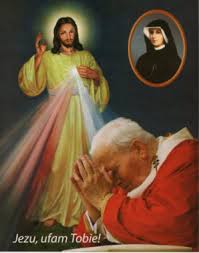
Canonizing Sister Faustina and Divine Mercy
HOMILY OF THE HOLY FATHER MASS IN ST PETER’S SQUARE FOR THE CANONIZATION OF SR MARY FAUSTINA KOWALSKA Sunday, 30 April 2000 1. “Confitemini Domino quoniam bonus, quoniam in saeculum misericordia eius”; “Give thanks to the Lord for he is good; his steadfast love endures for ever” (Ps 118: 1). So the Church sings on the Octave of[…]Continue reading→

Divine Mercy Sunday – An Echo of Every Mass
Reach out your hand and put it in my side. Do not doubt but believe’… ‘My Lord and my God!’ (Jn. 20:18)). Today is Divine Mercy Sunday, and as we celebrate the end of the Easter Octave, we contemplate the wounded side of our Saviour, the Church’s source of life. On Good Friday in the[…]Continue reading→

Saint Stanislaus of Szczepanów
We celebrate Saint Stanislaus today (+ April 11, 1079), in light of this Easter Octave, a bishop and martyr who accepted the episcopacy only at the direct order of Pope Alexander II. He proved a wise and courageous leader of his flock, put to death by his own king, Boleslaus, for rebuking the monarch’s ‘immoral[…]Continue reading→

First Holy Communion: Sermon from May 16, 1943
Here is a sermon from the good old days by +Rev. Msgr. Vincent Nicholas Foy (August 14, 1915 – March 13, 2017), from 1943. Readers may recall that Pope Saint Pius X, by the decree Quam Singulari in 1910, lowered the customary age of reception of Holy Communion – after the rigours of the plague[…]Continue reading→
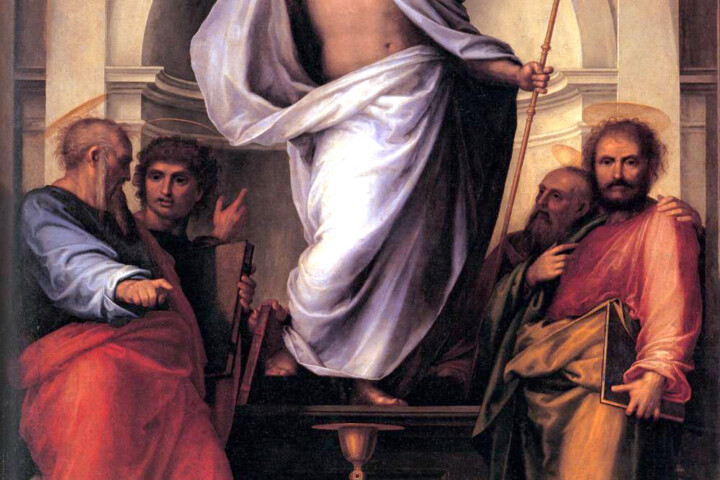
In the Glorious Light of Easter, Alleluia!
Set your minds on things that are above, not on things that are on earth, for you have died, and your life is hidden with Christ in God. When Christ who is your life is revealed, then you also will be revealed with him in glory (Col. 3:3-4). The Resurrection of Our Lord and Saviour[…]Continue reading→
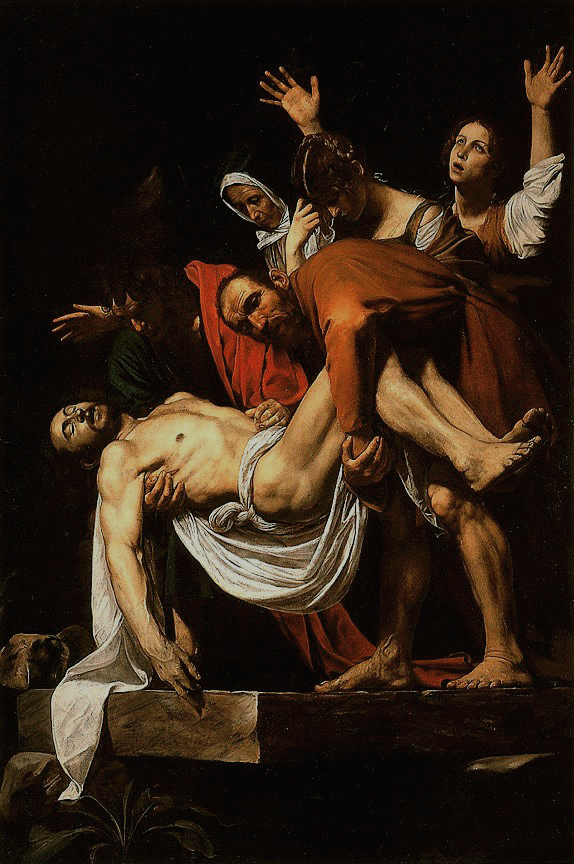
An Ancient Homily for Holy Saturday
The time between Good Friday and Easter Sunday is one of waiting, in silence, as the world wonders – anticipates – what will happen, after the death of Christ. We re-live this time each year in the anamnesis of our liturgy, and in turn look forward to the glorious re-creation of all things at the[…]Continue reading→
Europe’s Long Descent
(As we meditate on this day on Christ’s burial, and His descent into hell, it is fitting to ponder here with contributor Peter Marcus how the world seems to be heading there as well. The difference is that, although God cannot ‘redeem’ hell, nor those therein, He can and did redeem the world. There is[…]Continue reading→