
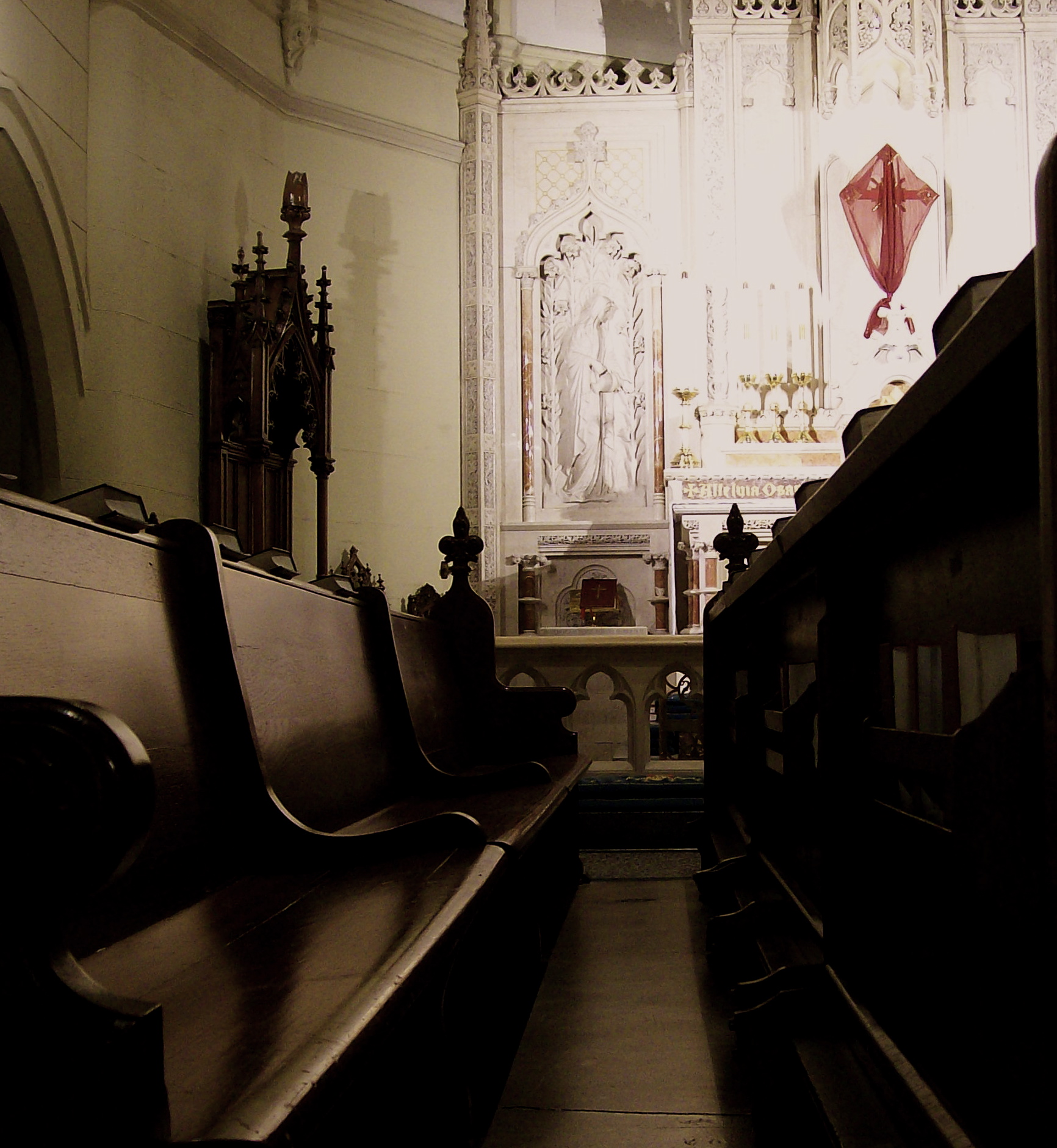
Stripping of the Altar, the Babylonian Captivity, and Properly Approaching Restrictions on the Traditional Latin Mass (TLM)
Having passed through the veiling of images during Passion week to the Stripping of the Altar on Holy Thursday (for those of you who have never seen this rite: Maundy Thursday 1 April 2021 @St Anne’s — Stripping of the Altar), we come to the apparent, absolute, defeat of Good Friday and Holy Saturday, Christ, himself sepulchred in the Altar of repose. A question arises amidst prominent liturgical sensibilities in today’s world: Do we really enjoy the diminished symbolism with our various sacramentals removed from sight, Christ himself moved away to the altar of repose, and even the altar stripped of all adornment? However, in the light of Faith, the question of “enjoyment” is the wrong question: did the Apostles “enjoy” their first Holy Week when Christ, Himself, was removed from them, when the first altar was an infamous means of shame and torture built for their Lord, Himself? And yet, how foundational to the faith!
Following the Lenten liturgical readings to today, we learn that we, like Peter, cannot remain on the mountain making three tents to bask in the glory of Christ until the day we die (Gospel of Laetare Sunday or “rose” Sunday). We also are called to follow Christ to the Cross where “the Son of Man [is] glorified, and God is glorified in him” (Jn 13:31 Tuesday in Holy Week, Novus Ordo liturgy; see also Jn 12:23-24 Saturday in Passion Week TLM), for therein does the Son of Man consummate (Jn 19:30 – Good Friday) his High Priesthood in his ultimate act of earthly obedience to the will of the Father.
As such, the Stripping of the Altar becomes our liturgical union to Christ through symbolizing both the particular stripping of Christ’s clothes during the soldiers’ mockery and before the crucifixion as well as more generally his stripping of earthly glory from the cry of joyous crowds on Palm Sunday to the “crucify him!” with all that followed. Herein, we are called to recognize that glory while on this earth is separate from what this world glorifies; as Christians, our glory also is in the priestly life of sacrifice (Jn 13:14-15 Holy Thursday in context of Heb 5:4-10 where St. Paul describes the priesthood as a glory given by God, Tenebrae of Good Friday) following the will of the Father up to consummation of obedience in apparent absolute shame and death itself: “I gave my back to those who beat me, my cheeks to those who plucked my beard; My face I did not shield from buffets and spitting. The Lord GOD is my help, therefore I am not disgraced” (Is 50:6-7 – Wednesday in Holy Week, Novus Ordo; Monday in Holy Week, TLM).
The fulfilment of glory is proper to the next life, and we cannot build tents to remain unqualifiedly sheltered from the world basking in Christ’s glory, but neither is the world’s abusing and deriding us for following God’s commands truthfully shaming; rather, God’s commandments guide us through the glorification of Christ as High Priest in His Passion and death to the fulfilment of the next life when Christ’s glory will be continually manifest to us, unobscured from the appearance of shame.
Lenten Babylonian Captivity
This stripping of the altar draws a parallel to the Old Testament Babylonian Captivity, which is, in fact, another Lenten theme (season of Septuagesima – derived from 70, offertory for Thursday of Passion week, the readings of Tenebrae, etc): For seventy years, the Israelites were exiled in Babylon, all traditional rites of the Temple stripped away; further, some of them saw the destruction and desecration of the Temple before exile, including the massacre of the priests. One psalm (Ps. 74[73]) laments this event, describing the pride of the enemy tearing down all that was sacred without fear, the absence of priests and prophets to lead the people back to full worship in the future, and a complete dependence on God to restore the traditional sacrifices; although this psalm is not liturgically prominent in Lent, the laments in Tenebrae describe the same events. Another Psalm (Ps. 137[136]) is quoted in the offertory of Thursday in Passion week (TLM); it is a lament within Babylon, describing how the Babylonians seek to entice the Israelites to sing as they do in Sion, living “fully” a spiritual life separate from Sion, but the Israelites instead weep for the Temple, without which the songs of God lose their joy; the psalm ends recognizing the misery of the Babylonians (who themselves live in denial of their misery) and calling the one blessed who gives the Babylonians that which God gave them through Babylon, namely a dashing of their children, the fruits of their (disordered) love, against the rock.
The restriction on the TLM and the year-long Babylonian Captivity of Today
For those of us who love the greater depth of the TLM, these Lenten themes give rise to the question of how to approach current restrictions of the TLM, for, in the absence of this liturgy, attending the Novus Ordo becomes, as it were, an extreme and year-long stripping of traditional rites, a Babylonian captivity away from fuller worship of the Temple, a liturgical Triduum without Easter; this remains the case even, or perhaps more acutely, on Solemnities, for amidst apparent outward joys the ‘stripped altar’ remains even in relatively traditional parishes and the heart laments: “How shall we sing the song of the Lord in a strange land?” (Ps. 136:4, DRA):
Today also, we are separated from traditional rites. Further, many of us have seen the desecration of the sanctuary of the Babylonian Captivity described in Psalm 74[73] and 2 Kings: men setting their own banners proclaiming things contrary to God laws (e.g. pride flags), tearing down of the rich symbolism during so called ‘updating’ of churches, stifling of the holy feasts of God during the massive change in the calendar in the Novus Ordo (five major feasts are different within the two weeks around Christmas alone, leading to a disruption of Catholic culture), and silencing of today’s prophets decrying sacrileges. I could go on…: “they are ignorant as they go out, ignorant as they scale the top” (Ps. 73:6, DRA) professing a humanly rational liturgical approach above respectful receptivity to that passed down.
There is, however, one more parallel which is important not to overlook: As in the Babylonian Captivity of the Old Testament, our own captivity is a call to repentance. The Old Testament Babylonian Captivity was God making explicitly manifest to the Israelites the interior nature of their worship through the exterior privations – Israel was not truly participating in the sacrifices as an act of obedient submission to God, but as a “den of thieves” (Jer. 7:11) seeking to gain something from the rites (e.g. enjoyment, etc.) instead of seeking a proper relation to God. They placed their own satisfaction above an interior commitment to God’s commandments and reforming their lives, and, therefore, God removed the sacrifices which they were not truthfully taking to heart. Likewise, in our own day, Vatican II recognized a problem with how, in practice, the Mass was approached: the result, God allowed enemies to take his Church into exile.
As in the past, our proper response is that of repentance and faith while in exile, a longing for return and attempt while in exile to approach God in faith, dependent on his guidance back to tradition, for “there is now no prophet” (Ps. 74[73]: 9)– no one who knows unerringly the way to return; without having ourselves lived the traditional Catholic culture, we seek, amidst uncertainties, to rediscover the lost depth – the TLM itself, but also a proper approach thereto.
Faith, however, to be true faith must reject the heresy of activism: Saul was condemned because he sacrificed contrary to obedience (1 Sam 13) and Christ himself told his apostles when they sought to defend Him in the garden “The chalice which my Father has given me, shall I not drink it?” (Jn 8:11). Our Holy Father Pope Francis holds the keys of Peter, the power from Christ himself to bind and loose, and if, as Passiontide in particular witnesses, diminished rites are not in themselves evil, per se, providing they are properly approached not in pride or sloth but in a spirit of repentance, then it seems that the Holy Father does have authority to restrict the TLM even, if God permits, to the point of taking the remainder of the Church into a Babylonian exile for a time.
While we can pray with Christ “Father, if thou wilt, remove this chalice from me…”, we must hold to the deeper obedience to the Father’s will accepting the punishment of the Babylonian Captivity “even onto death…”, trusting that God will not abandon his Holy One to decay and keeping our eyes fixed on Sion: “how shall we sing the songs of the Lord in a strange Land?”. As Christ’s worship was most perfect loving obedience even amidst blaspheming crowds and the Blessed Mother stood by, her eyes fixed on her Son, we also can keep our eyes fixed on Christ, trusting in God’s Providence, praying as a royal Priesthood (1 Peter 2:9) in Christ through baptism for those who do not know or recognize the sacredness of Sion, “Father, forgive them, for they know not what they do” and offering our tears as a sacrifice to secure the eventual return from exile.
With the memory of the Transfiguration ever before us, let us not forget Sion as we seek evermore to take her fuller worship to heart, but neither let us reject the chalice the Father gives us as we repentantly order ourselves to the perfected worship in life to come. Lastly, neither let us as a priestly people forget the Bablyonians, interceding for them that God may remember them in day of Jerusalem, dashing their ‘children (that is, disordered loves) against the rock of Christ that they also may embrace the joy of Sion with us!
Mater dolorosa, ora pro nobis!

Saint Kateri , Canada’s Protectress
This was the title given to Saint Kateri Tekakwitha, by Pope Benedict XVI, when he canonized her on October 28th, 2012, along with six others, in Saint Peter’ Square (she had been beatified by Pope John Paul II back in 1980). With Saint Joseph as our protector, along with the Canadian martyrs, we seem to[…]Continue reading→

Remembering Father Alphonse de Valk
(Today marks the sixth anniversary of the death of Father Alphonse de Valk, C.S.B., a faithful, courageous and indefatigable Basilian priest, pro-life-and-family apostle, and the founder of Catholic Insight magazine. Here is what we wrote those on his entering into eternity five years ago, as we continue to remember him in our prayers and thoughts)[…]Continue reading→

My Name is Bernadette
April 16th is a propitious day, for besides the anniversary of Father de Valk’s death, who founded Catholic Insight in its print form decades ago, and the commemoration of the ‘two Benedicts’, mentioned in accompanying posts, today we also recall Saint Bernadette Soubirous, the young visionary to whom the Virgin Mary appeared numerous times at[…]Continue reading→
Canonizing Sister Faustina and Divine Mercy
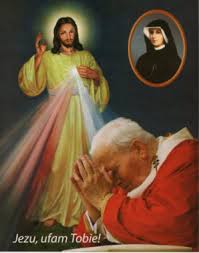
HOMILY OF THE HOLY FATHER MASS IN ST PETER’S SQUARE FOR THE CANONIZATION OF SR MARY FAUSTINA KOWALSKA Sunday, 30 April 2000 1. “Confitemini Domino quoniam bonus, quoniam in saeculum misericordia eius”; “Give thanks to the Lord for he is good; his steadfast love endures for ever” (Ps 118: 1). So the Church sings on the Octave of[…]Continue reading→

Divine Mercy Sunday – An Echo of Every Mass
Reach out your hand and put it in my side. Do not doubt but believe’… ‘My Lord and my God!’ (Jn. 20:18)). Today is Divine Mercy Sunday, and as we celebrate the end of the Easter Octave, we contemplate the wounded side of our Saviour, the Church’s source of life. On Good Friday in the[…]Continue reading→

Saint Stanislaus of Szczepanów
We celebrate Saint Stanislaus today (+ April 11, 1079), in light of this Easter Octave, a bishop and martyr who accepted the episcopacy only at the direct order of Pope Alexander II. He proved a wise and courageous leader of his flock, put to death by his own king, Boleslaus, for rebuking the monarch’s ‘immoral[…]Continue reading→
First Holy Communion: Sermon from May 16, 1943
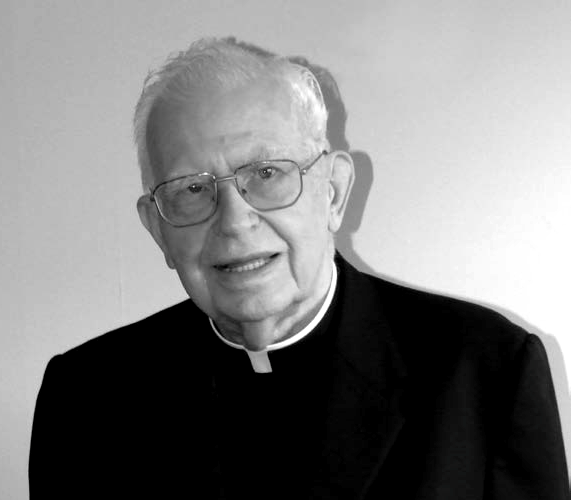
Here is a sermon from the good old days by +Rev. Msgr. Vincent Nicholas Foy (August 14, 1915 – March 13, 2017), from 1943. Readers may recall that Pope Saint Pius X, by the decree Quam Singulari in 1910, lowered the customary age of reception of Holy Communion – after the rigours of the plague[…]Continue reading→
In the Glorious Light of Easter, Alleluia!
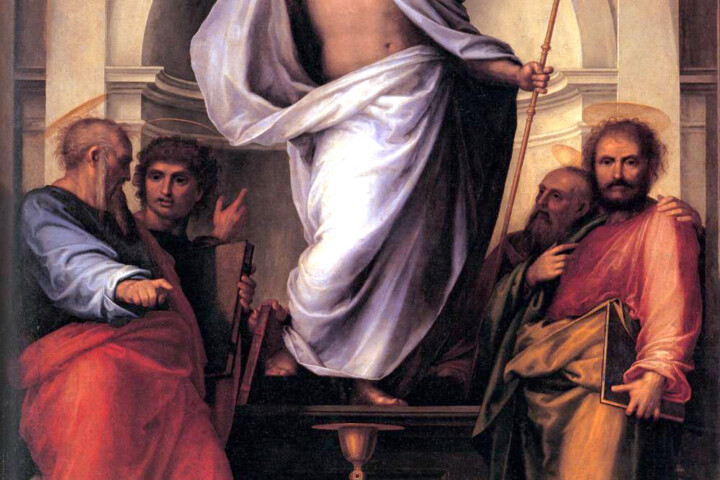
Set your minds on things that are above, not on things that are on earth, for you have died, and your life is hidden with Christ in God. When Christ who is your life is revealed, then you also will be revealed with him in glory (Col. 3:3-4). The Resurrection of Our Lord and Saviour[…]Continue reading→
An Ancient Homily for Holy Saturday
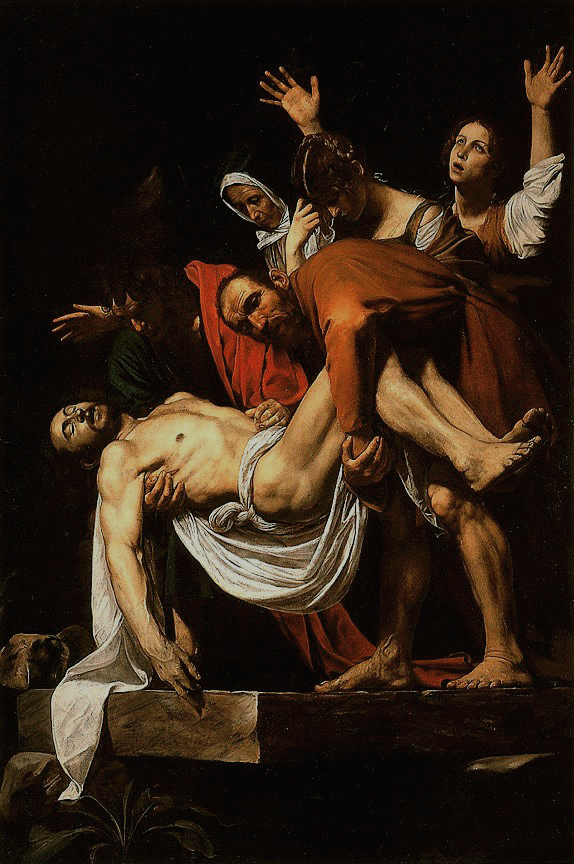
The time between Good Friday and Easter Sunday is one of waiting, in silence, as the world wonders – anticipates – what will happen, after the death of Christ. We re-live this time each year in the anamnesis of our liturgy, and in turn look forward to the glorious re-creation of all things at the[…]Continue reading→
Europe’s Long Descent
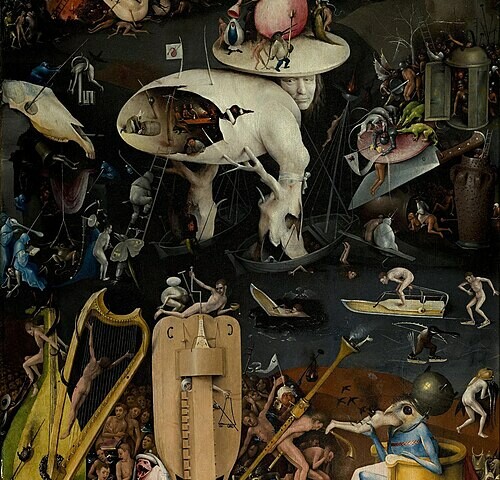
(As we meditate on this day on Christ’s burial, and His descent into hell, it is fitting to ponder here with contributor Peter Marcus how the world seems to be heading there as well. The difference is that, although God cannot ‘redeem’ hell, nor those therein, He can and did redeem the world. There is[…]Continue reading→