
Fifth Sunday of Lent: The Infinite, Incarnate Mercy of God
I regard everything as loss because of the surpassing value of knowing Christ Jesus my Lord (Phil. 3:8). ⧾
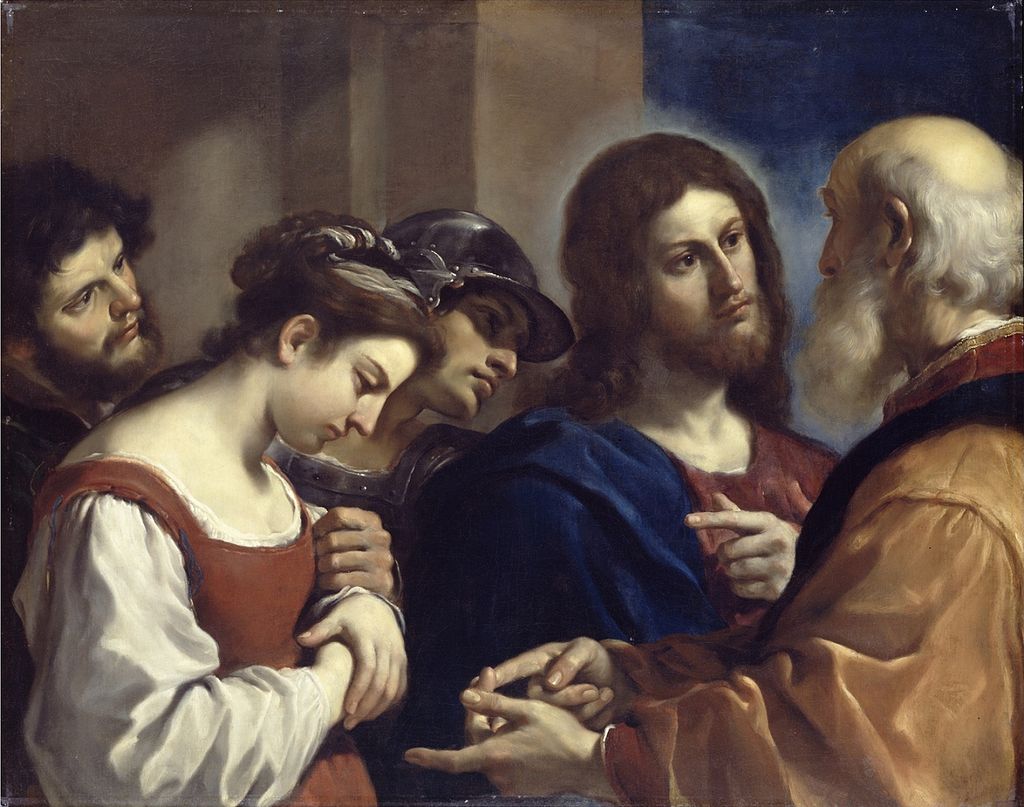
Our Gospel reading today is taken from the Gospel of St. John. For John, life begins when one meets Jesus; and for this reason, one of the major interests of this evangelist is to lead the reader to this life-giving encounter with Our Lord. For those who have never met Him, the Gospel serves as an introduction. For those who already believe in Him, the Gospel invites us to relive and deepen this encounter. St John does this by providing several vivid examples, and in so doing suggests that the ways of meeting Jesus are as different as the persons who meet Him. The message to us as readers and hearers is that God has tailored our encounter with Our Lord to our needs and personality, our individual history. Our Gospel text describes the woman caught in adultery, a story with which we can all relate because we are all burdened and wounded by sin. What happens between this unfortunate woman and Our Saviour can teach us much about our own relationship with Him and to regard everything as loss because of the surpassing value of knowing Christ Jesus [our] Lord (Phil. 3:8).
The law of Leviticus demanded that anyone guilty of adultery be put to death (20:10), and other texts indicate that stoning was the common practice. The woman had been caught in the very act of adultery; the man, equally guilty, has apparently escaped, and so she stands alone, though surrounded by a crowd. The Scribes and the Pharisees have not brought the woman to Our Lord because they don’t know what to do with her. They do so to catch Him on the horns of a dilemma. If he says, ‘do nothing’, He might be denounced for flaunting the Law. If He says, ‘stone her’, He might get in trouble with the Roman authorities who, precisely around this time, are said to have reserved the right to capital punishment to themselves. They make the woman stand before the people in public display, as they question Our Lord. He in turn, responds with great disinterest, it would seem. He has not come as judge but as Saviour (3:17; 8:15). When the Scribes and Pharisees persist in their questioning, Our Lord goes to the heart of the matter. Punishment is the world’s way of dealing with evil. Forgiveness and rehabilitation is God’s way. Our Lord unmasks what is in their hearts: ‘Let anyone among you who is without sin be the first to throw a stone at her’. One by one they leave. Our Lord has escaped the dilemma; but more importantly He has revealed Himself to the woman as the mercy of God. St. Augustine says, There remain only two; misera et misericordia – misery and mercy. Our Lord is God’s mercy made manifest; and the mercy He bestows is not generic but very specific to the unfortunate circumstances of her life.
It is possible that the woman’s self-image had been fashioned by the images of a male that she had only ever known: as one who uses her for pleasure or as one who condemns her. In either case, she is worthless; but in meeting Jesus, the Mercy of God, she comes to discover her dignity. This is what God’s mercy does. It restores and enhances our human dignity. The sin is not the end of her worth. Forgiven, she finds the strength to believe in the better life to which Our Lord calls her; for He tells her that she can avoid sin in the future. He opens a new path to freedom for her: freedom from accusation and stoning of course, but more importantly, freedom from the prison of her past. Such is the power of God’s mercy. We don’t have to be what the past may have made us.
This life-changing meeting of the woman with Our Lord helps us to understand St. Paul’s declaration: I regard everything as loss because of the surpassing value of knowing Christ Jesus my Lord (Phil. 3:8). Truly, nothing else ultimately matters because in Christ Jesus Our Lord we are given to know everything necessary for a life of meaningful purpose. Scholars tell us that the unnamed woman caught in adultery is in fact Mary Magdalene, whom we later find at the foot of the Cross together with Our Lady and St. John, and who after Our Lord’s Resurrection is sent to the Apostles to share the good news of His Resurrection from the dead. She who had come to know Christ Jesus in the very real experience of mercy was in turn strengthened by it and sent out to proclaim that in Christ God was reconciling the world to himself, not counting [our] trespasses against [us], and entrusting to us the message of reconciliation (2 Cor. 5:19). This reconciliation was brought about through Our Lord’s sacred Passion.
We have begun Passiontide, the last two weeks of Lent. With the exception of the Way of the Cross, our statues and images are veiled, for the Gospels tells us that during this time Our Lord no longer walked openly among the people, but hid Himself. Another reason given for their veiling is that when He arrived at the time of His suffering and death His divinity was hidden. Let us benefit from this sacred time and see in it an invitation to enter even more deeply into the Mystery of His Passion. The passion of Christ completely suffices to fashion our lives. The mercy which changed the life of the woman caught in adultery is the same mercy that we receive; and it has the power to transform our lives and strengthen us as we serve God and one another in the Church, the visible community of God’s mercy. Here sinners are reconciled and rehabilitated; so that everyone may come to know that God is rich in mercy. The cross exemplifies every virtue (St. Thomas Aquinas, Collatio 6 super Credo in Deum), most especially God’s mercy.
As we prepare to commemorate the Passion of Our Lord and celebrate the great Paschal Feasts, may we be filled with true reverence for His sacred Passion, and so benefit from our knowledge and love of Jesus Crucified. ⧾

Remembering Father Alphonse de Valk
(Today marks the sixth anniversary of the death of Father Alphonse de Valk, C.S.B., a faithful, courageous and indefatigable Basilian priest, pro-life-and-family apostle, and the founder of Catholic Insight magazine. Here is what we wrote those on his entering into eternity five years ago, as we continue to remember him in our prayers and thoughts)[…]Continue reading→

Divine Mercy Sunday – An Echo of Every Mass
Reach out your hand and put it in my side. Do not doubt but believe’… ‘My Lord and my God!’ (Jn. 20:18)). Today is Divine Mercy Sunday, and as we celebrate the end of the Easter Octave, we contemplate the wounded side of our Saviour, the Church’s source of life. On Good Friday in the[…]Continue reading→

Saint Stanislaus of Szczepanów
We celebrate Saint Stanislaus today (+ April 11, 1079), in light of this Easter Octave, a bishop and martyr who accepted the episcopacy only at the direct order of Pope Alexander II. He proved a wise and courageous leader of his flock, put to death by his own king, Boleslaus, for rebuking the monarch’s ‘immoral[…]Continue reading→

First Holy Communion: Sermon from May 16, 1943
Here is a sermon from the good old days by +Rev. Msgr. Vincent Nicholas Foy (August 14, 1915 – March 13, 2017), from 1943. Readers may recall that Pope Saint Pius X, by the decree Quam Singulari in 1910, lowered the customary age of reception of Holy Communion – after the rigours of the plague[…]Continue reading→

In the Glorious Light of Easter, Alleluia!
Set your minds on things that are above, not on things that are on earth, for you have died, and your life is hidden with Christ in God. When Christ who is your life is revealed, then you also will be revealed with him in glory (Col. 3:3-4). The Resurrection of Our Lord and Saviour[…]Continue reading→

An Ancient Homily for Holy Saturday
The time between Good Friday and Easter Sunday is one of waiting, in silence, as the world wonders – anticipates – what will happen, after the death of Christ. We re-live this time each year in the anamnesis of our liturgy, and in turn look forward to the glorious re-creation of all things at the[…]Continue reading→

Europe’s Long Descent
(As we meditate on this day on Christ’s burial, and His descent into hell, it is fitting to ponder here with contributor Peter Marcus how the world seems to be heading there as well. The difference is that, although God cannot ‘redeem’ hell, nor those therein, He can and did redeem the world. There is[…]Continue reading→
Pope Saint John Paul II’s First Good Friday Homily
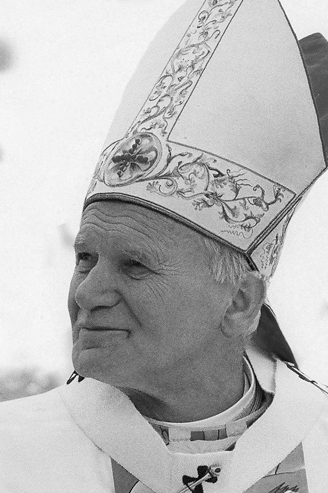
ADDRESS OF HIS HOLINESS JOHN PAUL II AT THE CONCLUSION OF THE STATIONS OF THE CROSS AT THE COLOSSEUM Good Friday, 13 April 1979 When we make the Way of the Cross from one station to the next, in spirit we are always at the spot wherethis journey had its “historical” place: where it[…]Continue reading→
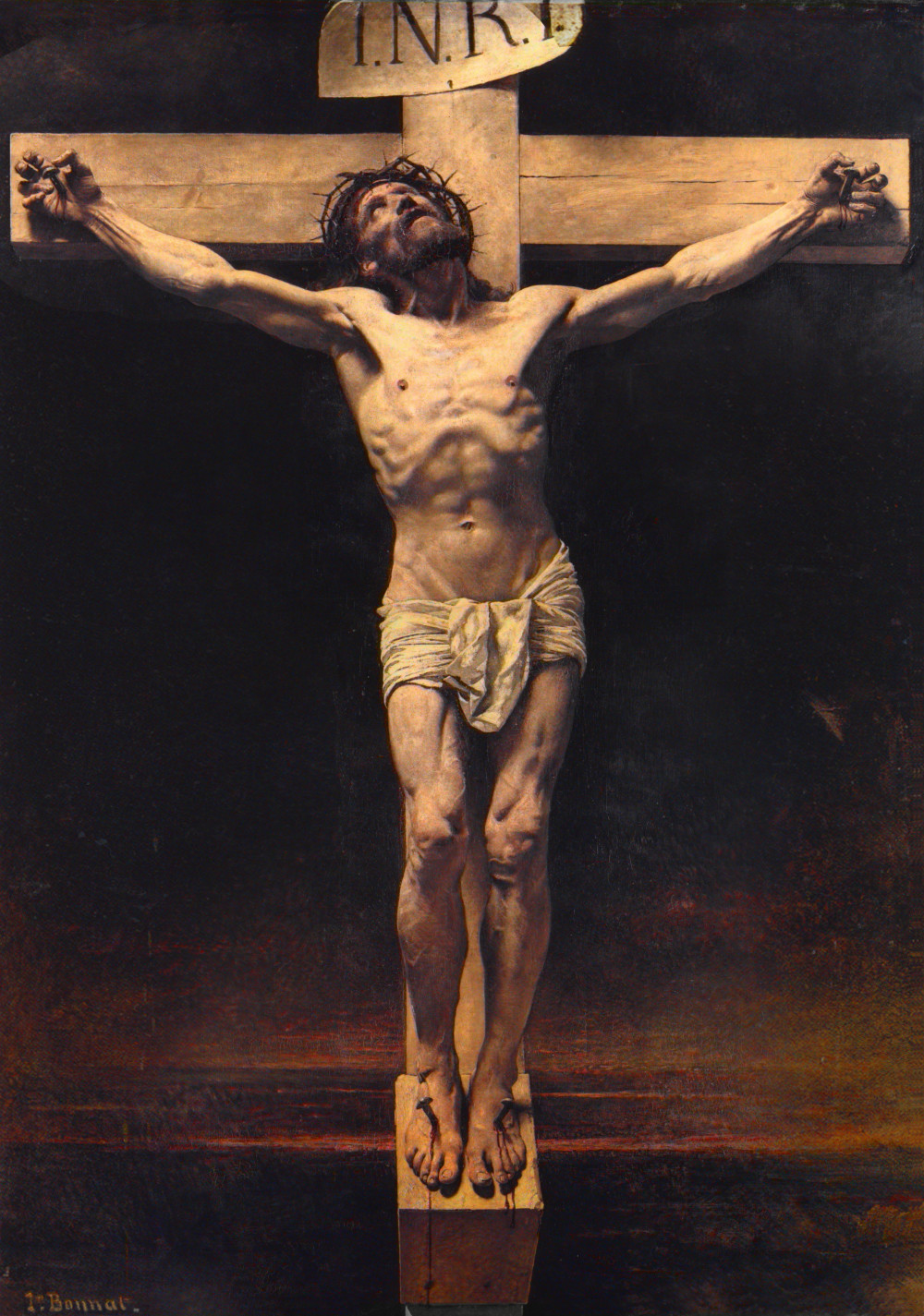
A Meditation for Good Friday: How To Undo the Effects of Sin?
Cardinal Newman, now Saint John Henry Newman, was a towering figure of nineteenth-century Catholicism who is almost universally admired. I say “almost” because not everyone likes him. I knew a priest once, Arthur Caulkins, who has become disenchanted with Newman. As an undergraduate Arthur had been enamoured of Newman, and this interest continued when he[…]Continue reading→
Pope Benedict’s Last Holy Thursday Homily
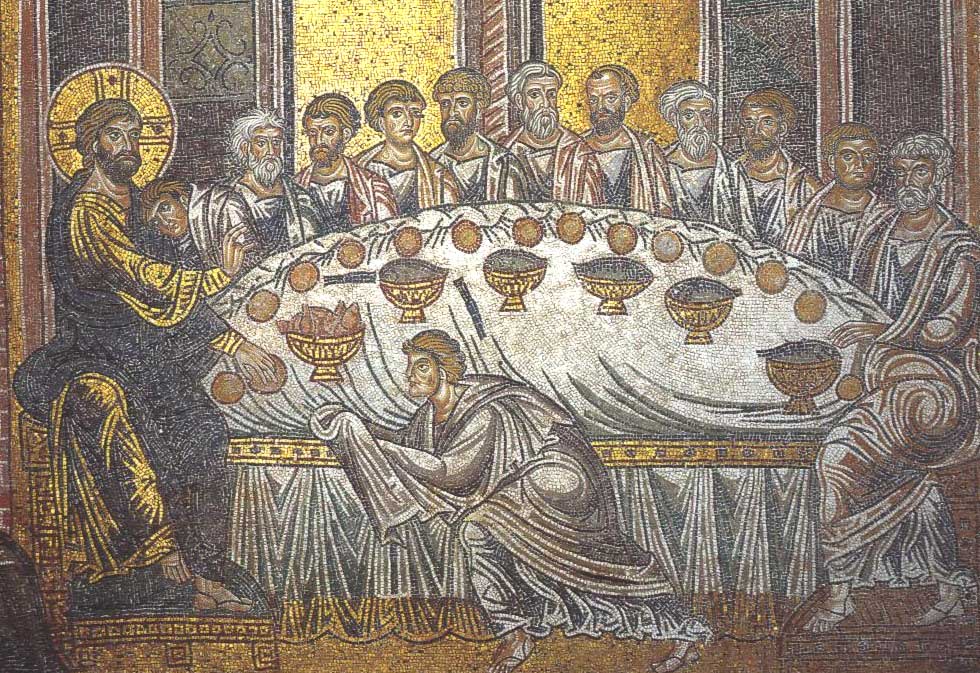
MASS OF THE LORD’S SUPPER HOMILY OF HIS HOLINESS BENEDICT XVI Basilica of St John Lateran Holy Thursday, 5 April 2012 Photo Gallery (Video) Dear Brothers and Sisters! Holy Thursday is not only the day of the institution of the Most Holy Eucharist, whose splendour bathes all else and in some ways draws it to[…]Continue reading→