
The Feast of the Chair of St Peter
The 22nd of February is the Feast of the Chair of St Peter. St Peter’s Chair, or “Cathedra” brings with it the particular mission Jesus entrusted to Peter himself.
The Matthean Gospel reveals to us the essence of this feast when in today’s Gospel we read Jesus’ words to Peter: And I tell you, you are Peter, and on this rock I will build my church, and the powers of death shall not prevail against it (Matt 16:18). Various Popes undertook this feast to promote the Chair of St Peter in the service of the unity of the faith. It naturally comes to mind the beautiful words Pope St John Paul spoke in his angelus address of Sunday 22 February 2004: Today, 22 February, is the liturgical Feast of the Chair of St Peter. It sheds light on the special ministry of strengthening and guiding the Church in the unity of the faith which the Lord entrusted to the Head of the Apostles. It consists in this ministerium petrinum (Petrine ministry), the particular service that the Bishop of Rome is called to render to the entire Christian people. It is an indispensable mission that is not built on human prerogatives but on Christ himself, the cornerstone of the Ecclesial Community. Let us pray that the Church in the different cultures, languages and traditions will be unanimous in believing and professing the truths of faith and morals passed down by the Apostles.
In his clear style, Pope Benedict XVI explains to us why we call the Chair of St Peter as Cathedra. In his catechesis of Wednesday, 22 February 2006, he taught us: “Cathedra” literally means the established seat of the Bishop, placed in the mother church of a diocese which for this reason is known as a “cathedral”; it is the symbol of the Bishop’s authority and in particular, of his “magisterium”, that is, the evangelical teaching which, as a successor of the Apostles, he is called to safeguard and to transmit to the Christian Community. When a Bishop takes possession of the particular Church that has been entrusted to him, wearing his mitre and holding the pastoral staff, he sits on the cathedra. From this seat, as teacher and pastor, he will guide the journey of the faithful in faith, hope and charity.
But what is special about the Chair of the Church of Rome? Benedict XVI gives us the following response within the same catechesis: The See of Rome, after St Peter’s travels, thus came to be recognized as the See of the Successor of Peter, and its Bishop’s “cathedra” represented the mission entrusted to him by Christ to tend his entire flock. This is testified by the most ancient Fathers of the Church, such as, for example, St Irenaeus, Bishop of Lyons, but who came from Asia Minor, who in his treatise Adversus Haereses, describes the Church of Rome as the “greatest and most ancient, known by all… founded and established in Rome by the two most glorious Apostles, Peter and Paul”; and he added: “The universal Church, that is, the faithful everywhere, must be in agreement with this Church because of her outstanding superiority” (III, 3, 2-3). Tertullian, a little later, said for his part: “How blessed is the Church of Rome, on which the Apostles poured forth all their doctrine along with their blood!” (De Praescriptione Hereticorum, 36). Consequently, the Chair of the Bishop of Rome represents not only his service to the Roman community but also his mission as guide of the entire People of God... This is what Jerome wrote: “I decided to consult the Chair of Peter, where that faith is found exalted by the lips of an Apostle; I now come to ask for nourishment for my soul there, where once I received the garment of Christ. I follow no leader save Christ, so I enter into communion with your beatitude, that is, with the Chair of Peter, for this I know is the rock upon which the Church is built” (cf. Le lettere I, 15, 1-2).
And yet, the greatness for such a feast lies in the faith confession of the Apostle Peter who told Jesus: You are the Christ, the Son of the living God (Matt 16:16). Pope Francis tells us in his Angelus address of June 29, 2018:
In the confusion of these and other hypotheses, still today, a simple and clear one stands out, the confession of Simon, called Peter, a humble man full of faith: “You are the Christ, the Son of the living God” (v.16). Jesus is the Son of God: hence he is perennially alive as his Father is eternally alive. This is the novelty that grace ignites in the heart of those who are open to the mystery of Jesus: the non-mathematical — but even stronger, inner — certainty of having encountered the Wellspring of Life, Life itself made flesh, visible and tangible in our midst. This is the experience of Christians, and it is not their merit, not that of we Christians; it is not our merit, but comes from God; it is a grace of God, the Father and Son and Holy Spirit. All this is contained in the seed of Peter’s response: “You are the Christ, the Son of the living God”. Then, Jesus’ response is full of light: “you are Peter, and on this rock I will build my church, and the powers of death shall not prevail against it” (v. 18). It is the first time that Jesus says the word “Church”: and he does so expressing all his love for her, which he defines as “my Church”. It is the new community of the Covenant, no longer based on lineage and on the Law, but on faith in him, Jesus, the Face of God.
O God, Who by delivering to Thy blessed Apostle Peter the keys of the kingdom of Heaven,didst confer upon him the pontifical power of binding and of losing, grant that, by the help of his intercession, we may be delivered from the bonds of our sins. Who lives and reignest with Thee, One God, world without end. Amen.
A Closed, Unsustainable, Descending Loop
As a follow-up to my thoughts on Payette’s payout, here be a stark image of where are here in Canada. As the graph shows in, well, graphic terms, since 2025, the public sector has contributed to 95.5% of economic growth. The private sector – which funds the public sector, or is supposed to – has[…]Continue reading→
Presidential Pardon of Weronika Krawczyk
As a good news, follow-up to our story from Poland, of the persecution of Weronika Krawczyk for her pro-life views, we heard that she has been granted a presidential pardon. One might still wonder why one needs a presidential pardon for simply holding the long-held belief that the child within the womb is a child,[…]Continue reading→
Pope Leo and a Rosary for Peace
Pope Leo XIV has asked Catholics across the world to join him in a Rosary for peace today, at 18:00 Rome time (6 pm), which would be noon from where I write (EST). If you are able, whether at that time or another, and in whatever way you pray, to join in intercession with the[…]Continue reading→
Payette’s Payout
I was glancing through some headlines, and noticed a mention of Julie Payette – engineer and astronaut and sometime the Queen’s representative in Canada – which brought back vague memories. She was appointed Governor-General by Justin Trudeau in 2017. Ms. Payette resigned in 2021, amidst claims that she created a ‘toxic work environment’, with allegations[…]Continue reading→
Weronika Krawczyk and Injustice in Poland
Catholic Action in Poland has issued a formal statement appealing to the President of the Republic of Poland to pardon Weronika Krawczyk—convicted for warning other women against an abortion-performing gynaecologist. Catholic Action (AK) emphasizes that no apology is owed to a doctor who has performed numerous abortions and proposed others; furthermore, the organization considers the[…]Continue reading→
Saint Isidore of Seville, the Internet and Industriousness
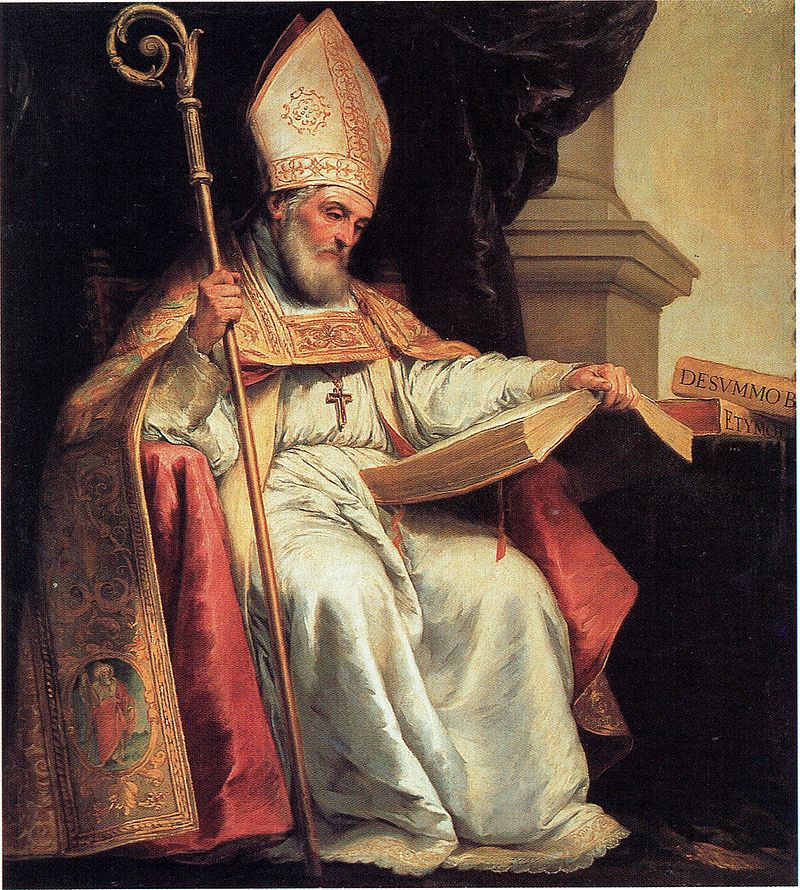
Today, April 4th, muted this year by Holy Saturday, is the commemoration of Saint Isidore of Seville (560-636) a bishop and doctor of the Church during a tumultuous age, when civilization was crumbling, coming apart at its very seams, which may sound sort of au courant. Then again, the form of this world has always[…]Continue reading→
Bishop Fulton Sheen’s 58th Good Friday Reflection
Incredible, at the beginning of this reflection, that the Venerable Bishop Sheen declares that he has given nearly 58 Good Friday reflections – this, as far as I can gather, was his final one, and he seems in full vigour in mind and body. The good bishop and evangelist died in his 84th year on[…]Continue reading→
A Minimal Friar and the Death of a Great Pope
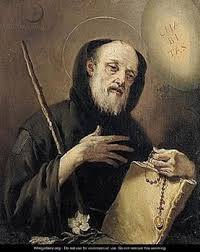
This April the second- overshadowed by Holy Thursday this year – marks the memorial of Saint Francis of Paola (1417-1507), founder of the ‘Minim’ friars, so called for their humility and poverty, who interpreted the rule of Saint Francis of Assisi in quite a literal sense: extreme poverty, trust in God, foregoing all animal and[…]Continue reading→
Woven versus Seamless Garments
The reflection on the worthy project by Magie Dominic was intriguing, and I thought I would offer a brief follow-up commentary. The garment woven out of many pieces is a poignant symbol, even a ‘sacramental’, inspired by prayer and grace. We are all united in some way, and should strive for such unity, wherever we[…]Continue reading→
Bill C-9: Prelude to Persecution?
Well, it happened, as I suppose was inevitable, at least in a secular sense (from God’ perspective, there’s always hope). Bill C-9, the ironically named ‘Combatting Hate Act’ passed the House of Commons with a 186-137 vote. Look on the good side – there’s still over a hundred sane people in parliament who believe in[…]Continue reading→