
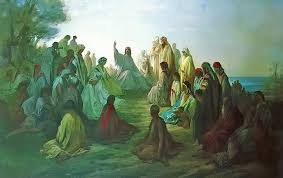
Sixth Sunday: The Inimitable Joy of the Beatitudes
Blessed is the man who does not follow the advice of the wicked…but whose delight is the law of the Lord (Ps. 1).⧾
These are the very first words of the Book of Psalms, and the man spoken of is to be understood as Our Lord Jesus Christ, both God and Man (St. Augustine, Enarrationes in Psalmos), who in our Gospel text gives us a law of sorts in the beatitudes. This is what we are to delight in and what in the end will give us the greatest joy and fulfilment. The beatitudes recorded by St. Luke include an equal number of woes and with these Our Lord cautions us against making wealth and pleasures our goal in life. These are not condemned as evil but we are warned that they will not ultimately fulfill us. In the hierarchy or order of goods in life we are cautioned to give primacy of place to God alone. Blessed is the man who does not follow the advice of the wicked…but whose delight is the law of the Lord…the wicked are not so [and] the way of the wicked will perish.
Who are the wicked? Of them the Psalmist says, Sin speaks to the sinner in the depth of his heart: there is no fear of God before his eyes (Ps. 36). Our Lord teaches us to live in the awareness of the holy presence of God and likewise to discern His presence through certain dispositions of mind and heart that can make us one with the mind and heart of God Himself. We can know God; and this knowledge can deepen and mature to God’s greater glory, our salvation and to the benefit of others as well. In the beatitudes Our Lord gives us the means to grow in this saving knowledge, a holy wisdom; to become ourselves godly.
The beatitudes are sometimes referred to as the Charter of God’s Kingdom, a magna carta of sorts given to us by Our Lord, the new Moses who gives us a new law. Like Moses who gave the Israelites the Ten Commandments, ten words that changed the world, Christ Our Lord gives us invitations to perfect love: words that transform minds and hearts in holiness and by extension, sanctify the world with the presence of God. Jesus is not only the new Moses but God Himself who inscribes the Law of His Sacred Heart not on stone tablets but on the very hearts of His disciples. What we are given in the beatitudes is more than negative commandments that forbid sin. The beatitudes invite us to live the blessedness of God’s own life of light and love and in the perfection of that life to experience already here on earth something of the life of Heaven. This is why it is said of the beatitudes that they are heaven in our hands. While we keep the commandments, we live the Beatitudes.
The beatitudes invite us to make our own the mind of Christ (1 Cor. 2:16); and in so doing, to conform ourselves to the Sacred Heart of Jesus: Take my yoke upon you, and learn from me; for I am gentle and lowly in heart, and you will find rest for your souls. For my yoke is easy, and my burden is light (Mt. 11:29-30). Humility and gentleness are always the hallmark of the faithful disciple of Christ. Whatever our state in life, we should always be humble before God and one another; and always gentle in our dealings with one another. It is evident that what Our Lord calls us to imitate can neither be legislated as the Ten Commandments are, nor imposed; yet the beatitudes propose everything because they invite us to mold our minds and hearts according to the mind and heart of God Himself.
Good character cannot be forced on people; it must be formed, and for this to take place, one needs good models. This is why we venerate the Saints and why it is important to foster in ourselves a devotion to Saints as models to emulate. Our common desire and effort to follow Our Lord by heeding His counsels fashions us into a people humble and lowly…[who] seek refuge in the name of the Lord – the remnant of Israel (Zeph. 3:12). The blessedness of those whose lives are governed by God’s logic and His own inner life of beatitude are imbued with a joy that is altogether different from the happiness that comes even with an abundance of the world’s goods. It is not difficult to be tempted by passing things or to base our security on them alone. This is why Our Lord repeatedly warns us about the dangers posed by the world: For what will it profit a man, if he gains the whole world and forfeits his life? (Mt. 16:26).
The beatitudes invite us to tread the path that Our Lord Himself became for us, and through His own example we are strengthened and encouraged to live as He did. The beatitudes are the means by which we are sanctified and conformed to Our Lord, and as we mature in our discipleship a time must come for all of us when we assent to the truth of Our Lord’s words and we begin to live by this new logic. This is what it means to be saved: to arrive at and to assent to the saving truth of His living word; engaged in the present and looking forward to a future full of promise. In the experience of the grace of salvation we willingly offer our bodies as a living sacrifice, holy and pleasing to God; this being our true and proper worship. So we do not conform ourselves to the pattern of this world but are transformed by the renewing of our mind (Cf. Rom. 12:1-2).
The renewal of our mind is brought about when we listen to Our Lord’s word of truth attentively and allow this word to govern our minds and hearts. This is what we do in this first part of the Mass. We have listened to this word and have delighted in it; and now, formed by divine teaching, we unite the offering of our bodies as a living sacrifice to the Sacrament of our redemption for the world’s salvation. May our attentiveness and fidelity to God’s word make of us a people humble and lowly [who] seek refuge in the name of the Lord – the remnant of Israel (Zeph. 3:12). For it would seem that at the present time there is a remnant, chosen by grace (Rom. 11:5). In His mercy may God grant us the courage and strength to persevere in this grace. ⧾

Remembering Father Alphonse de Valk
(Today marks the sixth anniversary of the death of Father Alphonse de Valk, C.S.B., a faithful, courageous and indefatigable Basilian priest, pro-life-and-family apostle, and the founder of Catholic Insight magazine. Here is what we wrote those on his entering into eternity five years ago, as we continue to remember him in our prayers and thoughts)[…]Continue reading→

Divine Mercy Sunday – An Echo of Every Mass
Reach out your hand and put it in my side. Do not doubt but believe’… ‘My Lord and my God!’ (Jn. 20:18)). Today is Divine Mercy Sunday, and as we celebrate the end of the Easter Octave, we contemplate the wounded side of our Saviour, the Church’s source of life. On Good Friday in the[…]Continue reading→

Saint Stanislaus of Szczepanów
We celebrate Saint Stanislaus today (+ April 11, 1079), in light of this Easter Octave, a bishop and martyr who accepted the episcopacy only at the direct order of Pope Alexander II. He proved a wise and courageous leader of his flock, put to death by his own king, Boleslaus, for rebuking the monarch’s ‘immoral[…]Continue reading→
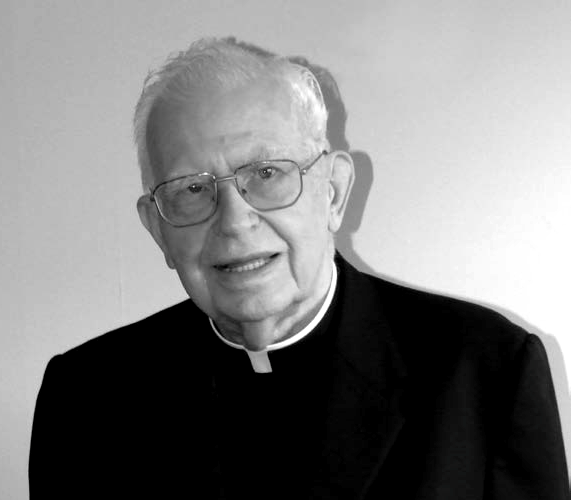
First Holy Communion: Sermon from May 16, 1943
Here is a sermon from the good old days by +Rev. Msgr. Vincent Nicholas Foy (August 14, 1915 – March 13, 2017), from 1943. Readers may recall that Pope Saint Pius X, by the decree Quam Singulari in 1910, lowered the customary age of reception of Holy Communion – after the rigours of the plague[…]Continue reading→
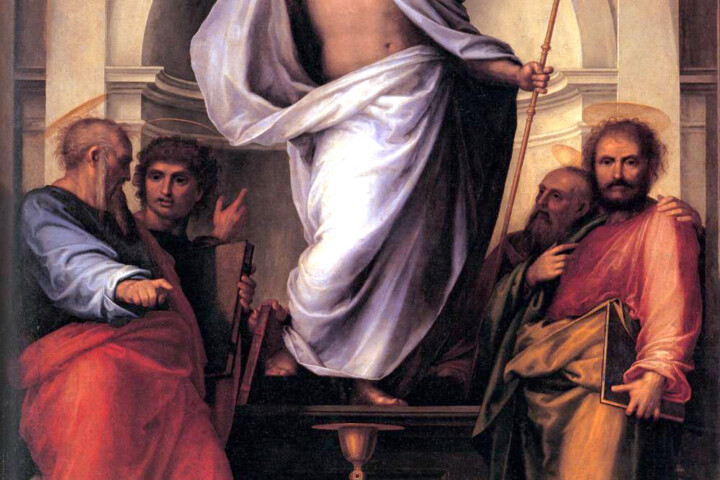
In the Glorious Light of Easter, Alleluia!
Set your minds on things that are above, not on things that are on earth, for you have died, and your life is hidden with Christ in God. When Christ who is your life is revealed, then you also will be revealed with him in glory (Col. 3:3-4). The Resurrection of Our Lord and Saviour[…]Continue reading→

An Ancient Homily for Holy Saturday
The time between Good Friday and Easter Sunday is one of waiting, in silence, as the world wonders – anticipates – what will happen, after the death of Christ. We re-live this time each year in the anamnesis of our liturgy, and in turn look forward to the glorious re-creation of all things at the[…]Continue reading→
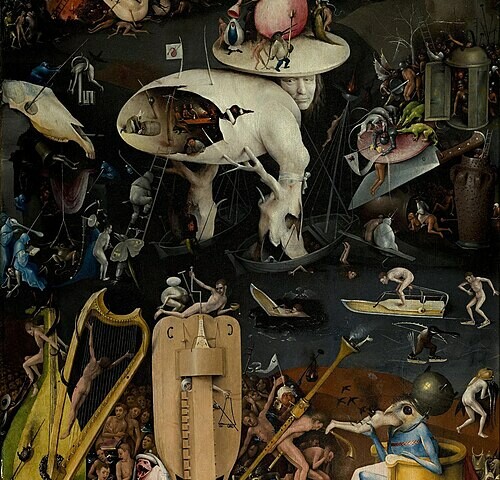
Europe’s Long Descent
(As we meditate on this day on Christ’s burial, and His descent into hell, it is fitting to ponder here with contributor Peter Marcus how the world seems to be heading there as well. The difference is that, although God cannot ‘redeem’ hell, nor those therein, He can and did redeem the world. There is[…]Continue reading→
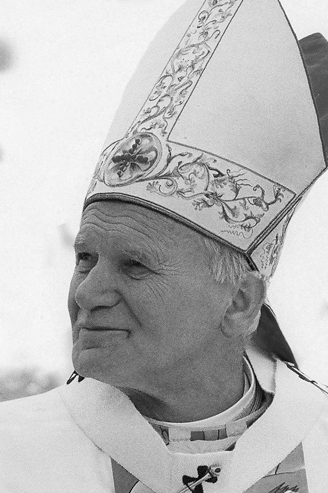
Pope Saint John Paul II’s First Good Friday Homily
ADDRESS OF HIS HOLINESS JOHN PAUL II AT THE CONCLUSION OF THE STATIONS OF THE CROSS AT THE COLOSSEUM Good Friday, 13 April 1979 When we make the Way of the Cross from one station to the next, in spirit we are always at the spot wherethis journey had its “historical” place: where it[…]Continue reading→
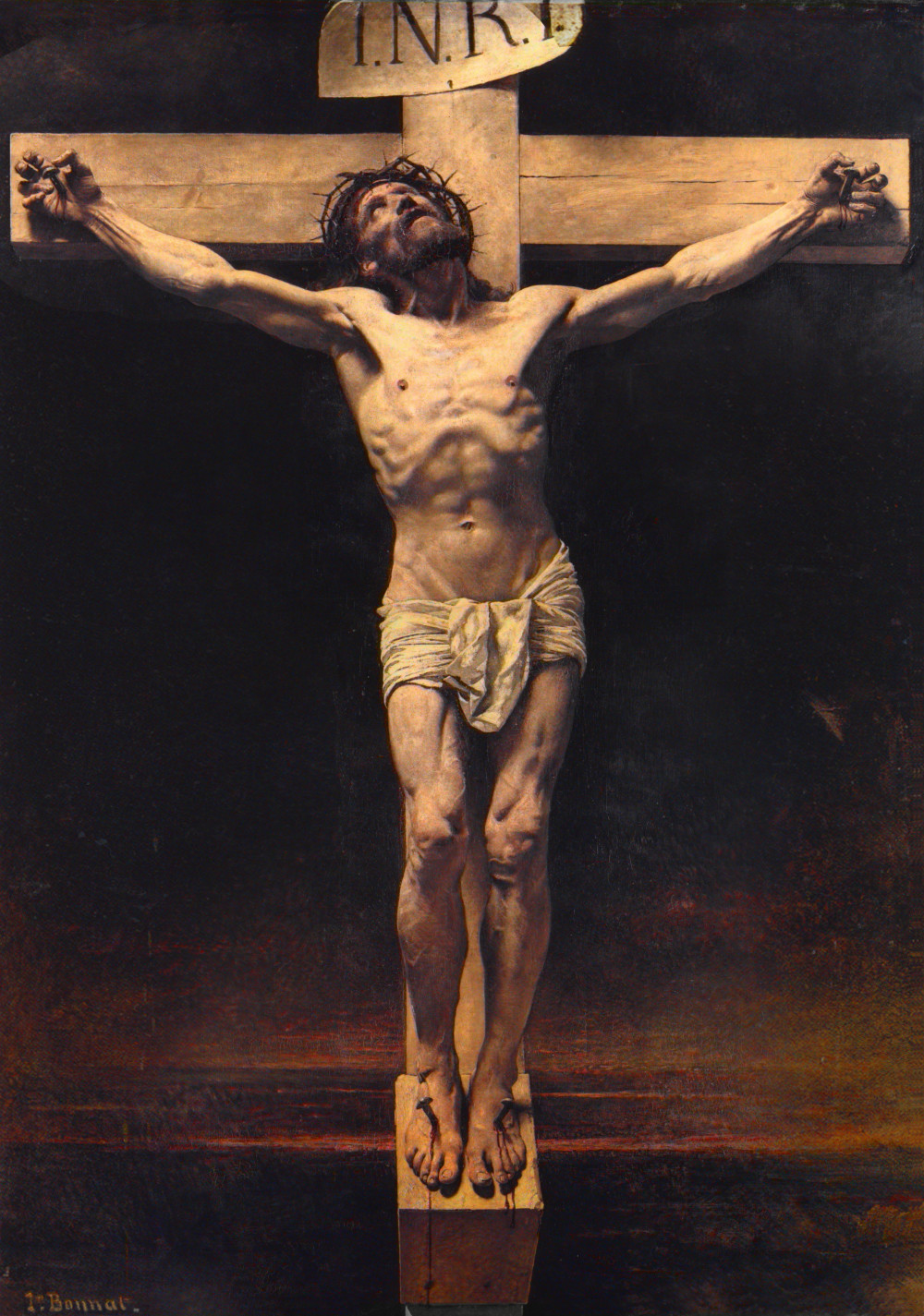
A Meditation for Good Friday: How To Undo the Effects of Sin?
Cardinal Newman, now Saint John Henry Newman, was a towering figure of nineteenth-century Catholicism who is almost universally admired. I say “almost” because not everyone likes him. I knew a priest once, Arthur Caulkins, who has become disenchanted with Newman. As an undergraduate Arthur had been enamoured of Newman, and this interest continued when he[…]Continue reading→
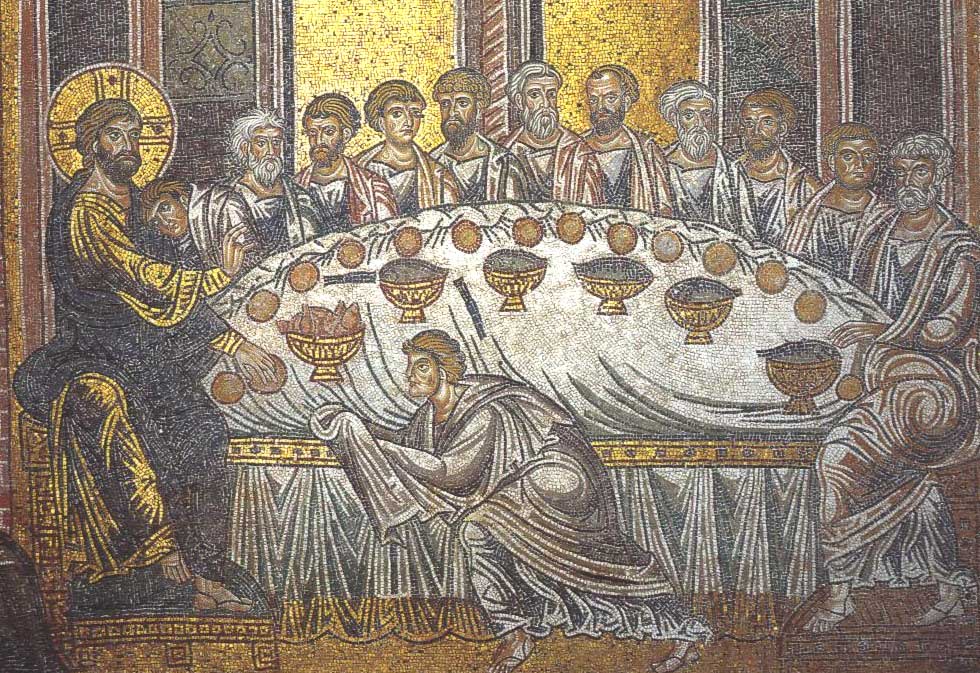
Pope Benedict’s Last Holy Thursday Homily
MASS OF THE LORD’S SUPPER HOMILY OF HIS HOLINESS BENEDICT XVI Basilica of St John Lateran Holy Thursday, 5 April 2012 Photo Gallery (Video) Dear Brothers and Sisters! Holy Thursday is not only the day of the institution of the Most Holy Eucharist, whose splendour bathes all else and in some ways draws it to[…]Continue reading→