
Third Sunday: Nehemiah, Ezra and Restoring All Things
‘This day is holy to the Lord your God; do not mourn or weep.’ For all the people wept when they heard the words of the Law (Neh. 8:9). ⧾
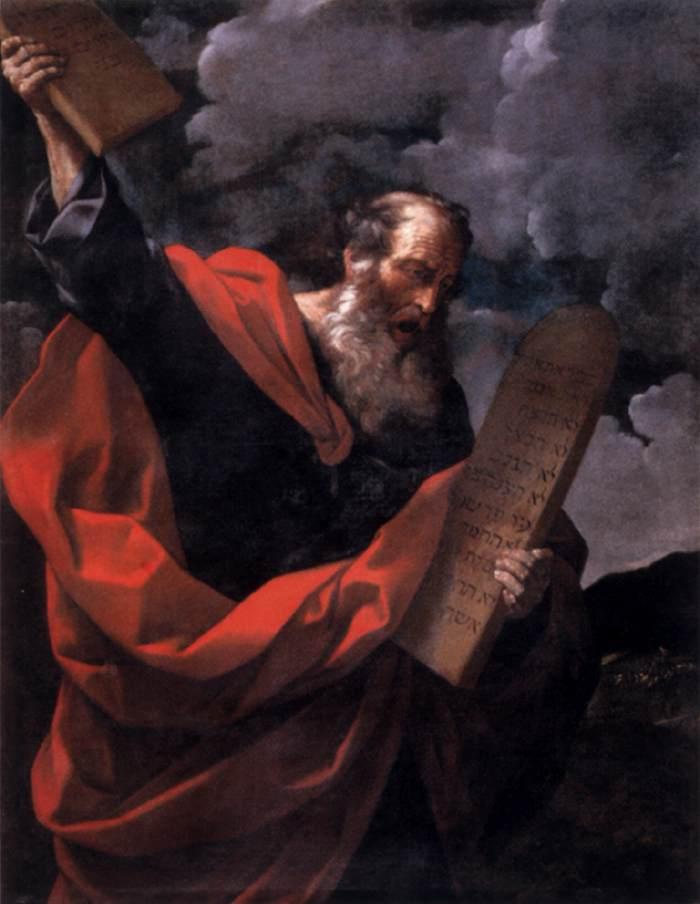
The first lesson today is taken from the Book of Nehemiah, one of the historical books of the Old Testament. It speaks of the restoration of the Jewish religion after the Babylonian Exile (587 to 538 B.C.) and the rebuilding of the Temple (515 B.C.) The books of both Ezra and Nehemiah are about the return from exile, the religious and political restoration of Israel and what happened during the next hundred years. Ezra the wise scribe had been sent to help restore the Jewish religion and practice; including the worship and singing in the Temple. Nehemiah had been sent (in 445 B.C.) by the Persian Emperor to organize Judea politically and to rebuild the city of Jerusalem, especially the walls, which, up to that time, had not been restored. It is important for us to know this because Ezra was the founder of Judaism as it existed in the time of Our Lord and as it persists for the most part even to this day: the Jewish way of life is defined by fidelity to the Law of Moses.
The religious culture created by Ezra and Nehemiah was the culture out of which the Church grew and spread to the rest of the world. In bringing the Gospel to the nations the Church also brought the essence of the Mosaic Law, the Ten Commandments. These are ten words that have changed the world. What we refer to as Western Civilization, of which we are part, is founded on this Judeo-Christian tradition of observance of God’s Law, the keeping of the Commandments; and it would not be wrong to say that in the long history of this civilization, whether one is speaking of the Church or of a given nation, restoration after a crisis or calamity has always entailed a return to greater fidelity to the law of God and authenticity of life. This is how cultures are restored.
There are definite parallels between what the Jewish people experienced in their exile and what the Church continues to experience in our time. Already in 1968, with consternation Pope Paul VI spoke of an auto-destruction of the Church. With sorrow he observed: The Church finds herself in an hour of anxiety, a disturbed period of self-criticism or what would even better be called self-demolition. It is an interior upheaval; acute and complicated…It is as if the Church were destroying herself. Since truth is the daughter of time, what we have come to know in the half-century since those words were spoken and in view of the hegemony of the modernist heresy afflicting the Church it would not be wrong to speak of a destruction by design.
Can Sacred Scripture help us to understand what has taken place and how we can be restored? Indeed it can. The Prophet Jeremiah who had seen the destruction of the Temple and had witnessed the people being carried into exile to Babylon had warned: This is what the LORD says: Stand at the crossroads and look. Ask for the ancient paths: Where is the good way? Then walk in it and find rest for your souls. But they said, ‘We will not walk in it! (6:16). The ancient paths that Jeremiah and Ezra and Nehemiah proposed were and are for us today also the paths of the law, and of right worship. A unifying theme that runs through the books of Ezra and Nehemiah is that Israel has been chosen by God to be a theocratic people whose hope of survival does not lie in military strength but in fidelity to God and to the Torah or Law. Similarly, for the Church, the new Israel of God, our survival does not lie in political alliances with worldly powers, or in espousing worldly causes but in fidelity to the rule of Christ the King and in working towards the establishment His social kingship in our lives and in our culture. All of it begins with our own fidelity to the Commandments and to right worship – the source and summit of the Christian life (Catechism of the Catholic Church, 1324). The Church teaches us that our worship is the sum and summary of our faith (Catechism of the Catholic Church, 1327).
The message of both Ezra and Nehemiah to their contemporaries is that Israel’s future depended on faithful worship in the Temple in Jerusalem and on cutting off contact with corrupting alien influences such as that of the Philistines and the Egyptians. This is the meaning of these beautiful words: the joy of the Lord is your strength (8:10). In other words, the Israelites are told to make the worship of God the centre of their life and this will be their strength and the assurance of their fidelity in a hostile world. In the Gospels Our Lord exhorts us to do likewise. He reminds us that the hour is coming, and now is when the true worshippers will worship the Father in spirit and truth, for such the Father seeks to worship Him (Jn. 4:23). In His high priestly prayer offered at the Last Supper Our Lord prayed that we might be kept from the corruption of the world (Cf. Jn. 15:18-19).
Ezra and Nehemiah gave cohesion and spiritual unity to their people, which saved them from disintegration as they faced the challenges that came later. Similarly, in our history when the faith has been strong the Church has been able to withstand the persecutions of the world. These prophets teach us that the restoration of the sacred and the establishment of a clear line of defence against the errors of the world are what are needed most in our day. It is time to bring an end to this seemingly endless dialogue with the world. The embrace of modernity which characterizes the Church’s life in our time has had devastating results. (Modernity may be best understood as the conflict between the supernatural spiritual order and the temporal order) The supernatural, spiritual order cannot be subservient to the temporal order because the temporal is fleeting and for a time, while the spiritual endures forever. The first place cannot and must not be given to man but to God alone. Our sacred history proves again and again that those who live for Heaven are the greatest benefactors of man; and secular history, especially recent history proves that those who attempt to create an earthly paradise are humanity’s greatest foes. And our recent history proves that alliances with the world and its dictates have only weakened the Church and especially the faith of wavering souls. If only priests were as faithful to the rubrics of the Mass as they have been to supposed sanitary measures, there would be an immediate end to the liturgical abuses that have done so much harm to the mission of the Church.
Ezra and Nehemiah teach us that the restoration of the sacred is at the heart of renewal because when God’s primacy is affirmed, everything follows in its proper place, order and time. The time is especially now to do all that we can to restore the sacred; to ask for the ancient paths, to seek the good way and to walk in it. The manifold works of charity, or social ministries as they are sometimes called – that are part of the life of any parish are not our primary work. The worship of God [opus Dei] is our primary work and from this everything else flows and grows and develops. By our devout and conscious participation in this worship we also grow and mature in our understanding of God and of ourselves and arrive at the conviction that the joy of the Lord is also our strength. It is here, in the sacred assembly which takes in fidelity to God’s commandments that we learn to live for the praise of His glory (Eph. 1:11).
‘This day is holy to the Lord your God; do not mourn or weep.’ For all the people wept when they heard the words of the Law (Neh. 8:9). We rejoice in the gift of the Law and in the Law’s fulfillment in Christ Jesus Our Saviour; and we are grateful that in the celebration of the Holy Sacrifice of the Mass the joy of the Lord is [our] strength. May we remain steadfast in our faith; jealously guarding and defending our sacred worship, our ancient paths, the good way. ⧾

Remembering Father Alphonse de Valk
(Today marks the sixth anniversary of the death of Father Alphonse de Valk, C.S.B., a faithful, courageous and indefatigable Basilian priest, pro-life-and-family apostle, and the founder of Catholic Insight magazine. Here is what we wrote those on his entering into eternity five years ago, as we continue to remember him in our prayers and thoughts)[…]Continue reading→

Divine Mercy Sunday – An Echo of Every Mass
Reach out your hand and put it in my side. Do not doubt but believe’… ‘My Lord and my God!’ (Jn. 20:18)). Today is Divine Mercy Sunday, and as we celebrate the end of the Easter Octave, we contemplate the wounded side of our Saviour, the Church’s source of life. On Good Friday in the[…]Continue reading→

Saint Stanislaus of Szczepanów
We celebrate Saint Stanislaus today (+ April 11, 1079), in light of this Easter Octave, a bishop and martyr who accepted the episcopacy only at the direct order of Pope Alexander II. He proved a wise and courageous leader of his flock, put to death by his own king, Boleslaus, for rebuking the monarch’s ‘immoral[…]Continue reading→

First Holy Communion: Sermon from May 16, 1943
Here is a sermon from the good old days by +Rev. Msgr. Vincent Nicholas Foy (August 14, 1915 – March 13, 2017), from 1943. Readers may recall that Pope Saint Pius X, by the decree Quam Singulari in 1910, lowered the customary age of reception of Holy Communion – after the rigours of the plague[…]Continue reading→

In the Glorious Light of Easter, Alleluia!
Set your minds on things that are above, not on things that are on earth, for you have died, and your life is hidden with Christ in God. When Christ who is your life is revealed, then you also will be revealed with him in glory (Col. 3:3-4). The Resurrection of Our Lord and Saviour[…]Continue reading→

An Ancient Homily for Holy Saturday
The time between Good Friday and Easter Sunday is one of waiting, in silence, as the world wonders – anticipates – what will happen, after the death of Christ. We re-live this time each year in the anamnesis of our liturgy, and in turn look forward to the glorious re-creation of all things at the[…]Continue reading→

Europe’s Long Descent
(As we meditate on this day on Christ’s burial, and His descent into hell, it is fitting to ponder here with contributor Peter Marcus how the world seems to be heading there as well. The difference is that, although God cannot ‘redeem’ hell, nor those therein, He can and did redeem the world. There is[…]Continue reading→
Pope Saint John Paul II’s First Good Friday Homily
ADDRESS OF HIS HOLINESS JOHN PAUL II AT THE CONCLUSION OF THE STATIONS OF THE CROSS AT THE COLOSSEUM Good Friday, 13 April 1979 When we make the Way of the Cross from one station to the next, in spirit we are always at the spot wherethis journey had its “historical” place: where it[…]Continue reading→
A Meditation for Good Friday: How To Undo the Effects of Sin?
Cardinal Newman, now Saint John Henry Newman, was a towering figure of nineteenth-century Catholicism who is almost universally admired. I say “almost” because not everyone likes him. I knew a priest once, Arthur Caulkins, who has become disenchanted with Newman. As an undergraduate Arthur had been enamoured of Newman, and this interest continued when he[…]Continue reading→
Pope Benedict’s Last Holy Thursday Homily
MASS OF THE LORD’S SUPPER HOMILY OF HIS HOLINESS BENEDICT XVI Basilica of St John Lateran Holy Thursday, 5 April 2012 Photo Gallery (Video) Dear Brothers and Sisters! Holy Thursday is not only the day of the institution of the Most Holy Eucharist, whose splendour bathes all else and in some ways draws it to[…]Continue reading→