
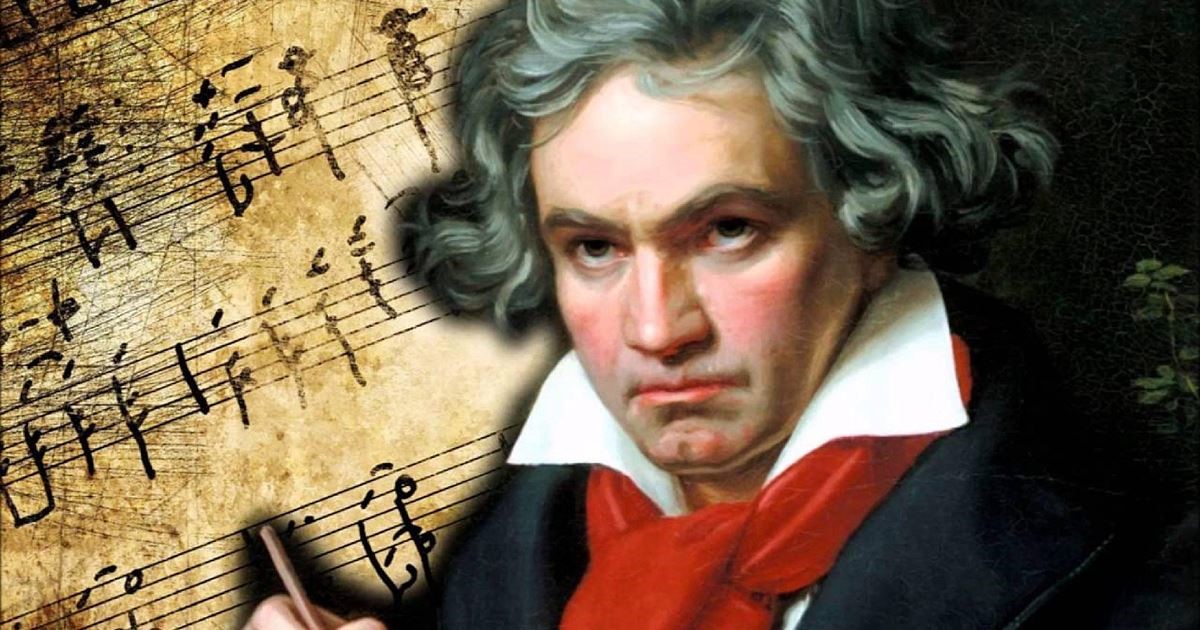
The Catholic Spirit of Beethoven
Beethoven was baptized a Catholic on December 17th, 1770 – in the time of Advent we now find ourselves, in the proximate preparation for the birth of our Saviour. Those who think that he was not a true Catholic often point to the observation of his friends that he hardly ever attended Mass. Born in the so-called Age of Reason, he very likely was infected with the newfound liberalism promoted by the French Revolution and its resulting spread of rebellion against all the old institutions and ideologies. Indeed, Beethoven apparently admired the same Voltaire that Mozart had described as a “godless arch-scoundrel.”
Beethoven’s character traits attest to a soul conscious of its own greatness, but just as conscious of the littleness of other souls around him. The common complaint of those who knew him well was his mercurial nature, an unpredictable pattern of pompous arrogance and charming fellowship. Yet those who perceived the proof of Beethoven’s dark side, such as the waiter into whose face he threw a dish of gravy, or the prince at whose home he was denied a seat near the host … whereupon he stormed out of the room … were rewarded in some small measure just by the fact that their existence would be recorded for posterity. The impatient and angry temperament that bedeviled not only Beethoven, but all who knew him, was possibly heightened by the growing loss of his hearing. How tragic it must have been for the creator of so much immortal music to have been deprived of the pleasure of hearing his music played. He could hear the tones in his mind, but that which God had given with one hand, He had taken away with the other.
So many young men, full of their own greatness, will find little room for the Catholic God in their lives. That Beethoven was, for much of his life, such a man hardly anyone will dispute. But if his works are carefully studied, there can be no doubt that Beethoven was searching for some Power greater than himself, and that he was preoccupied with absorbing that distant and awesome Power into his music. It is not surprising that in his youth, and increasingly in later years, he referred to God as the “Almighty.” Musical composition, then, became Beethoven’s daily Mass. He communed daily with the omnipotent God through his piano.
Perhaps Beethoven’s passionate search for the Almighty through his musical art could be summarized in these lines of Elizabeth Barrett Browning:
What is art
But life upon the larger scale, the higher,
When, graduating up in a spiral line
Of still expanding and ascending gyres,
It pushes toward the intense significance
Of all things, hungry for the Infinite?
What moods would most of us attribute to Beethoven’s best work? Sadness? Anger? Meditation? Devotion? Joy? But always we feel that Beethoven lifts us beyond ourselves to a higher reality, as he says when he adopts the poet Schiller’s words for the choral movement of his stupendous Ninth Symphony:
Brothers, beyond you a starry canopy, there must dwell a loving Father!
Like Mozart, Beethoven wrote music for the Church. The Missa Solemnis (Solemn Mass) is arguably his best effort in that genre, even though it is more operatic than liturgical. Of this Mass Beethoven said, “My chief aim was to awaken and permanently instill religious feelings not only in the singers but also into the listeners.” The care that Beethoven put into this magnum opus was so great that what he intended to compose in six months took nearly four years. Though the Mass was written on paper of excellent quality, at one point he erased a passage so many times that he wore a hole in it. In the Dona nobis pacem section of the Mass Beethoven had written the heading “a prayer for inner and outer peace.” Many storm clouds had passed over his life: the tragic loss of his hearing; ingratitude of the nephew he loved; quarrelsome dealings with music publishers; failed relations with women; an unknown “incurable” disease; and at last, the painful dropsy.
But finally the peace for which he prayed came to him. On his deathbed Beethoven was asked by a friend whether he would like to see a priest. With a calm expression on his face, he said, “Let the priest be called.” He had stayed clear of priests as much as he could, even though he had often urged his nephew to attend confession. But as if to help Beethoven make up for all the Sundays he had missed church, nine priests officiated at his funeral Mass.
He once wrote what we may rightly call his own epitaph: “… what I am, I am by myself. There are and will be a thousand princes; there is only one Beethoven.”
From the Pen of Beethoven
I despise a world which does not feel that music is a higher revelation than all wisdom and philosophy.
Music should strike fire from the heart of man, and bring tears from the eyes of woman.
Music is the mediator between the spiritual and the sensual life.
Nothing is more intolerable than to have to admit to yourself your own errors.
Music is the one incorporeal entrance into the higher world of knowledge which comprehends mankind but which mankind cannot comprehend.
No friend have I. I must live by myself alone; but I know well that God is nearer to me than others in my art, so I will walk fearlessly with Him.
Recommend virtue to your children; it alone, not money, can make them happy. I speak from experience.
Anyone who tells a lie has not a pure heart, and cannot make a good soup.
My misfortune is doubly painful to me because it will result in my being misunderstood. For me there can be no recreation in the company of others, no intelligent conversation, no exchange of information with peers; only the most pressing needs can make me venture into society. I am obliged to live like an outcast.
Perhaps the quote just given is best musically demonstrated in the profound sadness of the so-called Moonlight Sonata as performed here: Beethoven “Moonlight Sonata” (1 mvt.) by Claudio Arrau

Saint Kateri , Canada’s Protectress
This was the title given to Saint Kateri Tekakwitha, by Pope Benedict XVI, when he canonized her on October 28th, 2012, along with six others, in Saint Peter’ Square (she had been beatified by Pope John Paul II back in 1980). With Saint Joseph as our protector, along with the Canadian martyrs, we seem to[…]Continue reading→

Remembering Father Alphonse de Valk
(Today marks the sixth anniversary of the death of Father Alphonse de Valk, C.S.B., a faithful, courageous and indefatigable Basilian priest, pro-life-and-family apostle, and the founder of Catholic Insight magazine. Here is what we wrote those on his entering into eternity five years ago, as we continue to remember him in our prayers and thoughts)[…]Continue reading→

My Name is Bernadette
April 16th is a propitious day, for besides the anniversary of Father de Valk’s death, who founded Catholic Insight in its print form decades ago, and the commemoration of the ‘two Benedicts’, mentioned in accompanying posts, today we also recall Saint Bernadette Soubirous, the young visionary to whom the Virgin Mary appeared numerous times at[…]Continue reading→

Canonizing Sister Faustina and Divine Mercy
HOMILY OF THE HOLY FATHER MASS IN ST PETER’S SQUARE FOR THE CANONIZATION OF SR MARY FAUSTINA KOWALSKA Sunday, 30 April 2000 1. “Confitemini Domino quoniam bonus, quoniam in saeculum misericordia eius”; “Give thanks to the Lord for he is good; his steadfast love endures for ever” (Ps 118: 1). So the Church sings on the Octave of[…]Continue reading→

Divine Mercy Sunday – An Echo of Every Mass
Reach out your hand and put it in my side. Do not doubt but believe’… ‘My Lord and my God!’ (Jn. 20:18)). Today is Divine Mercy Sunday, and as we celebrate the end of the Easter Octave, we contemplate the wounded side of our Saviour, the Church’s source of life. On Good Friday in the[…]Continue reading→

Saint Stanislaus of Szczepanów
We celebrate Saint Stanislaus today (+ April 11, 1079), in light of this Easter Octave, a bishop and martyr who accepted the episcopacy only at the direct order of Pope Alexander II. He proved a wise and courageous leader of his flock, put to death by his own king, Boleslaus, for rebuking the monarch’s ‘immoral[…]Continue reading→
First Holy Communion: Sermon from May 16, 1943
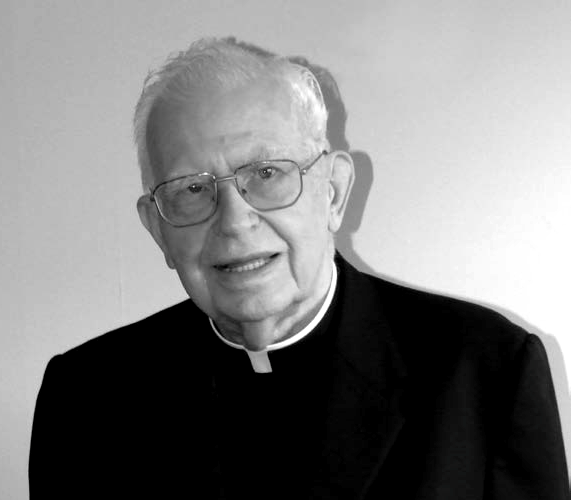
Here is a sermon from the good old days by +Rev. Msgr. Vincent Nicholas Foy (August 14, 1915 – March 13, 2017), from 1943. Readers may recall that Pope Saint Pius X, by the decree Quam Singulari in 1910, lowered the customary age of reception of Holy Communion – after the rigours of the plague[…]Continue reading→
In the Glorious Light of Easter, Alleluia!
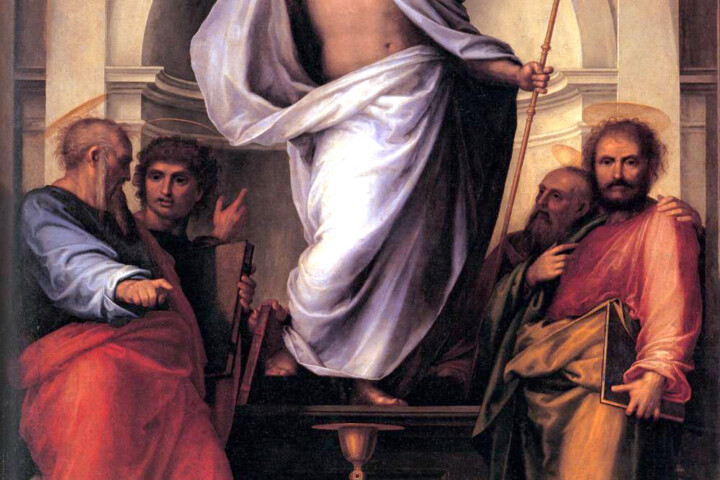
Set your minds on things that are above, not on things that are on earth, for you have died, and your life is hidden with Christ in God. When Christ who is your life is revealed, then you also will be revealed with him in glory (Col. 3:3-4). The Resurrection of Our Lord and Saviour[…]Continue reading→
An Ancient Homily for Holy Saturday
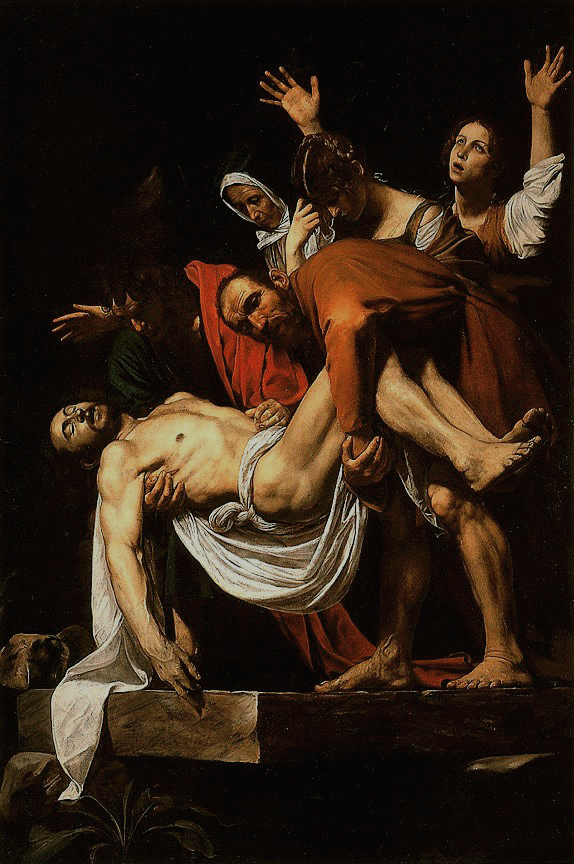
The time between Good Friday and Easter Sunday is one of waiting, in silence, as the world wonders – anticipates – what will happen, after the death of Christ. We re-live this time each year in the anamnesis of our liturgy, and in turn look forward to the glorious re-creation of all things at the[…]Continue reading→
Europe’s Long Descent
(As we meditate on this day on Christ’s burial, and His descent into hell, it is fitting to ponder here with contributor Peter Marcus how the world seems to be heading there as well. The difference is that, although God cannot ‘redeem’ hell, nor those therein, He can and did redeem the world. There is[…]Continue reading→