
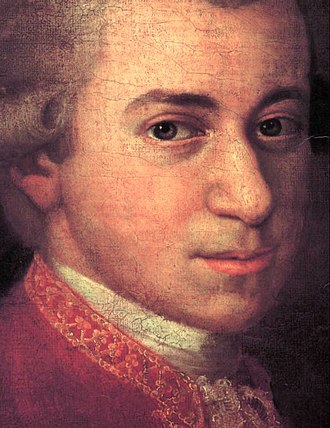
Mozart, the Catholic
(Wolfgang Amadeus Mozart died during Advent, on December 5th, 1791, so it’s fitting in this season of grace to reflect with faithful contributor Carl Sundell on the Catholic faith of one of the greatest of composers, whose music is truly heavenly. As Salieri said, ‘Ah, the divine Mozart!’. True enough. But, might we rather say, Mozart, who composed for the divine, and for the glory of God he loved) Editor.
The eminent Protestant theologian Karl Barth once said that if he made it to heaven he would look for Mozart (a Catholic) before he would search for Luther or Calvin. This is potent praise, which ought to convey that if there is truth in music, the mightiest truths ought to be found in the mightiest music. Or as the poet Keats put it, “Beauty is Truth, Truth Beauty.” Mozart’s music is full of beauty, and there can be no doubt that Mozart subscribed to the truth of the Catholic faith. As Pope Benedict XVI so succinctly put it, Mozart’s “music still touches me profoundly, because it is so luminous and yet at the same time so deep. His music is by no means just entertainment; it contains the whole tragedy of human existence.”
What is amazing to us today is that Mozart was barely understood in his own time for the genius he was. After the first performance of one of his compositions, Emperor Joseph II is said to have commented, “Too beautiful for our ears, and an enormous number of notes, dear Mozart.” Immensely rich and complex as his works proved to be for the audience of his day, they were just as difficult for performers to master. And since most of his compositions were played only once in public, there was little opportunity for his audiences to go back and revisit and learn to love both his style and his substance. Mozart’s popularity had fallen so low that some believe his last three great symphonies were never performed before he died.
Was Mozart ever deeply religious? Here is a passage from a letter written not long after he had married his wife Constanze:
For some time before we were married we had always attended Mass and gone to confession and received communion together; and I discovered that never had I prayed so ardently or confessed and received Communion so devoutly as by her side; and she felt likewise. In short we are made for one another; and God who orders all things and hence this too, will never forsake us.
There are those who would say that Mozart’s religious compositions are not among his best. Not so. His magnificent ode to the Eucharist, Ave verum corpus (Hail True Body), barely four minutes long, has brought many a true believer to tears and to his knees and is the perfect music to hear while receiving the Eucharist. Just as converted slave-ship captain John Newton would never have been remembered had it not been for “Amazing Grace,” so also Mozart would have been immortalized by Ave verum corpus if it was all he had ever composed. According to Mozart’s own dictum, that hymn is full of love. Anyone who has lost his faith in the Eucharist, if he has an open mind and an open heart, can find it again in Mozart, because if Jesus is not in the Eucharist, how could Mozart not have been so inspired to find him there in this hymn? (The superb rendition of Ave Verum Corpus by Leonard Bernstein can be found on YouTube: Mozart ~ Ave Verum Corpus ~ Leonard Bernstein)
Now it is a hackneyed truism to say that the enemies of the Catholic Church will try to diminish Catholic heroes by denying that they were truly Catholic, or by insisting that they were not Catholics in good standing, or by pointing to their monumental sins or monumental errors of judgment. So poor Mozart comes a cropper when judged according to such strict standards. Or does he?
The most famous charge brought against Mozart is that he abandoned his Catholic faith and became a Freemason and possibly an atheist. First let us charitably avoid that tangle of longstanding theories that the Freemasons had Mozart murdered by slow poisoning. That Mozart was allied with Freemasons and sympathetic to their cause there is no reason to deny. That he even composed excellent works and dedicated them to notable Freemasons is also true. Yet it is just as true that Mozart was certainly no atheist, as we can see from this sentence in a letter to his father. Now I give you a piece of news which perhaps you know already; that godless fellow and arch-rascal, Voltaire, is dead – died like a dog, like a beast. That is his reward.
A dying man’s last efforts, as he sinks into prolonged and devastating illness, often reflect a genuine show of what is in his heart. This was true of Mozart. We know that in his last months his wife spoke about him approaching the composing of the Requiem with great pleasure. She further testified in a letter that Mozart had often said he preferred sacred music above all other types, and that he hoped the Requiem would be his masterpiece and his swan song, and even a Requiem Mass for himself as he felt the swift progress of his fatal illness overtake him.
No true and loyal Freemason approaching death would be caught composing a Requiem Mass and putting the last of his mind, body, and spirit into it, as Mozart certainly did. Let us remember that fact above all and associate it with Mozart’s own words.
It is a great consolation to me to remember that the Lord, to whom I had drawn near in humble and child-like faith, has suffered and died for me, and that he will look on me in love and compassion.
From the Pen of Mozart:
I thank my God for graciously granting me the opportunity of learning that death is the key which unlocks the door to our true happiness.
When I am . . . traveling in a carriage, or walking after a good meal, or during the night when I cannot sleep; it is on such occasions that ideas flow best and most abundantly.
To talk well and eloquently is a very great art, but that an equally great one is to know the right moment to stop.
Music, even in situations of the greatest horror, should never be painful to the ear but should flatter and charm it, and thereby always remain music.
My subject enlarges itself, becomes methodical and defined, and the whole, though it be long, stands almost complete and finished in my mind, so that I can survey it, like a fine picture or a beautiful statute, at a glance.
We say that the hour of death cannot be forecast, but when we say this we imagine that hour as placed in an obscure and distant future. It never occurs to us that it has any connection with the day already begun or that death could arrive this same afternoon, this afternoon which is so certain and which has every hour filled in advance.
Neither a lofty degree of intelligence nor imagination nor both together go to the making of genius. Love, love, love, that is the soul of genius.

Remembering Father Alphonse de Valk
(Today marks the sixth anniversary of the death of Father Alphonse de Valk, C.S.B., a faithful, courageous and indefatigable Basilian priest, pro-life-and-family apostle, and the founder of Catholic Insight magazine. Here is what we wrote those on his entering into eternity five years ago, as we continue to remember him in our prayers and thoughts)[…]Continue reading→

Divine Mercy Sunday – An Echo of Every Mass
Reach out your hand and put it in my side. Do not doubt but believe’… ‘My Lord and my God!’ (Jn. 20:18)). Today is Divine Mercy Sunday, and as we celebrate the end of the Easter Octave, we contemplate the wounded side of our Saviour, the Church’s source of life. On Good Friday in the[…]Continue reading→

Saint Stanislaus of Szczepanów
We celebrate Saint Stanislaus today (+ April 11, 1079), in light of this Easter Octave, a bishop and martyr who accepted the episcopacy only at the direct order of Pope Alexander II. He proved a wise and courageous leader of his flock, put to death by his own king, Boleslaus, for rebuking the monarch’s ‘immoral[…]Continue reading→
First Holy Communion: Sermon from May 16, 1943
Here is a sermon from the good old days by +Rev. Msgr. Vincent Nicholas Foy (August 14, 1915 – March 13, 2017), from 1943. Readers may recall that Pope Saint Pius X, by the decree Quam Singulari in 1910, lowered the customary age of reception of Holy Communion – after the rigours of the plague[…]Continue reading→
In the Glorious Light of Easter, Alleluia!
Set your minds on things that are above, not on things that are on earth, for you have died, and your life is hidden with Christ in God. When Christ who is your life is revealed, then you also will be revealed with him in glory (Col. 3:3-4). The Resurrection of Our Lord and Saviour[…]Continue reading→

An Ancient Homily for Holy Saturday
The time between Good Friday and Easter Sunday is one of waiting, in silence, as the world wonders – anticipates – what will happen, after the death of Christ. We re-live this time each year in the anamnesis of our liturgy, and in turn look forward to the glorious re-creation of all things at the[…]Continue reading→
Europe’s Long Descent
(As we meditate on this day on Christ’s burial, and His descent into hell, it is fitting to ponder here with contributor Peter Marcus how the world seems to be heading there as well. The difference is that, although God cannot ‘redeem’ hell, nor those therein, He can and did redeem the world. There is[…]Continue reading→
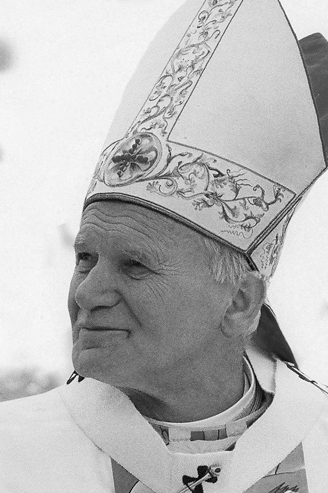
Pope Saint John Paul II’s First Good Friday Homily
ADDRESS OF HIS HOLINESS JOHN PAUL II AT THE CONCLUSION OF THE STATIONS OF THE CROSS AT THE COLOSSEUM Good Friday, 13 April 1979 When we make the Way of the Cross from one station to the next, in spirit we are always at the spot wherethis journey had its “historical” place: where it[…]Continue reading→
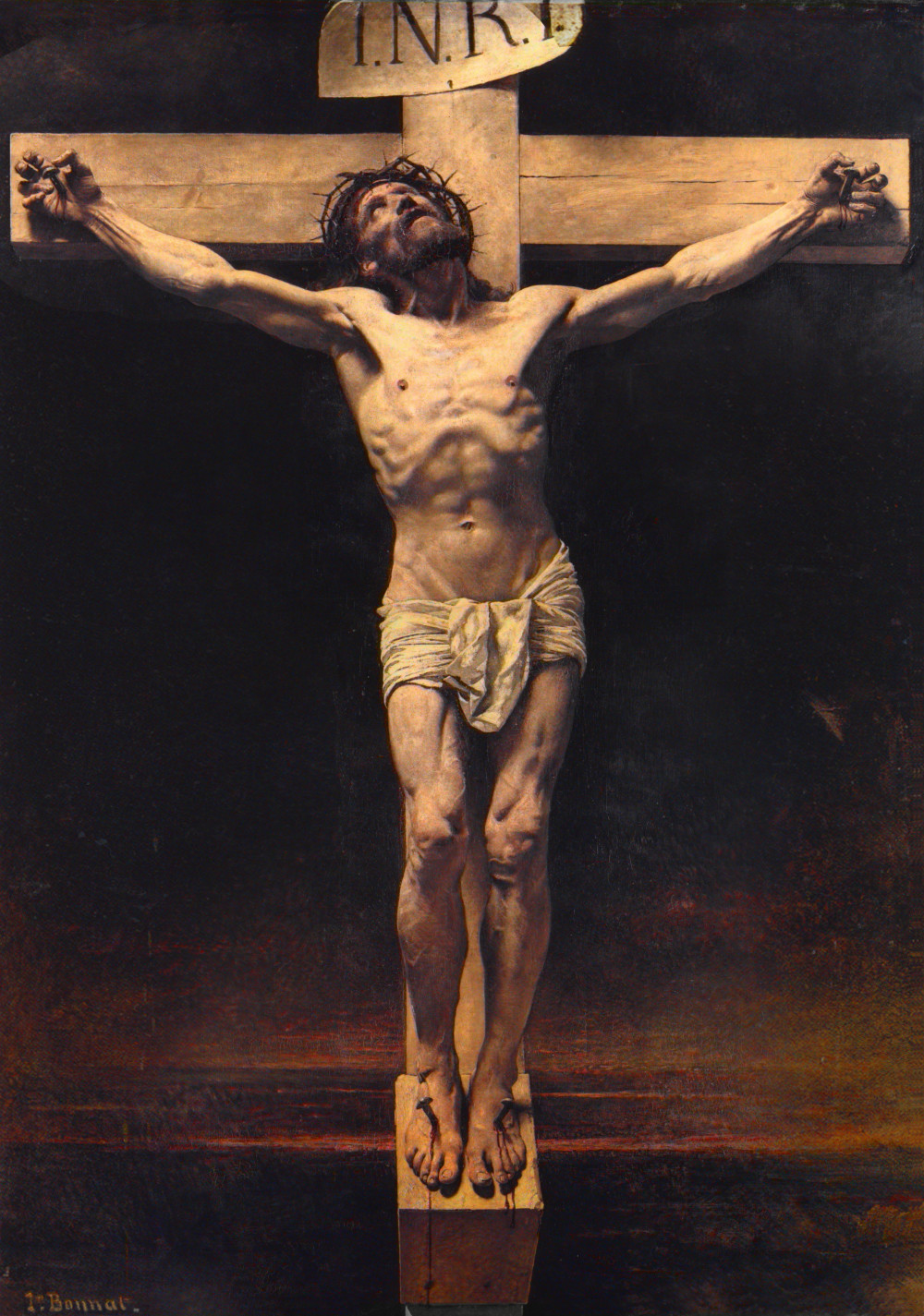
A Meditation for Good Friday: How To Undo the Effects of Sin?
Cardinal Newman, now Saint John Henry Newman, was a towering figure of nineteenth-century Catholicism who is almost universally admired. I say “almost” because not everyone likes him. I knew a priest once, Arthur Caulkins, who has become disenchanted with Newman. As an undergraduate Arthur had been enamoured of Newman, and this interest continued when he[…]Continue reading→
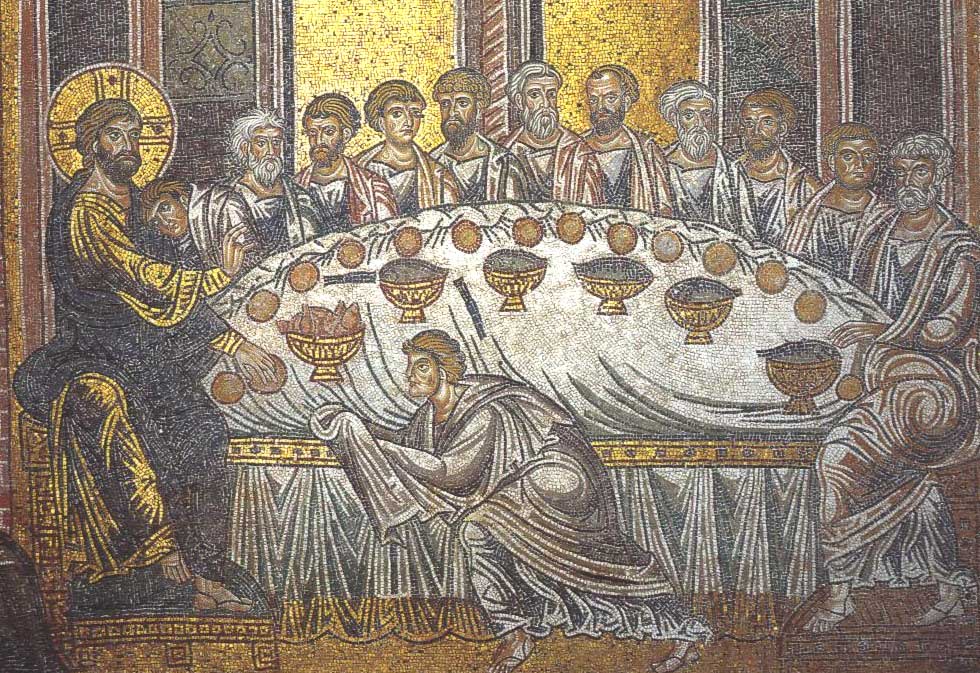
Pope Benedict’s Last Holy Thursday Homily
MASS OF THE LORD’S SUPPER HOMILY OF HIS HOLINESS BENEDICT XVI Basilica of St John Lateran Holy Thursday, 5 April 2012 Photo Gallery (Video) Dear Brothers and Sisters! Holy Thursday is not only the day of the institution of the Most Holy Eucharist, whose splendour bathes all else and in some ways draws it to[…]Continue reading→