
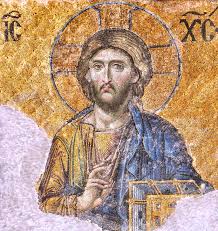
The Nativity Fast in the ‘Advent’ of the East
(On this memorial of the Eastern saint, John of Damascus, here is a reflection worth pondering on the ascetical practices of the Eastern rite. We of the West may not be called to such, and they are not intended to lay heavy burdens that we ourselves are not able to lift. But they do offer food for thought, if one may pardon the pun. As a priest said to me the other evening, it would be easier to do such penance if it were ‘corporate’, done by all, and sanctioned by the Church. As it is now, our preparations during Advent are more personal, inspired by what graces we are given, and to which we respond. But prepare we should, and not celebrate Christmas before Christmas. After all, one does not hold a birthday party until the guest of honour has arrived. And we must clean our own homes first, weeding out the garden of our souls, and making them as fair as we might). Editor
‘Tis the season, indeed – one of hope and anticipation – Advent is upon us. And much like the West, Eastern Churches remember Christ’s birth through prayer and opening oneself to the work of the Holy Spirit.
Although referred to as Advent (Latin: “coming, arrival”) in the West, among Eastern Catholics, the season is known as the Nativity Fast.
To be fair, the term Advent, actually, does not well accommodate the Eastern rites. The latter do not share all the themes of Latin Advent, and it retains a vigorous fasting component which may be observed voluntarily, partially, or totally.
While Advent this year began Dec. 1 for the Western church, the Byzantine custom (observed Nov. 15 to Dec. 24) is already weeks into its celebration. Also known as Philip’s Fast, it begins on the day following the feast of the apostle St. Philip (Nov. 14) on the Eastern liturgical calendar.
Eastern rites observe four penitential seasons during the year, and Philip’s Fast beckons the faithful to practice abstinence and almsgiving.
Particularity is strictly observed with minor variations between rites: Mondays, Wednesdays, and Fridays proscribe oil and spirits (wine), while meat, fish, dairy, and other animal products are abstained from the other weekdays. Fish (but no other animal products) is consumed on weekends.
The Nativity Fast of the East observes several holy days including:
- Entry of the Theotokos (Greek: Theo – God; tokos – bearer…Mother of God) into the Temple on Nov. 21,
- Feast of St. Nicholas of Myra Dec. 6
- Maternity of St. Anne (Conception of the Theotokos) Dec. 8 or 9.
Due to the extended nature of the period, many Eastern faithful ameliorate the fast with celebration. St. Nicholas (Santa Claus) is especially revered among Eastern Catholics. And it should not be overlooked that several prophets of the Hebrew Scriptures, including Daniel, are also commemorated as saints during this season.
The final day of the fast, Dec. 24, is even more fastidious. The faithful fast until after vespers and Divine Liturgy (Mass); they then share a repast, the Holy Supper, a symbolic meal – simple fare devoid of meat. A loaf of bread symbolizes Christ – the Bread of Life – and a burning candle connotes the glorious radiance from Bethlehem that night, announcing God’s gift to the world.
Transformative power of God’s Grace
For the Eastern faithful, this is a season of repentance. It’s a period of solemn reflection on the Incarnation – the second person of the Trinity. And in that regard the Eastern Churches are unique in their faith. Their most distinctive belief is that they are called “to become partakers of the divine nature” (2 Peter 1:4). They see themselves as invited to live the very life of God, to become intimately related to God, to be united with Christ and to have the Holy Spirit dwell within them.
The early Eastern Church Fathers – Apostolic, Ante-Nicene, Nicene — saw this as the reason for Christ’s coming: “God became man so that man might become God” (St. Athanasius).
Jesus taught us to fast, give alms to those who ask, and commit ourselves in regular prayer.
During the fast, Eastern Catholics are called to imitate the kenosis which Christ demonstrated – an emptying and self-sacrifice. In the Epistle to the Philippians Paul says that “although he was in the form of God, [Jesus] did not regard equality with God as something to be exploited, but emptied himself, taking the form of a slave” (Phil 2:6-7).
We reflect the “similitudo dei” – becoming more like God – by emptying ourselves through sacrificial giving. Aquinas’s conception of the experience is to be understood as something that “grace, in some sense, builds upon and completes by adding the supernatural gifts of holiness and righteousness.”
To the uninformed, an unfortunate misunderstanding about the fast persists – that somehow – it is about punishment. Such an orientation is counter to Christ’s charge to us: to not disfigure our faces with outward signs of fasting. Rather, the experience should be one of joy and contentment as bespeaks our reward from God.
Yet, the ultimate purpose of fasting cannot primarily be about our reward. The Advent season (the Nativity Fast) is a season of reflection, preparation, and spiritual renewal in anticipation of the coming of Christ.
Three Pillars
This writer believes that central to this liturgical period are, not surprisingly, the same three pillars observed at Lent: prayer, fasting, and almsgiving. But more importantly, they are all interrelated. These practices (however and to whatever extent they are observed) are not merely obligations but opportunities for deeper conversion and intimacy with God. The pillars are rooted in Jesus’ teachings in the Sermon on the Mount (Matthew 6:1-18) and are meant to guide us on our journey, helping us to purify our hearts and renew our commitment to God.
When we abstain or fast, we take what we would have eaten and give it to those who have need of its sustenance – spiritually and physically. Fasting is not limited to – not eating. The purpose of fasting is to create an excess which can be given away.
Fasting enables almsgiving, and almsgiving is a purpose of the fast. Hence, these two charges from Christ are inextricably related. Fasting enables us to have more to share with another of God’s children.
When we fast, prayer is its natural companion. And through these efforts we become spiritually strengthened by the Holy Spirit, so we may fulfill the good news of Christ. While many Christians who fast will undoubtedly focus on that aspect of the season, celebrating the feast should not be neglected. Those around us should (through our demeanor) see the joy in our hearts of the theophany of God – and be moved by it. And that is good news, indeed.
Helen McLoughlin in Advent and Christmas in a Catholic Home once wrote that we either live the liturgical year with its varying seasons of joy and sorrow, work and rest, or we follow the pattern of the world. She was commenting on the challenge Catholics have of being in the world, but not of the world, throughout the year.
Although she wrote those words in the 1950s, they are just as relevant today, some 70 years later.
May this Advent, or Nativity Fast season, be a joyous one for all.

Saint Kateri , Canada’s Protectress
This was the title given to Saint Kateri Tekakwitha, by Pope Benedict XVI, when he canonized her on October 28th, 2012, along with six others, in Saint Peter’ Square (she had been beatified by Pope John Paul II back in 1980). With Saint Joseph as our protector, along with the Canadian martyrs, we seem to[…]Continue reading→

Remembering Father Alphonse de Valk
(Today marks the sixth anniversary of the death of Father Alphonse de Valk, C.S.B., a faithful, courageous and indefatigable Basilian priest, pro-life-and-family apostle, and the founder of Catholic Insight magazine. Here is what we wrote those on his entering into eternity five years ago, as we continue to remember him in our prayers and thoughts)[…]Continue reading→

My Name is Bernadette
April 16th is a propitious day, for besides the anniversary of Father de Valk’s death, who founded Catholic Insight in its print form decades ago, and the commemoration of the ‘two Benedicts’, mentioned in accompanying posts, today we also recall Saint Bernadette Soubirous, the young visionary to whom the Virgin Mary appeared numerous times at[…]Continue reading→

Canonizing Sister Faustina and Divine Mercy
HOMILY OF THE HOLY FATHER MASS IN ST PETER’S SQUARE FOR THE CANONIZATION OF SR MARY FAUSTINA KOWALSKA Sunday, 30 April 2000 1. “Confitemini Domino quoniam bonus, quoniam in saeculum misericordia eius”; “Give thanks to the Lord for he is good; his steadfast love endures for ever” (Ps 118: 1). So the Church sings on the Octave of[…]Continue reading→

Divine Mercy Sunday – An Echo of Every Mass
Reach out your hand and put it in my side. Do not doubt but believe’… ‘My Lord and my God!’ (Jn. 20:18)). Today is Divine Mercy Sunday, and as we celebrate the end of the Easter Octave, we contemplate the wounded side of our Saviour, the Church’s source of life. On Good Friday in the[…]Continue reading→

Saint Stanislaus of Szczepanów
We celebrate Saint Stanislaus today (+ April 11, 1079), in light of this Easter Octave, a bishop and martyr who accepted the episcopacy only at the direct order of Pope Alexander II. He proved a wise and courageous leader of his flock, put to death by his own king, Boleslaus, for rebuking the monarch’s ‘immoral[…]Continue reading→

First Holy Communion: Sermon from May 16, 1943
Here is a sermon from the good old days by +Rev. Msgr. Vincent Nicholas Foy (August 14, 1915 – March 13, 2017), from 1943. Readers may recall that Pope Saint Pius X, by the decree Quam Singulari in 1910, lowered the customary age of reception of Holy Communion – after the rigours of the plague[…]Continue reading→

In the Glorious Light of Easter, Alleluia!
Set your minds on things that are above, not on things that are on earth, for you have died, and your life is hidden with Christ in God. When Christ who is your life is revealed, then you also will be revealed with him in glory (Col. 3:3-4). The Resurrection of Our Lord and Saviour[…]Continue reading→

An Ancient Homily for Holy Saturday
The time between Good Friday and Easter Sunday is one of waiting, in silence, as the world wonders – anticipates – what will happen, after the death of Christ. We re-live this time each year in the anamnesis of our liturgy, and in turn look forward to the glorious re-creation of all things at the[…]Continue reading→

Europe’s Long Descent
(As we meditate on this day on Christ’s burial, and His descent into hell, it is fitting to ponder here with contributor Peter Marcus how the world seems to be heading there as well. The difference is that, although God cannot ‘redeem’ hell, nor those therein, He can and did redeem the world. There is[…]Continue reading→