
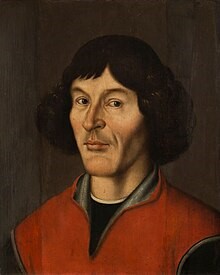
Nicolaus Copernicus: Catholic Pioneer of Modern Science,1473 –1543
The parents of Niclas Kopernik of Poland were dedicated Catholics and members of the Third Order of Saint Dominic. The young Copernicus lost his father at the age of ten, but his uncle, a bishop, saw to his education at the University of Cracow where he specialized in the study of mathematics and astronomy. At the age of twenty-four Copernicus enrolled at the University at Bologna, studied canon law and medicine, and subsequently became an accomplished private physician attending to several princes and bishops.
There is no specific record of his being ordained a priest, but he did serve as a Church canon, which required celibacy, and his name appears on a list of candidates to become the new Bishop of Ermland, In later years he became an expert on financial matters and won the approval of the King of Poland for his expertise in this area. He first discovered what would centuries later be called by another man’s name, Gresham’s Law: Bad money drives out good.
In 1514, Pope Leo X inquired of Copernicus whether and how he might revise the existing calendar. Though Copernicus did not complete a solution to the problem, his notes were preserved, consulted, and helpful seventy years later when the new Gregorian calendar was devised.
But the real fame of Copernicus is the revolution he inaugurated against the ancient and venerated doctrine of Ptolemy about the orbit of the Sun around the Earth. His calculations on the matter he knew were very solid, but he also knew the conservatism of the established scientific culture of his day, so there were times when he was sorely discouraged. As he said:
Therefore, when I considered this carefully, the contempt which I had to fear because of the novelty and apparent absurdity of my view, nearly induced me to abandon utterly the work I had begun…. Those who know that the consensus of many centuries has sanctioned the conception that the earth remains at rest in the middle of the heavens as its center, would, I reflected, regard it as an insane pronouncement if I made the opposite assertion that the earth moves.
Risking the charge of insanity, Copernicus began to share his views in limited form with several younger contemporaries who were more open to his theory. Cardinal Schonberg was very impressed with the new cosmology, and the brilliant young mathematician, George Joachim Rheticus, prevailed upon Copernicus to allow the manuscript of his calculations to be published. However, by now nearly seventy, Copernicus had suffered a stroke and was paralyzed, so that he could not supervise the publication. Rheticus also was unable to assist, as the advocates of the ancient Ptolemaic system were now determined to suppress anyone who came to the aid of Copernicus.
Even so, a final published copy of Six Books on the Revolutions of the Celestial Orbits was placed in the great astronomer’s hands on the day he died. He never knew that the preface he had written was rewritten by the editor so as to raise reservations about the certainty of his new “heliocentric” system. The dedication to Pope Paul III was kept, so that it appeared the pope was intended to be honored and did not object in principle to the new theory.
Copernicus addressed the following remarks to the pope.
I can easily conceive, most Holy Father, that as soon as some people learn that in this book which I have written concerning the revolutions of the heavenly bodies, I ascribe certain motions to the Earth, they will cry out at once that I and my theory should be rejected.
But the ones who cried out most vociferously were not Catholics. Rather, opposition to Copernicus came from the Protestant reformers, in particular Luther and Calvin. Luther in his Table Talk, said: “There is talk of a new astrologer who wants to prove that the earth moves and goes around instead of the sky, the sun, the moon, just as if somebody were moving in a carriage or ship might hold that he was sitting still and at rest while the earth and the trees walked and moved. But that is how things are nowadays: when a man wishes to be clever he must . . . invent something special, and the way he does it must be the best! The fool wants to turn the whole art of astronomy upside-down. However, as Holy Scripture tells us, so did Joshua bid the sun to stand still and not the earth”(Joshua 10:10–15].
John Calvin likewise objected, saying: “Who will venture to place the authority of Copernicus above that of the Holy Spirit?” Catholic opposition was relatively muted, though three years after the theory was first published the Dominican Giovanni Maria Tolosani denounced it as a piece of heresy inconsistent with Scripture. Official Catholic opposition would not intensify until the time of Galileo, who would receive the brunt of punishment Copernicus may have escaped by his premature death.
In 2005, Polish archaeologists, scanning the floor of the Roman Catholic cathedral in the city of Frombork, found what appears to be the skull of Copernicus, based on forensic evidence matching the the shape of the skull with old paintings of him and dating it to about the age of seventy. That the burial place should have been lost in the first place shows how poorly records were kept in those days. But that it should have finally been found with instruments of modern science and technology is fitting, since it was the church canon Copernicus who, in his spare time, through mathematics more than anyone else founded the age of modern science. Let us give Copernicus the last words:
The solar system has been wrought for us by a supremely good and orderly Creator.

Remembering Father Alphonse de Valk
(Today marks the sixth anniversary of the death of Father Alphonse de Valk, C.S.B., a faithful, courageous and indefatigable Basilian priest, pro-life-and-family apostle, and the founder of Catholic Insight magazine. Here is what we wrote those on his entering into eternity five years ago, as we continue to remember him in our prayers and thoughts)[…]Continue reading→

Divine Mercy Sunday – An Echo of Every Mass
Reach out your hand and put it in my side. Do not doubt but believe’… ‘My Lord and my God!’ (Jn. 20:18)). Today is Divine Mercy Sunday, and as we celebrate the end of the Easter Octave, we contemplate the wounded side of our Saviour, the Church’s source of life. On Good Friday in the[…]Continue reading→

Saint Stanislaus of Szczepanów
We celebrate Saint Stanislaus today (+ April 11, 1079), in light of this Easter Octave, a bishop and martyr who accepted the episcopacy only at the direct order of Pope Alexander II. He proved a wise and courageous leader of his flock, put to death by his own king, Boleslaus, for rebuking the monarch’s ‘immoral[…]Continue reading→

First Holy Communion: Sermon from May 16, 1943
Here is a sermon from the good old days by +Rev. Msgr. Vincent Nicholas Foy (August 14, 1915 – March 13, 2017), from 1943. Readers may recall that Pope Saint Pius X, by the decree Quam Singulari in 1910, lowered the customary age of reception of Holy Communion – after the rigours of the plague[…]Continue reading→

In the Glorious Light of Easter, Alleluia!
Set your minds on things that are above, not on things that are on earth, for you have died, and your life is hidden with Christ in God. When Christ who is your life is revealed, then you also will be revealed with him in glory (Col. 3:3-4). The Resurrection of Our Lord and Saviour[…]Continue reading→

An Ancient Homily for Holy Saturday
The time between Good Friday and Easter Sunday is one of waiting, in silence, as the world wonders – anticipates – what will happen, after the death of Christ. We re-live this time each year in the anamnesis of our liturgy, and in turn look forward to the glorious re-creation of all things at the[…]Continue reading→

Europe’s Long Descent
(As we meditate on this day on Christ’s burial, and His descent into hell, it is fitting to ponder here with contributor Peter Marcus how the world seems to be heading there as well. The difference is that, although God cannot ‘redeem’ hell, nor those therein, He can and did redeem the world. There is[…]Continue reading→
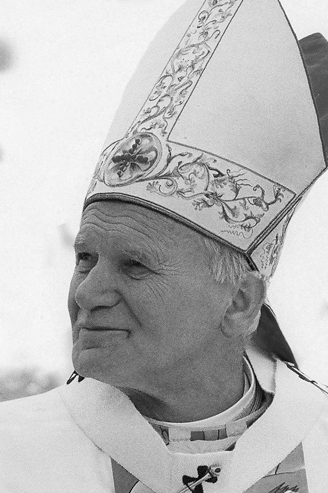
Pope Saint John Paul II’s First Good Friday Homily
ADDRESS OF HIS HOLINESS JOHN PAUL II AT THE CONCLUSION OF THE STATIONS OF THE CROSS AT THE COLOSSEUM Good Friday, 13 April 1979 When we make the Way of the Cross from one station to the next, in spirit we are always at the spot wherethis journey had its “historical” place: where it[…]Continue reading→
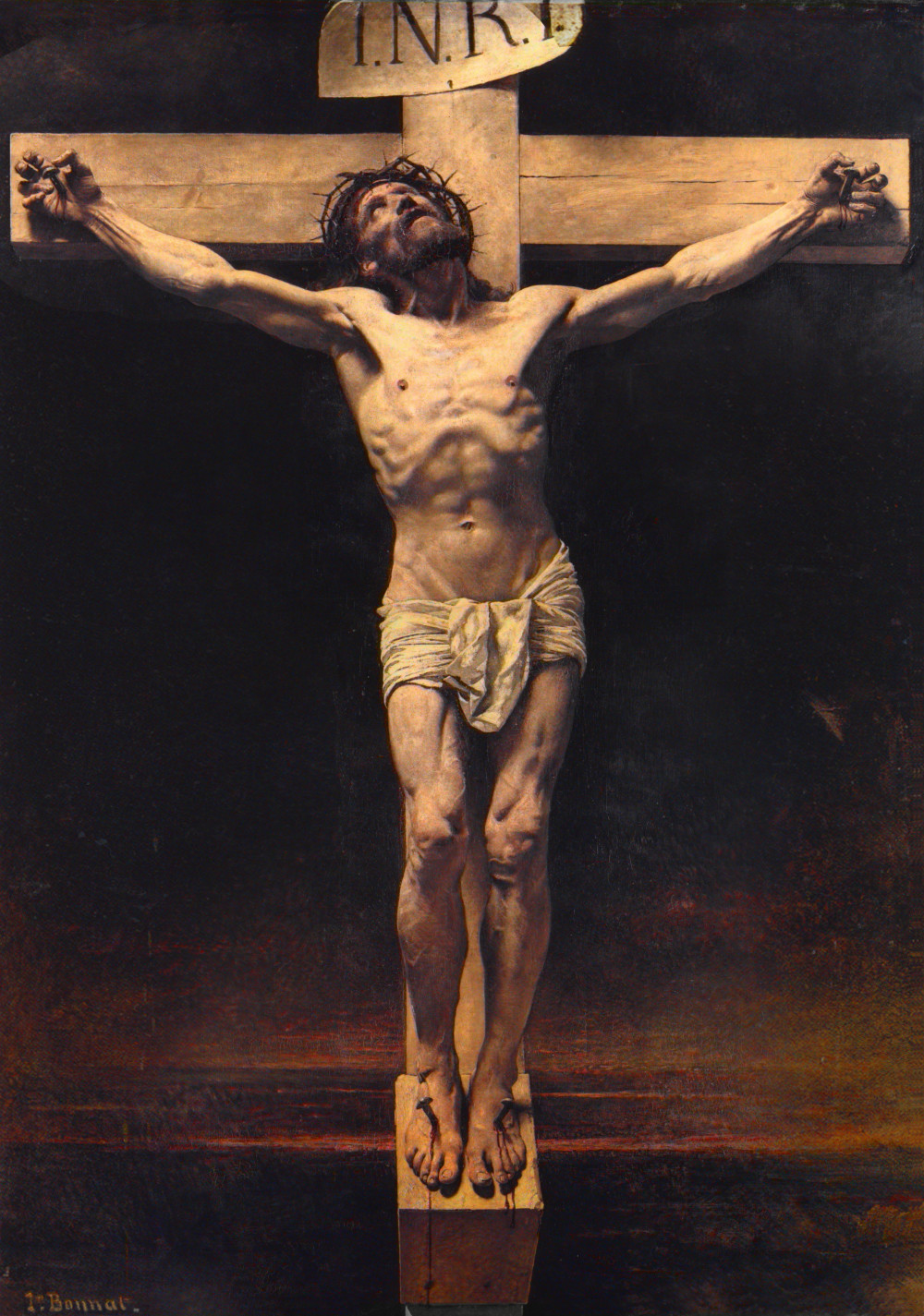
A Meditation for Good Friday: How To Undo the Effects of Sin?
Cardinal Newman, now Saint John Henry Newman, was a towering figure of nineteenth-century Catholicism who is almost universally admired. I say “almost” because not everyone likes him. I knew a priest once, Arthur Caulkins, who has become disenchanted with Newman. As an undergraduate Arthur had been enamoured of Newman, and this interest continued when he[…]Continue reading→
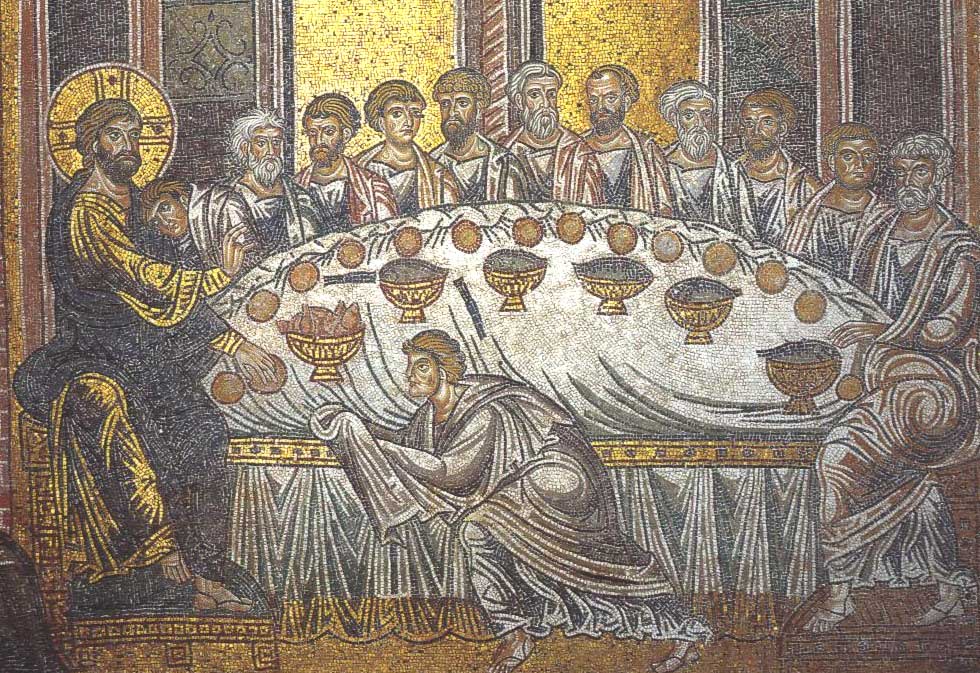
Pope Benedict’s Last Holy Thursday Homily
MASS OF THE LORD’S SUPPER HOMILY OF HIS HOLINESS BENEDICT XVI Basilica of St John Lateran Holy Thursday, 5 April 2012 Photo Gallery (Video) Dear Brothers and Sisters! Holy Thursday is not only the day of the institution of the Most Holy Eucharist, whose splendour bathes all else and in some ways draws it to[…]Continue reading→