
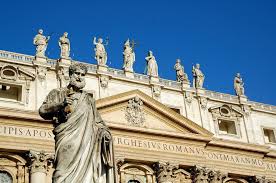
The Synod on Synodality How Will it Affect the Church?
“…a new vision that overturns established practices.” – Synod on Synodality
The words above may well come back to haunt the Church. This past week in Rome the Vatican concluded years of gatherings by bishops, clergy and laity initiated by Pope Francis. The hierarchy within the Catholic Church calls it a ‘process’ – more specifically – the Synod on Synodality. This multi-year series of meetings aimed to reconfigure how the Church operates by utilizing the model of a synod – one in which open dialogue and transparency are primary.
Synods have long served as consultative bodies of bishops, clergy, and laity assembled to consider significant concerns of Church discipline. However (and this is critical to understand) synods are not democratic, deliberative bodies that decide doctrine or discipline by ballot or any other means; they are purely advisory in their function.
Pope Paul VI, following the Second Vatican Council (1965), established the Synod of Bishops to perpetuate an atmosphere of collegiality among the church’s bishops. The term “synodality,” however, is not found in any official documents from Vatican II. Conceptually, it merely refers to the principle of collegiality and communion in the Church.
Many are asking (including this writer), since the term has no historical denotation, what significance will this particular synod be accorded?
At this juncture in the “process,” it is a fait accompli – a document has been produced and the pontiff (curiously enough) adopted it without an ‘apostolic exhortation’ – meaning no further comment or alterations in the text was deemed necessary. The document emphasizes the church’s “mission, with a concrete proposal of a new vision that overturns established practices.”
After three years of work, it turns out there was much deliberation but little declaration. The language employed was novel, but broad and general. While it declared a “greater role for women in the church,” it did not specify how. Moreover, it sought “greater lay participation” in decision-making, but was nonspecific as to the means of effecting it.
It would appear the more controversial issues discussed in the deliberations will remain such for the balance of this pope’s pontificate.
Openness and transparency?
The press began reporting on “difficult” issues being discussed more than a year ago – but often from behind closed doors. Debates were to remain confidential – counterintuitive to the idea of openness repeatedly professed by synod leadership. Sensitive issues like women’s ordination, LGBTQ concerns, and church governance were explored via private discussions – not open to the media or the faithful.
Notably absent from the synod’s discussions were representatives from vibrant, traditional communities. Representatives from pro-life organizations were conspicuously missing from the proceedings. While LGBTQ+ issues were frequently discussed – only those who mostly shared progressive views were given a platform.
Although openness was to be its theme, the synod’s process was exquisitely controlled. Openness and transparency played minor roles in the “process.”
This writer wonders if the lack of open discourse and transparency, in spite of profuse rhetoric to the contrary, is not in some way tied to the current pope’s vision of what and how the Church ought to be in the world. He was responsible for the structure of the “process” as well as who was appointed to lead its “open discourse and transparency.”
Leadership of the synod largely consisted of figures known for their progressive positions, including Cardinal Mario Grech, the general secretary, and Cardinal Jean-Claude Hollerich, the general rapporteur. Both spiritual directors of the synod, Cardinal-designate Timothy Radcliffe and Sister Maria Ignazia Angelini, also articulate more progressive views.
This writer wonders if this synod and the results of its deliberations are tied to Pope Francis’s more liberal vision for the church – an orientation which at times seems beyond the limitations imposed by the promulgations of Vatican II?
Its goal, as put forward by the pontiff himself, was to make the Church more effective at evangelization by making it more participatory and inclusive. Does “synodality” allude to the possibility of the Magisterium (at some future point) being open to novel interpretations as a result of synodal consensus?
Does the current pontiff believe the function of the church should be that of appeasing the world of secular modernity – surrendering beliefs and traditions that were instrumental in building Western civilization and which allowed the church itself to be sustained amidst two thousand years of struggle and conflict?
Precedent
The answer to these interrogatives will not be immediately forthcoming. But there is current precedent for what could occur if the Church relents in its pursuit of objective truth and acquiesces instead to the relativism of the subjective truth offered by the modern liberals’ secular culture – if the church attempts to alter how it acts in the world in an effort to appease what the modern liberal culture wants it to be for them – not God.
A similar synodal process to that just discussed has been underway for some time in Germany – the ‘Synodaler Weg’ (Synodal Way). Over the preceding five years, it is no secret that pressure from the latter was exerted on the synod in Rome to influence some of the church’s most difficult issues: the role of women, concerns regarding sexuality, priestly celibacy and decentralizing church authority through collegial forums (like synods). Since then, the Synodal Way has deemed it appropriate to approve advocacy for same-sex union blessings, women in the priesthood and marriage of the clergy.
The problem is that many of the ideas and discussions from the Synodal Way have found their way into the universal church through the Synod on Synodality. For the faithful, this creates concerns about whether the Catholic Church in general is being influenced by a distinctly Western, progressive agenda.
The circumstance in Germany provides a provocative illustration of what occurs when the Church relents to cultural trends and begins to see its purpose as accommodation to others rather than sanctification of the faithful.
German Bishop Franz-Josef Overbeck, a central participant in the Synodal Way, acknowledged the near collapse of the priesthood in his diocese. He reported that in just 14 years the latter lost (through death) 300 priests while ordaining 15. Meanwhile, the Church in Germany overall has witnessed an enormous flight in membership, with almost three quarters of a million-faithful leaving in recent years, compared to about a quarter million a few years back.
This precipitous decline in both clergy and laity reflects a larger problem in the German church. As it seeks to adapt itself to the progressive cultural trends of the secular society, it risks losing what defines its character and thus the meaning and purpose it brings to the world. Adapting to the trends means surrendering two thousand years of what has created and sustained Western civilization and the Church, itself. In trying to make itself more “inclusive,” the church in Germany appears to be experiencing a crisis of meaning and purpose – what it is and what it has to say to a world in need of God’s message.
The Catholic Church is unique in important ways, but it is also a large institution with a purpose. In that regard, it is not unlike a commercial entity. Corporations can and often do collapse when they lose focus on what has made them relevant in society. And this is true especially when they attempt to introduce – something novel and untried – into areas that dilute their identity and undermine their purpose. The same can happen to institutions – it can happen to the Catholic Church.
The Church in Germany, with its precipitous falloff in clergy and faithful, must (at the very least) give us pause. As it seeks to appease the expectations of the secular culture and yet continues to experience further deterioration, its relevance in German society is brought into question. The Catholic Church must realize:
When the church loses its focus on its primary purpose, it loses its voice – but more than that – its credibility to speak meaningfully to a world that is in greater need of it than ever before.
If the Church is to remain relevant in the face of modern critique, it must seek an informed response. But it must respond with reason – not react with emotion – to the winds of critique. It must remain open to dialogue and hear new voices, but it must do so while it refines (not changes) its teaching to make it more comprehensible to the modern world. And it must never lose sight of its core identity and purpose which comes from Mathew 16:18 and the ecumenical councils which followed.
To do otherwise is to cease to be the Church of “the way, the truth, and the life” (Jn 14:6).

Remembering Father Alphonse de Valk
(Today marks the sixth anniversary of the death of Father Alphonse de Valk, C.S.B., a faithful, courageous and indefatigable Basilian priest, pro-life-and-family apostle, and the founder of Catholic Insight magazine. Here is what we wrote those on his entering into eternity five years ago, as we continue to remember him in our prayers and thoughts)[…]Continue reading→

Divine Mercy Sunday – An Echo of Every Mass
Reach out your hand and put it in my side. Do not doubt but believe’… ‘My Lord and my God!’ (Jn. 20:18)). Today is Divine Mercy Sunday, and as we celebrate the end of the Easter Octave, we contemplate the wounded side of our Saviour, the Church’s source of life. On Good Friday in the[…]Continue reading→

Saint Stanislaus of Szczepanów
We celebrate Saint Stanislaus today (+ April 11, 1079), in light of this Easter Octave, a bishop and martyr who accepted the episcopacy only at the direct order of Pope Alexander II. He proved a wise and courageous leader of his flock, put to death by his own king, Boleslaus, for rebuking the monarch’s ‘immoral[…]Continue reading→
First Holy Communion: Sermon from May 16, 1943
Here is a sermon from the good old days by +Rev. Msgr. Vincent Nicholas Foy (August 14, 1915 – March 13, 2017), from 1943. Readers may recall that Pope Saint Pius X, by the decree Quam Singulari in 1910, lowered the customary age of reception of Holy Communion – after the rigours of the plague[…]Continue reading→
In the Glorious Light of Easter, Alleluia!
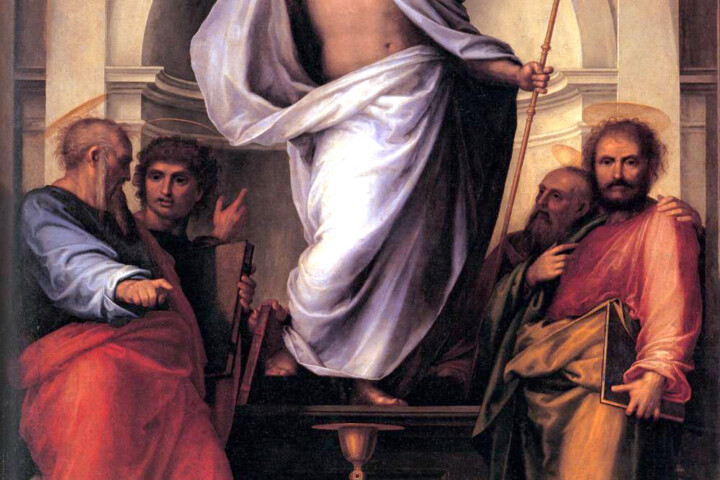
Set your minds on things that are above, not on things that are on earth, for you have died, and your life is hidden with Christ in God. When Christ who is your life is revealed, then you also will be revealed with him in glory (Col. 3:3-4). The Resurrection of Our Lord and Saviour[…]Continue reading→
An Ancient Homily for Holy Saturday
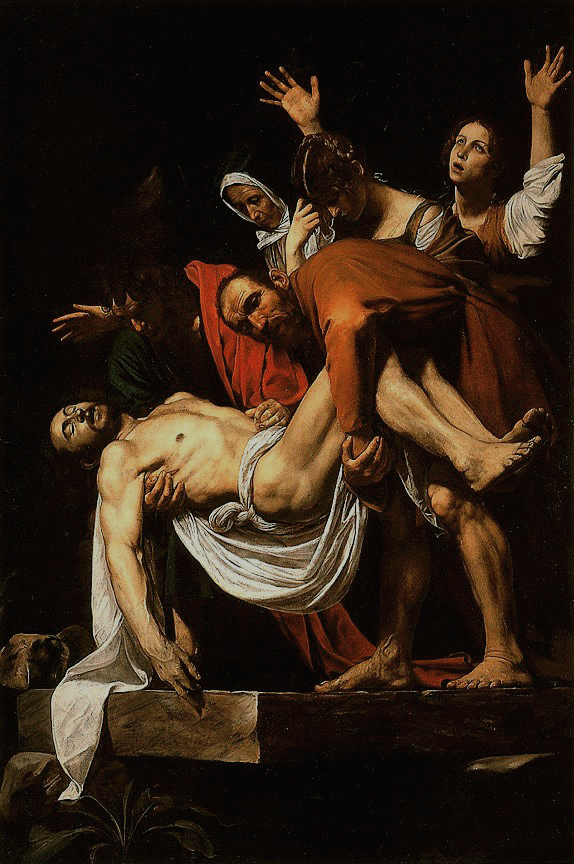
The time between Good Friday and Easter Sunday is one of waiting, in silence, as the world wonders – anticipates – what will happen, after the death of Christ. We re-live this time each year in the anamnesis of our liturgy, and in turn look forward to the glorious re-creation of all things at the[…]Continue reading→
Europe’s Long Descent
(As we meditate on this day on Christ’s burial, and His descent into hell, it is fitting to ponder here with contributor Peter Marcus how the world seems to be heading there as well. The difference is that, although God cannot ‘redeem’ hell, nor those therein, He can and did redeem the world. There is[…]Continue reading→
Pope Saint John Paul II’s First Good Friday Homily
ADDRESS OF HIS HOLINESS JOHN PAUL II AT THE CONCLUSION OF THE STATIONS OF THE CROSS AT THE COLOSSEUM Good Friday, 13 April 1979 When we make the Way of the Cross from one station to the next, in spirit we are always at the spot wherethis journey had its “historical” place: where it[…]Continue reading→
A Meditation for Good Friday: How To Undo the Effects of Sin?
Cardinal Newman, now Saint John Henry Newman, was a towering figure of nineteenth-century Catholicism who is almost universally admired. I say “almost” because not everyone likes him. I knew a priest once, Arthur Caulkins, who has become disenchanted with Newman. As an undergraduate Arthur had been enamoured of Newman, and this interest continued when he[…]Continue reading→
Pope Benedict’s Last Holy Thursday Homily
MASS OF THE LORD’S SUPPER HOMILY OF HIS HOLINESS BENEDICT XVI Basilica of St John Lateran Holy Thursday, 5 April 2012 Photo Gallery (Video) Dear Brothers and Sisters! Holy Thursday is not only the day of the institution of the Most Holy Eucharist, whose splendour bathes all else and in some ways draws it to[…]Continue reading→