
Pope Benedict and Saint John Chrysostom: Part II
BENEDICT XVI
GENERAL AUDIENCE
Saint Peter’s Square
Wednesday, 26 September 2007
St John Chrysostom (2)
Dear Brothers and Sisters,
Today, let us continue our reflection on St John Chrysostom. After the period he spent in Antioch, in 397 he was appointed Bishop of Constantinople, the capital of the Roman Empire of the East. John planned the reform of his Church from the outset: the austerity of the episcopal residence had to be an example for all – clergy, widows, monks, courtiers and the rich. Unfortunately, many of those he criticized distanced themselves from him. Attentive to the poor, John was also called “the Almoner”. Indeed, he was able as a careful administrator to establish highly appreciated charitable institutions. For some people, his initiatives in various fields made him a dangerous rival but as a true Pastor, he treated everyone in a warm, fatherly way. In particular, he always spoke kindly to women and showed special concern for marriage and the family. He would invite the faithful to take part in liturgical life, which he made splendid and attractive with brilliant creativity.
Despite his kind heart, his life was far from peaceful. He was the Pastor of the capital of the Empire, and often found himself involved in political affairs and intrigues because of his ongoing relations with the authorities and civil institutions. Then, within the Church, having removed six Bishops in Asia in 401 A.D. who had been improperly appointed, he was accused of having overstepped the boundaries of his own jurisdiction and thus he easily became the target of accusations. Another accusation against him concerned the presence of some Egyptian monks, excommunicated by Patriarch Theophilus of Alexandria, who had sought refuge in Constantinople. A heated argument then flared up on account of Chrysostom’s criticism of the Empress Eudoxia and her courtiers who reacted by heaping slander and insults upon him. Thus, they proceeded to his removal during the Synod organized by the same Patriarch Theophilus in 403, which led to his condemnation and his first, brief exile. After Chrysostom’s return, the hostility he had instigated by his protests against the festivities in honour of the Empress, which the Bishop considered as sumptuous pagan celebrations, and by his expulsion of the priests responsible for the Baptisms during the Easter Vigil in 404, marked the beginning of the persecution of Chrysostom and his followers, the so-called “Johannites”.
John then denounced the events in a letter to Innocent I, Bishop of Rome, but it was already too late. In 406, he was once again forced into exile, this time to Cucusus in Armenia. The Pope was convinced of his innocence but was powerless to help him. A Council desired by Rome to establish peace between the two parts of the Empire and among their Churches could not take place. The gruelling journey from Cucusus to Pityus, a destination that he never reached, was meant to prevent the visits of the faithful and to break the resistance of the worn-out exile: his condemnation to exile was a true death sentence! The numerous letters from his exile in which John expressed his pastoral concern in tones of participation and sorrow at the persecution of his followers are moving. His journey towards death stopped at Comana in Ponto. Here, John, who was dying, was carried into the Chapel of the Martyr St Basiliscus, where he gave up his spirit to God and was buried, one martyr next to the other (Palladius, Dialogue on the Life of St John Chrysostom, 119). It was 14 September 407, the Feast of the Triumph of the Holy Cross. He was rehabilitated in 438 through Theodosius II. The holy Bishop’s relics, which had been placed in the Church of the Apostles in Constantinople, were later, in 1204, translated to the first Constantinian Basilica in Rome, and now rest in the chapel of the Choir of the Canons in St Peter’s Basilica. On 24 August 2004, Pope John Paul II gave a large part of the saint’s relics to Patriarch Bartholomew I of Constantinople. The Saint’s liturgical Memorial is celebrated on 13 September. Blessed John XXIII proclaimed him Patron of the Second Vatican Council.
(To continue reading, please see here).
A Closed, Unsustainable, Descending Loop
As a follow-up to my thoughts on Payette’s payout, here be a stark image of where are here in Canada. As the graph shows in, well, graphic terms, since 2025, the public sector has contributed to 95.5% of economic growth. The private sector – which funds the public sector, or is supposed to – has[…]Continue reading→
Presidential Pardon of Weronika Krawczyk
As a good news, follow-up to our story from Poland, of the persecution of Weronika Krawczyk for her pro-life views, we heard that she has been granted a presidential pardon. One might still wonder why one needs a presidential pardon for simply holding the long-held belief that the child within the womb is a child,[…]Continue reading→
Pope Leo and a Rosary for Peace
Pope Leo XIV has asked Catholics across the world to join him in a Rosary for peace today, at 18:00 Rome time (6 pm), which would be noon from where I write (EST). If you are able, whether at that time or another, and in whatever way you pray, to join in intercession with the[…]Continue reading→
Payette’s Payout
I was glancing through some headlines, and noticed a mention of Julie Payette – engineer and astronaut and sometime the Queen’s representative in Canada – which brought back vague memories. She was appointed Governor-General by Justin Trudeau in 2017. Ms. Payette resigned in 2021, amidst claims that she created a ‘toxic work environment’, with allegations[…]Continue reading→
Weronika Krawczyk and Injustice in Poland
Catholic Action in Poland has issued a formal statement appealing to the President of the Republic of Poland to pardon Weronika Krawczyk—convicted for warning other women against an abortion-performing gynaecologist. Catholic Action (AK) emphasizes that no apology is owed to a doctor who has performed numerous abortions and proposed others; furthermore, the organization considers the[…]Continue reading→
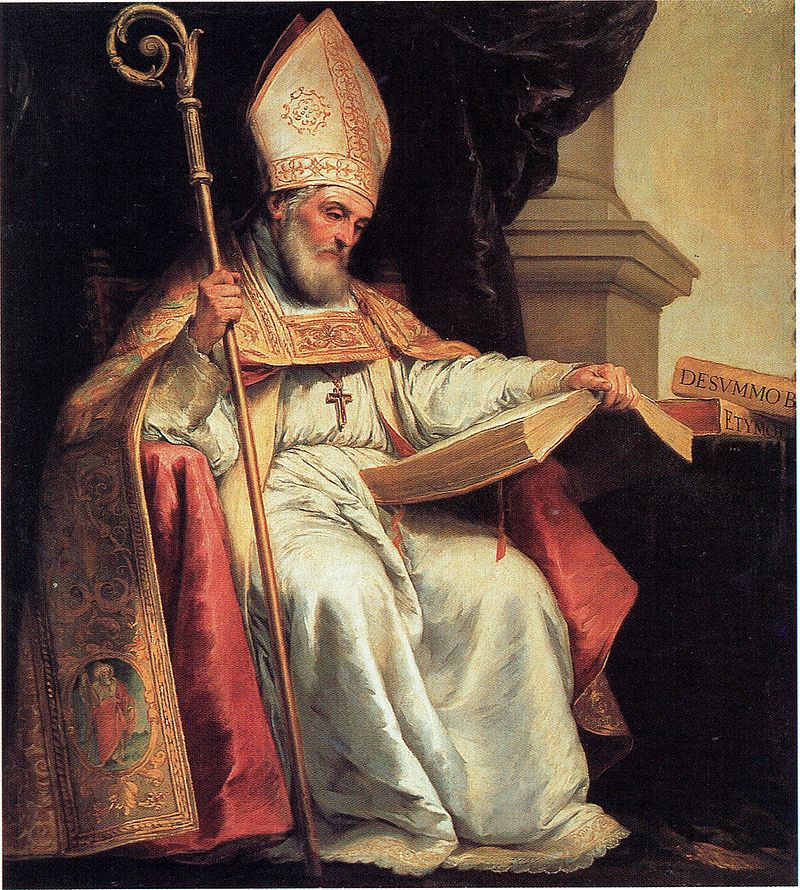
Saint Isidore of Seville, the Internet and Industriousness
Today, April 4th, muted this year by Holy Saturday, is the commemoration of Saint Isidore of Seville (560-636) a bishop and doctor of the Church during a tumultuous age, when civilization was crumbling, coming apart at its very seams, which may sound sort of au courant. Then again, the form of this world has always[…]Continue reading→
Bishop Fulton Sheen’s 58th Good Friday Reflection
Incredible, at the beginning of this reflection, that the Venerable Bishop Sheen declares that he has given nearly 58 Good Friday reflections – this, as far as I can gather, was his final one, and he seems in full vigour in mind and body. The good bishop and evangelist died in his 84th year on[…]Continue reading→
A Minimal Friar and the Death of a Great Pope
This April the second- overshadowed by Holy Thursday this year – marks the memorial of Saint Francis of Paola (1417-1507), founder of the ‘Minim’ friars, so called for their humility and poverty, who interpreted the rule of Saint Francis of Assisi in quite a literal sense: extreme poverty, trust in God, foregoing all animal and[…]Continue reading→
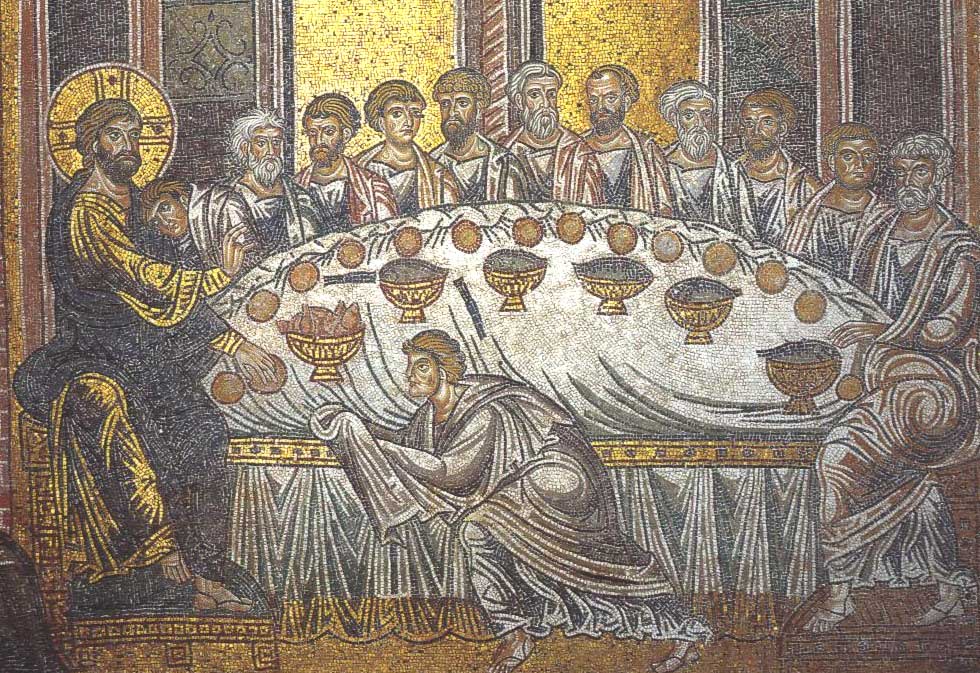
Pope Benedict’s Last Holy Thursday Homily
MASS OF THE LORD’S SUPPER HOMILY OF HIS HOLINESS BENEDICT XVI Basilica of St John Lateran Holy Thursday, 5 April 2012 Photo Gallery (Video) Dear Brothers and Sisters! Holy Thursday is not only the day of the institution of the Most Holy Eucharist, whose splendour bathes all else and in some ways draws it to[…]Continue reading→
Woven versus Seamless Garments
The reflection on the worthy project by Magie Dominic was intriguing, and I thought I would offer a brief follow-up commentary. The garment woven out of many pieces is a poignant symbol, even a ‘sacramental’, inspired by prayer and grace. We are all united in some way, and should strive for such unity, wherever we[…]Continue reading→