
Is Religion a Force for the Good?
Most people regard religion as a constructive and positive force in human history, while some regard it as a false and negative force. Naturally, that depends on which religion you are talking about, and even on whether or not you happen to be religious. Some old religions, and perhaps some new ones, appear to be fanatical and akin to devil worship. The ancient idols of Money, Power, and Fame have always had their clergy, congregation, and temple, and have been worshiped by some as divine even when it was clear they were truly demonic.
But it can hardly be argued that the wisdom taught by Christ has had a wicked influence on the world. Yes, some Christians have behaved wickedly, even while professing to be Christian. But that is not a reasonable argument against Christianity, any more than that medicine should be regarded as wicked because some pharmacists and physicians have used it to exploit their patients; or that the law should be regarded as wicked because some judges, lawyers, and policemen have used it to thwart justice.
Christianity has been an enormously positive force in the history of humankind. It has nurtured in us the idea that we exist for a purpose; that we have the free will to manage ourselves with the help of God in attaining that purpose; that we have immortality to strive for rather than oblivion to approach with fear and trembling; and that we have a God who loves us and is willing to forgive our sins if we are but sincere in asking that forgiveness.
Christianity has a track record comparable to no other world religion. Until Christianity converted the Roman Empire, there was worldwide traffic in slavery that was justified even by the great Greek philosopher Aristotle. The savage entertainment offered by bloodletting Roman gladiators ended only after the victory of Christ over Jupiter. From the time of Constantine on, Christian hospitals were built everywhere in Europe as a visible sign of Christian charity. The Catholic popes helped to unify the culture of Europe by making Latin the universal language of the Church and scholars everywhere.
Risking the wrath of King John of England, Archbishop Stephen Langton promoted the Magna Carta, a treaty that began the long decline of ruthless monarchies toward parliamentary government in England and Jeffersonian democracy in America. Catholic monks invented the medieval university system that paved the way toward the Renaissance and the scientific revolution. A Catholic, Johannes Gutenberg, invented the printing press, making books easy and inexpensive to market, which in turn encouraged the literacy required to read those books and the growing scholarship that followed.
Those who despise religion in general, and Christianity in particular, foolishly denounce Christian civilizations of the past and the present. If people want to know how civilized the world was in those places where Christianity has prevailed, let them first study how brutal the world was in the centuries before Christ. The narrative of that savage world is vividly told in the first three volumes of Will Durant’s monumental The Story of Civilization. Another (admittedly Hollywood) version of pre-Christian barbarism is vividly depicted in Mel Gibson’s movie Apocalypto.
Any competent historian has to admit that before Christianity triumphed there was no spreading empire anywhere in the world whose central, pervasive, and constant moral teaching was, “Love God and one another.” Nor was there ever a religion that so convincingly offered to frail humanity the hope that somewhere beyond this life there is final justice and mercy that cannot always be found in this world.
Whenever and wherever in the world Christianity has failed, or gone into gradual decline, or Christians have engaged in bloody excesses, it was always because there was not enough Christianity, not because there was too much. One hundred years from now religious scholars will surely still remember the Catholic convert G. K. Chesterton’s insight of one hundred years ago: “The Christian ideal has not been tried and found wanting. It has been found difficult, and left untried.”
In today’s world this is perhaps more true than it has ever been.

Saint Kateri , Canada’s Protectress
This was the title given to Saint Kateri Tekakwitha, by Pope Benedict XVI, when he canonized her on October 28th, 2012, along with six others, in Saint Peter’ Square (she had been beatified by Pope John Paul II back in 1980). With Saint Joseph as our protector, along with the Canadian martyrs, we seem to[…]Continue reading→

Remembering Father Alphonse de Valk
(Today marks the sixth anniversary of the death of Father Alphonse de Valk, C.S.B., a faithful, courageous and indefatigable Basilian priest, pro-life-and-family apostle, and the founder of Catholic Insight magazine. Here is what we wrote those on his entering into eternity five years ago, as we continue to remember him in our prayers and thoughts)[…]Continue reading→

My Name is Bernadette
April 16th is a propitious day, for besides the anniversary of Father de Valk’s death, who founded Catholic Insight in its print form decades ago, and the commemoration of the ‘two Benedicts’, mentioned in accompanying posts, today we also recall Saint Bernadette Soubirous, the young visionary to whom the Virgin Mary appeared numerous times at[…]Continue reading→

Canonizing Sister Faustina and Divine Mercy
HOMILY OF THE HOLY FATHER MASS IN ST PETER’S SQUARE FOR THE CANONIZATION OF SR MARY FAUSTINA KOWALSKA Sunday, 30 April 2000 1. “Confitemini Domino quoniam bonus, quoniam in saeculum misericordia eius”; “Give thanks to the Lord for he is good; his steadfast love endures for ever” (Ps 118: 1). So the Church sings on the Octave of[…]Continue reading→

Divine Mercy Sunday – An Echo of Every Mass
Reach out your hand and put it in my side. Do not doubt but believe’… ‘My Lord and my God!’ (Jn. 20:18)). Today is Divine Mercy Sunday, and as we celebrate the end of the Easter Octave, we contemplate the wounded side of our Saviour, the Church’s source of life. On Good Friday in the[…]Continue reading→

Saint Stanislaus of Szczepanów
We celebrate Saint Stanislaus today (+ April 11, 1079), in light of this Easter Octave, a bishop and martyr who accepted the episcopacy only at the direct order of Pope Alexander II. He proved a wise and courageous leader of his flock, put to death by his own king, Boleslaus, for rebuking the monarch’s ‘immoral[…]Continue reading→
First Holy Communion: Sermon from May 16, 1943
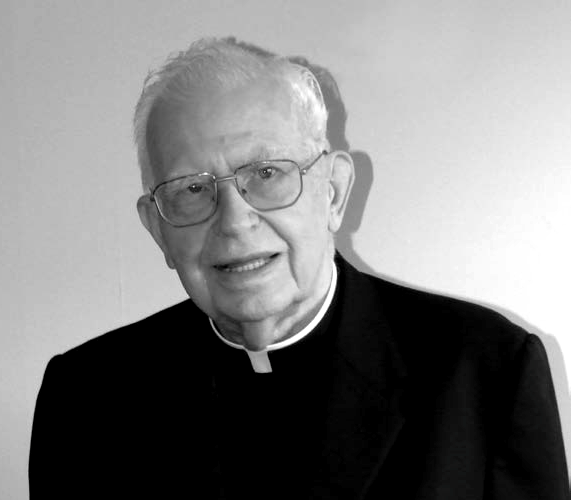
Here is a sermon from the good old days by +Rev. Msgr. Vincent Nicholas Foy (August 14, 1915 – March 13, 2017), from 1943. Readers may recall that Pope Saint Pius X, by the decree Quam Singulari in 1910, lowered the customary age of reception of Holy Communion – after the rigours of the plague[…]Continue reading→
In the Glorious Light of Easter, Alleluia!
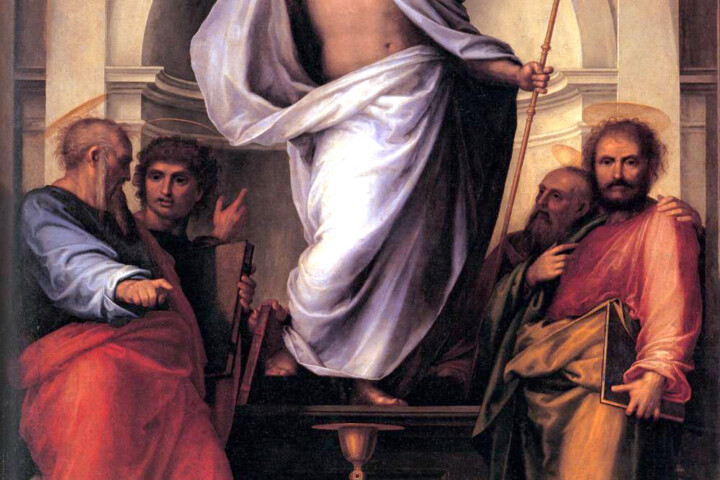
Set your minds on things that are above, not on things that are on earth, for you have died, and your life is hidden with Christ in God. When Christ who is your life is revealed, then you also will be revealed with him in glory (Col. 3:3-4). The Resurrection of Our Lord and Saviour[…]Continue reading→
An Ancient Homily for Holy Saturday
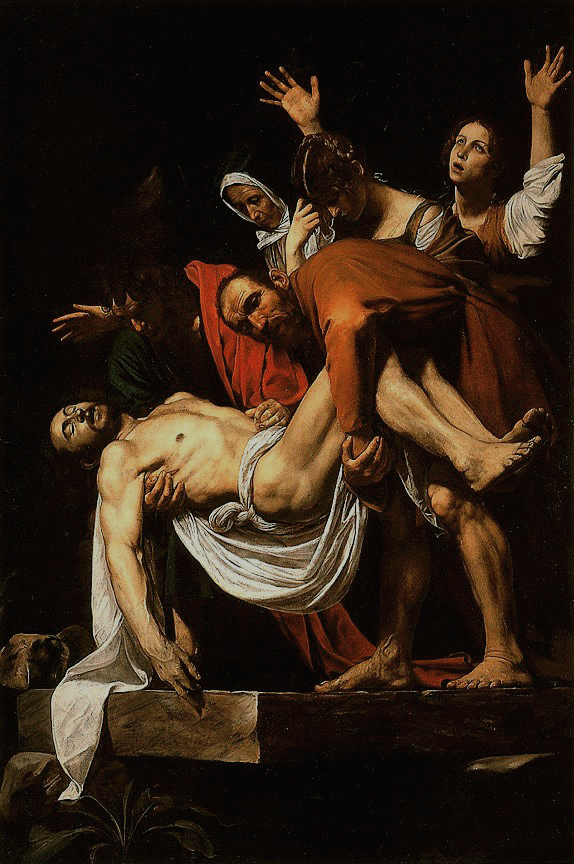
The time between Good Friday and Easter Sunday is one of waiting, in silence, as the world wonders – anticipates – what will happen, after the death of Christ. We re-live this time each year in the anamnesis of our liturgy, and in turn look forward to the glorious re-creation of all things at the[…]Continue reading→
Europe’s Long Descent
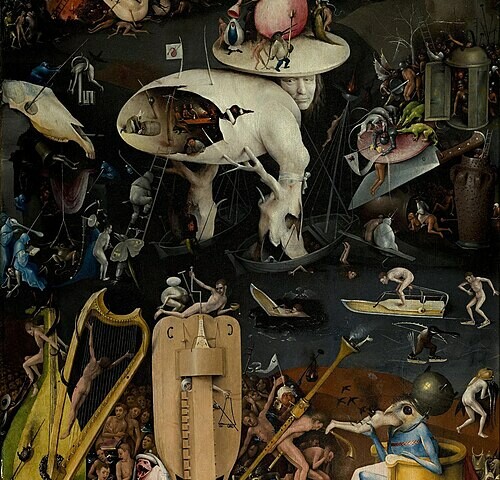
(As we meditate on this day on Christ’s burial, and His descent into hell, it is fitting to ponder here with contributor Peter Marcus how the world seems to be heading there as well. The difference is that, although God cannot ‘redeem’ hell, nor those therein, He can and did redeem the world. There is[…]Continue reading→