

Two Roads Diverged, But They Both Lead Back to the Basics – and to Rome
To a scientist—an honest one—the term disruptive is one of approbation. It means something’s been discovered or invented that shakes the continuously ossifying framework of accepted knowledge and possibly dislodges something new. There’s even a system for quantifying how disruptive your idea might prove to be: the CD (consolidation-or-destabilization) Index, developed by Dr.s Funk and Owen-Smith in 2016. Worryingly, however, a recent article [1] from Nature.com entitled, “Papers and patents are becoming less disruptive over time” (the thesis of which is that papers and patents are becoming less disruptive over time), calls attention to a sharp decrease in cross-disciplinary journal citations as a possible symptom and/or cause of the accelerating decline in status quo-shaking ideas. Nuclear physicists and astrophysicists (for instance) just don’t talk to each other anymore.
Now, personally, I know very little about science, and understand even less; but this pattern of decreasing cross-pollination makes perfect sense to me from the standpoint of my own chosen field of study: Japanese Jiu-Jitsu. This martial art (the seemingly misnomered “Gentle Art”) is specifically focused on grappling, and was never meant to be a complete fighting style. It was originally one element of a comprehensive method that included kicks, punches, and throws—to say nothing of the yet larger framework of armed combat. Grappling was what you did if you lost your squadmates and your horse and your weapons, and you were too close to boot the other guy in the head.
But over time, inevitably, those fighters who happened to enjoy and excel at grappling began to specialize more and more in that particular branch and its ever-ramifying network of twigs. And the same, of course, happened with Karate (strikes) and Judo (throws) and all the dividing and multiplying sub-sub-styles—and then particular demographics became associated with particular disciplines, and there followed all the usual corruptions and degradations that we’re eternally pushing back against in every field of endeavor in the fallen world. It wasn’t until extremely recently that global travel and communication became so commonplace that masters of every vanishing twig-point from around the world could truly work together to brush away the kudzu of history and politics, and finally rediscover the tree.
Every branch, as it develops and forks outward, becomes far stronger in its own specific area of expertise. A samurai freed from the obligation to keep up with his Kenpo training can naturally devote more time to teasing out the hidden possibilities of Jiu-Jitsu. And, because it takes years—centuries—of experimentation to develop the art to its fullness, no one can be a devotee of twenty different styles that are still in the frontier of development. Of course, now, in the wake of all that specialization, the heirs of the arts can be swiftly taught what it took generations to learn—but in doing so, we unavoidably lose whole universes of nuance and infinitesimal detail, the filigreed delight of any true master.
We all stand on the shoulders of giants, as Newton said, and you can go on stacking up giants as high as you like—as long as you accept that the ones toward the bottom will gradually be squashed into a dense, homogenous paste. Mind you, that paste will form a highly nourishing fertilizer for the giants at the top of the pile; but, again, those giants must either go on branching off into finer and finer sub-disciplines, intricately detailed but increasingly isolated, or accept the homogeneity of a consolidated knowledge base, containing (in digest form) as much of every sub-discipline as can reasonably be accommodated by a single human mind.
It seems a grim dilemma—and, for a non-Catholic, it is. But this reductio ad Jiu-Jitsum (if you will) presumes that the entirety of any particular discipline needs to be assimilated by this or that individual intellect and soul. It’s based on the failure to comprehend the nature and purpose of the Universal Church. I don’t need to understand astrophysics, because there are other members of the Body of Christ who do. A given astrophysicist doesn’t need to understand Japanese grappling, because we’ve got that covered over here in the dojo.
And eventually, inevitably, the “vanishing twig-points” will overreach themselves and collapse back together into the sappy paste we mentioned earlier. All the sciences will return to their base form of Natural Philosophy, informed by Theology. And then, at last, we’ll truly be able to begin.
1: https://www.nature.com/articles/s41586-022-05543-x

Remembering Father Alphonse de Valk
(Today marks the sixth anniversary of the death of Father Alphonse de Valk, C.S.B., a faithful, courageous and indefatigable Basilian priest, pro-life-and-family apostle, and the founder of Catholic Insight magazine. Here is what we wrote those on his entering into eternity five years ago, as we continue to remember him in our prayers and thoughts)[…]Continue reading→

Divine Mercy Sunday – An Echo of Every Mass
Reach out your hand and put it in my side. Do not doubt but believe’… ‘My Lord and my God!’ (Jn. 20:18)). Today is Divine Mercy Sunday, and as we celebrate the end of the Easter Octave, we contemplate the wounded side of our Saviour, the Church’s source of life. On Good Friday in the[…]Continue reading→

Saint Stanislaus of Szczepanów
We celebrate Saint Stanislaus today (+ April 11, 1079), in light of this Easter Octave, a bishop and martyr who accepted the episcopacy only at the direct order of Pope Alexander II. He proved a wise and courageous leader of his flock, put to death by his own king, Boleslaus, for rebuking the monarch’s ‘immoral[…]Continue reading→

First Holy Communion: Sermon from May 16, 1943
Here is a sermon from the good old days by +Rev. Msgr. Vincent Nicholas Foy (August 14, 1915 – March 13, 2017), from 1943. Readers may recall that Pope Saint Pius X, by the decree Quam Singulari in 1910, lowered the customary age of reception of Holy Communion – after the rigours of the plague[…]Continue reading→

In the Glorious Light of Easter, Alleluia!
Set your minds on things that are above, not on things that are on earth, for you have died, and your life is hidden with Christ in God. When Christ who is your life is revealed, then you also will be revealed with him in glory (Col. 3:3-4). The Resurrection of Our Lord and Saviour[…]Continue reading→

An Ancient Homily for Holy Saturday
The time between Good Friday and Easter Sunday is one of waiting, in silence, as the world wonders – anticipates – what will happen, after the death of Christ. We re-live this time each year in the anamnesis of our liturgy, and in turn look forward to the glorious re-creation of all things at the[…]Continue reading→

Europe’s Long Descent
(As we meditate on this day on Christ’s burial, and His descent into hell, it is fitting to ponder here with contributor Peter Marcus how the world seems to be heading there as well. The difference is that, although God cannot ‘redeem’ hell, nor those therein, He can and did redeem the world. There is[…]Continue reading→
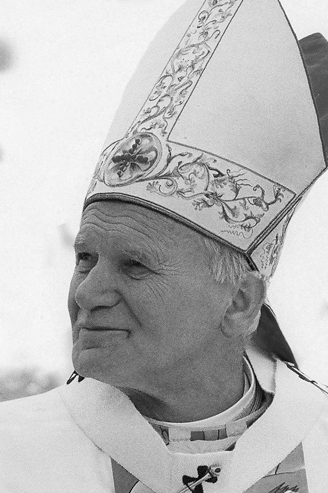
Pope Saint John Paul II’s First Good Friday Homily
ADDRESS OF HIS HOLINESS JOHN PAUL II AT THE CONCLUSION OF THE STATIONS OF THE CROSS AT THE COLOSSEUM Good Friday, 13 April 1979 When we make the Way of the Cross from one station to the next, in spirit we are always at the spot wherethis journey had its “historical” place: where it[…]Continue reading→
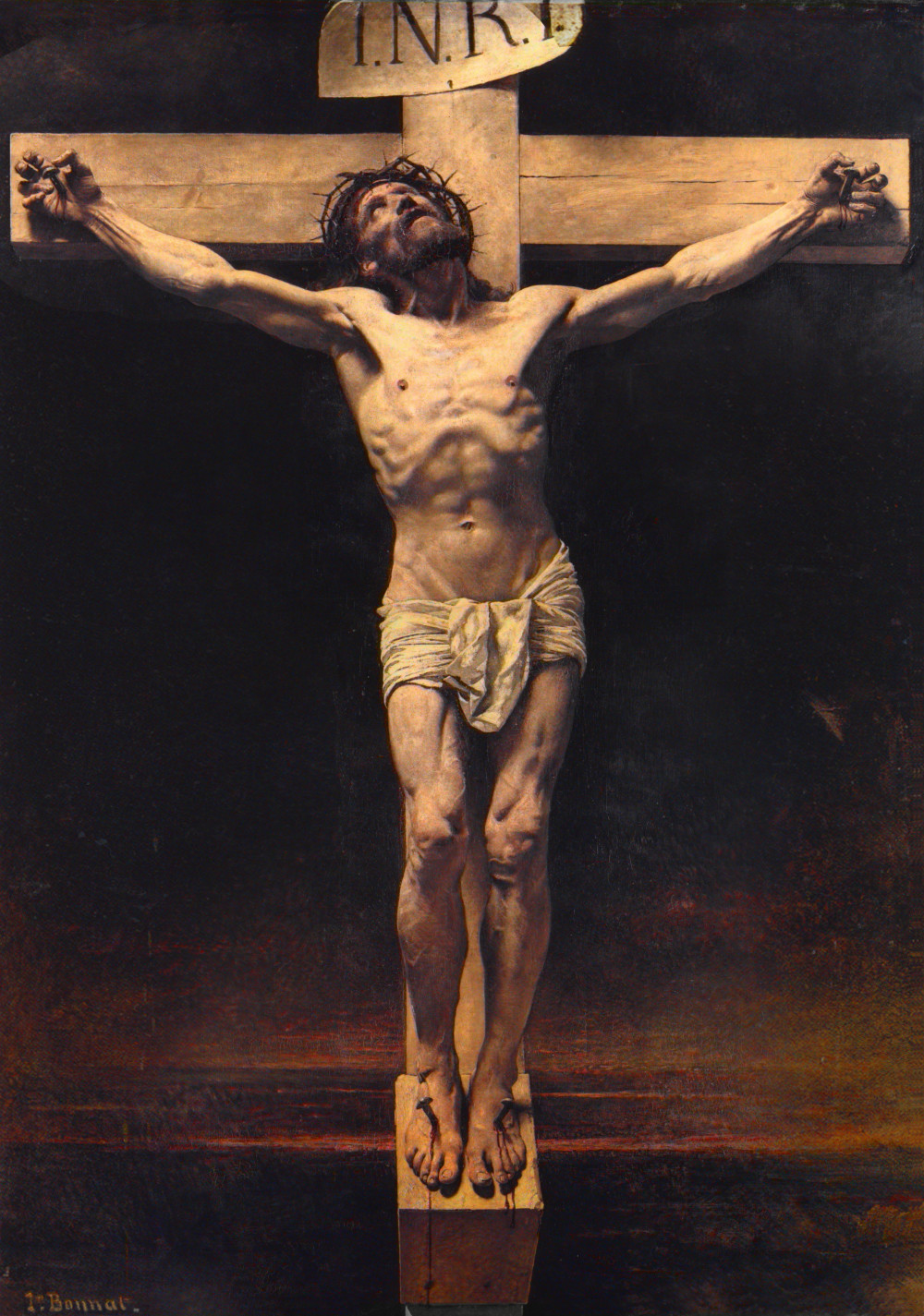
A Meditation for Good Friday: How To Undo the Effects of Sin?
Cardinal Newman, now Saint John Henry Newman, was a towering figure of nineteenth-century Catholicism who is almost universally admired. I say “almost” because not everyone likes him. I knew a priest once, Arthur Caulkins, who has become disenchanted with Newman. As an undergraduate Arthur had been enamoured of Newman, and this interest continued when he[…]Continue reading→
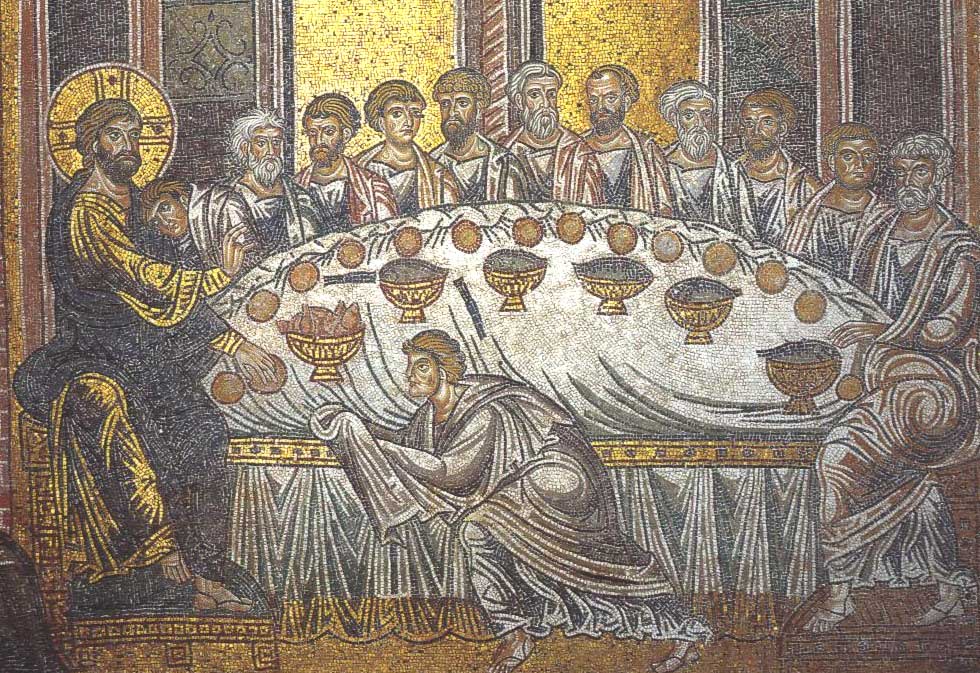
Pope Benedict’s Last Holy Thursday Homily
MASS OF THE LORD’S SUPPER HOMILY OF HIS HOLINESS BENEDICT XVI Basilica of St John Lateran Holy Thursday, 5 April 2012 Photo Gallery (Video) Dear Brothers and Sisters! Holy Thursday is not only the day of the institution of the Most Holy Eucharist, whose splendour bathes all else and in some ways draws it to[…]Continue reading→