
Letter to the Editor: On Evil, Physical and Moral
(To remind readers, letters to the editor are very welcome, and those judged pertinent can be posted, with permission, and with some commentary in the spirit of charitable dialogue and critique in search of the fullness and splendour of truth).
So, in that spirit, Richard Yates from England writes:
I don’t think Carl Sundell is expressing a view that does justice to the Catholic tradition on the subject of evil. If memory serves aright, Aquinas teaches that evil is a lack of something that belongs to an entity according to its nature. There are both natural and moral evils. Natural evils include suffering and death (brought upon us by the Fall). Lacking a limb is an evil (not an attributable moral evil) because it belongs to the nature of living things to have a complete set of limbs, and they can’t function well without them.
I don’t believe there is such a thing as a ‘problem of evil’ in the sense of a challenge to the goodness of God.
Why does God permit evil?
On the one hand, we could just say “we don’t know”. What we do know rationally is that God is perfectly good because God is the perfect being (this follows from the convertibility of good and being).
According to Aquinas, God permits evil so that an even greater good may come of it.
Perhaps one could say: the worst evil was the torturing to death of the man who was God, Jesus, but from it came the redemption of the world, raising us to a state higher than that before the Fall.
Reply from the editor:
True enough. Saint Thomas does distinguish ‘natural’ or ‘physical’ evils from moral evil. The former are privations in any given nature or being – missing something that should be there. While the latter – moral evil – is true evil, a disorder in the will. We wrote of this distinction in these pages. Both may be ‘mysteries’, in the sense that we don’t understand their full purpose in God’s providence, but moral evil, with its eternal consequences, is far more grave – in fact, it is ‘incommensurate’ with physical evil, as the Catechism says.
A Closed, Unsustainable, Descending Loop
As a follow-up to my thoughts on Payette’s payout, here be a stark image of where are here in Canada. As the graph shows in, well, graphic terms, since 2025, the public sector has contributed to 95.5% of economic growth. The private sector – which funds the public sector, or is supposed to – has[…]Continue reading→

Remembering Father Alphonse de Valk
(Today marks the sixth anniversary of the death of Father Alphonse de Valk, C.S.B., a faithful, courageous and indefatigable Basilian priest, pro-life-and-family apostle, and the founder of Catholic Insight magazine. Here is what we wrote those on his entering into eternity five years ago, as we continue to remember him in our prayers and thoughts)[…]Continue reading→
Presidential Pardon of Weronika Krawczyk
As a good news, follow-up to our story from Poland, of the persecution of Weronika Krawczyk for her pro-life views, we heard that she has been granted a presidential pardon. One might still wonder why one needs a presidential pardon for simply holding the long-held belief that the child within the womb is a child,[…]Continue reading→
Pope Leo and a Rosary for Peace
Pope Leo XIV has asked Catholics across the world to join him in a Rosary for peace today, at 18:00 Rome time (6 pm), which would be noon from where I write (EST). If you are able, whether at that time or another, and in whatever way you pray, to join in intercession with the[…]Continue reading→
Payette’s Payout
I was glancing through some headlines, and noticed a mention of Julie Payette – engineer and astronaut and sometime the Queen’s representative in Canada – which brought back vague memories. She was appointed Governor-General by Justin Trudeau in 2017. Ms. Payette resigned in 2021, amidst claims that she created a ‘toxic work environment’, with allegations[…]Continue reading→

Saint Stanislaus of Szczepanów
We celebrate Saint Stanislaus today (+ April 11, 1079), in light of this Easter Octave, a bishop and martyr who accepted the episcopacy only at the direct order of Pope Alexander II. He proved a wise and courageous leader of his flock, put to death by his own king, Boleslaus, for rebuking the monarch’s ‘immoral[…]Continue reading→
Weronika Krawczyk and Injustice in Poland
Catholic Action in Poland has issued a formal statement appealing to the President of the Republic of Poland to pardon Weronika Krawczyk—convicted for warning other women against an abortion-performing gynaecologist. Catholic Action (AK) emphasizes that no apology is owed to a doctor who has performed numerous abortions and proposed others; furthermore, the organization considers the[…]Continue reading→
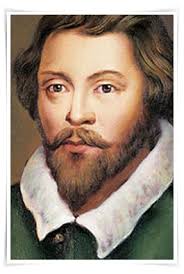
Three Easter Musical Gems: Bach, Palestrina and Byrd
A very blessed and glorious Easter! Christus surrexit vere, alleluia! As we begin this Easter Octave with the great Solemnity of Easter, music to lift the soul would be one of Bach’s Easter cantatas, composed during his time at Leipzig in the early 1700’s, for the six Sundays of this festive season, leading up to[…]Continue reading→
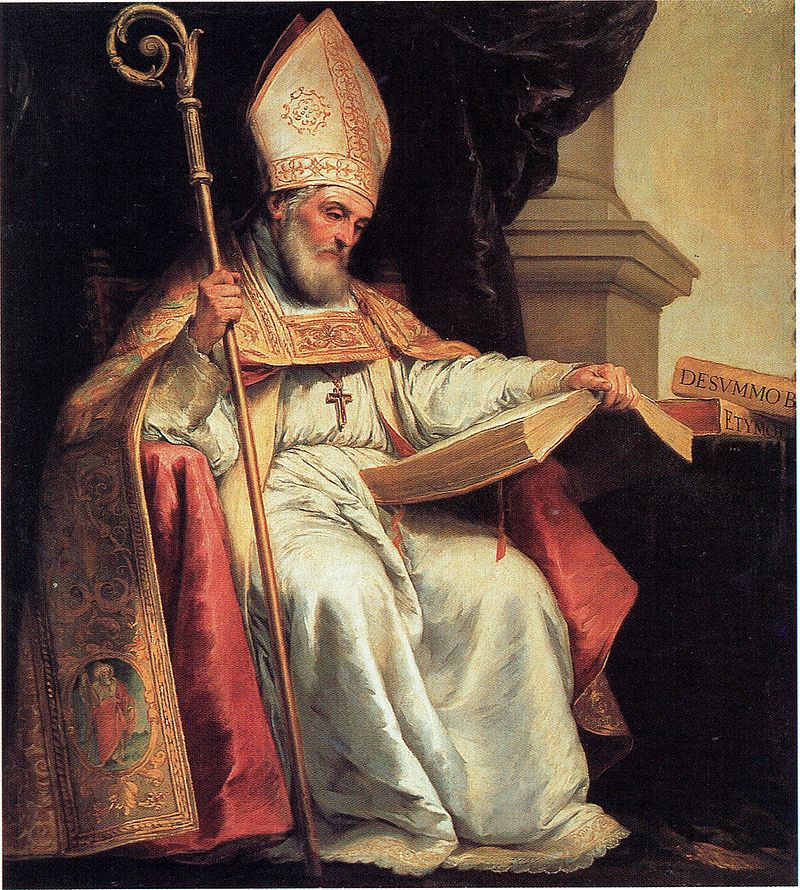
Saint Isidore of Seville, the Internet and Industriousness
Today, April 4th, muted this year by Holy Saturday, is the commemoration of Saint Isidore of Seville (560-636) a bishop and doctor of the Church during a tumultuous age, when civilization was crumbling, coming apart at its very seams, which may sound sort of au courant. Then again, the form of this world has always[…]Continue reading→

An Ancient Homily for Holy Saturday
The time between Good Friday and Easter Sunday is one of waiting, in silence, as the world wonders – anticipates – what will happen, after the death of Christ. We re-live this time each year in the anamnesis of our liturgy, and in turn look forward to the glorious re-creation of all things at the[…]Continue reading→