
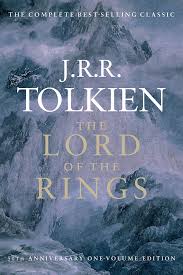
Tolkien, Discernment, and Vocation in The Lord of the Rings
The Dogmatic Constitution on the Church, Lumen Gentium, issued from the Second Vatican Council, emphasized the point that every person has a vocation to holiness. The word “vocation” stems from the Latin word vocare which means “to call.” Within each person’s call to holiness is a particular vocation such as the priesthood, marriage, and religious life. Though not intending to necessarily give the main aspects of this particular discernment in his writings, J.R.R. Tolkien has, in The Lord of the Rings, given a number of pointers regarding discernment, in large part for Frodo Baggins. The different stages that Frodo experiences strongly reflect the Catholic tradition of discernment and vocations and can indeed be valuable to see in one’s own life.
The first part, of course, is a calling from God. In their conversation at the beginning of The Lord of the Rings, Frodo makes known his regret that the Ring came to Bilbo and thus came to himself:
I wish it need not have happened in my time,’ said Frodo. ‘So do I,’ said Gandalf, ‘and so do all who live to see such times. But that is not for them to decide. All we have to decide is what to do with the time that is given us.’”[1]
Gandalf alludes to the idea that one must discern what one is to do with the life that God has given. He does, however, perceive the entire situation as something that Frodo has been specifically tasked with:
I can put it no plainer than by saying that Bilbo was meant to find the Ring and not by its maker. In which case you also were meant to have it. And that may be a encouraging thought.’”[2]
Here, Gandalf clearly sees the providential hand of God at work. God had called Bilbo to aid the Dwarves in taking back the Lonely Mountain and becoming the Ringbearer for a time. Now, God has called on Frodo to be the Ringbearer as well.
The second part of Frodo’s discernment is that of seeking advice from a spiritual authority: Gandalf. One of Fr. Timothy Gallaghar’s rules for discernment is never to do it alone. Always seek the aid of a spiritual director. Pulling from St. Ignatius of Loyola’s Spiritual Exercises, he writes in his book Discerning the Will of God,
There is obvious value in Ignatius’s counsel that discernment should be accompanied. When those who discern are unsure, feel blocked, and do not know how to proceed, often the need is for wise accompaniment.
Before making any decisive move with what to do with the Ring, Frodo consults with Gandalf for a good time. Gandalf helps Frodo to understand the situation with his own insights and wisdom and aids him to make a decision much as a spiritual director will do for their directee.
Another part of proper discernment is accepting the vocation freely. When men present themselves for ordination, they are required to declare their freedom in accepting this office. When a man and woman come to be married, they too must acknowledge that they are under no constraint and are completely free in accepting their vocation. The Order of Celebrating Matrimony directs the priest ask “N. and N. have you come here to enter into Marriage without coercion, freely and wholeheartedly?” The man and the woman reply “I have.” Elrond acknowledges Frodo’s freedom in regards to taking the Ring: “’But it is a heavy burden. So heavy that none could lay it on another. I do not lay it on you. But if you take it freely, I will say that your choice is right…’”[3] Frodo is not forced to carry the Ring nor does anyone persuade him; he accepts it voluntarily.
Another aspect of Frodo’s vocational journey is that of community and friendship – or as Tolkien would have it, fellowship. Elrond chooses eight companions for Frodo to aid him in his quest of destroying the Ring. Community in any vocation is an important factor since humans were created as social beings. The very beginning of the Bible tells us this: “The LORD God said: It is not good for the man to be alone. I will make a helper suited to him.” (Genesis 2:18) And again in the Gospels there is a communal aspect of the mission of the Apostles: “He summoned the Twelve and began to send them out two by two and gave them authority over unclean spirits.” (Mark 6:7) This is not to say that times of solitude are unnecessary. Indeed, moments of quiet personal meditation and private retreats are always beneficial. Christ Himself is the model of this – Christ spent time in community with His Apostles and disciples but also spent a good deal of time alone in personal prayer: “He [Jesus] would withdraw to deserted places to pray.” (Luke 5:16)
A further aspect of vocations is recognizing one’s weaknesses and imperfections. Frodo is a hobbit – not a great Elvish warrior, nor a wizard, nor a long lost king. He is short in height and inexperienced in battle. To the world he doesn’t exactly seem like the best person for the job. In one of his letters, Tolkien writes “Frodo undertook his quest out of love – to save the world he knew from disaster at his own expense, if he could; and also in complete humility, acknowledging that he was wholly inadequate to the task.”[4] While one may feel they are not up to the task that God has called them to, one should always keep in mind that God does not call the equipped; He equips those whom He calls and provides them with sufficient grace.
As any reader of The Lord of the Rings knows, Frodo seemingly failed his mission and perhaps failed his vocation. In Tolkien’s view, Frodo could not have overcome the power of the Ring at the very end. The power was too much for him. But Tolkien does not see this as Frodo’s final condemnation. In one of his letters, Tolkien writes “He [Frodo] was honoured because he had accepted the burden voluntarily, and had then done all that was within his utmost physical and mental strength to do. He (and the Cause) were saved – by Mercy: by the supreme value and efficacy of Pity and forgiveness of injury.”[5]
In the end, Frodo’s vocation was to bring the Ring to the fires of Mount Doom to destroy it. He failed in the latter part of this but was spared by the grace of God, due to his (Frodo’s) mercy and generosity to Gollum. This, for Tolkien, was Frodo’s salvation. Frodo, in a sense, did pursue and attain his vocation to holiness even though he stumbled and failed along the way. Many of the saints had such struggles in their own lives. Many of them failed before they succeeded. St. Peter is a prime example. After confessing that Jesus is the Messiah and the Son of God, he puts his foot in his mouth and tells Jesus that He shouldn’t speak of His Crucifixion and Death. Later, Peter vehemently says that he will not deny Christ and then promptly denies Him three times! In the end, Peter did follow Christ to the very end – by being crucified upside down. Even if we have struggled and failed, Frodo, and more importantly the saints, show us that we can succeed in our particular vocation, with the grace that God gives us if we are willing to cooperate with it.
[1]J.R.R. Tolkien, The Lord of the Rings (New York: Houghton Mifflin Harcourt, 2021), 51.
[2]Lord of the Rings, 56.
[3]Lord of the Rings, 270.
[4]J.R.R. Tolkien, ed. Humphrey Carpenter, The Letters of J.R.R. Tolkien (New York: William Morrow: 2000), #246.
[5]Letters, #191.

Remembering Father Alphonse de Valk
(Today marks the sixth anniversary of the death of Father Alphonse de Valk, C.S.B., a faithful, courageous and indefatigable Basilian priest, pro-life-and-family apostle, and the founder of Catholic Insight magazine. Here is what we wrote those on his entering into eternity five years ago, as we continue to remember him in our prayers and thoughts)[…]Continue reading→

Divine Mercy Sunday – An Echo of Every Mass
Reach out your hand and put it in my side. Do not doubt but believe’… ‘My Lord and my God!’ (Jn. 20:18)). Today is Divine Mercy Sunday, and as we celebrate the end of the Easter Octave, we contemplate the wounded side of our Saviour, the Church’s source of life. On Good Friday in the[…]Continue reading→

Saint Stanislaus of Szczepanów
We celebrate Saint Stanislaus today (+ April 11, 1079), in light of this Easter Octave, a bishop and martyr who accepted the episcopacy only at the direct order of Pope Alexander II. He proved a wise and courageous leader of his flock, put to death by his own king, Boleslaus, for rebuking the monarch’s ‘immoral[…]Continue reading→

First Holy Communion: Sermon from May 16, 1943
Here is a sermon from the good old days by +Rev. Msgr. Vincent Nicholas Foy (August 14, 1915 – March 13, 2017), from 1943. Readers may recall that Pope Saint Pius X, by the decree Quam Singulari in 1910, lowered the customary age of reception of Holy Communion – after the rigours of the plague[…]Continue reading→

In the Glorious Light of Easter, Alleluia!
Set your minds on things that are above, not on things that are on earth, for you have died, and your life is hidden with Christ in God. When Christ who is your life is revealed, then you also will be revealed with him in glory (Col. 3:3-4). The Resurrection of Our Lord and Saviour[…]Continue reading→

An Ancient Homily for Holy Saturday
The time between Good Friday and Easter Sunday is one of waiting, in silence, as the world wonders – anticipates – what will happen, after the death of Christ. We re-live this time each year in the anamnesis of our liturgy, and in turn look forward to the glorious re-creation of all things at the[…]Continue reading→

Europe’s Long Descent
(As we meditate on this day on Christ’s burial, and His descent into hell, it is fitting to ponder here with contributor Peter Marcus how the world seems to be heading there as well. The difference is that, although God cannot ‘redeem’ hell, nor those therein, He can and did redeem the world. There is[…]Continue reading→
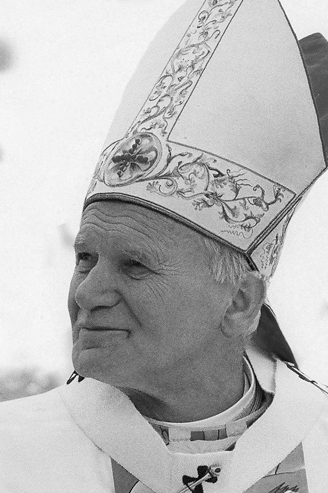
Pope Saint John Paul II’s First Good Friday Homily
ADDRESS OF HIS HOLINESS JOHN PAUL II AT THE CONCLUSION OF THE STATIONS OF THE CROSS AT THE COLOSSEUM Good Friday, 13 April 1979 When we make the Way of the Cross from one station to the next, in spirit we are always at the spot wherethis journey had its “historical” place: where it[…]Continue reading→
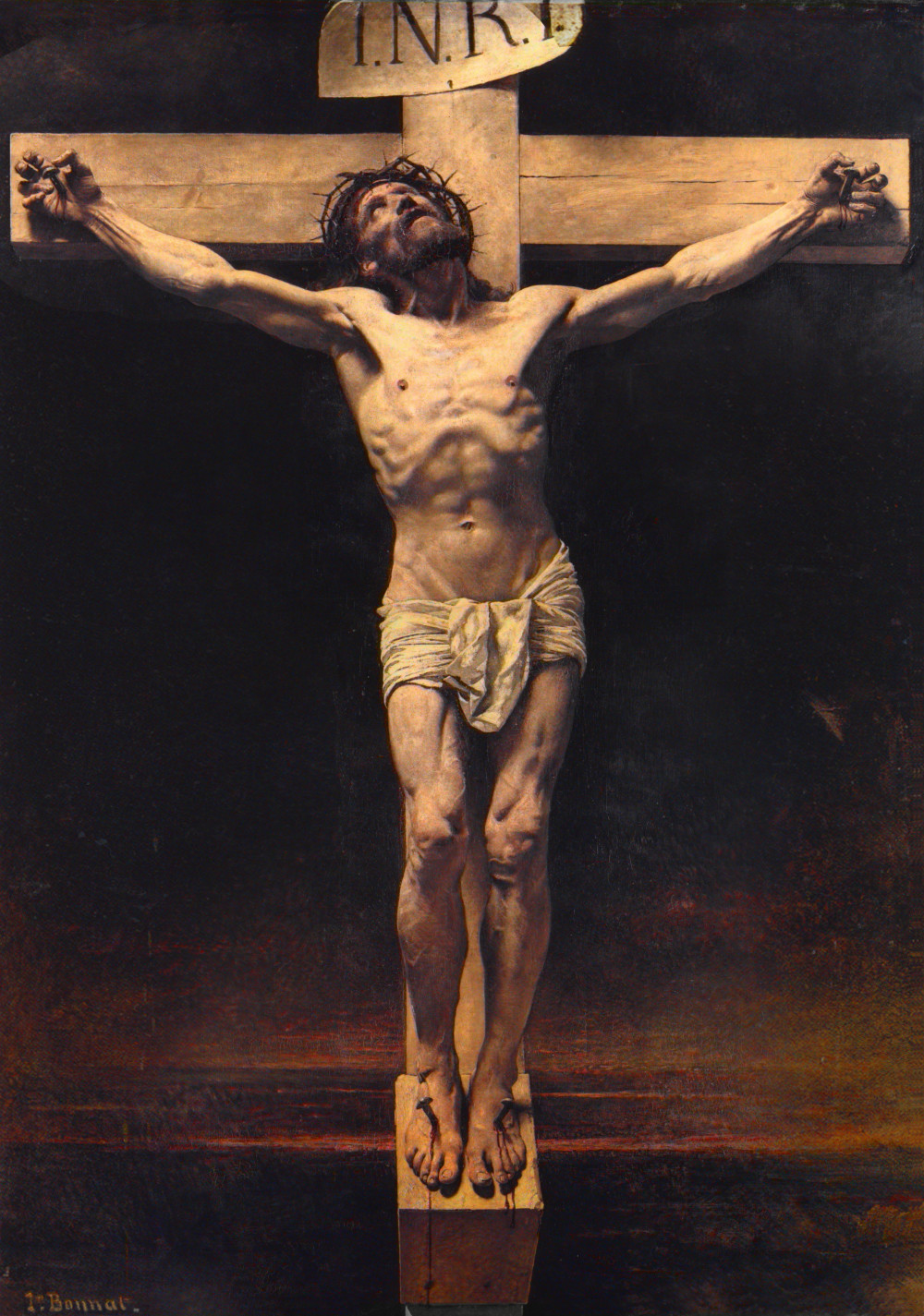
A Meditation for Good Friday: How To Undo the Effects of Sin?
Cardinal Newman, now Saint John Henry Newman, was a towering figure of nineteenth-century Catholicism who is almost universally admired. I say “almost” because not everyone likes him. I knew a priest once, Arthur Caulkins, who has become disenchanted with Newman. As an undergraduate Arthur had been enamoured of Newman, and this interest continued when he[…]Continue reading→
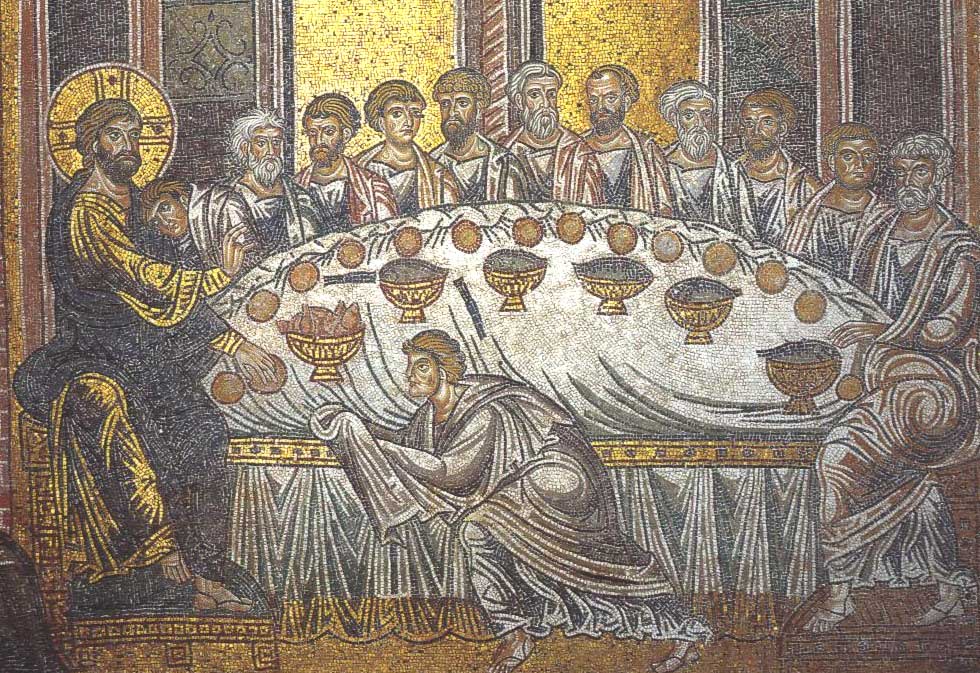
Pope Benedict’s Last Holy Thursday Homily
MASS OF THE LORD’S SUPPER HOMILY OF HIS HOLINESS BENEDICT XVI Basilica of St John Lateran Holy Thursday, 5 April 2012 Photo Gallery (Video) Dear Brothers and Sisters! Holy Thursday is not only the day of the institution of the Most Holy Eucharist, whose splendour bathes all else and in some ways draws it to[…]Continue reading→