
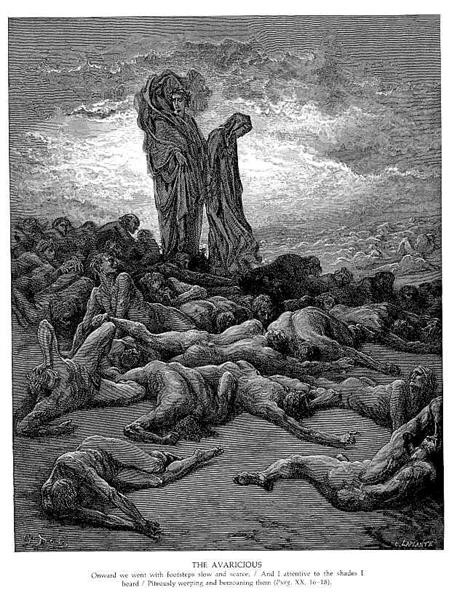
Why is There Purgatory?
“All who die in God’s grace and friendship, but still imperfectly purified, are indeed assured of their eternal salvation; but after death they undergo purification, so as to achieve the holiness necessary to enter the joy of heaven.”
From the Catechism of the Catholic Church
Purgatory is traditionally defined by the Catholic Church as a temporary state of being somewhere between heaven and hell. Purgatory is for those who have not fully deserved heaven and are not so unworthy as to be damned. According to the Catholic Encyclopedia, these “have not fully paid the satisfaction due to their transgressions.”
The teaching is found implied in the Old Testament, in Second Maccabees, where Judas, the commander of the forces of Israel,
“making a gathering . . . sent twelve thousand drachmas of silver to Jerusalem for sacrifice to be offered for the sins of the dead, thinking well and religiously concerning the resurrection (For if he had not hoped that they that were slain should rise again, it would have seemed superfluous and vain to pray for the dead). And because he considered that they who had fallen asleep with godliness, had great grace laid up for them. It is therefore a holy and wholesome thought to pray for the dead, that they may be loosed from sins.”(2 Maccabees 12:43-46)
St. Paul also weighs in.
“For other foundation no man can lay, but that which is laid; which is Christ Jesus. Now if any man build upon this foundation, gold, silver, precious stones, wood, hay stubble: Every man’s work shall be manifest; for the day of the Lord shall declare it, because it shall be revealed in fire; and the fire shall try every man’s work, of what sort it is. If any man’s work abide, which he hath built thereupon, he shall receive a reward. If any man’s work burn, he shall suffer loss: but he himself shall be saved, yet so as by fire.” (1 Corinthians 3:11-15)
“Yet so as by fire” suggests a period of suffering that qualifies as atonement for our sins. Tertullian, Origen, Ambrose, Augustine, Cyril of Jerusalem, and other Early Fathers of the Church confirmed the early Christian belief in a state of purification that later theologians would call “purgatory.”
The concept of purgatory is a very reasonable one, and applies even to us in our present life. When we commit crimes, we either exult in them, or show no remorse and risk the judge throwing the book at us; or we may confess our crimes and throw ourselves upon the mercy of the court. But it makes no sense, no matter how contrite we may be for our crime, no matter how much we beg for mercy, that the judge should let us off with no penalty (purgatory) whatever. For any crime a degree of suffering is exacted. For rape, theft, or perjury, it is expected that we should be deprived of our liberty and sent to a place (prison-purgatory) where we can hope for release to the freedom and redemption that is one day to come.
Human nature cries out not only for mercy, but also for justice. In the Garden of Gethsemane, Jesus also cried out for mercy when he asked if this cup of suffering could pass from his lips. But to obtain true and merciful justice, that was not possible. He had to suffer his own ‘purgatory’ on the cross – not for Himself, the Holy and Just One, but for all of us, to open the gates of heaven for all who deserve to enter.
What St. Augustine said: “That there should be some fire even after this life is not incredible, and it can be inquired into and either be discovered or left hidden whether some of the faithful may be saved, some more slowly and some more quickly, in the greater or lesser degree in which they loved the good things that perish, through a certain purgatorial fire.”
Clearly, Augustine’s remarks should lay to rest the claim by some Protestants that the Catholic doctrine of purgatory was invented in the 11th century.

Saint Kateri , Canada’s Protectress
This was the title given to Saint Kateri Tekakwitha, by Pope Benedict XVI, when he canonized her on October 28th, 2012, along with six others, in Saint Peter’ Square (she had been beatified by Pope John Paul II back in 1980). With Saint Joseph as our protector, along with the Canadian martyrs, we seem to[…]Continue reading→

Remembering Father Alphonse de Valk
(Today marks the sixth anniversary of the death of Father Alphonse de Valk, C.S.B., a faithful, courageous and indefatigable Basilian priest, pro-life-and-family apostle, and the founder of Catholic Insight magazine. Here is what we wrote those on his entering into eternity five years ago, as we continue to remember him in our prayers and thoughts)[…]Continue reading→

My Name is Bernadette
April 16th is a propitious day, for besides the anniversary of Father de Valk’s death, who founded Catholic Insight in its print form decades ago, and the commemoration of the ‘two Benedicts’, mentioned in accompanying posts, today we also recall Saint Bernadette Soubirous, the young visionary to whom the Virgin Mary appeared numerous times at[…]Continue reading→
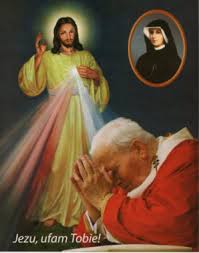
Canonizing Sister Faustina and Divine Mercy
HOMILY OF THE HOLY FATHER MASS IN ST PETER’S SQUARE FOR THE CANONIZATION OF SR MARY FAUSTINA KOWALSKA Sunday, 30 April 2000 1. “Confitemini Domino quoniam bonus, quoniam in saeculum misericordia eius”; “Give thanks to the Lord for he is good; his steadfast love endures for ever” (Ps 118: 1). So the Church sings on the Octave of[…]Continue reading→

Divine Mercy Sunday – An Echo of Every Mass
Reach out your hand and put it in my side. Do not doubt but believe’… ‘My Lord and my God!’ (Jn. 20:18)). Today is Divine Mercy Sunday, and as we celebrate the end of the Easter Octave, we contemplate the wounded side of our Saviour, the Church’s source of life. On Good Friday in the[…]Continue reading→

Saint Stanislaus of Szczepanów
We celebrate Saint Stanislaus today (+ April 11, 1079), in light of this Easter Octave, a bishop and martyr who accepted the episcopacy only at the direct order of Pope Alexander II. He proved a wise and courageous leader of his flock, put to death by his own king, Boleslaus, for rebuking the monarch’s ‘immoral[…]Continue reading→
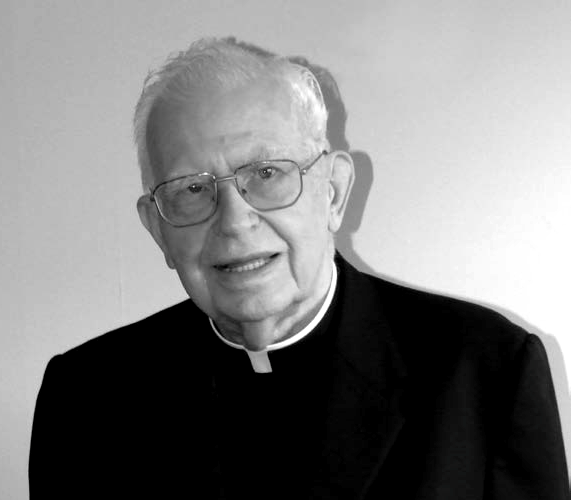
First Holy Communion: Sermon from May 16, 1943
Here is a sermon from the good old days by +Rev. Msgr. Vincent Nicholas Foy (August 14, 1915 – March 13, 2017), from 1943. Readers may recall that Pope Saint Pius X, by the decree Quam Singulari in 1910, lowered the customary age of reception of Holy Communion – after the rigours of the plague[…]Continue reading→
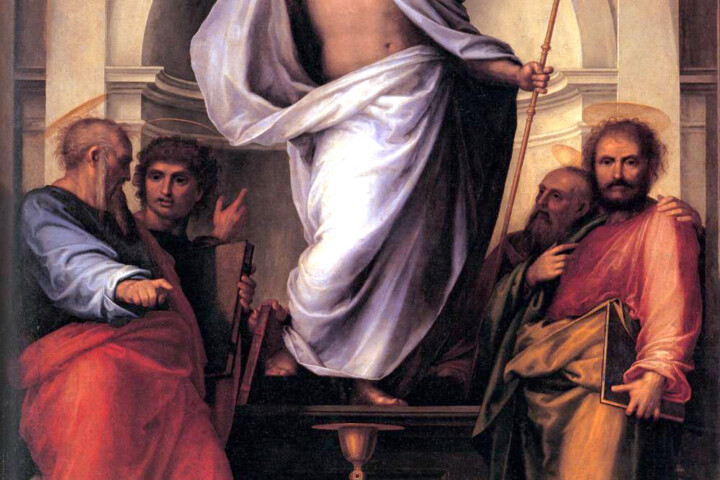
In the Glorious Light of Easter, Alleluia!
Set your minds on things that are above, not on things that are on earth, for you have died, and your life is hidden with Christ in God. When Christ who is your life is revealed, then you also will be revealed with him in glory (Col. 3:3-4). The Resurrection of Our Lord and Saviour[…]Continue reading→
An Ancient Homily for Holy Saturday
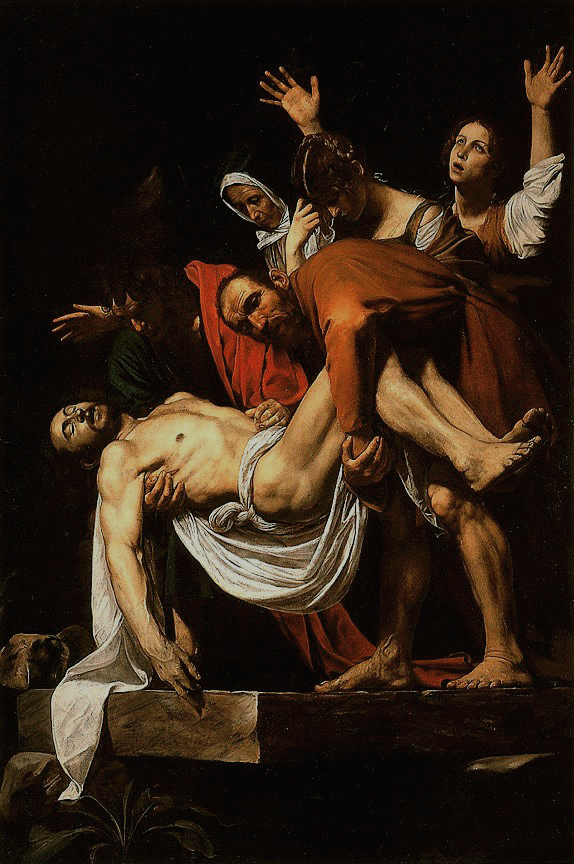
The time between Good Friday and Easter Sunday is one of waiting, in silence, as the world wonders – anticipates – what will happen, after the death of Christ. We re-live this time each year in the anamnesis of our liturgy, and in turn look forward to the glorious re-creation of all things at the[…]Continue reading→
Europe’s Long Descent
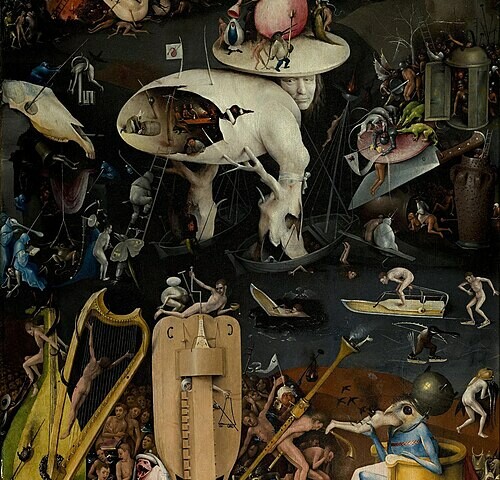
(As we meditate on this day on Christ’s burial, and His descent into hell, it is fitting to ponder here with contributor Peter Marcus how the world seems to be heading there as well. The difference is that, although God cannot ‘redeem’ hell, nor those therein, He can and did redeem the world. There is[…]Continue reading→