
18th Sunday: The Bread of Life and the Canon of Holy Mass
For the bread of God is that which comes down from heaven and gives life to the world. (Jn 6:33)
As we listen to our Lord’s Eucharistic discourse, our Lord Himself teaches us about the Eucharist, the Sacrament prefigured not only in the miracle of the multiplication of the loaves and fish but also in the life and worship of the Jewish people, specifically in the worship given to God in the Temple in Jerusalem. Last Sunday we considered the function of the Offertory and specifically the Offertory prayers as a preparation for the Eucharistic Prayer or Canon of the Mass. This is the priestly prayer which brings about the re-presentation of Our Lord’s Passion and Death on the Cross. It is called the canon—which means rule, because it is the unchangeable heart of the Mass. In the Extraordinary Form of the Mass this is literally true because the Roman Canon, as it is also sometimes called, is the only Eucharistic prayer. The Ordinary Form of the Mass allows for a number of Eucharistic Prayers, some of which may be used only in very specific circumstances. We will consider the structure and beauty of the Roman Canon or Eucharistic Prayer I. Before we do so, let us be mindful that the sacred liturgy, in all its varied aspects but most especially as the reception of God’s Incarnate Word in the Holy Eucharist, is truly nourishment for our human nature. Hence Our Lord’s declaration: “I am the bread of life. Whoever comes to me will never be hungry, and whoever believes in me will never be thirsty” (Jn 6: 35).
The structure of the Eucharistic Prayer is symmetrical with three prayers of remembrance, followed by two offertory prayers, and after the consecration of the host and the consecration of the wine there are three offertory prayers and two more prayers of remembrance. The Canon is recited by the priest alone who acts in persona Christi, that is, in the person of Christ, because he will speak the words of our Lord Himself at the Consecration of the offerings. Especially at the Altar the priest is Our Lord’s sacerdotal or priestly icon. The priest has to be the self-sacrificing image of Christ the High Priest. In the Extraordinary Form of the Mass this is especially evident in the orientation of the priest at the Altar. He offers the sacrifice facing God or coram Deo. Although it has become customary to have the priest facing the people in the Ordinary Form of the Mass, the rubrics or instructions in the Missal promulgated after the Second Vatican Council are such that they presuppose that the priest is offering Mass facing God. In our parish, Mass is celebrated both coram Deo and coram populo, facing the people.
It is not a question of the priest turning his back on the people but of the priest in a sense, disappearing into the Holy Sacrifice when he faces ad orientem, to use another ancient expression; and offers the sacrifice with his face invisible to the people. “Jesus alone is the centre, the one Sun whose light illumines all the worshippers, including the priest. In this sense, the ancient liturgy places at once all the emphasis and none of it upon the priest; he is the most visible and the most invisible, central and at the same time peripheral” (Peter Kwasniewski, Resurgent in the Midst of Crisis, p. 75). In the Tridentine Mass the Priest prays the Canon or Eucharistic Prayer with a reverent whisper. Like Moses on Mount Sinai, the priest enters the cloud as we read in the Book of Exodus. “And Moses, entering into the midst of the cloud, went up into the mountain” (24:18). Like Our Lord Himself, the priest is on mount Calvary and he re-presents the Sacrifice that has redeemed the world. This is why diverse authors have spoken of the priesthood as “the most sublime, the most arduous, the most demanding of all vocations—[and] that is how it should be; in fact, it cannot be otherwise” (Peter Kwasniewski, Resurgent in the Midst of Crisis, p. 75).
During the Canon it is especially evident that the faithful do not simply attend Mass but assist at Mass, because it is crucial that you add your faith and devotion to the priestly prayer. Indeed, this pattern is at work in the life of any given parish as the faithful are united with and assist the work of the parish priest or priests. Our loving adoration of God becomes love towards our neighbour, in this order and pattern. This charity extends beyond time and place. The Canon contains two diptychs: the memento or remembrance of the living, the Church Militant; and the memento of the dead, the Church Suffering. These prayers are called diptychs, the Greek word for the folding tablets which contained the names to be included in the priest’s prayers at this point. The pause that is observed by the priest at this point enables him to remember the specific person or intention of the Mass. The Holy Council of Trent says of your personal intentions as you assist at Holy Mass that “no other work can be performed by the faithful so holy and divine as this tremendous Mystery.”
Especially during the Canon the rubrics, that is to say the directions, given for the action of the sacred ministers are very specific. The manner in which the priest holds his hands over the offerings, the signs of the Cross and so forth; some of the gestures have their origin in the Jewish liturgical practices of the blood sacrifices of the Old Law. During the Offertory the bread and wine which will become Our Lord’s Most Precious Body and Blood are lifted up in a gesture of offering. “According to Jewish tradition, all ceremonial offerings were lifted up—that is, they were first raised up and offered to God, then lowered and ‘waved’ to the north, south, east and west, making a cross. This was true of all offerings, from the sacrificial animals offered in the Temple to the bread and wine Jesus shared with His disciples during the Last Supper” (Lisa Bergman, Treasure and Tradition, The Ultimate guide to the Latin Mass, p. 34). In the Extraordinary Form of the Mass, the priest is instructed to perform this very action and the offerings are blessed with the Sign of the Cross. Thus we continue this same tradition now enriched by the sign of Our Lord’s Passion. You may have also noticed that the priest may hold his thumbs and index fingers pressed together after the Consecration of the Host. If he does, he will not separate them again, except to hold the Consecrated Host, until after Holy Communion when he will purify them. This laudable custom speaks to the sacredness of the Blessed Sacrament and it is good for us to know about this in our times when the reception of Holy Communion on the hand has become very common. The Eucharist is Our Lord’s Precious Body and we cannot be reverent and careful enough.
The Mass is truly the most beautiful thing this side of Heaven; and in its celebration the Church, the mystical Body of Christ is united through prayer and good works. Like the Trinity, the Church is one Body, but with three aspects: the Church Triumphant in Heaven, the Church Militant on earth and the Church Suffering in Purgatory. During Holy Mass, all of us are united in the worship of the living God in Christ, the Eternal High Priest whose saving Sacrifice has redeemed the world. Our devout participation at the Sacrifice of the Cross enables us to make intercession for world’s salvation. Earlier this week I had the privilege of baptising, confirming and anointing an eighty-three-year-old woman, a graceful lady whose extended family I have known for many years. She was once a member of the Communist Party in China but she was touched by God’s grace and asked for Baptism. When I imparted the last blessing she made the sign of the Cross with the most graceful gestures I have ever seen. In no small manner I attribute her conversion to your prayers and sacrifices and your devout manner of assisting at Holy Mass. Without them my priestly ministry would be greatly impoverished. I share with you her last word to me: “Thank you, very much.” May we never boast about anything except the Cross of Our Lord Jesus Christ (Cf. Gal 6:14).

Remembering Father Alphonse de Valk
(Today marks the sixth anniversary of the death of Father Alphonse de Valk, C.S.B., a faithful, courageous and indefatigable Basilian priest, pro-life-and-family apostle, and the founder of Catholic Insight magazine. Here is what we wrote those on his entering into eternity five years ago, as we continue to remember him in our prayers and thoughts)[…]Continue reading→

Divine Mercy Sunday – An Echo of Every Mass
Reach out your hand and put it in my side. Do not doubt but believe’… ‘My Lord and my God!’ (Jn. 20:18)). Today is Divine Mercy Sunday, and as we celebrate the end of the Easter Octave, we contemplate the wounded side of our Saviour, the Church’s source of life. On Good Friday in the[…]Continue reading→

Saint Stanislaus of Szczepanów
We celebrate Saint Stanislaus today (+ April 11, 1079), in light of this Easter Octave, a bishop and martyr who accepted the episcopacy only at the direct order of Pope Alexander II. He proved a wise and courageous leader of his flock, put to death by his own king, Boleslaus, for rebuking the monarch’s ‘immoral[…]Continue reading→
First Holy Communion: Sermon from May 16, 1943
Here is a sermon from the good old days by +Rev. Msgr. Vincent Nicholas Foy (August 14, 1915 – March 13, 2017), from 1943. Readers may recall that Pope Saint Pius X, by the decree Quam Singulari in 1910, lowered the customary age of reception of Holy Communion – after the rigours of the plague[…]Continue reading→
In the Glorious Light of Easter, Alleluia!
Set your minds on things that are above, not on things that are on earth, for you have died, and your life is hidden with Christ in God. When Christ who is your life is revealed, then you also will be revealed with him in glory (Col. 3:3-4). The Resurrection of Our Lord and Saviour[…]Continue reading→
An Ancient Homily for Holy Saturday
The time between Good Friday and Easter Sunday is one of waiting, in silence, as the world wonders – anticipates – what will happen, after the death of Christ. We re-live this time each year in the anamnesis of our liturgy, and in turn look forward to the glorious re-creation of all things at the[…]Continue reading→
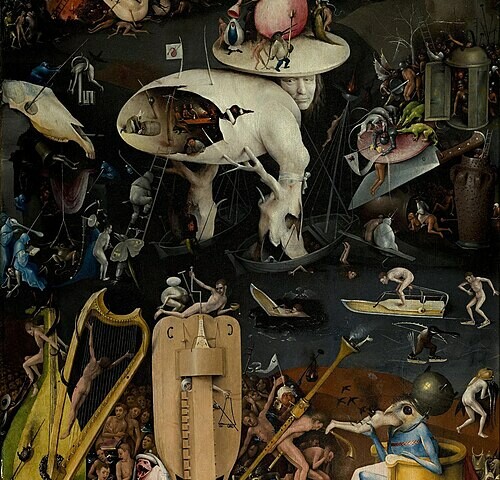
Europe’s Long Descent
(As we meditate on this day on Christ’s burial, and His descent into hell, it is fitting to ponder here with contributor Peter Marcus how the world seems to be heading there as well. The difference is that, although God cannot ‘redeem’ hell, nor those therein, He can and did redeem the world. There is[…]Continue reading→
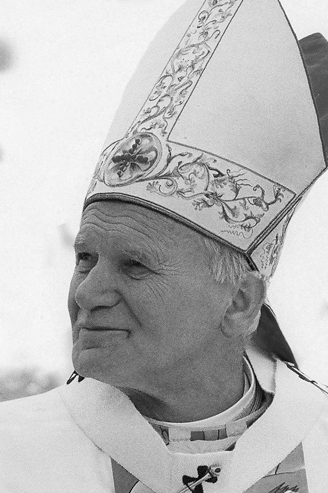
Pope Saint John Paul II’s First Good Friday Homily
ADDRESS OF HIS HOLINESS JOHN PAUL II AT THE CONCLUSION OF THE STATIONS OF THE CROSS AT THE COLOSSEUM Good Friday, 13 April 1979 When we make the Way of the Cross from one station to the next, in spirit we are always at the spot wherethis journey had its “historical” place: where it[…]Continue reading→
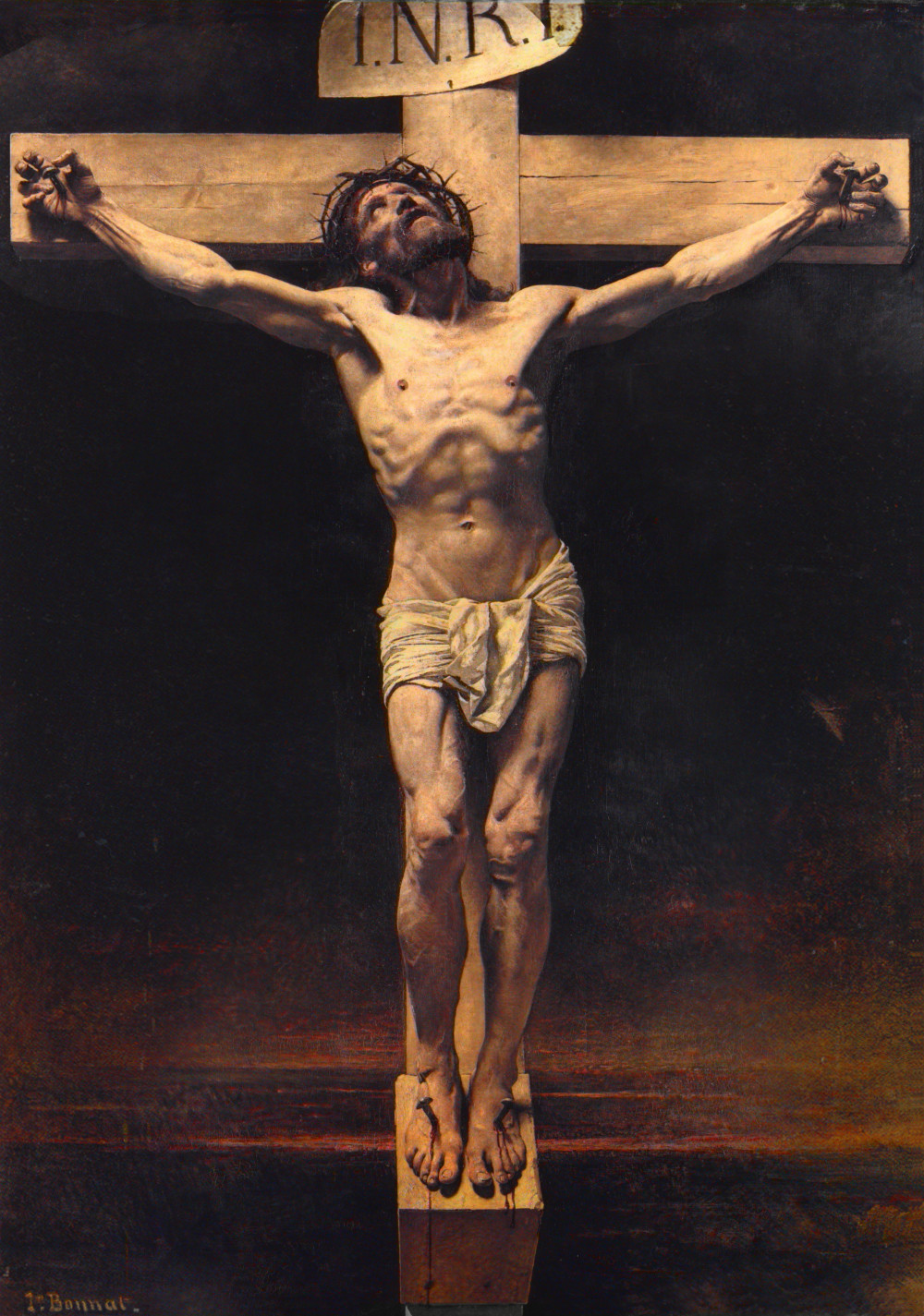
A Meditation for Good Friday: How To Undo the Effects of Sin?
Cardinal Newman, now Saint John Henry Newman, was a towering figure of nineteenth-century Catholicism who is almost universally admired. I say “almost” because not everyone likes him. I knew a priest once, Arthur Caulkins, who has become disenchanted with Newman. As an undergraduate Arthur had been enamoured of Newman, and this interest continued when he[…]Continue reading→
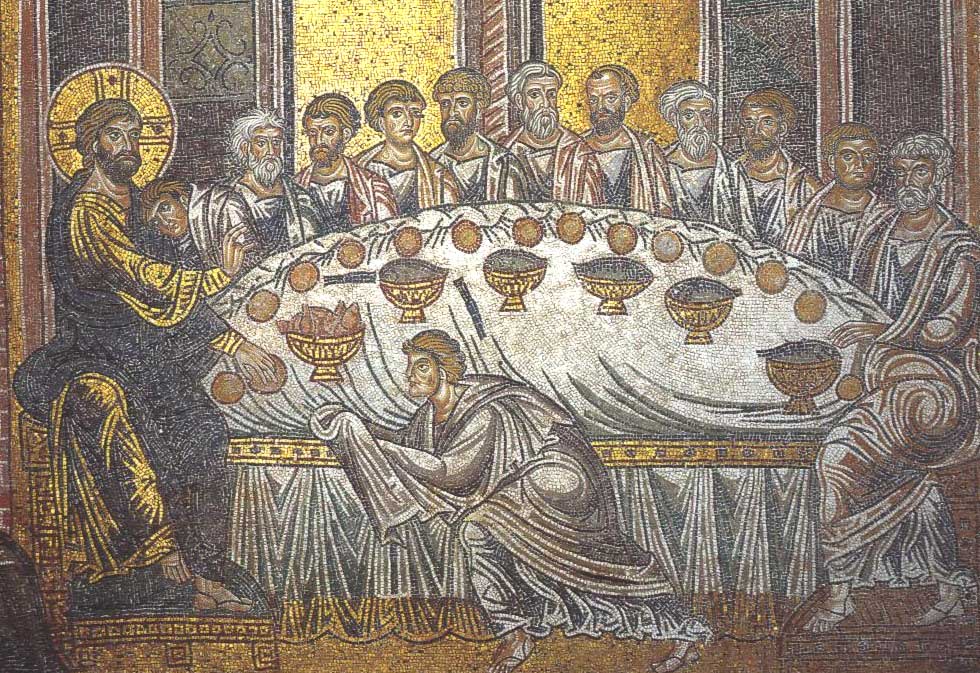
Pope Benedict’s Last Holy Thursday Homily
MASS OF THE LORD’S SUPPER HOMILY OF HIS HOLINESS BENEDICT XVI Basilica of St John Lateran Holy Thursday, 5 April 2012 Photo Gallery (Video) Dear Brothers and Sisters! Holy Thursday is not only the day of the institution of the Most Holy Eucharist, whose splendour bathes all else and in some ways draws it to[…]Continue reading→