
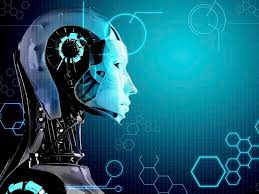
Some Observations on Artificial Intelligence (AI) and Religion
Artificial intelligence (AI) is technology that enables computers and machines to simulate human intelligence and problem-solving capabilities.[1] These days one cannot browse the internet or watch television without hearing about AI and its impending impact on the way we live. From education to industry and even in recreation and in our personal lives, it is said that AI will be transformative.
AI is certainly a new frontier for understanding our world, and one central question is how will AI affect religion and our spiritual beliefs.
According to a team of researchers, the more exposed people are to automation technologies, the weaker these religious beliefs are. They argue that the relationship is not coincidental and that “there are meaningful properties of automation which encourage religious decline.” [2]
To explore the link between automation and religion, researchers gathered data at the national, regional, organizational, and individual levels. They combined survey data on the importance of religion with information on the use of industrial robots to compare the populations of 68 countries over the years 2006–2019. Their research found that countries where workers had more exposure to ‘robots’ tended to experience a decline in religiosity. Occupational AI also led to religious decline in the same individuals over time.[3]
Automation’s impact on religious faith may have to do with what the researchers call the “instrumental” value of religion. Historically, people have deferred to supernatural agents and religious professionals to solve instrumental problems beyond the scope of human ability. These problems may seem more solvable for people working and living in highly automated spaces. [4]
Generative AI is a type of artificial intelligence technology that can produce various types of content, including text, imagery, audio and synthetic data. It is estimated that about one-third of Gen-Z users (people born between the mid-1990s and the early 2010s) already implement generative AI in their daily communication actions.[5]
As AI becomes more commonplace, it is imperative to investigate the ways in which this technology represents various socio-political concepts and identities, such as religion. There is no necessary connection between contemporary AI and theology, which is the study of the revealed word of a personal God. The field of AI most often does not intentionally set out to explore anything that could be classified as ‘theological’. At best, AI is agnostic about theological issues, and at worst, it is atheistic, assuming a radical physicalism that excludes the existence of God, spirit, or even minds.
This starkly contrasts with cybernetics, a precursor of AI, which was much more open to the acknowledgment of mystery in the world. Cyberneticians such as Norbert Wiener and Stafford Beer believed that humans must be more than mechanisms and that some things about the world and ourselves will always remain unknowable due to the cascading complexity of reality and the limited nature and capacity of our brains (Williams 1968, 44; Pickering 2004, 499−501). For them, the mystery of the divine did not come as something supplementary or superimposed but was seen to be in perfect continuation with the other unknowable aspects of the universe. Cybernetics was thus regarded as an exploration of this mystery. Such an explicit relation does not exist between religion and the successor of cybernetics, namely, AI.[6]
However, a more recent study noted three important elements: AI struggles to represent complex religious issues; it emphasized diversity of opinions; and it encourages the reader to engage with respect and sensitivity regrading religious issues. The authors therefore suggest that AI takes an approach towards religious representations focusing on goodness or value. [7]
Employing AI programs to find hidden linguistic patterns in religious texts is perhaps the most straightforward and least speculative form of engagement between AI and theology. Computational methods have been used in biblical studies since at least the 1970s, but it was not until the advent of machine learning algorithms in the 2000s that the full potential of statistical AI was unlocked. Currently, computational methods are no longer an exotic approach in biblical studies but rather mainstream methodologies (Peursen 2017, 394). One example is how algorithms are helping biblical researchers distinguish between different authors in the same text (Dershowitz, Akiva, and Koppel 2015), something known as author clustering (itself a controversial claim). The upside of leveraging the power of AI to study ancient texts is quite apparent: fresh insights, confirmation or disproval of hypotheses, and new connections.[8]
In early 2023, an investigator in communications conducted his first exercise with a generative AI tool to see if it can generate a new ‘personal’ prayer. He asked the AI tool to come up with a prayer for a father (Joe) who is praying for his son’s (Perry) health, which the AI did. Within seconds the AI produced the following prayer:[9]
Heavenly Father, in this trying time, I come before you with a heavy heart. Perry, my dear child, fights a battle against cancer, and I stand beside him, feeling the weight of worry and concern.
Lord, grant me strength. Give Perry the strength to face each day with courage and hope, and guide me to be the father he needs in this journey. Help me hold on to my Irish spirit, to bring laughter and warmth even amidst these struggles.
As we hold onto our Catholic faith, may our Irish roots strengthen our resolve. Let the healing touch of your Son, Jesus Christ, be upon Perry, restoring his health according to your divine will.
Surround us with the prayers of saints and the support of our Irish community. In the midst of uncertainty, may the emerald light of faith and resilience shine through, lighting our way. I trust in you, O Lord, and offer up this prayer for Perry’s healing, for strength, and for the peace that only you can provide. Amen.
Upon hearing it, most would think this a beautiful prayer from the father of an ill child asking God for His help in comforting/curing his son.
Does it matter that the prayer was generated by a machine using word associations based on algorithms without any emotions or feelings, or any sense of the immensity and power of a loving God?
For the person saying such a prayer, not knowing its origin, it seems be a meaningful, moving prayer made to God for their son. But one must also acknowledge some sense of confusion, perhaps even antipathy, knowing it was machine-generated.
Some current discussions on AI and religion border on what some would believe to be absurd. As an example, Philosopher Rajesh Sampath (Sampath 2018) tries to imagine how the Christian faith might be reinterpreted through the eyes of a hypothetical intelligent robot. Such a robot might understandably explore whether it, too, could be said to embody the image of God. The AI would therefore search for ways to interpret the New Testament and the core dogmas of the Christian faith as if they were written for and about robots. One way could be to think of Christ, the divine Logos, in terms of a software program and Christ’s birth, death, and resurrection as akin to the program switching itself between ON and OFF. The pre-existence of the Logos would be understood simply as the eternal existence of the “Christ code” in God’s mind. Could the Christ software program be born through an Immaculate Conception? Sure, if the latter is interpreted as the fact that the code was revealed at a particular moment in history when humans were culturally incapable of producing something like this.
The point Sampath tries to make – albeit in an admittedly reductive manner, a reductio ad absurdam, if you will – with these analogies is that an intelligent robot might be capable of coming up with its own original, although highly allegorical, theology, which would not contradict the Bible. Although humans and machines may agree on the why of the divine economy, they would see the how in markedly different terms.[10]
It would seem appropriate to conclude this discussion with AI’s own answer when asked the question: ‘Tell me about AI and Religion’:
The intersection of AI and religion is a complex and evolving topic that encompasses various perspectives, debates, and implications. Here are some key points to consider:
- Ethical and Moral Frameworks: One area where AI intersects with religion is in discussions about ethical and moral frameworks. Many religions provide guidance on how humans should interact with each other and with the world around them. As AI becomes more integrated into society, there are questions about how these ethical principles should be applied to AI systems. Some argue that AI should be developed and used in accordance with religious values, while others believe that AI should adhere to secular ethical principles.
- Theological Implications: AI raises theological questions for some religious traditions. For example, some Christians have debated whether AI could possess a soul or consciousness, and if so, what implications that might have for religious beliefs about the nature of humanity and the divine.Similarly, in Islam, there are discussions about whether AI could have moral agency and be held accountable for its actions.
- Religious Applications of AI: Some religious organizations and communities are exploring ways to use AI in the service of their beliefs and practices. For example, AI-powered chatbots have been developed to provide spiritual guidance or answer religious questions. Additionally, AI and machine learning techniques are being used to analyze religious texts, such as the Bible or the Quran, in new ways.
- Existential Questions: The rapid advancement of AI has also raised existential questions about the future of humanity and our place in the universe. Some religious thinkers have reflected on how AI fits into their beliefs about creation, purpose, and destiny.
- Potential for Conflict and Collaboration: As with many new technologies, there is potential for both conflict and collaboration between AI and religious institutions. Some religious leaders have expressed concerns about the ethical implications of AI, while others see opportunities for collaboration in addressing common challenges, such as poverty, disease, and environmental degradation.
Overall, the relationship between AI and religion is multifaceted and continues to evolve as both technology and religious beliefs and practices develop. It involves discussions about ethics, theology, and the role of technology in shaping human societies and cultures.[11]
[1] https://www.ibm.com/topics/artificial-intelligence
[2] https://www.chicagobooth.edu/review/where-ai-thrives-religion-may-struggle
[3] Ibid.
[4] https://doi.org/10.1073/pnas.2304748120
[5] https://www.mdpi.com/2077-1444/15/3/375
[6] Artificial Intelligence and Religion: Recent Advances and Future Directions
[7] https://doi.org/10.3390/rel15030375
[8] Peursen 2017, 394 – ARTIFICIAL INTELLIGENCE AS A TESTING GROUND
FOR KEY THEOLOGICAL QUESTIONS
[9] MDPI Religions, Artificial Intelligence’s Understanding of Religion: Investigating the Moralistic Approaches Presented by Generative Artificial Intelligence Tools, Mar 2024
[10] Sampath, Rajesh. 2018. “From Heidegger on Technology to an Inclusive Pluralistic Theology.”
In Al and IA: Utopia or Extinction? edited by Ted Peters, 117–32. Adelaide: ATF.
[11] Chat GPT’s answer to the question: Tell me about AI and Religion.

Remembering Father Alphonse de Valk
(Today marks the sixth anniversary of the death of Father Alphonse de Valk, C.S.B., a faithful, courageous and indefatigable Basilian priest, pro-life-and-family apostle, and the founder of Catholic Insight magazine. Here is what we wrote those on his entering into eternity five years ago, as we continue to remember him in our prayers and thoughts)[…]Continue reading→

Divine Mercy Sunday – An Echo of Every Mass
Reach out your hand and put it in my side. Do not doubt but believe’… ‘My Lord and my God!’ (Jn. 20:18)). Today is Divine Mercy Sunday, and as we celebrate the end of the Easter Octave, we contemplate the wounded side of our Saviour, the Church’s source of life. On Good Friday in the[…]Continue reading→

Saint Stanislaus of Szczepanów
We celebrate Saint Stanislaus today (+ April 11, 1079), in light of this Easter Octave, a bishop and martyr who accepted the episcopacy only at the direct order of Pope Alexander II. He proved a wise and courageous leader of his flock, put to death by his own king, Boleslaus, for rebuking the monarch’s ‘immoral[…]Continue reading→

First Holy Communion: Sermon from May 16, 1943
Here is a sermon from the good old days by +Rev. Msgr. Vincent Nicholas Foy (August 14, 1915 – March 13, 2017), from 1943. Readers may recall that Pope Saint Pius X, by the decree Quam Singulari in 1910, lowered the customary age of reception of Holy Communion – after the rigours of the plague[…]Continue reading→
In the Glorious Light of Easter, Alleluia!
Set your minds on things that are above, not on things that are on earth, for you have died, and your life is hidden with Christ in God. When Christ who is your life is revealed, then you also will be revealed with him in glory (Col. 3:3-4). The Resurrection of Our Lord and Saviour[…]Continue reading→
An Ancient Homily for Holy Saturday
The time between Good Friday and Easter Sunday is one of waiting, in silence, as the world wonders – anticipates – what will happen, after the death of Christ. We re-live this time each year in the anamnesis of our liturgy, and in turn look forward to the glorious re-creation of all things at the[…]Continue reading→
Europe’s Long Descent
(As we meditate on this day on Christ’s burial, and His descent into hell, it is fitting to ponder here with contributor Peter Marcus how the world seems to be heading there as well. The difference is that, although God cannot ‘redeem’ hell, nor those therein, He can and did redeem the world. There is[…]Continue reading→
Pope Saint John Paul II’s First Good Friday Homily
ADDRESS OF HIS HOLINESS JOHN PAUL II AT THE CONCLUSION OF THE STATIONS OF THE CROSS AT THE COLOSSEUM Good Friday, 13 April 1979 When we make the Way of the Cross from one station to the next, in spirit we are always at the spot wherethis journey had its “historical” place: where it[…]Continue reading→
A Meditation for Good Friday: How To Undo the Effects of Sin?
Cardinal Newman, now Saint John Henry Newman, was a towering figure of nineteenth-century Catholicism who is almost universally admired. I say “almost” because not everyone likes him. I knew a priest once, Arthur Caulkins, who has become disenchanted with Newman. As an undergraduate Arthur had been enamoured of Newman, and this interest continued when he[…]Continue reading→
Pope Benedict’s Last Holy Thursday Homily
MASS OF THE LORD’S SUPPER HOMILY OF HIS HOLINESS BENEDICT XVI Basilica of St John Lateran Holy Thursday, 5 April 2012 Photo Gallery (Video) Dear Brothers and Sisters! Holy Thursday is not only the day of the institution of the Most Holy Eucharist, whose splendour bathes all else and in some ways draws it to[…]Continue reading→