

Life Beyond the Sting of Death
There is surprisingly little in the Old Testament about the immortality of the soul. The later books talk about it, but the early books are more silent, and the Sadducee Jews neglected, if not outright rejected, this truth. The Sadducees became virtually extinct when the Roman army destroyed the Second Temple in 70 AD. The earthly Promised Land flowing with milk and honey preached by Moses would later become a greater and immortal Promised Land preached by Jesus.
The Old Testament sect called Pharisees, on the other hand, came to believe very much in an afterlife. For this reason Jesus preached mostly to them, because in spite of their well-known hypocrisies they were at least open to the belief that if they behaved well they could be saved for an afterlife with God.
The Pharisees were not alone in believing in some kind of afterlife. Most cultures have depicted the human soul inhabiting a body as a temporary place, to be followed by another home that, according to each culture, would right the wrongs done to or by that soul in its former life. Even the Oriental belief in reincarnation is a variant of this persistent and nearly universal hope of humans. The Egyptians certainly believed in an afterlife. So did the Greeks. Plato makes it emphatic by offering a logical proof for the soul’s immortality in his dialogue “Phædo.”
Atheists deny that the soul survives the body because, like the body, what we call spirit is really, according to them, only a collection of molecules nature has hidden from our sight, but organized to move in complex directions to obtain certain complex results. When the body dies, those “complex invisible” molecules die with it, they suppose.
Now the existence of an immortal soul cannot be dissociated from the existence of an almighty God. If God is almighty enough to create the entire universe, He is almighty enough to create a soul distinct from its body, and God is powerful enough to keep that soul in existence long after its separation from the body. And it does seem pointless for God to have created the soul if he did not wish it live forever. Why would God behave like a child who, when his toy is broken, tosses it into a trash heap? As Abraham Lincoln observed: “Surely God would not have created such a being as man, with an ability to grasp the infinite, to exist only for a day. No, no, man was made for immortality.”
Those who believe the soul dies with the body sometimes console themselves with the belief that what really matters is the focus not on the death of a personal soul, but rather on the everlasting life of society itself. Unfortunately, sooner or later it dawns on such people that this kind of belief has a dead end. Astronomers assure us that sooner or later the sun will burn out, but before it does all life on planet Earth will already long ago have been extinguished. Then there is the possibility of an even sooner annihilation for us all, as Archbishop Fulton Sheen cautioned:
“The atomic bomb has made collective immortality a myth and restored personal immortality as the great problem of our age.”
Belief in the immortality of the soul cannot be substantiated by a scientific investigation, and for that reason it is useless to suppose that science one day will prove or disprove the immortality of the soul. However, much scientific work is being done to determine whether that part of us that is called “soul” really exists. If it can be proven that there is not and cannot be any scientific explanation to account for certain phenomena, especially for miracles following the exercise of prayer, scientists might someday have to admit the possibility of miracles. If miracles can be acknowledged as plausible or even likely, it follows that another order of being exists that is not subject to the laws of nature, and especially to that particular law of nature called entropy, or the final winding down and death not only of individuals but of the universe itself.
This belief in immortal life is at the heart of what distinguishes religion from science and philosophy. It also assures us that there will always and everywhere be religions of one kind or another in the world. As Alfred Martin put it: “To my reason, immortality is the only possible solution to the mystery of life.”
It is also the only thing anywhere that offers final hope to earthbound souls.
A Personal Note:
At the time of my mother’s death I was in my late 50s. Mother had not been particularly religious most of her life, yet she saw to it that I had a religious education in my youth. On her deathbed I arranged for a priest to visit her, which she seemed to experience with surprising joy. The day of her death I was called to her bedside. The family gathered around her and we prayed the great prayer of St. Francis. That evening, upon returning home, I glanced at the clock my mother had given me to keep on my fireplace mantle. I calculated it had stopped at very likely the hour mother took her last breath. It had not only stopped. It was broken. I could not wind it. I took it to a clock repairman and explained that it stopped and broke about the hour of my mother’s death. He nodded his head knowingly. He replied, “I wish I long ago had started counting how many times I have heard that story from my customers.”
There are logical, intuitive, and experiential ways to know that our souls live on. As to all the great and fundamental truths about our human nature, God is good at leaving hints about them here, there, and for some people … anywhere and everywhere.

Remembering Father Alphonse de Valk
(Today marks the sixth anniversary of the death of Father Alphonse de Valk, C.S.B., a faithful, courageous and indefatigable Basilian priest, pro-life-and-family apostle, and the founder of Catholic Insight magazine. Here is what we wrote those on his entering into eternity five years ago, as we continue to remember him in our prayers and thoughts)[…]Continue reading→
Divine Mercy Sunday – An Echo of Every Mass
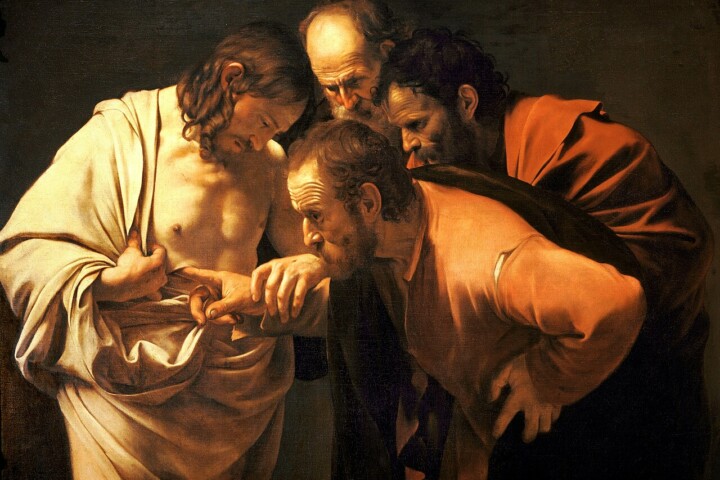
Reach out your hand and put it in my side. Do not doubt but believe’… ‘My Lord and my God!’ (Jn. 20:18)). Today is Divine Mercy Sunday, and as we celebrate the end of the Easter Octave, we contemplate the wounded side of our Saviour, the Church’s source of life. On Good Friday in the[…]Continue reading→

Saint Stanislaus of Szczepanów
We celebrate Saint Stanislaus today (+ April 11, 1079), in light of this Easter Octave, a bishop and martyr who accepted the episcopacy only at the direct order of Pope Alexander II. He proved a wise and courageous leader of his flock, put to death by his own king, Boleslaus, for rebuking the monarch’s ‘immoral[…]Continue reading→
First Holy Communion: Sermon from May 16, 1943
Here is a sermon from the good old days by +Rev. Msgr. Vincent Nicholas Foy (August 14, 1915 – March 13, 2017), from 1943. Readers may recall that Pope Saint Pius X, by the decree Quam Singulari in 1910, lowered the customary age of reception of Holy Communion – after the rigours of the plague[…]Continue reading→
In the Glorious Light of Easter, Alleluia!
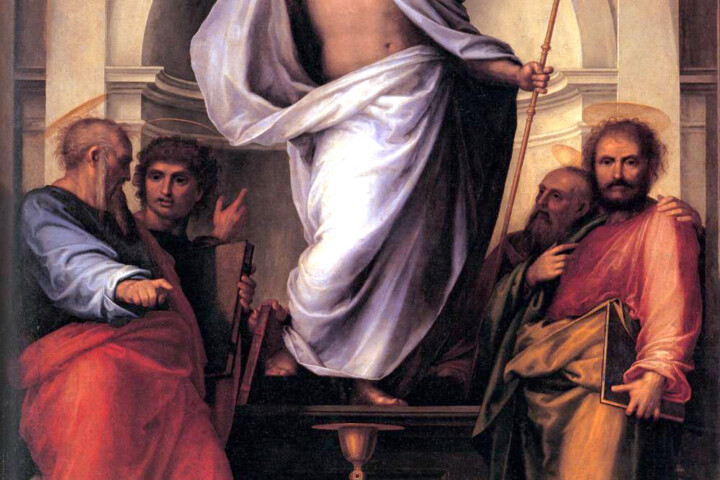
Set your minds on things that are above, not on things that are on earth, for you have died, and your life is hidden with Christ in God. When Christ who is your life is revealed, then you also will be revealed with him in glory (Col. 3:3-4). The Resurrection of Our Lord and Saviour[…]Continue reading→
An Ancient Homily for Holy Saturday
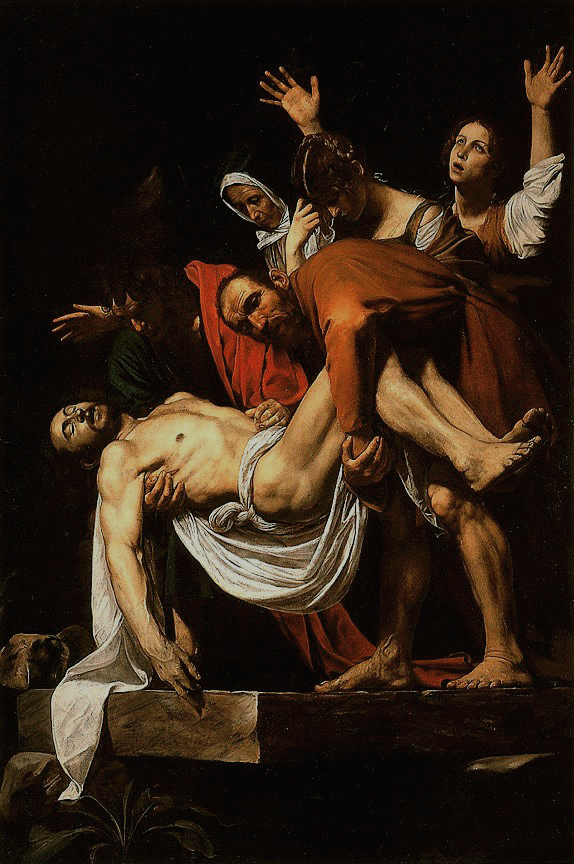
The time between Good Friday and Easter Sunday is one of waiting, in silence, as the world wonders – anticipates – what will happen, after the death of Christ. We re-live this time each year in the anamnesis of our liturgy, and in turn look forward to the glorious re-creation of all things at the[…]Continue reading→
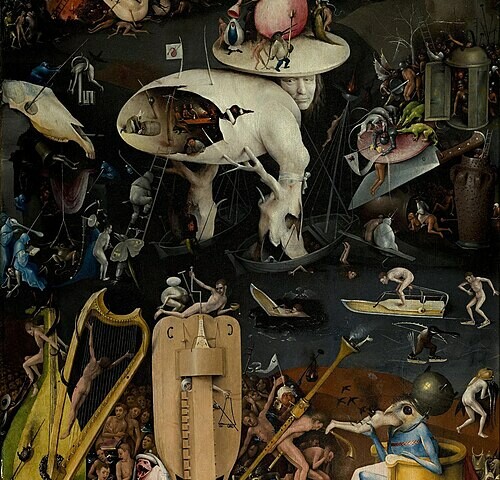
Europe’s Long Descent
(As we meditate on this day on Christ’s burial, and His descent into hell, it is fitting to ponder here with contributor Peter Marcus how the world seems to be heading there as well. The difference is that, although God cannot ‘redeem’ hell, nor those therein, He can and did redeem the world. There is[…]Continue reading→
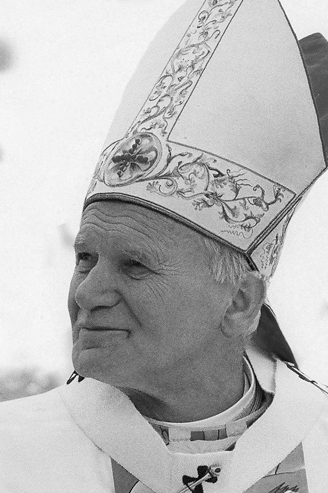
Pope Saint John Paul II’s First Good Friday Homily
ADDRESS OF HIS HOLINESS JOHN PAUL II AT THE CONCLUSION OF THE STATIONS OF THE CROSS AT THE COLOSSEUM Good Friday, 13 April 1979 When we make the Way of the Cross from one station to the next, in spirit we are always at the spot wherethis journey had its “historical” place: where it[…]Continue reading→
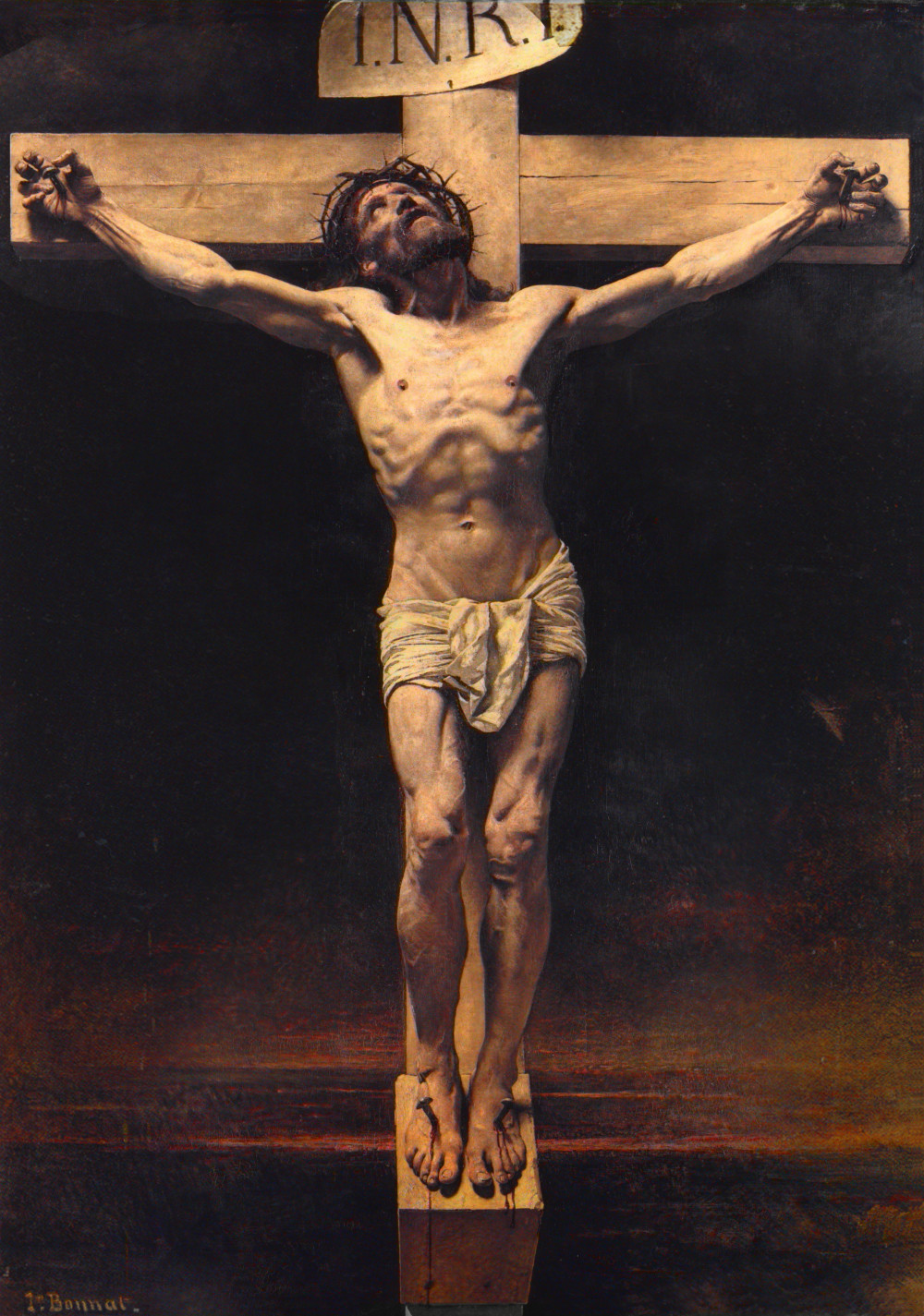
A Meditation for Good Friday: How To Undo the Effects of Sin?
Cardinal Newman, now Saint John Henry Newman, was a towering figure of nineteenth-century Catholicism who is almost universally admired. I say “almost” because not everyone likes him. I knew a priest once, Arthur Caulkins, who has become disenchanted with Newman. As an undergraduate Arthur had been enamoured of Newman, and this interest continued when he[…]Continue reading→
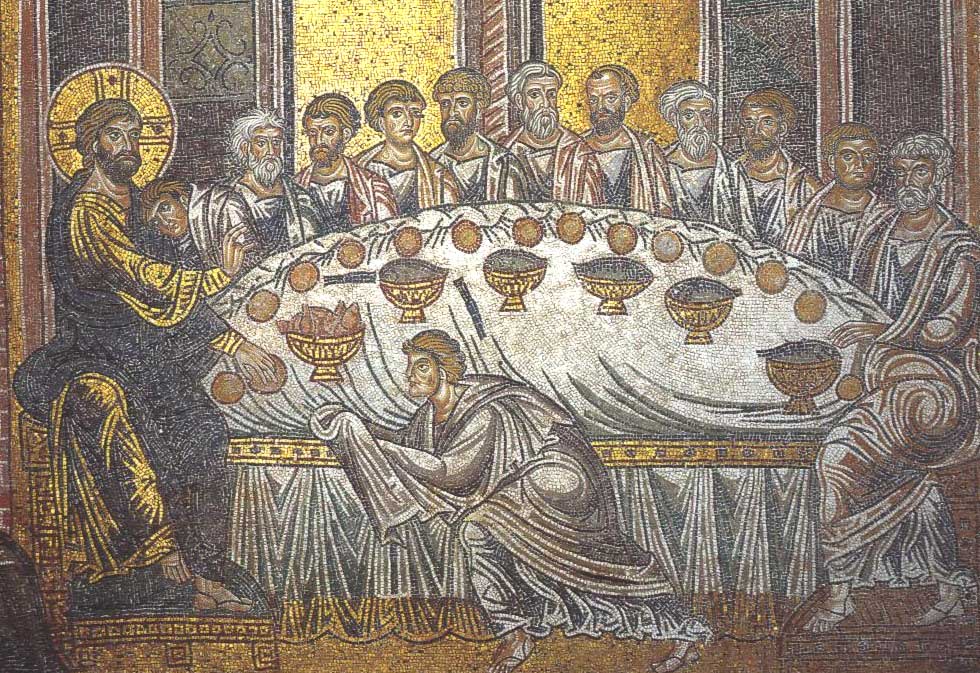
Pope Benedict’s Last Holy Thursday Homily
MASS OF THE LORD’S SUPPER HOMILY OF HIS HOLINESS BENEDICT XVI Basilica of St John Lateran Holy Thursday, 5 April 2012 Photo Gallery (Video) Dear Brothers and Sisters! Holy Thursday is not only the day of the institution of the Most Holy Eucharist, whose splendour bathes all else and in some ways draws it to[…]Continue reading→